Loading...
Fu Jian vs Louis XI
Louis XI leads by 3.3 pts · 2 figures compared
…
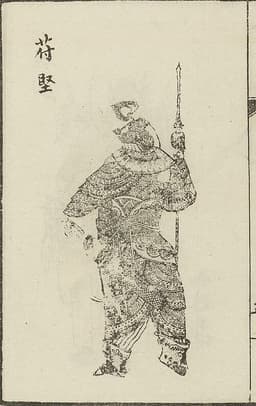
Fu Jian
Emperor · Ancient
64.4Total
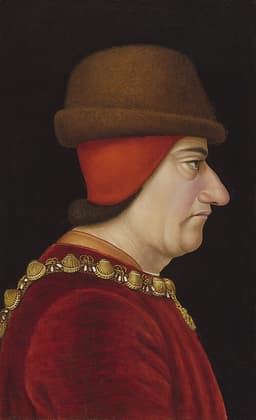
Louis XI
Emperor · Medieval
67.7Total
Basic Information
Born
338
1423
Died
385
1483
Era
Ancient
Medieval
Nationality
China
France
Occupation
Emperor
Emperor
Civilization
Eastern
Western
Score Comparison
Military (10%)
78.0
45.0
Political (20%)
72.0
78.0
Influence (20%)
59.0
68.0
Legacy (20%)
50.0
65.0
Leadership (15%)
85.0
85.0
Strategy (15%)
58.0
55.0
TOTAL
64.4
67.7
Fu Jian — Complete Timeline
370 AD
Conquest of Former YanWar◆ Major
Fu Jian's Former Qin forces conquered the Former Yan state, annexing its territory in northern China. This victory significantly expanded Former Qin's power and territory, bringing Fu Jian closer to unifying the north.
ConquestExpansion
Impact: regionalconstructive
376 AD
Conquest of Former LiangWar◆ Major
Fu Jian's forces conquered the Former Liang state in the northwest, incorporating its territory into Former Qin. This further consolidated his control over northern China.
ConquestExpansion
Impact: regionalconstructive
Conquest of DaiWar
Fu Jian's army conquered the Dai state, a Xianbei confederation in the north. This eliminated a rival and extended Former Qin's influence into the steppe region.
ConquestExpansion
Impact: regionalconstructive
379 AD
Capture of XiangyangWar
Fu Jian's forces captured the strategic city of Xiangyang from the Eastern Jin dynasty. This victory gave Former Qin a foothold south of the Huai River, setting the stage for the invasion that led to the Battle of Fei River.
ConquestCampaign
Impact: regionalconstructive
383 AD
Battle of Fei RiverWar
Fu Jian led a massive Former Qin army against the Eastern Jin dynasty at the Fei River. The Jin forces defeated the Qin army, causing a catastrophic rout. This defeat shattered Fu Jian's unification efforts and led to the collapse of Former Qin.
BattleUnificationDefeat
Impact: regionaltragic
Louis XI — Complete Timeline
1464 AD
Established the Postal SystemReform
Louis XI created a royal postal system with relay stations across France, enabling faster communication between the crown and provincial officials. This administrative reform improved governance and intelligence gathering.
AdministrationCommunicationReform
Impact: nationalconstructive
1465 AD
Defeated the League of the Public WealWar◆ Major
Louis XI faced a coalition of powerful nobles, the League of the Public Weal, led by Charles the Bold of Burgundy. Although the Battle of Montlh
Civil WarNoble RebellionBurgundy
Impact: national
1475 AD
Treaty of PicquignyPolitical Action◆ Major
Louis XI negotiated the Treaty of Picquigny with Edward IV of England, ending English military intervention in France. Louis paid a large pension to Edward in exchange for English withdrawal, avoiding a costly war and securing his northern border.
TreatyDiplomacyEngland
Impact: regionalconstructive
1477 AD
Acquired BurgundyPolitical Action
After Charles the Bold's death at the Battle of Nancy, Louis XI seized the Duchy of Burgundy and other Burgundian territories, including Picardy and the Somme towns. This expansion significantly increased royal domain and weakened the Burgundian state.
Territorial ExpansionBurgundyRoyal Domain
Impact: regionalconstructive
1481 AD
Annexed Anjou and MainePolitical Action
Louis XI annexed the counties of Anjou and Maine after the death of Charles of Anjou, incorporating them into the royal domain. This further consolidated French territory and reduced the power of the Angevin nobility.
Territorial ExpansionAnjouMaine
Impact: nationalconstructive
Expert Analysis
Fu Jian vs Louis XI
# The Spider and the Emperor: Two Paths to Power
On a spring morning in 383, Fu Jian, Emperor of Former Qin, stood atop a hill overlooking the Fei River in southern China. Below him stretched the largest army the world had seen in centuries—perhaps a million men, by some accounts—a force so vast that horses stumbled over their own shadows. He had conquered nearly all of northern China, and now the Yangtze River lay before him, the last barrier to total unification. Across the water, a much smaller Eastern Jin army waited, outnumbered perhaps ten to one. Fu Jian was confident. He had never lost a major battle.
Half a world away and a thousand years later, Louis XI of France sat in his private chamber at the Château de Plessis-lez-Tours, surrounded by spies’ reports and diplomatic correspondence. He was called the Universal Spider, and he wove his web not with armies but with letters, treaties, and secrets. His kingdom was fractured, his nobles rebellious, his treasury strained. Yet he, too, dreamed of unification—not of all China, but of France.
Both men sought to unite their worlds. One would die a broken refugee. The other would die the most powerful king in Europe. Their stories reveal how the same ambition, pursued through different means, can lead to radically different ends.
Origins
Fu Jian was born in 338 into the Di people, a semi-nomadic tribe of the Tibetan borderlands. His grandfather had founded the short-lived Former Qin dynasty, and Fu Jian inherited a kingdom of warriors, horsemen, and constant war. The Sixteen Kingdoms period was a time of chaos, when northern China had shattered into rival states after the collapse of the Western Jin. Fu Jian grew up in the saddle, learning the rhythms of conquest from a people who measured power in territory taken and enemies crushed.
Louis XI was born in 1423 into the House of Valois, but his inheritance was a broken realm. The Hundred Years’ War with England had left France devastated, and powerful dukes like Charles the Bold of Burgundy ruled territories larger than the king’s own domain. Louis’s father, Charles VII, had driven out the English but could not control his own nobles. Young Louis was a difficult son—rebellious, cunning, and deeply suspicious. He spent years in exile at the court of his enemy, studying the Burgundian court’s machinations. Where Fu Jian learned war, Louis learned politics.
Rise to Power
Fu Jian became emperor at nineteen, but he was never truly the sole architect of his rise. His prime minister, Wang Meng, a brilliant strategist and administrator, was the real mastermind behind Former Qin’s expansion. From 357 to 375, Wang Meng orchestrated campaigns that swallowed state after state: Former Yan in 370, Former Liang in 376, the Dai confederation in 376. Fu Jian provided the charisma and the sword; Wang Meng provided the plan. It was a partnership of fire and ice—the emperor’s boldness tempered by the minister’s caution.
Louis XI ascended the throne in 1461, but his path was far more treacherous. He had conspired against his own father, been exiled, and returned only after Charles VII’s death. From the start, Louis faced a coalition of nobles—the League of the Public Weal—led by Charles the Bold. In 1465, Louis met them at the Battle of Montlhéry, a confused, bloody draw that he could not win. But Louis understood something Fu Jian never learned: battles are not the only way to victory. He negotiated, bribed, and divided his enemies. He let Charles the Bold exhaust himself in wars against the Swiss and the Lorrainers, while Louis quietly bought off his allies.
Leadership & Governance
Fu Jian ruled with a generous, almost naive magnanimity. He incorporated conquered nobles into his court, gave them positions of trust, and trusted them absolutely. He believed that virtue and benevolence could bind a multi-ethnic empire together. When he conquered the Xianbei and the Qiang, he did not slaughter or enslave them—he gave them commands in his army. His officials warned him: these people are not loyal. Fu Jian dismissed them. A true ruler, he said, wins hearts, not just territory.
Louis XI governed through suspicion and control. He established a royal postal system in 1464, not for convenience but for intelligence—couriers could carry his orders and intercept his enemies’ messages faster than ever before. He surrounded himself with low-born advisors, men who owed everything to him, rather than proud nobles. He taxed heavily, built a professional army, and broke the power of the great feudal houses one by one. Where Fu Jian trusted, Louis doubted. Where Fu Jian forgave, Louis punished.
Their military records tell the story. Fu Jian’s military score of 66.2 reflects a commander who won every battle until the one that mattered most. Louis’s score of 14.5 is almost comically low—he was a terrible general. But Louis never needed to be a general. He understood that in medieval France, wars were won by gold, marriage alliances, and patience, not by cavalry charges.
Triumph & Tragedy
Fu Jian’s greatest moment was also his greatest tragedy. In 379, his forces captured Xiangyang, the strategic gateway to the Eastern Jin. The Yangtze lay open. In 383, he launched the invasion that would seal his fate. At the Fei River, the Eastern Jin general Xie Xuan offered a truce: let the Qin army retreat a few hundred paces so the Jin could cross and fight on open ground. Fu Jian agreed. But as his vast, multi-ethnic army began to withdraw, someone in the rear shouted that they were beaten. Panic spread. The retreat became a rout. The Jin army swept across the river and destroyed the Former Qin forces. Fu Jian fled, wounded in body and spirit. Within two years, his empire collapsed into rebellion, and he was killed by a former ally.
Louis XI’s triumph came in 1477. Charles the Bold, his great rival, died at the Battle of Nancy, his body found half-eaten by wolves. Louis moved instantly, seizing the Duchy of Burgundy and the rich territories of Artois and Picardy. He did not win this victory on any battlefield—he simply outlasted his enemy. By the Treaty of Picquigny in 1475, he had already paid off the English king Edward IV to stay home. By 1481, he had annexed Anjou and Maine through inheritance and pressure. France was becoming whole.
Character & Destiny
Fu Jian was a man of grand visions and fatal generosity. He believed that his empire could be held together by goodwill alone. When Wang Meng died in 375, Fu Jian lost his anchor. He ignored the dying minister’s warning: “Do not trust the Xianbei and the Qiang. They will betray you.” Fu Jian could not conceive of betrayal because he himself was incapable of it. His personality—open, trusting, idealistic—drove him to conquer but also to fall.
Louis XI was Fu Jian’s opposite in every way. He was paranoid, calculating, and ruthless. He wore plain clothes, lived frugally, and trusted no one. His own mother said he was “the most suspicious man alive.” But this suspicion kept him alive. He survived assassination attempts, noble rebellions, and the enmity of half of Europe. His personality—closed, cynical, pragmatic—allowed him to build slowly, piece by piece, without risking everything on a single battle.
Legacy
Fu Jian’s legacy is a cautionary tale. He is remembered as a brilliant conqueror who could not govern what he conquered, a man who unified the north only to lose it all in a single afternoon. His total score of 72.1 reflects a figure of genuine power and influence, but his legacy score of 67.9 is pulled down by the Fei River disaster. In Chinese history, he is a tragic figure—a reminder that unity cannot be achieved by military might alone.
Louis XI’s legacy is more durable. His political score of 69.6 and legacy score of 80.0 reflect a king who built the foundations of modern France. He is remembered not as a warrior but as a weaver—the Universal Spider who spun the threads of royal power into an unbreakable web. He did not conquer France; he assembled it, piece by piece, through patience, bribery, and time.
Conclusion
The contrast between Fu Jian and Louis XI is not merely a comparison of two rulers but a meditation on the nature of power itself. Fu Jian tried to build an empire through trust and speed; Louis XI built a kingdom through suspicion and patience. One risked everything on a single battle and lost; the other risked nothing he could not afford to lose and won. Their stories suggest that in the long arc of history, the spider often outlasts the lion—not because it is stronger, but because it knows that the web, once woven, holds far longer than any sword can cut.
Rankings
🥇
Louis XILeader
Mil: 45.0Pol: 78.0Inf: 68.0
67.7
🥈
Fu Jian
Mil: 78.0Pol: 72.0Inf: 59.0
64.4
+3.3 behind
How This Comparison Works
Algorithm
Each figure is scored on 6 dimensions (0—100 scale) based on structured historical data: Military (10%), Political (20%), Influence (20%), Legacy (20%), Leadership (15%), Strategy (15%). The weighted total produces the final ranking.
Data Sources
Scores are computed from structured sub-indicators in the database. Scale factors adjust for era (Ancient ×0.85, Modern ×1.0) and civilization size (Eastern ×1.05, Other ×0.80) to account for differences in population and military scale.
Maximum 3 Figures
Comparisons are limited to 2—3 figures to ensure readability and statistical meaningfulness.
Error Margins
±5 points per dimension — Sub-scores are derived from historical records with inherent uncertainty. Two figures within 5 points on a dimension should be considered roughly equivalent in that area.
Total Score Accuracy
±3 points overall — The weighted combination of 6 dimensions produces a total score with approximately ±3 points of uncertainty. Differences of less than 3 points are not statistically significant— the figures are effectively tied.
Known Limitations
- Historical records are incomplete and uneven across civilizations
- Figures from oral-tradition societies may be underrepresented
- Occupation labels can misclassify multi-role figures
- Scores measure capability and impact, not moral character
- Quantitative scoring is a comparison tool, not absolute truth
Capability Radar
Military (10%) — Battles & Warfare
Battles
75
45
Win Rate
70
40
Expansion
80
65
Political (20%) — Governance & Reform
Reform
70
80
Diplomacy
60
95
Economy
65
70
Influence (20%) — Cultural & Global Reach
Cultural
50
55
Global
45
60
Legacy (20%) — Historical Impact
Historical
60
75
Longevity
40
70
Leadership (15%) — Power & Stability
Tenure
65
75
Stability
55
65
Strategy (15%) — Tactics & Innovation
Strategy
70
70
Tactics
65
55
Reform
60
60
Similar Comparisons
Comments & Discussion
MapStalker6/16/2026
The comparison is flawed: Fu Jian’s “million-man army” is a fantasy number from later Tang historians trying to mythologize a defeat. Even 300,000 men would have been logistically impossible without catastrophic supply failure. What killed Fu Jian wasn’t his ambition—it was the assumption that hegemony = loyalty. His coalition of conquered tribes collapsed because he had no bureaucratic skeleton. Louis XI understood that true power isn’t banners; it’s tax rolls and spies. One man played Risk, th
河畔谋士6/16/2026
把苻坚和路易十一放一起比较,本身就有点关公战秦琼的味道。苻坚的失败不是策略问题,是民族融合的节奏全乱了——他把氐、羌、鲜卑、匈奴全部塞进同一支军队,淝水之战一退,慕容垂和姚苌马上翻脸。路易十一面对的是布列塔尼、勃艮第,那是封建契约下的博弈,不是种族生存战。苻坚输在太急,而不是太笨。拿蜘蛛的耐心去比帝国的急躁,根本不公平。