Loading...
Louis XI vs Themistocles
Themistocles leads by 0.7 pts · 2 figures compared
…
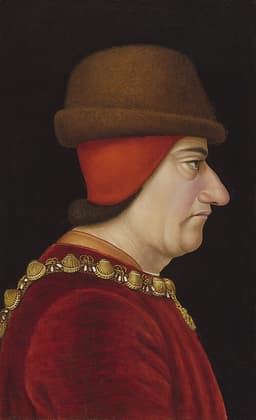
Louis XI
Emperor · Medieval
67.7Total
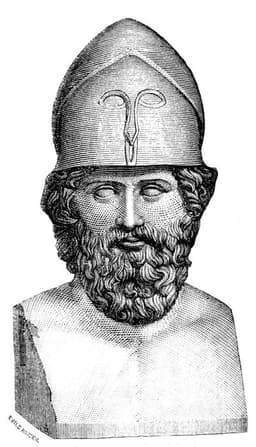
Themistocles
Politician · Ancient
68.4Total
Basic Information
Born
1423
-524
Died
1483
-459
Era
Medieval
Ancient
Nationality
France
Greece
Occupation
Emperor
Politician
Civilization
Western
Western
Score Comparison
Military (10%)
45.0
80.0
Political (20%)
78.0
72.0
Influence (20%)
68.0
40.0
Legacy (20%)
65.0
80.0
Leadership (15%)
85.0
79.8
Strategy (15%)
55.0
76.0
TOTAL
67.7
68.4
Louis XI — Complete Timeline
1464 AD
Established the Postal SystemReform
Louis XI created a royal postal system with relay stations across France, enabling faster communication between the crown and provincial officials. This administrative reform improved governance and intelligence gathering.
AdministrationCommunicationReform
Impact: nationalconstructive
1465 AD
Defeated the League of the Public WealWar◆ Major
Louis XI faced a coalition of powerful nobles, the League of the Public Weal, led by Charles the Bold of Burgundy. Although the Battle of Montlh
Civil WarNoble RebellionBurgundy
Impact: national
1475 AD
Treaty of PicquignyPolitical Action◆ Major
Louis XI negotiated the Treaty of Picquigny with Edward IV of England, ending English military intervention in France. Louis paid a large pension to Edward in exchange for English withdrawal, avoiding a costly war and securing his northern border.
TreatyDiplomacyEngland
Impact: regionalconstructive
1477 AD
Acquired BurgundyPolitical Action
After Charles the Bold's death at the Battle of Nancy, Louis XI seized the Duchy of Burgundy and other Burgundian territories, including Picardy and the Somme towns. This expansion significantly increased royal domain and weakened the Burgundian state.
Territorial ExpansionBurgundyRoyal Domain
Impact: regionalconstructive
1481 AD
Annexed Anjou and MainePolitical Action
Louis XI annexed the counties of Anjou and Maine after the death of Charles of Anjou, incorporating them into the royal domain. This further consolidated French territory and reduced the power of the Angevin nobility.
Territorial ExpansionAnjouMaine
Impact: nationalconstructive
Themistocles — Complete Timeline
483 BC
Construction of the Athenian FleetReform◆ Major
Themistocles persuaded the Athenian assembly to use silver from the Laurion mines to build a fleet of 200 triremes. This naval expansion transformed Athens into a major maritime power and was crucial for the victory at Salamis.
AthensNaval PowerReform
Impact: nationalconstructive
480 BC
Battle of SalamisWar
Themistocles commanded the Greek navy against the Persian fleet at Salamis. He lured the Persians into the narrow straits, where the Greek ships destroyed the larger Persian fleet. This victory ended the Persian threat to Greece and preserved Greek independence.
Greco-Persian WarsNaval BattleAthens
Impact: regionalconstructive
472 BC
Ostracism from AthensPolitical Action◆ Major
Themistocles was ostracized by the Athenian assembly, likely due to political rivalries and accusations of arrogance. He went into exile, first to Argos, then to Persia, where he was received by King Artaxerxes I.
AthensExileOstracism
Impact: nationaltragic
465 BC
Service under the Persian KingPolitical Action
After his ostracism, Themistocles fled to Persia and offered his services to King Artaxerxes I. He was granted governorship of Magnesia and other cities in Asia Minor, where he lived until his death. This act was seen as treason by many Athenians.
PersiaExileTreason
Impact: regional
Expert Analysis
Themistocles vs Louis XI
# The Spider and the Sea-King
On a spring morning in 1475, two kings faced each other across a bridge at Picquigny, near Amiens. One was Louis XI of France, a man whose sallow face and shabby clothes belied a mind of razor-sharp cunning. The other was Edward IV of England, a golden warrior-king at the height of his power. As they embraced and exchanged gifts, Louis had already won—without a single sword being drawn. Four centuries earlier, on a narrow stretch of water near Salamis, another man had faced a very different kind of confrontation. Themistocles, standing on the deck of a trireme, watched the Persian fleet pour into a trap of his own making. One man spun webs; the other built walls of wood. Both saved their civilizations, but their paths—and their fates—could not have been more different.
Origins
Louis XI was born in 1423 into a France bleeding from the wounds of the Hundred Years' War. His father, Charles VII, was a king who had seen Joan of Arc rise and fall, a man haunted by doubt and betrayal. Young Louis grew up in a court of intrigue, where loyalty was a currency spent as quickly as gold. He learned early that the world was a chessboard, and that a king played with pieces made of flesh and bone.
Themistocles came from a far older world. Born around 524 BC in a democratic Athens still finding its feet, he was the son of a minor noble and a mother who may not have been Athenian-born—a stain that would follow him. In Athens, a man's worth was measured by his words in the assembly and his courage in battle. Themistocles had both, but he also had something rarer: the ability to see the future in the present.
Rise to Power
Louis XI's rise was not graceful. He rebelled against his own father in 1440, leading a revolt of nobles called the Praguerie. He lost, was forgiven, and learned a bitter lesson: open rebellion is a fool's game. From then on, he worked in shadows. When he became king in 1461, he inherited a realm still fractured by feudal lords who held more power than the crown. His response was not to smash them with armies, but to divide them with whispers.
Themistocles rose through the turbulent democracy of Athens. By 483 BC, he had become the most persuasive voice in the assembly. The city had just discovered a rich vein of silver at Laurion. Most wanted to distribute the wealth among citizens. Themistocles argued for something bolder: build a fleet of 200 triremes. It was a gamble that would define his life—and save Greece.
Leadership & Governance
Louis XI governed from a chair in a modest castle, surrounded by clerks and spies. He created the first royal postal system in 1464, with relay stations that allowed news to travel faster than any army. He understood that information was power. When the League of the Public Weal—a coalition of nobles led by the formidable Charles the Bold of Burgundy—rose against him in 1465, Louis fought, lost the battle, but won the peace. He bribed, cajoled, and negotiated until the alliance dissolved like morning mist.
His military score of 14.5 reflects a king who rarely led armies but who understood war as an extension of politics. His political score of 69.6 tells a truer story: he was a master of the long game. He waited for Charles the Bold to die in 1477 at Nancy, then pounced on Burgundy like a spider on a fly. By 1481, he had absorbed Anjou and Maine. Piece by piece, he stitched France together.
Themistocles was a different kind of leader. His military score of 64.1 and strategy of 75.0 show a man who understood the geometry of battle. At Salamis in 480 BC, he faced the Persian fleet of Xerxes, a force that outnumbered the Greeks perhaps three to one. He did not try to match them ship for ship. Instead, he lured them into the narrow strait between the island of Salamis and the Athenian coast, where numbers meant nothing and maneuver meant everything. It was, as the historian Herodotus wrote, a victory won by "the wooden walls" of the Athenian fleet.
His political score of 69.4 matches Louis's, but his influence of 84.7 surpasses it. He shaped the course of Western civilization by saving it from Persian conquest. Yet his governance was always precarious, built on persuasion in a democracy that could turn on its heroes overnight.
Triumph & Tragedy
Louis XI's greatest triumph was the Treaty of Picquigny in 1475. Edward IV had landed in France with a formidable army. Louis could have fought—and likely lost. Instead, he offered gold, pensions, and a bride for Edward's son. The English king took the money and sailed home. Louis had bought peace without bloodshed.
His tragedy was quieter: he died in 1483, feared and isolated, his own courtiers relieved to see him gone. He had united France, but he had also crushed the spirit of its nobility, leaving a kingdom that was strong but sad.
Themistocles's triumph was Salamis, a victory so complete that it ended the Persian threat to Greece for a generation. His tragedy was ingratitude. In 472 BC, he was ostracized—sent into exile by the very people he had saved. He fled to Persia, of all places, and offered his services to King Artaxerxes I. He was granted a governorship and died in foreign service around 459 BC, a Greek who ended his days in the court of his former enemy.
Character & Destiny
Louis XI was patient, secretive, and utterly pragmatic. He wore plain clothes, avoided ceremony, and trusted no one. His strategy score of 55.2 is surprisingly low for a man who outmaneuvered half of Europe, but it reflects a mind that preferred politics to battlefields. He was not a general; he was a chess player who knew that pawns could become queens.
Themistocles was brilliant, arrogant, and restless. He saw the future—the rise of naval power, the threat of Persia—and forced his city to see it too. But he lacked the patience for gratitude. His genius made enemies, and his exile was the price of his vision.
Legacy
Louis XI is remembered as the Universal Spider, a name that captures both his method and his menace. He left behind a France that was larger, stronger, and more unified than the one he inherited. His legacy score of 80.0 reflects a king who shaped a nation's destiny. He is not loved, but he is respected—a necessary evil who did what needed to be done.
Themistocles left a different legacy. His score of 79.0 is almost identical to Louis's, but it is the legacy of an idea: that democracy could defend itself, that a free people with a fleet could stand against an empire. He is remembered as the father of Athenian naval power, the man who made the Golden Age possible. His memory is more honored than his life.
Conclusion
One man wove webs; the other sailed through storms. Louis XI united a kingdom by dividing its enemies; Themistocles saved a civilization by uniting its ships. Both were brilliant, both were flawed, and both were, in the end, alone. Their stories remind us that history is not written by the virtuous, but by the clear-eyed. The spider and the sea-king—each in his own way, each in his own time—showed that survival is the first victory, and that the rest is memory.
Rankings
🥇
ThemistoclesLeader
Mil: 80.0Pol: 72.0Inf: 40.0
68.4
🥈
Louis XI
Mil: 45.0Pol: 78.0Inf: 68.0
67.7
+0.7 behind
How This Comparison Works
Algorithm
Each figure is scored on 6 dimensions (0—100 scale) based on structured historical data: Military (10%), Political (20%), Influence (20%), Legacy (20%), Leadership (15%), Strategy (15%). The weighted total produces the final ranking.
Data Sources
Scores are computed from structured sub-indicators in the database. Scale factors adjust for era (Ancient ×0.85, Modern ×1.0) and civilization size (Eastern ×1.05, Other ×0.80) to account for differences in population and military scale.
Maximum 3 Figures
Comparisons are limited to 2—3 figures to ensure readability and statistical meaningfulness.
Error Margins
±5 points per dimension — Sub-scores are derived from historical records with inherent uncertainty. Two figures within 5 points on a dimension should be considered roughly equivalent in that area.
Total Score Accuracy
±3 points overall — The weighted combination of 6 dimensions produces a total score with approximately ±3 points of uncertainty. Differences of less than 3 points are not statistically significant— the figures are effectively tied.
Known Limitations
- Historical records are incomplete and uneven across civilizations
- Figures from oral-tradition societies may be underrepresented
- Occupation labels can misclassify multi-role figures
- Scores measure capability and impact, not moral character
- Quantitative scoring is a comparison tool, not absolute truth
Capability Radar
Military (10%) — Battles & Warfare
Battles
45
75
Win Rate
40
85
Expansion
65
60
Political (20%) — Governance & Reform
Reform
80
75
Diplomacy
95
85
Economy
70
65
Influence (20%) — Cultural & Global Reach
Cultural
55
70
Global
60
75
Legacy (20%) — Historical Impact
Historical
75
85
Longevity
70
80
Leadership (15%) — Power & Stability
Tenure
75
70
Stability
65
60
Strategy (15%) — Tactics & Innovation
Strategy
70
90
Tactics
55
95
Reform
60
80
Similar Comparisons
Comments & Discussion
青铜时代钓客6/16/2026
我是铁杆数据流,但得说这个对比本身就是个假命题。Themistocles救了城邦,Louis XI吞了勃艮第,但你能拿战船比信鸽?两人的人生路径就像拿商鞅和基辛格比手腕,不在一个计量器上。真的要比,拿数据说话:雅典在萨拉米斯之后蹦跶了不到百年;法国在蜘蛛王手里硬了半世纪。谁是赢家?你看结局吧。
Vault-Buster6/16/2026
So let’s clear the air: Themistocles was a tactical genius; Louis XI was a strategic psychopath. But the myth that the Spider “saved France without a fight” is overblown. Picquigny wasn’t pure cunning—it was a bribe disguised as diplomacy, £75,000 a year to Edward IV plus a pension. That’s not cerebral brilliance; that’s bullion fraud. Themistocles had to trick Xerxes’ entire fleet into a strait with no backup plan but hope and wood. I’d rather trust a trireme oarsman than a king’s sack of silve
墨鱼史官6/16/2026
我偏要从仪态上撕开来看。Louis XI穿得像个街头乞丐,坐在王座上都像在密谋下毒,而Themistocles穿着战甲的破片、嗓门大到能震开军阵。我不信蜘蛛的沉默有多深算——他就是没勇气装出英雄样。Themistocles被放逐后求死都更干脆:他选择在波斯宫廷服毒自尽,而不是像Louis那样窝在城堡里等死。尊严不是钱能买的,那叫脊梁。
Rubicon-Scar6/16/2026
Let’s call this what it is: a historian’s fantasy to make palace spiders and sea wolves sound comparable. Themistocles didn't just outgun—he out-envied everyone. He got Athens to build 200 triremes with silver from a random strike at Laurium. Louis XI’s greatest gambit was marrying off his daughter to a minor prince. One guy transformed a mining windfall into a navy that smashed an empire; the other hoarded provinces like a miser counts coins. Who’s building walls of wood, and who’s just buildin
盐海行者6/16/2026
我来点直击要害的。你们把两人都捧成“文明救星”,可Themistocles救的是民主和自由,Louis XI救的是王室集权的地盘。我不是要唱反调,但蜘蛛王玩的是中央集权加速器,把封建贵族都压成邮票;而海王在放逐后,还想靠波斯施舍苟活——这算是为尊严而死?他其实是想活,但不是自己的文明给他的活法。救文明没错,但一个救的是