Loading...
Louis XI vs Zhao Kuangyin
Zhao Kuangyin leads by 3.8 pts · 2 figures compared
…
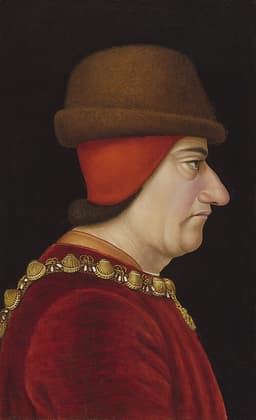
Louis XI
Emperor · Medieval
67.7Total
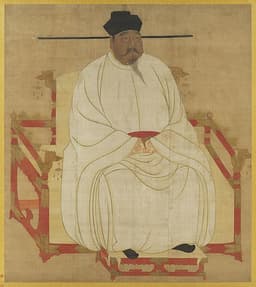
Zhao Kuangyin
Emperor · Medieval
71.5Total
Basic Information
Born
1423
927
Died
1483
976
Era
Medieval
Medieval
Nationality
France
China
Occupation
Emperor
Emperor
Civilization
Western
Eastern
Score Comparison
Military (10%)
45.0
78.0
Political (20%)
78.0
84.0
Influence (20%)
68.0
68.0
Legacy (20%)
65.0
65.0
Leadership (15%)
85.0
74.0
Strategy (15%)
55.0
68.0
TOTAL
67.7
71.5
Louis XI — Complete Timeline
1464 AD
Established the Postal SystemReform
Louis XI created a royal postal system with relay stations across France, enabling faster communication between the crown and provincial officials. This administrative reform improved governance and intelligence gathering.
AdministrationCommunicationReform
Impact: nationalconstructive
1465 AD
Defeated the League of the Public WealWar◆ Major
Louis XI faced a coalition of powerful nobles, the League of the Public Weal, led by Charles the Bold of Burgundy. Although the Battle of Montlh
Civil WarNoble RebellionBurgundy
Impact: national
1475 AD
Treaty of PicquignyPolitical Action◆ Major
Louis XI negotiated the Treaty of Picquigny with Edward IV of England, ending English military intervention in France. Louis paid a large pension to Edward in exchange for English withdrawal, avoiding a costly war and securing his northern border.
TreatyDiplomacyEngland
Impact: regionalconstructive
1477 AD
Acquired BurgundyPolitical Action
After Charles the Bold's death at the Battle of Nancy, Louis XI seized the Duchy of Burgundy and other Burgundian territories, including Picardy and the Somme towns. This expansion significantly increased royal domain and weakened the Burgundian state.
Territorial ExpansionBurgundyRoyal Domain
Impact: regionalconstructive
1481 AD
Annexed Anjou and MainePolitical Action
Louis XI annexed the counties of Anjou and Maine after the death of Charles of Anjou, incorporating them into the royal domain. This further consolidated French territory and reduced the power of the Angevin nobility.
Territorial ExpansionAnjouMaine
Impact: nationalconstructive
Zhao Kuangyin — Complete Timeline
960 AD
Founded Song dynastyPolitical Action
Zhao Kuangyin, a general of Later Zhou, was proclaimed emperor by his troops at Chenqiao. He established the Song dynasty, ending the Five Dynasties period and beginning a new era of Chinese history.
Song dynastyFoundingChenqiao
Impact: globalconstructive
961 AD
Removed military power from generalsPolitical Action◆ Major
Zhao Kuangyin invited senior generals to a banquet and persuaded them to retire peacefully. This 'removal of military power over wine' prevented military coups and centralized control.
Song dynastyMilitary reformCentralization
Impact: nationalconstructive
963 AD
Unified southern ChinaWar◆ Major
Zhao Kuangyin launched campaigns to conquer the southern kingdoms, including Jingnan, Later Shu, and Southern Tang. By his death, most of China was reunified under Song rule.
Song unificationConquestSouthern kingdoms
Impact: national
Expert Analysis
Zhao Kuangyin vs Louis XI
# The Spider and the Emperor: Two Paths to Unification
On a cold autumn morning in 1477, King Louis XI of France received word that would change the course of European history. Charles the Bold, Duke of Burgundy—his most formidable enemy—had fallen at the Battle of Nancy, his body mutilated beyond recognition. The king, known throughout Europe as the "Universal Spider" for his intricate webs of intrigue, did not weep for his rival. Instead, he moved with the speed of a predator, seizing the wealthy Duchy of Burgundy and its territories before anyone could object. A century earlier and half a world away, another unifier had faced a similar moment of triumph. In 960, a Chinese general named Zhao Kuangyin had been lifted onto a yellow silk robe by his troops, proclaimed emperor against his will. But where Louis would crush his enemies, Zhao would invite his to dinner.
Origins
Louis XI was born into a France ravaged by the Hundred Years' War, a kingdom of fractured loyalties and overmighty nobles. His father, Charles VII, had been a weak king, and young Louis grew up watching the crown bleed authority to dukes and counts who commanded their own armies. He learned early that trust was a luxury a king could not afford. His education came not from books but from court intrigue, where he mastered the art of turning enemies against each other.
Zhao Kuangyin emerged from the chaos of the Five Dynasties and Ten Kingdoms period, an era when China splintered into competing kingdoms and generals toppled emperors with alarming regularity. Born into a military family, he rose through the ranks of the Later Zhou dynasty, witnessing firsthand how quickly power could shift when soldiers decided their commander deserved the throne more than their emperor. Unlike Louis, who inherited his crown, Zhao understood that legitimacy must be earned.
Rise to Power
Louis ascended the throne in 1461, but his rise had been anything but smooth. He had rebelled against his own father, fled to the court of the Duke of Burgundy, and earned a reputation as a schemer who would betray anyone for advantage. When he finally became king, the nobles of France formed the League of the Public Weal in 1465, a coalition determined to clip his wings. Louis lost the ensuing battle but won the war through negotiation, buying off his enemies with promises he never intended to keep.
Zhao's path was more dramatic. In 960, when news arrived that the Liao dynasty had invaded, Zhao marched his army north. But at Chenqiao, his troops stopped and declared him emperor, draping him in a yellow robe—the color of imperial authority. Unlike Louis, who had schemed for years, Zhao had power thrust upon him. His response revealed his genius: he swore to his officers that if they made him emperor, they must obey his commands absolutely. They agreed, and the Song dynasty was born.
Leadership & Governance
Here the two men diverged most sharply. Louis XI governed through fear and manipulation. He created a royal postal system in 1464, with relay stations across France, enabling him to communicate with his agents faster than any noble could. He appointed commoners to high office, bypassing the aristocracy, and built a network of spies that made every courtier nervous. His military score of 14.5 reflects his preference for diplomacy over battle—he understood that a treaty signed was worth more than a battle won.
Zhao, with a military score of 74.6, was a seasoned commander. But his greatest act of governance came not on the battlefield but at a banquet. In 961, he invited his most powerful generals to dinner, drank with them late into the night, and then gently suggested they retire to comfortable estates rather than risk the fate that had befallen so many founding emperors—the murder of their own generals. The "removal of military power at a banquet" became legendary. Zhao centralized authority not through fear but through persuasion, creating a civil service system that would govern China for centuries.
Triumph & Tragedy
Louis's greatest triumph was the Treaty of Picquigny in 1475, where he bribed Edward IV of England to abandon his invasion of France. The English king took the money and left, and Louis had secured his kingdom without a single French soldier dying. His acquisition of Burgundy in 1477 and Anjou in 1481 completed the unification of France. But his tragedy was personal: he died in 1483, paranoid and isolated, convinced that everyone around him plotted his death.
Zhao's triumph was the unification of southern China by 963, bringing Jingnan, Later Shu, and Southern Tang under Song control. But his tragedy was premature: he died in 976 at age 48, possibly poisoned by his own brother, who seized the throne. The peaceful transfer of power he had engineered for his generals did not extend to his own family.
Character & Destiny
Louis XI was a spider, weaving webs of deceit that trapped his enemies and sometimes himself. His political score of 69.6 reflects a man who saw every interaction as a negotiation and every ally as a potential threat. He died unloved but effective, having transformed France from a feudal patchwork into a unified kingdom.
Zhao Kuangyin was a weaver of a different kind, stitching together a fractured China through trust and institution-building. His leadership score of 82.3 and political score of 75.9 suggest a ruler who understood that power sustained by fear eventually crumbles. He chose to disarm his generals with wine rather than swords, and that decision shaped Chinese governance for a millennium.
Legacy
Louis XI left behind a France that was stronger, richer, and more unified than he found it. The "Universal Spider" is remembered as the architect of French absolutism, the king who broke the nobility and built the modern state. His legacy score of 80.0 reflects his lasting impact, though his methods remain controversial.
Zhao Kuangyin's legacy is more profound. The Song dynasty he founded became a golden age of Chinese civilization—a time of economic revolution, artistic flourishing, and technological innovation. His decision to prioritize civil over military power created a bureaucracy that lasted until the twentieth century. With a total score of 75.5, he stands as one of China's most respected emperors, remembered not for conquest but for wisdom.
Conclusion
Two unifiers, two methods. Louis XI crushed his enemies and built a state on fear. Zhao Kuangyin disarmed his friends and built an empire on trust. Both succeeded. But their different paths remind us that unification is never merely a military question—it is a question of character. The spider and the emperor each understood that power, to endure, must be transformed into something more than force. Louis chose control; Zhao chose consent. History has judged both kindly, but for different reasons. Perhaps the lesson is not that one method is superior, but that great leaders adapt their means to their times. In the end, both men looked upon the chaos of their age and imposed order—one through the silk thread of intrigue, the other through the golden thread of trust.
Rankings
🥇
Zhao KuangyinLeader
Mil: 78.0Pol: 84.0Inf: 68.0
71.5
🥈
Louis XI
Mil: 45.0Pol: 78.0Inf: 68.0
67.7
+3.8 behind
How This Comparison Works
Algorithm
Each figure is scored on 6 dimensions (0—100 scale) based on structured historical data: Military (10%), Political (20%), Influence (20%), Legacy (20%), Leadership (15%), Strategy (15%). The weighted total produces the final ranking.
Data Sources
Scores are computed from structured sub-indicators in the database. Scale factors adjust for era (Ancient ×0.85, Modern ×1.0) and civilization size (Eastern ×1.05, Other ×0.80) to account for differences in population and military scale.
Maximum 3 Figures
Comparisons are limited to 2—3 figures to ensure readability and statistical meaningfulness.
Error Margins
±5 points per dimension — Sub-scores are derived from historical records with inherent uncertainty. Two figures within 5 points on a dimension should be considered roughly equivalent in that area.
Total Score Accuracy
±3 points overall — The weighted combination of 6 dimensions produces a total score with approximately ±3 points of uncertainty. Differences of less than 3 points are not statistically significant— the figures are effectively tied.
Known Limitations
- Historical records are incomplete and uneven across civilizations
- Figures from oral-tradition societies may be underrepresented
- Occupation labels can misclassify multi-role figures
- Scores measure capability and impact, not moral character
- Quantitative scoring is a comparison tool, not absolute truth
Capability Radar
Military (10%) — Battles & Warfare
Battles
45
75
Win Rate
40
85
Expansion
65
75
Political (20%) — Governance & Reform
Reform
80
90
Diplomacy
95
85
Economy
70
80
Influence (20%) — Cultural & Global Reach
Cultural
55
70
Global
60
60
Legacy (20%) — Historical Impact
Historical
75
80
Longevity
70
75
Leadership (15%) — Power & Stability
Tenure
75
65
Stability
65
85
Strategy (15%) — Tactics & Innovation
Strategy
70
80
Tactics
55
70
Reform
60
90
Similar Comparisons
Comments & Discussion
SpiderSkeptic6/16/2026
Louis XI didn't "unify" France—he barely held it together through bribery and backroom deals. Zhao Kuangyin actually reunified a fractured civilization through strategy. Give me the Chinese general who wrote poetry and drank wine with his former rivals over a French king who died terrified of poison in his own castle any day. The "Spider" comparison flatters Louis too much; he was more like a paranoid hoarder of power.
兵马俑判官6/16/2026
说赵匡胤"被迫"黄袍加身?史书上写得明明白白——他弟弟赵光义和赵普早就策划好了这场戏。真正的弱势君主会被部下架着上位?他杯酒释兵权那套才是真高明:不流一滴血就收走将领兵权,比路易十一靠收买和暗杀稳固统治强了不止一个档次。
LogisticsLord6/16/2026
Context matters. Zhao reunified a China that had shared a common writing system and bureaucratic tradition for centuries. Louis dealt with linguistically distinct duchies still nursing their own identities. The Song founder's job was objectively easier. That said, Zhao's "invite them to dinner" approach showed brilliant resource management—he preserved military strength instead of wasting it on civil wars. Louis' web-spinning cost France decades of prosperity.
史官老六6/16/2026
别被"万能蜘蛛"的名号骗了。路易十一整天躲在普莱西城堡里,让御医反复检查食物有没有毒,最后六十三岁就挂了。赵匡胤五十岁驾崩看似短命,可他亲手终结了五十三年分裂的乱世,建立的大宋延续了三百年。比寿命不如比遗产——一个留下稳固王朝,一个留下"蜘蛛网"般的烂摊子。
EagleEyeHistorian6/16/2026
The real difference: Zhao ended fragmentation through institutional genius—the Song examination system, centralized bureaucracy, transport networks. Louis just muddled through with tactical cunning. One built a foundation, the other patched leaks. If you're betting on long-term unification strategy, Zhao Kuangyin's "feast approach" outmaneuvers Louis's webs every time. Simpler, cheaper, and it actually worked.