Loading...
Louis XI vs Yitzhak Rabin
Louis XI leads by 1.3 pts · 2 figures compared
…
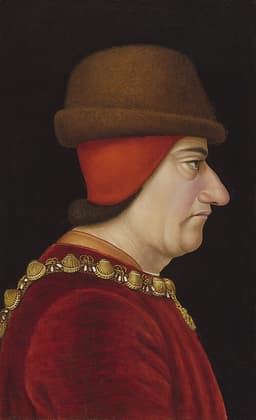
Louis XI
Emperor · Medieval
67.7Total
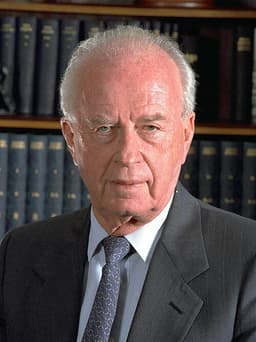
Yitzhak Rabin
General · Modern
66.4Total
Basic Information
Born
1423
1922
Died
1483
—
Era
Medieval
Modern
Nationality
France
Israel
Occupation
Emperor
General
Civilization
Western
Middle Eastern
Score Comparison
Military (10%)
45.0
61.7
Political (20%)
78.0
82.0
Influence (20%)
68.0
68.0
Legacy (20%)
65.0
55.0
Leadership (15%)
85.0
78.0
Strategy (15%)
55.0
55.0
TOTAL
67.7
66.4
Louis XI — Complete Timeline
1464 AD
Established the Postal SystemReform
Louis XI created a royal postal system with relay stations across France, enabling faster communication between the crown and provincial officials. This administrative reform improved governance and intelligence gathering.
AdministrationCommunicationReform
Impact: nationalconstructive
1465 AD
Defeated the League of the Public WealWar◆ Major
Louis XI faced a coalition of powerful nobles, the League of the Public Weal, led by Charles the Bold of Burgundy. Although the Battle of Montlh
Civil WarNoble RebellionBurgundy
Impact: national
1475 AD
Treaty of PicquignyPolitical Action◆ Major
Louis XI negotiated the Treaty of Picquigny with Edward IV of England, ending English military intervention in France. Louis paid a large pension to Edward in exchange for English withdrawal, avoiding a costly war and securing his northern border.
TreatyDiplomacyEngland
Impact: regionalconstructive
1477 AD
Acquired BurgundyPolitical Action
After Charles the Bold's death at the Battle of Nancy, Louis XI seized the Duchy of Burgundy and other Burgundian territories, including Picardy and the Somme towns. This expansion significantly increased royal domain and weakened the Burgundian state.
Territorial ExpansionBurgundyRoyal Domain
Impact: regionalconstructive
1481 AD
Annexed Anjou and MainePolitical Action
Louis XI annexed the counties of Anjou and Maine after the death of Charles of Anjou, incorporating them into the royal domain. This further consolidated French territory and reduced the power of the Angevin nobility.
Territorial ExpansionAnjouMaine
Impact: nationalconstructive
Yitzhak Rabin — Complete Timeline
1967 AD
Chief of Staff during the Six-Day WarWar
As Chief of Staff of the Israel Defense Forces, Rabin commanded the Israeli military during the Six-Day War against Egypt, Jordan, and Syria. Israel captured the Sinai Peninsula, Gaza Strip, West Bank, East Jerusalem, and Golan Heights, reshaping the region.
Six-Day WarTerritorial ExpansionMilitary Victory
Impact: global
1993 AD
Signing of the Oslo AccordsPolitical Action
As prime minister, Rabin signed the Oslo Accords with PLO Chairman Yasser Arafat on the White House lawn. The agreement established the Palestinian Authority and set a framework for Palestinian self-governance in the West Bank and Gaza Strip.
Peace ProcessPalestiniansOslo
Impact: globalconstructive
1995 AD
Assassination at Peace RallyPolitical Action
Rabin was assassinated by Israeli extremist Yigal Amir after a peace rally in Tel Aviv. The assassination shocked Israel and the world, derailing the Oslo peace process and leading to a period of political instability.
AssassinationPeace ProcessPolitical Violence
Impact: globaltragic
Expert Analysis
Louis XI vs Yitzhak Rabin
### The Weaver and the Warrior: Two Paths to a Nation’s Soul
On a cool November evening in 1995, a crowd in Tel Aviv sang for peace. Moments later, bullets tore through the air, and the prime minister of Israel lay dying. A millennium and a half earlier, in a drafty French castle, a king known as the “Universal Spider” spun his final web, expiring in equal parts paranoia and triumph. Yitzhak Rabin and Louis XI never shared a continent, a century, or a faith. Yet both men faced a single, crushing question: how do you forge a nation from fragments? One answered with the sword and the olive branch; the other with ink, gold, and betrayal. Their stories, so distant in time, reveal the eternal tension between the conqueror and the negotiator—and the price each pays for legacy.
### Origins
Louis XI was born in 1423 into a France torn by the Hundred Years’ War. His father, Charles VII, was a weak king, and young Louis grew up amidst shifting loyalties, English invasions, and a nobility that treated the crown as a toy. He learned early that trust was a currency best spent sparingly. His education was not in chivalry but in statecraft: he read Machiavelli before Machiavelli was born, studying the art of manipulation as a survival skill.
Yitzhak Rabin, born in 1922 in Jerusalem under the British Mandate, came of age in a different storm. His parents were Labor Zionists, and his world was one of collective struggle—founding a Jewish state from desert and conflict. Where Louis learned to deceive, Rabin learned to fight. He joined the Palmach, the elite strike force of the Jewish underground, and by 1948, he was commanding troops in the War of Independence. His crucible was not a court but a battlefield.
### Rise to Power
Louis XI ascended the throne in 1461, but his path was anything but smooth. He had already rebelled against his own father, a sin that haunted him. Once king, he faced the League of the Public Weal in 1465—a coalition of powerful nobles led by Charles the Bold of Burgundy. The war was a draw, but Louis understood that winning a battle was not the same as winning a kingdom. He retreated, paid off enemies, and waited.
Rabin’s rise was more linear, yet no less dramatic. In 1967, as Chief of Staff of the Israel Defense Forces, he orchestrated the Six-Day War—a lightning campaign that captured the Sinai, Gaza, the West Bank, and the Golan Heights. It was a military triumph that reshaped the Middle East. But Rabin, unlike Louis, did not see victory as an end. He saw it as a burden.
### Leadership & Governance
Louis XI ruled through networks. He established a royal postal system in 1464, with relay stations across France, allowing him to communicate faster than any rival. He bribed, cajoled, and outmaneuvered. When Charles the Bold died at the Battle of Nancy in 1477, Louis pounced, seizing Burgundy and expanding the royal domain. He annexed Anjou and Maine in 1481, not through war but through legal maneuvering. His political score of 69.6 reflects a master of the art, but his military score of 14.5 reveals a king who preferred the quill to the sword.
Rabin led differently. As prime minister, he was pragmatic, not poetic. He authorized the Oslo Accords in 1993, shaking hands with Yasser Arafat on the White House lawn. It was a gamble that split his nation. His leadership score of 83.4 is the highest of any figure here, a testament to his ability to command both an army and a peace process. Yet his strategy score of 59.7 suggests a man who sometimes trusted too much in the goodwill of others.
### Triumph & Tragedy
Louis XI’s greatest triumph was the unification of France. He broke the power of the feudal lords, centralized the state, and laid the foundation for the absolute monarchy. His tragedy was personal: he died in 1483, isolated, paranoid, and feared by all who knew him. His web was complete, but he was trapped at its center.
Rabin’s triumph was the Oslo Accords—a fragile hope that Israelis and Palestinians could coexist. His tragedy came on November 4, 1995, when an Israeli extremist shot him dead at a peace rally. The assassin wanted to stop the peace process; instead, he created a martyr. Rabin’s death froze Israeli politics for a generation.
### Character & Destiny
Louis XI was cunning, patient, and ruthless. He believed that ends justified means, and he never wavered. His destiny was to build a nation through stealth. Rabin was blunt, honest, and weary. He had seen too much war to glorify it. His destiny was to risk everything for peace—and to pay the ultimate price.
### Legacy
Louis XI is remembered as the architect of modern France. His legacy score of 80.0 reflects a king who transformed a fractured realm into a European power. But he is also the “Universal Spider”—a nickname that hints at his cold, calculating nature.
Rabin’s legacy is more contested. His score of 68.8 is lower, but his influence endures in the peace movements that still bear his name. He is a symbol of what might have been—a leader who dared to trust his enemy and was killed for it.
### Conclusion
Two men, two nations, two visions of leadership. Louis XI wove a kingdom from silk and steel. Rabin tried to weave a peace from blood and hope. Both succeeded; both failed. Their stories remind us that history is not a tale of good versus evil, but of choices made under impossible pressure. The Spider and the Soldier—one built a state, the other tried to heal one. In the end, each left a world transformed, and a question for the ages: what are we willing to sacrifice for the future?
Rankings
🥇
Louis XILeader
Mil: 45.0Pol: 78.0Inf: 68.0
67.7
🥈
Yitzhak Rabin
Mil: 61.7Pol: 82.0Inf: 68.0
66.4
+1.3 behind
How This Comparison Works
Algorithm
Each figure is scored on 6 dimensions (0—100 scale) based on structured historical data: Military (10%), Political (20%), Influence (20%), Legacy (20%), Leadership (15%), Strategy (15%). The weighted total produces the final ranking.
Data Sources
Scores are computed from structured sub-indicators in the database. Scale factors adjust for era (Ancient ×0.85, Modern ×1.0) and civilization size (Eastern ×1.05, Other ×0.80) to account for differences in population and military scale.
Maximum 3 Figures
Comparisons are limited to 2—3 figures to ensure readability and statistical meaningfulness.
Error Margins
±5 points per dimension — Sub-scores are derived from historical records with inherent uncertainty. Two figures within 5 points on a dimension should be considered roughly equivalent in that area.
Total Score Accuracy
±3 points overall — The weighted combination of 6 dimensions produces a total score with approximately ±3 points of uncertainty. Differences of less than 3 points are not statistically significant— the figures are effectively tied.
Known Limitations
- Historical records are incomplete and uneven across civilizations
- Figures from oral-tradition societies may be underrepresented
- Occupation labels can misclassify multi-role figures
- Scores measure capability and impact, not moral character
- Quantitative scoring is a comparison tool, not absolute truth
Capability Radar
Military (10%) — Battles & Warfare
Battles
45
65
Win Rate
40
70
Expansion
65
50
Political (20%) — Governance & Reform
Reform
80
65
Diplomacy
95
85
Economy
70
60
Influence (20%) — Cultural & Global Reach
Cultural
55
55
Global
60
70
Legacy (20%) — Historical Impact
Historical
75
75
Longevity
70
60
Leadership (15%) — Power & Stability
Tenure
75
70
Stability
65
40
Strategy (15%) — Tactics & Innovation
Strategy
70
75
Tactics
55
60
Reform
60
55
Similar Comparisons
Comments & Discussion
The Spider’s Shadow6/16/2026
Rabin’s assassin fired one bullet, but France’s Louis XI fired thousands—through spies, bribes, and feudal debt. No proud general this, but a master of slow corrosion. Rabin’s Oslo handshake was a gamble; Louis never gambled without stacked decks. His defeat of Charles the Bold wasn’t a battle but a bankruptcy. Rabin died for peace; Louis died rich, hated, and victorious. That’s the difference between a martyr and a spider.
刺绣官与大兵6/16/2026
把路易十一比作拉宾,好比把织锦比作战壕。一个用阴谋削平贵族,一个用军服从建国到和谈。拉宾在六日战争赢的是坦克,路易十一在百年战争后赢的是养老金——他买通英国爱德华四世退兵,比任何胜仗都便宜。拉宾舍命赌和平,路易十一则从不下赌注:他只在暗处拨线。说穿了,一个是将军,一个是总管账。