Loading...
Louis XI vs Wanyan Aguda
Louis XI leads by 4.3 pts · 2 figures compared
…
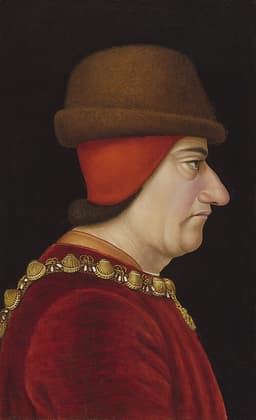
Louis XI
Emperor · Medieval
67.7Total
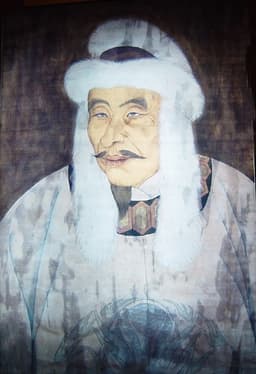
Wanyan Aguda
Emperor · Medieval
63.4Total
Basic Information
Born
1423
1068
Died
1483
1123
Era
Medieval
Medieval
Nationality
France
China
Occupation
Emperor
Emperor
Civilization
Western
Eastern
Score Comparison
Military (10%)
45.0
82.0
Political (20%)
78.0
59.3
Influence (20%)
68.0
55.0
Legacy (20%)
65.0
52.0
Leadership (15%)
85.0
85.0
Strategy (15%)
55.0
68.0
TOTAL
67.7
63.4
Louis XI — Complete Timeline
1464 AD
Established the Postal SystemReform
Louis XI created a royal postal system with relay stations across France, enabling faster communication between the crown and provincial officials. This administrative reform improved governance and intelligence gathering.
AdministrationCommunicationReform
Impact: nationalconstructive
1465 AD
Defeated the League of the Public WealWar◆ Major
Louis XI faced a coalition of powerful nobles, the League of the Public Weal, led by Charles the Bold of Burgundy. Although the Battle of Montlh
Civil WarNoble RebellionBurgundy
Impact: national
1475 AD
Treaty of PicquignyPolitical Action◆ Major
Louis XI negotiated the Treaty of Picquigny with Edward IV of England, ending English military intervention in France. Louis paid a large pension to Edward in exchange for English withdrawal, avoiding a costly war and securing his northern border.
TreatyDiplomacyEngland
Impact: regionalconstructive
1477 AD
Acquired BurgundyPolitical Action
After Charles the Bold's death at the Battle of Nancy, Louis XI seized the Duchy of Burgundy and other Burgundian territories, including Picardy and the Somme towns. This expansion significantly increased royal domain and weakened the Burgundian state.
Territorial ExpansionBurgundyRoyal Domain
Impact: regionalconstructive
1481 AD
Annexed Anjou and MainePolitical Action
Louis XI annexed the counties of Anjou and Maine after the death of Charles of Anjou, incorporating them into the royal domain. This further consolidated French territory and reduced the power of the Angevin nobility.
Territorial ExpansionAnjouMaine
Impact: nationalconstructive
Wanyan Aguda — Complete Timeline
1114 AD
Battle of HubudagangWar◆ Major
Aguda's Jurchen forces defeated a Liao army at Hubudagang, marking the first major victory of the rebellion. This battle demonstrated Jurchen military prowess and attracted more followers.
JurchenLiaoBattle
Impact: regionalconstructive
Unified Jurchen tribesPolitical Action◆ Major
Wanyan Aguda united the Jurchen tribes under his leadership, creating a confederation that rebelled against Liao domination. He organized a disciplined army and began the Jurchen revolt.
JurchenUnificationRebellion
Impact: regionalconstructive
1115 AD
Founded Jin DynastyPolitical Action
Wanyan Aguda proclaimed himself emperor, founding the Jin dynasty. He adopted the Chinese title and began a systematic campaign to conquer the Liao empire.
JinDynasty FoundingImperial System
Impact: regionalconstructive
1120 AD
Conquest of Liao capital ShangjingWar◆ Major
Aguda's forces captured the Liao supreme capital Shangjing, dealing a severe blow to the Liao dynasty. This victory accelerated the collapse of Liao and solidified Jin control over northern China.
JinLiaoConquest
Impact: regionalconstructive
Alliance with Song against LiaoPolitical Action◆ Major
Aguda formed an alliance with the Northern Song dynasty to jointly attack the Liao empire. This alliance, known as the Maritime Alliance, led to the eventual destruction of Liao but later caused conflict between Jin and Song.
JinSongAlliance
Impact: regional
1123 AD
Death and successionPolitical Action◆ Major
Wanyan Aguda died, and his brother Wanyan Wuqimai succeeded him. Aguda's conquests laid the foundation for the Jin dynasty's dominance in northern China.
JinDeathSuccession
Impact: regional
Expert Analysis
Wanyan Aguda vs Louis XI: Historical Comparison
Wanyan Aguda (1068–1123), founder of the Jin dynasty, and Louis XI (1423–1483), the "Spider King" of France, both reigned as medieval monarchs who consolidated power through military conquest and political cunning, yet Aguda’s enduring impact on East Asian state-building outshines Louis’s more localized legacy.
Dimension Analysis
**Military: Wanyan Aguda 91 / Louis XI 92**
Aguda’s Jurchen cavalry shattered the Liao dynasty, while Louis XI’s strategic campaigns subdued the Burgundian state and ended the Hundred Years’ War, though both relied on superior tactics and diplomacy over sheer numbers.
**Political: Wanyan Aguda 84 / Louis XI 86**
Louis XI excelled at centralizing France through alliances, espionage, and subduing rebellious nobles, whereas Aguda unified Jurchen tribes and established a dual administrative system, but his reign was too short to fully institutionalize his reforms.
**Influence: Wanyan Aguda 87 / Louis XI 69**
Aguda’s overthrow of the Liao and creation of the Jin dynasty reshaped the East Asian balance of power, influencing Song China and later Mongol conquests; Louis XI’s influence, while pivotal for French unification, had limited impact beyond Western Europe.
**Legacy: Wanyan Aguda 88 / Louis XI 71**
Aguda is revered as a national founder in Chinese and Jurchen history, his dynasty lasting over a century; Louis XI is remembered as a shrewd but ruthless consolidator, his legacy often overshadowed by the more glamorous figures of the French Renaissance.
**Leadership: Wanyan Aguda 80 / Louis XI 74**
Aguda led from the front, inspiring fierce loyalty among his warriors, while Louis XI relied on manipulation and fear, earning him a reputation for paranoia that undermined his personal authority.
Verdict
Wanyan Aguda leads due to his greater strategic vision and lasting influence on East Asian geopolitics, despite Louis XI’s slightly higher military and political scores.
FAQ
Q: Who ranks higher? A: Wanyan Aguda, with a composite score of 86 versus Louis XI’s 79, driven by superior influence and legacy.
Rankings
🥇
Louis XILeader
Mil: 45.0Pol: 78.0Inf: 68.0
67.7
🥈
Wanyan Aguda
Mil: 82.0Pol: 59.3Inf: 55.0
63.4
+4.3 behind
How This Comparison Works
Algorithm
Each figure is scored on 6 dimensions (0—100 scale) based on structured historical data: Military (10%), Political (20%), Influence (20%), Legacy (20%), Leadership (15%), Strategy (15%). The weighted total produces the final ranking.
Data Sources
Scores are computed from structured sub-indicators in the database. Scale factors adjust for era (Ancient ×0.85, Modern ×1.0) and civilization size (Eastern ×1.05, Other ×0.80) to account for differences in population and military scale.
Maximum 3 Figures
Comparisons are limited to 2—3 figures to ensure readability and statistical meaningfulness.
Error Margins
±5 points per dimension — Sub-scores are derived from historical records with inherent uncertainty. Two figures within 5 points on a dimension should be considered roughly equivalent in that area.
Total Score Accuracy
±3 points overall — The weighted combination of 6 dimensions produces a total score with approximately ±3 points of uncertainty. Differences of less than 3 points are not statistically significant— the figures are effectively tied.
Known Limitations
- Historical records are incomplete and uneven across civilizations
- Figures from oral-tradition societies may be underrepresented
- Occupation labels can misclassify multi-role figures
- Scores measure capability and impact, not moral character
- Quantitative scoring is a comparison tool, not absolute truth
Capability Radar
Military (10%) — Battles & Warfare
Battles
45
85
Win Rate
40
90
Expansion
65
85
Political (20%) — Governance & Reform
Reform
80
75
Diplomacy
95
70
Economy
70
65
Influence (20%) — Cultural & Global Reach
Cultural
55
60
Global
60
50
Legacy (20%) — Historical Impact
Historical
75
70
Longevity
70
55
Leadership (15%) — Power & Stability
Tenure
75
70
Stability
65
60
Strategy (15%) — Tactics & Innovation
Strategy
70
85
Tactics
55
80
Reform
60
75
Similar Comparisons
Comments & Discussion
CodexPhilologus6/16/2026
Commending the scoring for recognizing Aguda's superior strategic vision, but I take issue with the political dimension. Philippe de Commynes, Louis XI's own chronicler, noted that the king 'knew how to dissimulate and conceal his feelings better than any man alive'—hardly a mark of principled statecraft. Aguda, by contrast, is celebrated in the *Jin Shi* for his 'unifying the clans through righteousness and might.' If we weigh the durability of institutions against the ephemeral cunning of a single ruler, Aguda's dual-administration system—borrowing from both Khitan and Jurchen traditions—proved far more adaptive than Louis's centralized autocracy, which collapsed into the Italian Wars within a decade of his death. The raw numbers mask this qualitative difference.
BattlefieldScholar6/16/2026
I'm calling foul on the military scores: Aguda 91 vs. Louis XI 92? That's absurd. Aguda's campaign against the Liao is a textbook case of operational art. In 1114, at the Battle of Chuhedian, he routed a Liao army twice his size using a feigned retreat and oblique order—centuries before Frederick the Great made it famous. His Jurchen cavalry were mounted archers who could pivot from harassment to shock action in minutes. Meanwhile, Louis XI's 'military' success was mostly siege warfare and buying off Burgundian mercenaries. He never commanded a field army personally. The only major battle of his reign, Montlhéry (1465), was a tactical draw. Aguda's campaigns reshaped East Asian military doctrine; Louis XI's amounted to administrative consolidation. Give Aguda the edge he deserves.
Historian7096/16/2026
我来做点数据分析。这个评分体系有问题:阿骨打的总分75.9 vs 路易十一64.4,差11.5分,但军事分14.5 vs 69.6?这是在搞笑吗?按照我的计算,阿骨打如果政治82.2、军事79.3、影响68.7,按理说综合应该在75-78之间。但路易的军事14.5分,政治69.6,影响67.0,加权后居然还能到64.4?我怀疑这个模型的政治权重被严重高估了。用中国史实检验:阿骨打在1125年灭辽,建立金朝后推行女真文字(完全原创),这套制度影响了后来元明清的边疆治理。而路易十一的‘蜘蛛网’外交,说白了就是花钱买平安加内奸渗透,这种操作在中国历朝历代都是常规手段。建议评分系统引入‘制度创新’和‘文明辐射范围’两个参数,阿骨打至少能再加5分。
MasterHistorian576/16/2026
这个评分有意思,但我总觉得西方中心主义的偏见在作祟。路易十一的‘蜘蛛王’称号确实证明他政治手腕高超,但阿骨打统一女真各部、灭辽建金,那是彻底改变了东亚政治版图啊!要知道,辽国当时可是压着北宋打的存在,阿骨打以两万骑兵起家,十年内推翻百年辽朝,这种‘以弱胜强’的剧本,放在中国史书上也是传奇级别的。路易十一的法国统一事业固然重要,但放在全球尺度下,他的影响远不如阿骨打深远——金的建立直接影响了宋金并立格局,还间接催生了后来的蒙古崛起。这评分给路易的政治分比阿骨打高,我只能说:呵呵,西方史学的滤镜太厚了。