Loading...
Ferdinand I of Leon vs Themistocles
Themistocles leads by 9.2 pts · 2 figures compared
…
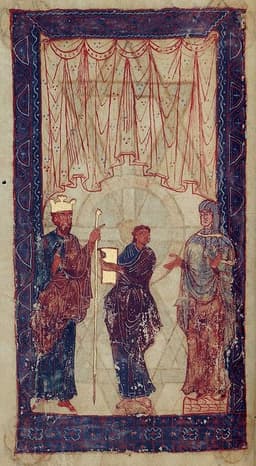
Ferdinand I of Leon
Emperor · Medieval
59.2Total
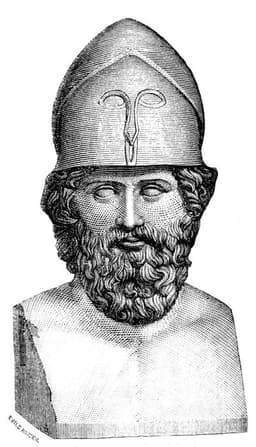
Themistocles
Politician · Ancient
68.4Total
Basic Information
Born
1015
-524
Died
1065
-459
Era
Medieval
Ancient
Nationality
Leon
Greece
Occupation
Emperor
Politician
Civilization
Western
Western
Score Comparison
Military (10%)
70.0
80.0
Political (20%)
68.0
72.0
Influence (20%)
56.4
40.0
Legacy (20%)
49.2
80.0
Leadership (15%)
66.0
79.8
Strategy (15%)
57.5
76.0
TOTAL
59.2
68.4
Ferdinand I of Leon — Complete Timeline
1029 AD
Inheritance of the County of CastilePolitical Action◆ Major
Ferdinand I inherited the County of Castile from his father Sancho III of Navarre. He later expanded his territory through conquest and marriage, laying the foundation for the Kingdom of Castile.
Impact: regionalconstructive
1037 AD
Conquest of LeónWar◆ Major
Ferdinand I defeated and killed King Bermudo III of Le
Impact: regional
1056 AD
First Emperor of SpainPolitical Action◆ Major
Ferdinand I was crowned 'Imperator totius Hispaniae' (Emperor of all Spain) in 1056, claiming suzerainty over all Christian and Muslim rulers in Iberia. This title reflected his military dominance and political ambition.
Impact: regional
1065 AD
Division of the kingdomPolitical Action◆ Major
Upon his death, Ferdinand I divided his kingdom among his sons: Sancho II received Castile, Alfonso VI received Le
Impact: regionaldestructive
Themistocles — Complete Timeline
483 BC
Construction of the Athenian FleetReform◆ Major
Themistocles persuaded the Athenian assembly to use silver from the Laurion mines to build a fleet of 200 triremes. This naval expansion transformed Athens into a major maritime power and was crucial for the victory at Salamis.
AthensNaval PowerReform
Impact: nationalconstructive
480 BC
Battle of SalamisWar
Themistocles commanded the Greek navy against the Persian fleet at Salamis. He lured the Persians into the narrow straits, where the Greek ships destroyed the larger Persian fleet. This victory ended the Persian threat to Greece and preserved Greek independence.
Greco-Persian WarsNaval BattleAthens
Impact: regionalconstructive
472 BC
Ostracism from AthensPolitical Action◆ Major
Themistocles was ostracized by the Athenian assembly, likely due to political rivalries and accusations of arrogance. He went into exile, first to Argos, then to Persia, where he was received by King Artaxerxes I.
AthensExileOstracism
Impact: nationaltragic
465 BC
Service under the Persian KingPolitical Action
After his ostracism, Themistocles fled to Persia and offered his services to King Artaxerxes I. He was granted governorship of Magnesia and other cities in Asia Minor, where he lived until his death. This act was seen as treason by many Athenians.
PersiaExileTreason
Impact: regional
Expert Analysis
Themistocles vs Ferdinand I of Leon
# The Strategist and the Emperor
In the narrow strait of Salamis, a small Greek fleet lured the massive Persian navy into a trap, turning the tide of history. Three centuries later, on the plains of León, a king crowned himself Emperor of Spain, claiming dominion over all Christendom. One man saved a civilization from conquest; the other built an empire from fragments. Both achieved greatness, yet their paths diverged so dramatically that one died a traitor in exile, the other a revered monarch dividing his kingdom among sons. What forces shaped these two men, and why did their stories end so differently?
Origins
Themistocles was born around 524 BCE into a modest Athenian family, his mother possibly a foreigner. Athens was a fledgling democracy, still finding its footing amid the chaos of Persian expansion. From an early age, he learned that persuasion and cunning mattered more than noble birth—a lesson that would define his career. His world was one of shifting alliances, where a single naval battle could determine the fate of Greek civilization.
Ferdinand I, born in 1015, was the son of Sancho III of Navarre, the most powerful Christian king in Iberia. His world was the Reconquista—the centuries-long struggle to reclaim the peninsula from Muslim rule. Unlike Themistocles, who had to fight for influence in a democracy, Ferdinand inherited legitimacy and military resources from a royal lineage. His upbringing steeped him in feudal politics, where land, oaths, and marriage alliances were the currency of power.
Rise to Power
Themistocles rose through the ranks of Athenian politics by sheer force of intellect. In 483 BCE, he persuaded the assembly to divert silver from the Laurion mines—wealth that could have been distributed to citizens—to build a fleet of 200 triremes. This was a masterstroke: he saw that Athens’ future lay not in hoplite armies but in naval power. His vision was prescient, but his methods bred resentment. He was a man who won arguments, not friends.
Ferdinand’s path was more straightforward. In 1029, he inherited the County of Castile from his father, then expanded his territory through strategic marriage and warfare. In 1037, he defeated and killed King Bermudo III of León at the Battle of Tamarón, claiming the kingdom for himself. Where Themistocles had to persuade, Ferdinand conquered. His rise was a story of blood and inheritance, not debate and vote.
Leadership & Governance
As a leader, Themistocles was brilliant but divisive. At the Battle of Salamis in 480 BCE, he commanded the Greek navy with tactical genius, luring the Persian fleet into the narrow strait where their numbers became a liability. The victory was decisive—it saved Greece from Persian domination. Yet his political style was abrasive. He surrounded himself with clever men but alienated rivals, relying on manipulation rather than consensus.
Ferdinand governed through feudal hierarchy and military expansion. He campaigned relentlessly against the Moors, extracting tribute and expanding Christian territory. In 1056, he had himself crowned "Imperator totius Hispaniae"—Emperor of all Spain—a title that reflected his ambition to unify the Christian kingdoms under his suzerainty. His political wisdom lay in understanding the limits of his power: he did not overreach into Moorish strongholds but consolidated gains through vassalage and tribute.
Triumph & Tragedy
Themistocles’ triumph was Salamis—a moment of pure strategic brilliance that secured him a place in history. But his tragedy came swiftly. In 472 BCE, he was ostracized by the Athenian assembly, a victim of political rivalries and accusations of arrogance. Exiled from the city he had saved, he fled to Persia, of all places, and offered his services to King Artaxerxes I. He was granted governorships in Asia Minor, where he died in 459 BCE, a servant of his former enemy.
Ferdinand’s triumph was his coronation as Emperor of Spain—a symbolic peak of Christian power in Iberia. His tragedy was subtler: upon his death in 1065, he divided his kingdom among his sons, Sancho II, Alfonso VI, and García. This fragmentation, common in feudal inheritance, sowed the seeds of civil war. What he built with conquest, he unraveled with tradition.
Character & Destiny
Themistocles was a man of restless ambition and sharp intelligence. He saw the future and bent reality to his will, but he lacked the humility to build lasting alliances. His exile was not just political—it was personal. He could not stop being the cleverest man in the room, even when the room wanted him gone.
Ferdinand was a builder, not a visionary. He expanded his realm methodically, crowned himself emperor, and died in his bed. His flaw was conventionality: he followed the feudal rulebook, dividing his lands as his father had done, never imagining that unity might be more valuable than tradition.
Legacy
Themistocles is remembered as the savior of Greece, the architect of Athenian naval power. His fleet at Salamis became the foundation of the Delian League and, later, the Athenian Empire. Yet his personal story is a cautionary tale about the cost of brilliance without loyalty.
Ferdinand’s legacy is more ambiguous. He is honored as the first Emperor of Spain, a title that foreshadowed the unification of Iberia under his grandson, Alfonso VI. But his division of the kingdom weakened Christian resistance against the Moors for a generation. He is remembered as a conqueror, not a unifier.
Conclusion
Two men, two fates. Themistocles saved a civilization and died a traitor. Ferdinand built an empire and left it fractured. Their stories remind us that greatness is never simple: the same qualities that lift a leader to triumph can also drive them to ruin. In the end, history remembers both—one for a single, brilliant battle, the other for a crown that would take centuries to make real.
Rankings
🥇
ThemistoclesLeader
Mil: 80.0Pol: 72.0Inf: 40.0
68.4
🥈
Ferdinand I of Leon
Mil: 70.0Pol: 68.0Inf: 56.4
59.2
+9.2 behind
How This Comparison Works
Algorithm
Each figure is scored on 6 dimensions (0—100 scale) based on structured historical data: Military (10%), Political (20%), Influence (20%), Legacy (20%), Leadership (15%), Strategy (15%). The weighted total produces the final ranking.
Data Sources
Scores are computed from structured sub-indicators in the database. Scale factors adjust for era (Ancient ×0.85, Modern ×1.0) and civilization size (Eastern ×1.05, Other ×0.80) to account for differences in population and military scale.
Maximum 3 Figures
Comparisons are limited to 2—3 figures to ensure readability and statistical meaningfulness.
Error Margins
±5 points per dimension — Sub-scores are derived from historical records with inherent uncertainty. Two figures within 5 points on a dimension should be considered roughly equivalent in that area.
Total Score Accuracy
±3 points overall — The weighted combination of 6 dimensions produces a total score with approximately ±3 points of uncertainty. Differences of less than 3 points are not statistically significant— the figures are effectively tied.
Known Limitations
- Historical records are incomplete and uneven across civilizations
- Figures from oral-tradition societies may be underrepresented
- Occupation labels can misclassify multi-role figures
- Scores measure capability and impact, not moral character
- Quantitative scoring is a comparison tool, not absolute truth
Capability Radar
Military (10%) — Battles & Warfare
Battles
55
75
Win Rate
60
85
Expansion
60
60
Political (20%) — Governance & Reform
Reform
50
75
Diplomacy
55
85
Economy
45
65
Influence (20%) — Cultural & Global Reach
Cultural
40
70
Global
30
75
Legacy (20%) — Historical Impact
Historical
45
85
Longevity
40
80
Leadership (15%) — Power & Stability
Tenure
65
70
Stability
50
60
Strategy (15%) — Tactics & Innovation
Strategy
55
90
Tactics
50
95
Reform
40
80
Similar Comparisons
Comments & Discussion
SalamisSkeptic6/16/2026
Let’s be real: comparing a scrappy Athenian tactician to a medieval Spanish king is like apples and war elephants. The only thing they share is ambition. Themistocles actually won his big moment—Salamis was a strategic masterpiece, not a dynastic land grab. Ferdinand just chopped up Muslim taifas and called himself emperor. One saved Western civilization from Persian domination; the other just solidified feudal control. Not exactly the same league, folks.
PersianSlayer6/16/2026
Themistocles is the underdog genius here. At Salamis, he tricked Xerxes into fighting in a narrow strait where Persian numbers meant nothing. Plutarch says he even sent a false message to lure the Persians in. That’s next-level psychological warfare. Ferdinand? He inherited a crown and spent decades grinding down weak Muslim states. One outsmarted an empire; the other outlasted neighbors. Give me the guy who reshaped history in a single day, not a slow land war.
历史拐点观察者6/16/2026
费迪南一世不过是“基督教帝国梦”的盲目执行者,他在1037年夺取莱昂后自封皇帝,分裂国土给儿子的操作让西班牙统一推迟了几百年。而泰米斯托克利斯用雅典银矿收入造舰队,在萨拉米斯以一敌十,直接改变了希腊文明的命运。一个被流放死于异乡,一个老死宫殿——这不只是个人命运,而是民主与封建制度下的必然结局。聪明人以国家兴亡为己任,贵族只在乎家族传承。
反骨考据党6/16/2026
别吹泰米斯托克利斯了。他确实赢了萨拉米斯,但之后被打败给斯巴达,最后投靠波斯国王阿塔薛西斯,被当成走狗养着。费迪南至少统一了半个伊比利亚,打下巴达霍斯和托莱多这些核心城市,让基督徒有了立足之地。民主英雄?不过是个政治投机者。费迪南的帝国野心虽然有限,但至少是扎扎实实的领土扩张和行政改革。一个叛国者凭什么和一代开国君主比?
Chronicler68636/16/2026
Let’s talk raw tactical genius. Themistocles built Athens’ navy on a silver strike at Laurion—a bet that paid off when he ambushed the Persian fleet at Salamis. Herodotus says he even knew the wind patterns to trap enemy ships. Ferdinand? His big move was capturing Coimbra in 1064 after a siege, standard medieval stuff. Not a masterstroke, just grinding warfare. One man engineered a naval miracle; the other took a town. The strategist wins hands down for innovative thinking under pressure.