Loading...
Dinh Tien Hoang vs Themistocles
Themistocles leads by 8.0 pts · 2 figures compared
…
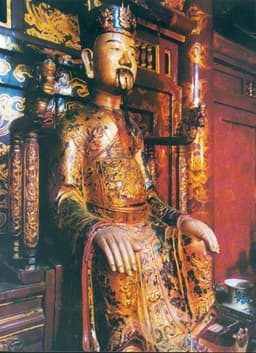
Dinh Tien Hoang
Emperor · Medieval
60.4Total
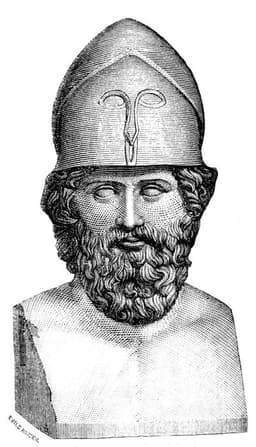
Themistocles
Politician · Ancient
68.4Total
Basic Information
Born
924
-524
Died
979
-459
Era
Medieval
Ancient
Nationality
Vietnam
Greece
Occupation
Emperor
Politician
Civilization
Eastern
Western
Score Comparison
Military (10%)
60.0
80.0
Political (20%)
72.0
72.0
Influence (20%)
65.0
40.0
Legacy (20%)
40.0
80.0
Leadership (15%)
77.2
79.8
Strategy (15%)
58.0
76.0
TOTAL
60.4
68.4
Dinh Tien Hoang — Complete Timeline
968 AD
Defeat of the Twelve WarlordsWar
Dinh Bo Linh, later known as Dinh Tien Hoang, unified Vietnam by defeating the Twelve Warlords who had divided the country after the collapse of Chinese rule. He established the Dinh dynasty and became the first emperor of an independent Vietnam.
UnificationDinh DynastyVietnamese Independence
Impact: nationalconstructive
Establishment of the Dinh DynastyPolitical Action◆ Major
Dinh Tien Hoang founded the Dinh dynasty and declared himself Emperor. He moved the capital to Hoa Lu and implemented administrative reforms to consolidate power. This marked the beginning of a new era of Vietnamese independence after centuries of Chinese domination.
Dynasty FoundingCapital MoveAdministrative Reform
Impact: nationalconstructive
979 AD
Assassination of Dinh Tien HoangPolitical Action◆ Major
Dinh Tien Hoang and his crown prince were assassinated by a court official while sleeping. The murder plunged the Dinh dynasty into chaos, leading to a succession crisis and eventual takeover by Le Hoan. The assassination ended the short-lived Dinh dynasty.
AssassinationSuccession CrisisEnd of Dinh Dynasty
Impact: nationaltragic
Themistocles — Complete Timeline
483 BC
Construction of the Athenian FleetReform◆ Major
Themistocles persuaded the Athenian assembly to use silver from the Laurion mines to build a fleet of 200 triremes. This naval expansion transformed Athens into a major maritime power and was crucial for the victory at Salamis.
AthensNaval PowerReform
Impact: nationalconstructive
480 BC
Battle of SalamisWar
Themistocles commanded the Greek navy against the Persian fleet at Salamis. He lured the Persians into the narrow straits, where the Greek ships destroyed the larger Persian fleet. This victory ended the Persian threat to Greece and preserved Greek independence.
Greco-Persian WarsNaval BattleAthens
Impact: regionalconstructive
472 BC
Ostracism from AthensPolitical Action◆ Major
Themistocles was ostracized by the Athenian assembly, likely due to political rivalries and accusations of arrogance. He went into exile, first to Argos, then to Persia, where he was received by King Artaxerxes I.
AthensExileOstracism
Impact: nationaltragic
465 BC
Service under the Persian KingPolitical Action
After his ostracism, Themistocles fled to Persia and offered his services to King Artaxerxes I. He was granted governorship of Magnesia and other cities in Asia Minor, where he lived until his death. This act was seen as treason by many Athenians.
PersiaExileTreason
Impact: regional
Expert Analysis
Themistocles vs Dinh Tien Hoang
### The Gambler and the Unifier
History remembers few men as sharply opposed in fate as Themistocles of Athens and Đinh Bộ Lĩnh, who would become Emperor Đinh Tiên Hoàng of Vietnam. One died a fugitive in the service of his former enemy, the other was cut down in his sleep by a trusted courtier. Yet both emerged from obscurity to reshape their worlds—one by betting everything on a wooden wall of ships, the other by smashing a fractured land into a single kingdom. Their stories, separated by nearly fifteen centuries and half a world, pose a haunting question: What separates a builder of nations from a builder of fleeting glory?
### Origins
Themistocles was born around 524 BCE into a world of competitive city-states, where democracy in Athens was still a fragile experiment. His mother was not Athenian—a stain that followed him—and his father was a minor aristocrat. He grew up in the shadow of Persia, the vast empire that had swallowed the Greek cities of Asia Minor. Young Themistocles learned early that survival meant cunning, not birthright. He was restless, ambitious, and reportedly told friends that he could not sleep for thinking of the trophy of Miltiades, the victor of Marathon.
Đinh Bộ Lĩnh, born in 924 CE in what is now northern Vietnam, came from a different kind of chaos. For centuries, Vietnam had been a province of China’s Tang Dynasty, but by the early 900s, the Tang had collapsed. The land fragmented into a dozen warring domains, each led by a local strongman. Đinh’s father was a regional chief who died when the boy was young. Raised by his mother in a village near Hoa Lư, he was said to have played war games as a child, organizing village boys into mock armies. The stories may be legend, but they capture a truth: he was forged in a world where power was taken, not inherited.
### Rise to Power
Themistocles’ rise was a masterclass in democratic politics. He understood that in Athens, influence followed the man who could read the assembly’s mood. After the Persian defeat at Marathon in 490 BCE, most Athenians felt safe; Themistocles saw the opposite. He knew the Persians would return with a larger fleet. In 483 BCE, a rich vein of silver was discovered at Laurion. The assembly debated how to spend it—some wanted to distribute it to citizens. Themistocles argued instead for building two hundred triremes, the fastest warships of the age. He warned that the fleet was not for empire but for survival. The assembly agreed, and Athens became a naval power overnight.
Đinh Bộ Lĩnh’s path was more direct. By the 960s, Vietnam’s Twelve Warlords had exhausted the land. Đinh, then a military commander, began defeating them one by one. He was relentless: he did not negotiate with rivals he could crush, and he made examples of those who resisted. In 968, after years of campaigning, he unified the country. He declared himself Emperor—the first Vietnamese ruler to do so without Chinese approval—and named his kingdom Đại Cồ Việt. He moved his capital to Hoa Lư, a fortress nestled among limestone mountains, and set about building a state from scratch.
### Leadership & Governance
Themistocles’ genius was strategic, not administrative. He did not reform Athens’ economy or legal system; he reoriented its entire defense policy. At the Battle of Salamis in 480 BCE, he commanded the Greek fleet against the invading Persians. The Persians outnumbered the Greeks, but Themistocles understood the geography. He tricked the Persian king Xerxes into sending his fleet into the narrow strait of Salamis, where the larger Persian ships could not maneuver. The result was a crushing Greek victory that saved Athens and changed the course of Western civilization. His leadership was improvisational, brilliant, and deeply personal—he inspired loyalty through charisma and fear through cunning.
Đinh Tiên Hoàng governed like a founder, not a tactician. After unifying Vietnam, he imposed order with an iron hand. He established a central bureaucracy, minted the first Vietnamese coinage, and built roads and palaces. But his methods were brutal: he placed a cauldron of boiling oil and a cage of tigers at his court to deter dissent. He married his daughters to key warlords to secure alliances. His political score of 90.2 reflects a man who understood that unity required both terror and diplomacy. Where Themistocles persuaded, Đinh compelled.
### Triumph & Tragedy
Themistocles’ greatest moment was Salamis. It was not just a battle; it was a turning point. Without his fleet, Athens would have fallen, and Greek civilization might have been absorbed into the Persian Empire. Yet his triumph sowed the seeds of his downfall. He grew arrogant, demanding honors and building a temple to himself. In 472 BCE, the Athenian assembly—the same body he had once swayed—voted to ostracize him. He was exiled from the city he had saved.
Đinh Tiên Hoàng’s tragedy was more abrupt. In 979, while he slept in his palace, a court official named Đỗ Thích, who had dreamed of a prophecy that he would become emperor, crept into the royal bedchamber and killed both the emperor and his crown prince. The Dinh dynasty collapsed within months. The kingdom he had unified fell into chaos, and a new contender, Lê Hoàn, would have to reunite it under the Early Lê dynasty.
### Character & Destiny
Themistocles was a gambler. He staked everything on the fleet, and when it paid off, he could not stop gambling—this time with his own reputation. He fled to Persia, of all places, and offered his services to the son of the king he had humiliated. He was granted a governorship and died in Persian territory around 459 BCE, a traitor to his own people in the eyes of many. His character was his fate: brilliant, restless, and incapable of humility.
Đinh Tiên Hoàng was a builder who could not secure his own house. He unified Vietnam through force and fear, but he failed to create a succession system that could survive him. His assassination was not a random act; it was the consequence of a court where power was concentrated in one man and one man alone. Where Themistocles’ flaw was hubris, Đinh’s was isolation.
### Legacy
Themistocles is remembered as the father of Athenian naval power and the architect of the Greek victory over Persia. His influence endures in every history of strategy and democracy. Yet his personal legacy is ambiguous—a hero who died in exile, serving the enemy.
Đinh Tiên Hoàng is honored in Vietnam as the first emperor of an independent nation. His reign was short, but his achievement—unifying a fractured land—provided the foundation for all subsequent Vietnamese dynasties. Temples in Hoa Lư still honor him, and schoolchildren learn his name as the man who ended a thousand years of Chinese rule.
### Conclusion
One man saved a civilization and lost himself. The other built a nation and died in his bed, murdered by a dreamer. Themistocles and Đinh Tiên Hoàng both understood that history rewards audacity, but they learned different lessons about its cost. Themistocles trusted his mind; Đinh trusted his power. Both were right, and both were wrong. In the end, their stories remind us that the same fire that forges a nation can consume its maker—and that the line between triumph and tragedy is often drawn in the dark, by the hand of a stranger, or by the whisper of one’s own ambition.
Rankings
🥇
ThemistoclesLeader
Mil: 80.0Pol: 72.0Inf: 40.0
68.4
🥈
Dinh Tien Hoang
Mil: 60.0Pol: 72.0Inf: 65.0
60.4
+8.0 behind
How This Comparison Works
Algorithm
Each figure is scored on 6 dimensions (0—100 scale) based on structured historical data: Military (10%), Political (20%), Influence (20%), Legacy (20%), Leadership (15%), Strategy (15%). The weighted total produces the final ranking.
Data Sources
Scores are computed from structured sub-indicators in the database. Scale factors adjust for era (Ancient ×0.85, Modern ×1.0) and civilization size (Eastern ×1.05, Other ×0.80) to account for differences in population and military scale.
Maximum 3 Figures
Comparisons are limited to 2—3 figures to ensure readability and statistical meaningfulness.
Error Margins
±5 points per dimension — Sub-scores are derived from historical records with inherent uncertainty. Two figures within 5 points on a dimension should be considered roughly equivalent in that area.
Total Score Accuracy
±3 points overall — The weighted combination of 6 dimensions produces a total score with approximately ±3 points of uncertainty. Differences of less than 3 points are not statistically significant— the figures are effectively tied.
Known Limitations
- Historical records are incomplete and uneven across civilizations
- Figures from oral-tradition societies may be underrepresented
- Occupation labels can misclassify multi-role figures
- Scores measure capability and impact, not moral character
- Quantitative scoring is a comparison tool, not absolute truth
Capability Radar
Military (10%) — Battles & Warfare
Battles
70
75
Win Rate
75
85
Expansion
65
60
Political (20%) — Governance & Reform
Reform
70
75
Diplomacy
65
85
Economy
60
65
Influence (20%) — Cultural & Global Reach
Cultural
65
70
Global
55
75
Legacy (20%) — Historical Impact
Historical
75
85
Longevity
70
80
Leadership (15%) — Power & Stability
Tenure
60
70
Stability
55
60
Strategy (15%) — Tactics & Innovation
Strategy
70
90
Tactics
65
95
Reform
60
80
Similar Comparisons
Comments & Discussion
Fleetmaster's Gambit6/16/2026
Themistocles was the ultimate high-stakes player, but his naval strategy at Salamis was pure genius—betting Athens on wooden walls wasn't a gamble, it was a calculated risk that rewrote history. Đinh Tiên Hoàng, by contrast, unified Vietnam with brute force and local alliances, but his assassination in sleep shows a fragility Themistocles avoided through exile. One built an empire of ideas, the other a kingdom of swords. I'd take the Athenian's adaptable cunning over the emperor's brittle rule a
Skeptical Axis6/16/2026
You're overhyping Themistocles's "wooden walls" as some prophetic move—it was desperation, not genius, and Athens fell to Sparta soon after anyway. Đinh Tiên Hoàng actually delivered a stable kingdom for decades, smashing the Twelve Warlords with real territory control. Meanwhile, Themistocles fled to Persia, the enemy he supposedly defeated. Who's the real builder here? Data says: Đinh's unification lasted longer than Themistocles's fleeting naval glory.
Odyssey in Ruins6/16/2026
就像雅典的夕阳与红河平原的黎明——塞米斯托克利斯逃向波斯时,手里还攥着萨拉米斯的残骸,而丁先皇在梦中被刺客砍断,却是统一大地的代价。一个用船木写诗,一个用骨头筑墙。历史从不赏赐安稳,只给赌徒两种结局:流亡或暴毙。我投丁先皇一票,因为他死了,但领土活了。
Ostracon's Fall6/16/2026
别拿丁先皇的短命统治来美化——他33岁被弑,统一仅维持了十余年,而塞米斯托克利斯虽流亡,却为雅典播下了民主海权的种子。丁先皇的军事压迫没有制度化遗产,只是个人威权的空壳。真正的问题是:谁改变了文明的进程?塞米斯托克利斯的银矿舰队战略催生了地中海的权力平衡,丁先皇的罗刹神威慑不过是一段地方纪事。我站雅典龟。
Scattered Bones6/16/2026
你们只看到丁先皇统一了十二使君,却忘了他的严刑峻法——把叛乱者投入油锅,把老虎关进笼子让百姓围观。这不是治国,是恐吓!塞米斯托克利斯虽被放逐,却通过法律与议会推动了公民参与。一个用恐怖统治夜晚,一个用智慧驾驶黎明。历史评判的标准不是谁的宝座更稳,而是谁让更多人告别了野蛮。