Loading...
Louis XI vs Sitiveni Rabuka
Louis XI leads by 16.0 pts · 2 figures compared
…
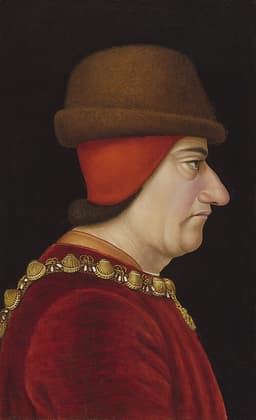
Louis XI
Emperor · Medieval
67.7Total
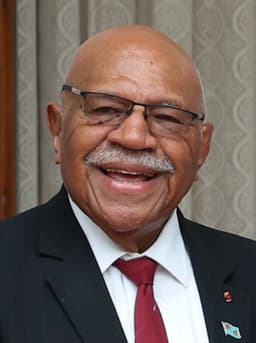
Sitiveni Rabuka
General · Modern
51.7Total
Basic Information
Born
1423
1948
Died
1483
—
Era
Medieval
Modern
Nationality
France
Fiji
Occupation
Emperor
General
Civilization
Western
Other
Score Comparison
Military (10%)
45.0
10.2
Political (20%)
78.0
60.0
Influence (20%)
68.0
53.3
Legacy (20%)
65.0
46.7
Leadership (15%)
85.0
85.0
Strategy (15%)
55.0
39.6
TOTAL
67.7
51.7
Louis XI — Complete Timeline
1464 AD
Established the Postal SystemReform
Louis XI created a royal postal system with relay stations across France, enabling faster communication between the crown and provincial officials. This administrative reform improved governance and intelligence gathering.
AdministrationCommunicationReform
Impact: nationalconstructive
1465 AD
Defeated the League of the Public WealWar◆ Major
Louis XI faced a coalition of powerful nobles, the League of the Public Weal, led by Charles the Bold of Burgundy. Although the Battle of Montlh
Civil WarNoble RebellionBurgundy
Impact: national
1475 AD
Treaty of PicquignyPolitical Action◆ Major
Louis XI negotiated the Treaty of Picquigny with Edward IV of England, ending English military intervention in France. Louis paid a large pension to Edward in exchange for English withdrawal, avoiding a costly war and securing his northern border.
TreatyDiplomacyEngland
Impact: regionalconstructive
1477 AD
Acquired BurgundyPolitical Action
After Charles the Bold's death at the Battle of Nancy, Louis XI seized the Duchy of Burgundy and other Burgundian territories, including Picardy and the Somme towns. This expansion significantly increased royal domain and weakened the Burgundian state.
Territorial ExpansionBurgundyRoyal Domain
Impact: regionalconstructive
1481 AD
Annexed Anjou and MainePolitical Action
Louis XI annexed the counties of Anjou and Maine after the death of Charles of Anjou, incorporating them into the royal domain. This further consolidated French territory and reduced the power of the Angevin nobility.
Territorial ExpansionAnjouMaine
Impact: nationalconstructive
Sitiveni Rabuka — Complete Timeline
1987 AD
1987 Fijian Coup d'étatPolitical Action
Rabuka, as a colonel in the Fijian military, led a coup overthrowing the elected government of Timoci Bavadra. The coup was motivated by ethnic Fijian opposition to Indo-Fijian political influence. Rabuka declared Fiji a republic.
CoupMilitary InterventionEthnic Tension
Impact: nationaldestructive
1992 AD
1992 Election as Prime MinisterPolitical Action◆ Major
Rabuka transitioned from military leader to civilian politician, winning the 1992 general election as leader of the Fijian Political Party. He became Prime Minister, serving until 1999.
ElectionCivilian GovernmentPolitical Transition
Impact: national
1997 AD
1997 Constitution ReformReform◆ Major
Rabuka's government oversaw the adoption of a new constitution that removed ethnic-based voting and provided for a multi-ethnic government. The constitution aimed to reduce ethnic tensions and promote national unity.
ConstitutionReformEthnic Reconciliation
Impact: nationalconstructive
1999 AD
1999 General Election DefeatPolitical Action◆ Major
Rabuka's government was defeated in the general election by the Labour Party led by Mahendra Chaudhry. Rabuka stepped down as Prime Minister, marking the end of his first period in power.
Election DefeatGovernment ChangeChaudhry
Impact: national
2022 AD
2022 Return as Prime MinisterPolitical Action◆ Major
Rabuka led the People's Alliance to victory in the 2022 general election, forming a coalition government. He became Prime Minister again, 23 years after his previous tenure, promising democratic reforms.
ElectionReturn to PowerCoalition Government
Impact: national
Expert Analysis
Louis XI vs Sitiveni Rabuka
# The Spider and the Soldier: Two Paths to Power
On a summer morning in 1465, Louis XI of France watched from his fortified position as the combined armies of the greatest nobles in the kingdom marched toward him. The League of the Public Weal, led by his most dangerous rival Charles the Bold of Burgundy, had gathered to break royal power once and for all. Five centuries later, on a tense May morning in 1987, a Fijian colonel named Sitiveni Rabuka walked into the parliament building in Suva and told the elected prime minister that his government no longer existed. Both men seized history by the throat. Yet one is remembered as a masterful unifier, the other as a figure who first tore his nation apart before stitching it back together. What drove these two men, born worlds apart in time and place, to such different destinies?
Origins
Louis XI entered the world in 1423 as the son of Charles VII, a king who had been saved from obscurity by Joan of Arc. The boy grew up in a France still bleeding from the Hundred Years' War, a realm where the crown controlled barely a third of its own territory. His father was pious, hesitant, and easily manipulated—qualities Louis would come to despise. The young prince learned early that the world was a web of lies and alliances, and that the spider who spun the most careful threads would feast while the fly struggled.
Sitiveni Rabuka was born in 1948 on the island of Cakaudrove, in a Fiji still under British colonial rule. His father was a Methodist catechist, a man of faith and discipline. The young Rabuka grew up in a world of village chiefs and communal obligations, where ancestry and tradition dictated one's place. He excelled at school and joined the military, rising through the ranks of a small army trained by New Zealand and British officers. Fiji in the 1970s was a fragile experiment: an independent nation where indigenous Fijians owned most of the land but Indo-Fijians, descendants of indentured laborers, dominated the economy and professions.
Rise to Power
Louis XI's path to power was forged in rebellion. In 1440, at age seventeen, he joined a revolt against his own father—the Praguerie, a noble uprising that failed miserably. Charles VII forgave him, but the pattern was set: Louis would never accept subordination. When he finally became king in 1461, he inherited a crown that was more symbol than substance. The great dukes of Burgundy, Brittany, and Anjou ruled like sovereigns, and the English still held Calais.
Rabuka's rise was far more sudden. On May 14, 1987, Lieutenant Colonel Rabuka led 200 soldiers in a bloodless coup. The newly elected government of Timoci Bavadra, a coalition of Indo-Fijians and progressive indigenous Fijians, had lasted barely a month. Rabuka claimed he was protecting indigenous Fijian rights and traditions. The coup shocked the Commonwealth and turned Fiji into a pariah state. Unlike Louis, who had spent decades maneuvering through the treacherous currents of French politics, Rabuka acted on impulse, driven by a conviction that his people's heritage was under threat.
Leadership & Governance
Louis XI governed from the shadows. He established a royal postal system in 1464, with relay stations that allowed messages to cross France in days rather than weeks. He befriended merchants, promoted trade fairs, and patronized the new printing presses. His political score of 69.6 reflects a man who understood that power flowed through information and money, not just swords. When he faced the League of the Public Weal in 1465, he fought to a draw and then negotiated, buying off enemies with pensions and positions. He waited seventeen years for Charles the Bold to overreach, and when Charles died at Nancy in 1477, Louis seized Burgundy without a pitched battle.
Rabuka's governance was a study in contradictions. After the 1987 coup, he handed power to a civilian government but soon grew frustrated with its incompetence. In 1992, he won election as prime minister, transforming from military strongman to democratic leader. His political score of 72.0 suggests a man who learned the art of compromise. The 1997 constitution reform was his masterpiece: it abolished ethnic voting rolls and created a multiracial parliament, a remarkable achievement for a man who had come to power on a platform of ethnic supremacy. Yet his leadership score of 77.4 masks a deep flaw: Rabuka governed as a conciliator, not a visionary, and his coalition governments were perpetually unstable.
Triumph & Tragedy
Louis XI's greatest triumph was the acquisition of Burgundy in 1477. Charles the Bold had been the most powerful vassal in Europe, ruling lands from the Netherlands to the Swiss border. His death left a power vacuum, and Louis moved with surgical precision, annexing the duchy proper while leaving the Low Countries to the Habsburgs. The Treaty of Picquigny in 1475, where he bought off Edward IV of England with a pension of 75,000 crowns, was a masterpiece of diplomatic bribery. His tragedy was personal: he died in 1483, paranoid and isolated, convinced his own son would betray him.
Rabuka's triumph was the 1997 constitution, which won praise from the United Nations and the Commonwealth. His tragedy was that it did not last. In 1999, his government was swept from power by Mahendra Chaudhry's Labour Party, and Rabuka accepted defeat gracefully—only to see another coup in 2000 that tore apart his constitutional legacy. When he returned to power in 2022, winning the election as prime minister at age 74, it was as a elder statesman, not a revolutionary. The coup leader had become the guardian of democracy.
Character & Destiny
Louis XI was called the "Universal Spider" for good reason. He was cold, calculating, and utterly devoid of sentiment. He wore shabby clothes, ate simple food, and surrounded himself with commoners rather than nobles. His character was his destiny: he unified France not through charisma or battlefield glory, but through patience, deception, and an almost inhuman capacity for waiting. His political score of 69.6 and legacy score of 80.0 reflect a man who understood that history belongs to the persistent, not the brilliant.
Rabuka was different. He was a man of faith and impulse, who acted first and justified later. His military score of 19.9 is low—he led a coup, not a war—but his political score of 72.0 suggests a capacity for growth. He is the rare figure who began as a destroyer of democracy and ended as one of its defenders. His legacy score of 61.2 is lower than Louis's, perhaps because his story is still unfinished, perhaps because he never fully escaped the shadow of 1987.
Legacy
Louis XI left behind a France that was recognizably modern: centralized, bureaucratic, and royal. He broke the power of the great nobles, expanded the royal domain, and laid the foundations for the absolute monarchy that would reach its peak under Louis XIV. He is remembered as a cunning unifier, a man who did what was necessary. His legacy score of 80.0 places him among the great consolidators of European history.
Rabuka's legacy is more ambiguous. In Fiji, he is both revered and reviled. Indigenous Fijians remember him as a protector of their rights; Indo-Fijians remember him as the man who shattered their hopes for equality. The 1997 constitution was a genuine achievement, but it was undone by others. His return to power in 2022 may yet define his final legacy, or it may prove to be a coda to a troubled melody.
Conclusion
Two men, separated by five centuries and half a world, yet bound by a common question: what does it mean to lead a divided nation? Louis XI answered with cunning and patience, weaving a web that trapped his enemies and built a kingdom. Rabuka answered with a rifle and a prayer, then spent the rest of his life trying to repair what he had broken. One was a spider who built an empire; the other was a soldier who learned to become a statesman. History may judge them differently, but both understood the terrible truth that power, once seized, can never be fully released—only transformed.
Rankings
🥇
Louis XILeader
Mil: 45.0Pol: 78.0Inf: 68.0
67.7
🥈
Sitiveni Rabuka
Mil: 10.2Pol: 60.0Inf: 53.3
51.7
+16.0 behind
How This Comparison Works
Algorithm
Each figure is scored on 6 dimensions (0—100 scale) based on structured historical data: Military (10%), Political (20%), Influence (20%), Legacy (20%), Leadership (15%), Strategy (15%). The weighted total produces the final ranking.
Data Sources
Scores are computed from structured sub-indicators in the database. Scale factors adjust for era (Ancient ×0.85, Modern ×1.0) and civilization size (Eastern ×1.05, Other ×0.80) to account for differences in population and military scale.
Maximum 3 Figures
Comparisons are limited to 2—3 figures to ensure readability and statistical meaningfulness.
Error Margins
±5 points per dimension — Sub-scores are derived from historical records with inherent uncertainty. Two figures within 5 points on a dimension should be considered roughly equivalent in that area.
Total Score Accuracy
±3 points overall — The weighted combination of 6 dimensions produces a total score with approximately ±3 points of uncertainty. Differences of less than 3 points are not statistically significant— the figures are effectively tied.
Known Limitations
- Historical records are incomplete and uneven across civilizations
- Figures from oral-tradition societies may be underrepresented
- Occupation labels can misclassify multi-role figures
- Scores measure capability and impact, not moral character
- Quantitative scoring is a comparison tool, not absolute truth
Capability Radar
Military (10%) — Battles & Warfare
Battles
45
5
Win Rate
40
5
Expansion
65
5
Political (20%) — Governance & Reform
Reform
80
50
Diplomacy
95
45
Economy
70
40
Influence (20%) — Cultural & Global Reach
Cultural
55
30
Global
60
20
Legacy (20%) — Historical Impact
Historical
75
40
Longevity
70
30
Leadership (15%) — Power & Stability
Tenure
75
55
Stability
65
35
Strategy (15%) — Tactics & Innovation
Strategy
70
10
Tactics
55
10
Reform
60
5
Similar Comparisons
Comments & Discussion
斐济之叹6/16/2026
说真的,把拉布卡跟路易十一相提并论,这是侮辱了谁?路易十一在1465年面对“公益联盟”时,手里其实只有一支可怜的常备军,但他硬是用外交、收买和分裂对手的战术,把查尔斯·勃艮第活活拖死在政治泥潭里。拉布卡呢?1987年他走进步兵议会大厦时,靠的是士兵和枪,而不是头脑。路易是织网者,拉布卡只是把网撕了再补。——完全是两种档次。
刺客与政变家6/16/2026
从军事史角度看,这两人根本不是一个层次。路易十一在1477年南锡战役中坐等查尔斯·勃艮第被瑞士长矛兵刺穿,这种“让别人流血,自己摘桃子”的阴险手法简直是教科书级的战略耐心。反观拉布卡,1987年他的政变不过是个训练有素的军人嗅到了混乱的气味,然后毫无长远规划地扣动了扳机。蜘蛛和士兵?分明是阴谋家和一个冲动的步兵班长。
Chronicler96356/16/2026
Let's talk numbers. Louis XI added Burgundy, Picardy, and Anjou to the royal domain, increasing crown lands by roughly 40% during his reign. Rabuka's 1987 coup directly led to a 20% drop in Fiji's GDP the following year, plus two decades of political instability and a brain drain of Indo-Fijian professionals. One expanded his realm's resources; the other shrank his nation's economy. That's not two paths to power—that's one path to prosperity and one path to poverty.
Chronicler24506/16/2026
Oh, please. Comparing Louis XI to Rabuka is like comparing a chess grandmaster to a checkers enthusiast. Louis centralized France while playing the long game—he founded postal systems, encouraged industry, and broke the Burgundian threat for good. Rabuka staged two coups and spent decades apologizing. The "Spider King" actually built something. Rabuka just tore down and rebuilt the same hut. One is Machiavelli's prince, the other is a footnote with a golf handicap.
Chronicler38776/16/2026
Nice try with the "two paths" framing, but let's be honest: one man unified France, the other divided Fiji. Louis XI's cruelty—like locking his brother in a cage for years—was strategic. Rabuka's coups were an ethnic fear response dressed up as nationalism. The Fijian constitution he overthrew had been in place for only 17 years; France had been a mess for centuries before Louis. History forgives effective cruelty but laughs at amateur ethnic fearmongering. One is a statesman, the other a tribal