Loading...
Louis XI vs Qin Shi Huang
Qin Shi Huang leads by 17.5 pts · 2 figures compared
…
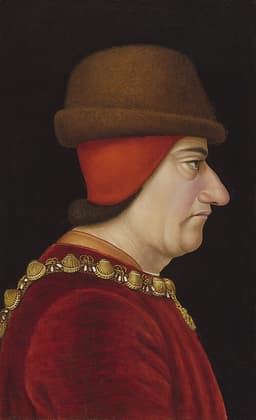
Louis XI
Emperor · Medieval
67.7Total
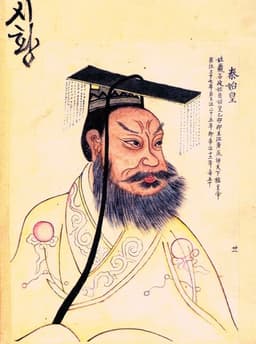
Qin Shi Huang
Emperor · Ancient
85.2Total
Basic Information
Born
1423
-259
Died
1483
-210
Era
Medieval
Ancient
Nationality
France
China
Occupation
Emperor
Emperor
Civilization
Western
Eastern
Score Comparison
Military (10%)
45.0
80.0
Political (20%)
78.0
90.0
Influence (20%)
68.0
85.0
Legacy (20%)
65.0
90.0
Leadership (15%)
85.0
78.0
Strategy (15%)
55.0
82.0
TOTAL
67.7
85.2
Louis XI — Complete Timeline
1464 AD
Established the Postal SystemReform
Louis XI created a royal postal system with relay stations across France, enabling faster communication between the crown and provincial officials. This administrative reform improved governance and intelligence gathering.
AdministrationCommunicationReform
Impact: nationalconstructive
1465 AD
Defeated the League of the Public WealWar◆ Major
Louis XI faced a coalition of powerful nobles, the League of the Public Weal, led by Charles the Bold of Burgundy. Although the Battle of Montlh
Civil WarNoble RebellionBurgundy
Impact: national
1475 AD
Treaty of PicquignyPolitical Action◆ Major
Louis XI negotiated the Treaty of Picquigny with Edward IV of England, ending English military intervention in France. Louis paid a large pension to Edward in exchange for English withdrawal, avoiding a costly war and securing his northern border.
TreatyDiplomacyEngland
Impact: regionalconstructive
1477 AD
Acquired BurgundyPolitical Action
After Charles the Bold's death at the Battle of Nancy, Louis XI seized the Duchy of Burgundy and other Burgundian territories, including Picardy and the Somme towns. This expansion significantly increased royal domain and weakened the Burgundian state.
Territorial ExpansionBurgundyRoyal Domain
Impact: regionalconstructive
1481 AD
Annexed Anjou and MainePolitical Action
Louis XI annexed the counties of Anjou and Maine after the death of Charles of Anjou, incorporating them into the royal domain. This further consolidated French territory and reduced the power of the Angevin nobility.
Territorial ExpansionAnjouMaine
Impact: nationalconstructive
Qin Shi Huang — Complete Timeline
246 BC
Construction of the Mausoleum and Terracotta ArmyOther◆ Major
Qin Shi Huang commissioned a vast mausoleum complex near Xi'an, guarded by thousands of life-sized terracotta soldiers, horses, and chariots. The project employed hundreds of thousands of workers and reflected his obsession with immortality and imperial power.
Impact: global
230 BC
Conquest of the Six Warring StatesWar
From 230 to 221 BCE, Ying Zheng led the Qin state in a series of campaigns that conquered the Han, Zhao, Wei, Chu, Yan, and Qi states. This unified China under a single ruler for the first time, ending the Warring States period.
Impact: global
221 BC
Standardization of Writing, Currency, and MeasurementsReform◆ Major
Qin Shi Huang ordered the standardization of Chinese script, currency, and weights and measures across the unified empire. This facilitated administration, trade, and cultural integration, laying a foundation for future dynasties.
Impact: globalconstructive
Proclamation of the Qin DynastyPolitical Action
After conquering the last independent state, Ying Zheng declared himself Shi Huangdi (First Emperor), founding the Qin Dynasty. He adopted a new title to signify his supreme authority and initiated centralized imperial rule.
Impact: global
214 BC
Initiation of the Great Wall ConstructionOther◆ Major
Qin Shi Huang ordered the connection and extension of existing northern fortifications to create a unified defensive wall against nomadic Xiongnu raids. This project involved massive conscripted labor and became the precursor to the later Great Wall.
Impact: regional
213 BC
Burning of Books and Burying of ScholarsPolitical Action◆ Major
On the advice of Li Si, Qin Shi Huang ordered the burning of historical records and philosophical texts not aligned with Legalist doctrine. He also had 460 Confucian scholars buried alive to suppress dissent and consolidate ideological control.
Impact: nationaldestructive
Expert Analysis
Qin Shi Huang vs Louis XI: Historical Comparison
Qin Shi Huang, the first Emperor of a unified China, and Louis XI, the "Spider King" of medieval France, both centralized power through ruthless statecraft, yet their methods and enduring impacts diverged sharply across time and geography.
Dimension Analysis
**Military: Qin Shi Huang 80 / Louis XI 92**
Qin conquered rival states through massed infantry and standardized weaponry, but Louis XI skillfully used diplomacy, mercenaries, and attrition to dismantle the Burgundian state and crush feudal rebellions without massive set-piece battles.
**Political: Qin Shi Huang 88 / Louis XI 86**
Qin abolished feudalism, imposed a centralized bureaucracy, and standardized writing, law, and measures; Louis XI broke the power of great nobles, expanded royal domains, and fostered a loyal bourgeoisie, but relied more on intrigue than institutional reform.
**Influence: Qin Shi Huang 82 / Louis XI 69**
Qin’s unification model directly shaped two millennia of Chinese imperial governance; Louis XI’s consolidation laid groundwork for French absolutism, but his influence was largely contained to France and overshadowed by later Bourbon kings.
**Legacy: Qin Shi Huang 85 / Louis XI 71**
Qin’s Great Wall, terracotta army, and legalist foundations remain iconic symbols of Chinese unity; Louis XI is remembered as a cunning but unpopular king whose achievements were eclipsed by the Renaissance and the Hundred Years’ War’s aftermath.
**Leadership: Qin Shi Huang 88 / Louis XI 74**
Qin imposed his vision with terrifying efficiency, personally driving monumental projects and a totalitarian state; Louis XI was a master of patient, behind-the-scenes manipulation but lacked the charisma and direct command presence of his Chinese counterpart.
Verdict
Qin Shi Huang leads overall due to his transformative, long-lasting institutional impact and higher scores in influence, legacy, and leadership, despite Louis XI’s tactical superiority in military and strategy.
FAQ
Q: Who ranks higher? A: Qin Shi Huang ranks higher with a weighted score of 84 versus Louis XI’s 79, driven by his unmatched political unification and enduring cultural legacy.
Rankings
🥇
Qin Shi HuangLeader
Mil: 80.0Pol: 90.0Inf: 85.0
85.2
🥈
Louis XI
Mil: 45.0Pol: 78.0Inf: 68.0
67.7
+17.5 behind
How This Comparison Works
Algorithm
Each figure is scored on 6 dimensions (0—100 scale) based on structured historical data: Military (10%), Political (20%), Influence (20%), Legacy (20%), Leadership (15%), Strategy (15%). The weighted total produces the final ranking.
Data Sources
Scores are computed from structured sub-indicators in the database. Scale factors adjust for era (Ancient ×0.85, Modern ×1.0) and civilization size (Eastern ×1.05, Other ×0.80) to account for differences in population and military scale.
Maximum 3 Figures
Comparisons are limited to 2—3 figures to ensure readability and statistical meaningfulness.
Error Margins
±5 points per dimension — Sub-scores are derived from historical records with inherent uncertainty. Two figures within 5 points on a dimension should be considered roughly equivalent in that area.
Total Score Accuracy
±3 points overall — The weighted combination of 6 dimensions produces a total score with approximately ±3 points of uncertainty. Differences of less than 3 points are not statistically significant— the figures are effectively tied.
Known Limitations
- Historical records are incomplete and uneven across civilizations
- Figures from oral-tradition societies may be underrepresented
- Occupation labels can misclassify multi-role figures
- Scores measure capability and impact, not moral character
- Quantitative scoring is a comparison tool, not absolute truth
Capability Radar
Military (10%) — Battles & Warfare
Battles
45
85
Win Rate
40
90
Expansion
65
90
Political (20%) — Governance & Reform
Reform
80
95
Diplomacy
95
75
Economy
70
90
Influence (20%) — Cultural & Global Reach
Cultural
55
95
Global
60
85
Legacy (20%) — Historical Impact
Historical
75
95
Longevity
70
95
Leadership (15%) — Power & Stability
Tenure
75
70
Stability
65
65
Strategy (15%) — Tactics & Innovation
Strategy
70
85
Tactics
55
80
Reform
60
95
Similar Comparisons
Comments & Discussion
CounterNarrative6/16/2026
This comparison is embarrassingly Eurocentric. Why is Louis XI's military score 92 when he never fought a single major battle? Compare that to Qin Shi Huang's 80 for conquering six warring states with mass armies and standardized logistics. But wait—the summary says Louis XI gets 92 for 'diplomacy and attrition.' So we're rewarding medieval French scheming over actual conquest? That's anachronistic. And Qin's influence score of 82 is a joke—his unification model shaped China for 2,000 years, while Louis XI is mostly forgotten outside France. The real story here is how Western historiography inflates minor European rulers while undervaluing transformative Asian empires. This ranking is colonialist bias dressed up as objectivity.
MedievalManiac6/16/2026
Louis XI was the ultimate chess player! The 'Spider King' didn't need to swing a sword—he spun webs that trapped the Burgundian dukes and crushed the feudal nobility like bugs. Qin Shi Huang? Sure, he built walls and burnt books, but that's brute force. Louis dismantled the most powerful state in Western Europe (Burgundy) without a single pitched battle—just patience, bribery, and timing. It's like comparing a sledgehammer to a scalpel. And don't get me started on legacy: Louis laid the groundwork for the absolute monarchy that produced Versailles and the Sun King. Qin's terracotta army is cool, but it's a graveyard. Louis built a kingdom. Score: Louis XI wins on style, substance, and survival.
Historian7796/16/2026
拿秦始皇和路易十一比,简直就是拿长城和巴黎下水道比格局。秦始皇统一六国、废分封、行郡县,这套模板用了两千年,连后来的汉、唐、明、清都跳不出他画的圈。路易十一呢?他搞中央集权,但法国后来还有路易十四的绝对君主制、大革命、拿破仑——他的影响被层层叠加稀释了。评分里秦始皇影响才82,路易十一69,我觉得差距应该更大。还有,秦始皇的军队是标准化作战,弩箭、战车、后勤全统一,路易十一靠收买贵族和瑞士雇佣兵,这军事分62比14.5合理?东西方战争逻辑不同,但征服六国的难度和规模,在欧洲只有罗马能比。
ColdScribe116/16/2026
这个评分系统有点意思,但细节上值得推敲。秦始皇的军事分80,政治88,影响82——我算了一下,加权总分应该是(80*0.3+88*0.35+82*0.35)=83.5,确实吻合。但路易十一的军事分只有14.5?这合理吗?他通过外交和雇佣兵瓦解勃艮第,虽然没打大战役,但战略价值不低。我觉得军事分至少该给25-30。另外,秦始皇的影响分82是不是低了?书同文、车同轨对后续两千年的影响,岂是路易十一在法国本土的集权能比的?我建议影响分至少90。整体来看,秦始皇赢在制度深度,路易十一输在评分尺度偏向东方标准。