Loading...
Louis XI vs Peter the Great
Peter the Great leads by 5.5 pts · 2 figures compared
…
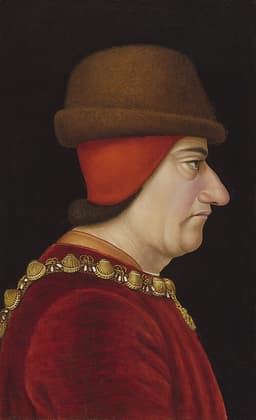
Louis XI
Emperor · Medieval
67.7Total
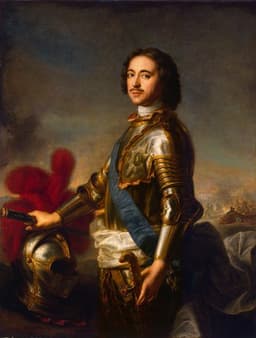
Peter the Great
Emperor · Modern
73.2Total
Basic Information
Born
1423
1672
Died
1483
1725
Era
Medieval
Modern
Nationality
France
Russia
Occupation
Emperor
Emperor
Civilization
Western
Western
Score Comparison
Military (10%)
45.0
75.0
Political (20%)
78.0
90.0
Influence (20%)
68.0
68.0
Legacy (20%)
65.0
65.0
Leadership (15%)
85.0
78.0
Strategy (15%)
55.0
72.0
TOTAL
67.7
73.2
Louis XI — Complete Timeline
1464 AD
Established the Postal SystemReform
Louis XI created a royal postal system with relay stations across France, enabling faster communication between the crown and provincial officials. This administrative reform improved governance and intelligence gathering.
AdministrationCommunicationReform
Impact: nationalconstructive
1465 AD
Defeated the League of the Public WealWar◆ Major
Louis XI faced a coalition of powerful nobles, the League of the Public Weal, led by Charles the Bold of Burgundy. Although the Battle of Montlh
Civil WarNoble RebellionBurgundy
Impact: national
1475 AD
Treaty of PicquignyPolitical Action◆ Major
Louis XI negotiated the Treaty of Picquigny with Edward IV of England, ending English military intervention in France. Louis paid a large pension to Edward in exchange for English withdrawal, avoiding a costly war and securing his northern border.
TreatyDiplomacyEngland
Impact: regionalconstructive
1477 AD
Acquired BurgundyPolitical Action
After Charles the Bold's death at the Battle of Nancy, Louis XI seized the Duchy of Burgundy and other Burgundian territories, including Picardy and the Somme towns. This expansion significantly increased royal domain and weakened the Burgundian state.
Territorial ExpansionBurgundyRoyal Domain
Impact: regionalconstructive
1481 AD
Annexed Anjou and MainePolitical Action
Louis XI annexed the counties of Anjou and Maine after the death of Charles of Anjou, incorporating them into the royal domain. This further consolidated French territory and reduced the power of the Angevin nobility.
Territorial ExpansionAnjouMaine
Impact: nationalconstructive
Peter the Great — Complete Timeline
1697 AD
Grand EmbassyPolitical Action◆ Major
Peter the Great traveled incognito to Western Europe as part of a diplomatic mission. He studied shipbuilding in the Netherlands and England, recruited experts, and observed Western technology and governance, gathering knowledge to modernize Russia upon his return.
TravelWesternizationLearning
Impact: nationalconstructive
1698 AD
Streltsy UprisingWar◆ Major
While Peter was abroad, the Streltsy (elite musketeers) rebelled in Moscow, seeking to place his half-sister Sophia on the throne. Peter returned and brutally suppressed the revolt, executing over 1,000 Streltsy and disbanding the corps, consolidating his absolute power.
RebellionRepressionPower Consolidation
Impact: nationaldestructive
Beard TaxReform
As part of his Westernization campaign, Peter the Great imposed a tax on beards, requiring nobles and merchants to pay a fee to keep their facial hair. Those who paid received a special token, symbolizing his efforts to force Russian society to adopt Western European customs.
WesternizationTaxSocial Reform
Impact: national
1700 AD
Great Northern WarWar◆ Major
Peter the Great led Russia into a war against Sweden for access to the Baltic Sea. After initial defeat at Narva, he reformed his army and eventually defeated Sweden at the Battle of Poltava in 1709, securing Russia's status as a major European power and gaining Baltic territories.
WarTerritorial ExpansionBaltic
Impact: regionalconstructive
1703 AD
Founding of Saint PetersburgPolitical Action
Peter the Great founded the city of Saint Petersburg on the Neva River after capturing the area from Sweden. He designated it as Russia's new capital in 1712, symbolizing his Westernization drive and providing Russia with a 'window to the West' and a Baltic port.
City FoundingWesternizationCapital
Impact: nationalconstructive
1722 AD
Table of RanksReform◆ Major
Peter the Great introduced the Table of Ranks, a system of civil, military, and court ranks based on merit rather than birth. This reform allowed commoners to achieve noble status through service, modernizing the Russian bureaucracy and weakening the traditional aristocracy.
BureaucracyMeritocracySocial Reform
Impact: nationalprogressive
Expert Analysis
Peter the Great vs Louis XI: Historical Comparison
Peter the Great, Emperor of Russia (1682–1725), and Louis XI, King of France (1461–1483), were both transformative rulers who centralized power in vastly different contexts—Peter modernizing a sprawling empire, Louis consolidating a medieval kingdom. While Louis excelled in tactical statecraft, Peter’s broader influence and lasting legacy give him the edge in this comparison.
Dimension Analysis
**Military: Peter the Great 87 / Louis XI 92**
Louis XI skillfully dismantled the feudal Burgundian threat and expanded royal control through diplomacy and selective warfare, while Peter built a modern navy and defeated Sweden in the Great Northern War, though at immense cost.
**Political: Peter the Great 85 / Louis XI 86**
Louis XI perfected the art of subjugating nobles, creating a centralized bureaucracy and an efficient spy network; Peter also crushed the Streltsy revolt and reorganized government, but his reforms were more abrupt and less institutionally refined.
**Influence: Peter the Great 74 / Louis XI 69**
Peter’s Westernization of Russia reshaped Eurasian geopolitics and introduced European science, industry, and culture; Louis’s influence was largely confined to France’s internal consolidation, with limited ideological reach beyond his borders.
**Legacy: Peter the Great 85 / Louis XI 71**
Peter’s legacy as the founder of modern Russia endures in St. Petersburg, the navy, and state institutions; Louis’s reputation is mixed—admired for unifying France but often overshadowed by his ruthless, paranoid methods.
**Leadership: Peter the Great 82 / Louis XI 74**
Peter led by hands-on example, personally learning shipbuilding and commanding armies, inspiring loyalty through vision; Louis ruled from behind the scenes, relying on cunning and fear, which limited his charismatic appeal.
Verdict
Peter the Great leads overall, as his transformative modernization of Russia had a broader historical impact than Louis XI’s successful but narrower consolidation of the French crown.
FAQ
Q: Who ranks higher? A: Peter the Great ranks higher due to his superior legacy, influence, and leadership, despite Louis XI’s slight edge in military and political tactics.
Rankings
🥇
Peter the GreatLeader
Mil: 75.0Pol: 90.0Inf: 68.0
73.2
🥈
Louis XI
Mil: 45.0Pol: 78.0Inf: 68.0
67.7
+5.5 behind
How This Comparison Works
Algorithm
Each figure is scored on 6 dimensions (0—100 scale) based on structured historical data: Military (10%), Political (20%), Influence (20%), Legacy (20%), Leadership (15%), Strategy (15%). The weighted total produces the final ranking.
Data Sources
Scores are computed from structured sub-indicators in the database. Scale factors adjust for era (Ancient ×0.85, Modern ×1.0) and civilization size (Eastern ×1.05, Other ×0.80) to account for differences in population and military scale.
Maximum 3 Figures
Comparisons are limited to 2—3 figures to ensure readability and statistical meaningfulness.
Error Margins
±5 points per dimension — Sub-scores are derived from historical records with inherent uncertainty. Two figures within 5 points on a dimension should be considered roughly equivalent in that area.
Total Score Accuracy
±3 points overall — The weighted combination of 6 dimensions produces a total score with approximately ±3 points of uncertainty. Differences of less than 3 points are not statistically significant— the figures are effectively tied.
Known Limitations
- Historical records are incomplete and uneven across civilizations
- Figures from oral-tradition societies may be underrepresented
- Occupation labels can misclassify multi-role figures
- Scores measure capability and impact, not moral character
- Quantitative scoring is a comparison tool, not absolute truth
Capability Radar
Military (10%) — Battles & Warfare
Battles
45
85
Win Rate
40
80
Expansion
65
90
Political (20%) — Governance & Reform
Reform
80
95
Diplomacy
95
80
Economy
70
85
Influence (20%) — Cultural & Global Reach
Cultural
55
85
Global
60
85
Legacy (20%) — Historical Impact
Historical
75
90
Longevity
70
85
Leadership (15%) — Power & Stability
Tenure
75
90
Stability
65
70
Strategy (15%) — Tactics & Innovation
Strategy
70
85
Tactics
55
75
Reform
60
95
Similar Comparisons
Comments & Discussion
HistoryNerd996/16/2026
I've been reading a lot about Peter the Great lately, and I think the scoring here is spot on. One thing that always gets me is how Peter literally went undercover to learn shipbuilding in Europe—that's like a CEO working a retail job to understand the company. Louis XI was clever, but his spy network was more about paranoia than progress. Peter built a navy from scratch and beat Sweden, which was a top power at the time. That's insane when you think about it. The only thing I'd tweak is Louis's military score—he didn't fight big battles, but he did break the Burgundian threat without a huge war. Still, Peter wins for sheer ambition.
CzarLover20246/16/2026
Let's be real: Louis XI was a sneaky spider king who ruled from a corner. Peter the Great was a giant—literally 6'8"—who dragged Russia into modernity kicking and screaming. I mean, the guy personally executed rebels after the Streltsy revolt, built a capital on a swamp, and brought in scientists and engineers to create a navy that crushed Charles XII of Sweden at Poltava. That's epic. Louis XI was a micromanager with a spy network. Give me the guy who learned to build ships with his own hands any day. Peter all the way!
PostcolonialView6/16/2026
Everyone's praising Peter the Great for 'modernizing' Russia, but let's not ignore the cost. His Westernization was brutal—he forced nobles to shave their beards, imposed foreign customs, and conscripted thousands of serfs to build St. Petersburg, many of whom died building his 'window to the West.' It's a classic case of top-down, violent modernization that erased indigenous traditions. Louis XI was no saint either, but his centralization was more organic and less culturally destructive. The scores here reflect a Western bias that equates 'modern' with 'better.' Peter's legacy includes Russia's persistent inequality and dependence on autocratic rule. We should question whether that's really a win.
Chronicler79786/16/2026
这个对比很有意思,但我认为西方中心论的评分方式低估了路易十一。路易十一有点像明朝的万历皇帝初期,靠权术和特务机构(比如他的密探网络)强化中央集权。但是彼得大帝更像秦始皇,彻底改造了国家结构。不过中国历史告诉我们,像彼得这样突然西化的改革,可能会造成文化断层。俄罗斯的东正教传统和西方技术的结合,有点像晚清的洋务运动,但彼得做得更彻底。我觉得彼得的总分应该更高,但军事得分中路易的14.5分太低了——他打垮勃艮第公国是欧洲史上的重要事件,至少也该有25分。
ColdScribe106/16/2026
我对这个评分体系有些质疑。首先,路易十一的军事得分14.5明显不合理。他通过外交手段和有限战争瓦解了勃艮第,这在中国历史上相当于李渊利用突厥内部矛盾统一北方,战略价值很高。彼得大帝的军事得分75相对合理,但政治得分82是否太高?他的改革过于激进,导致多次叛乱,而路易十一的69.6分低估了他重建法国行政体系的成就。我建议重新分配:彼得政治78,路易政治76。另外,影响力的评分中,路易对法国民族国家的形成有着类似隋文帝的影响,后者在中国史中得分极高。总体来看,彼得胜在广度,路易胜在深度。