Loading...
Louis XI vs Pachacuti
Pachacuti leads by 1.7 pts · 2 figures compared
…
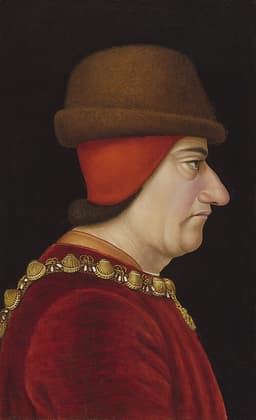
Louis XI
Emperor · Medieval
67.7Total
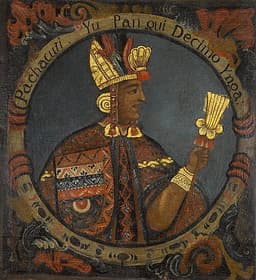
Pachacuti
Emperor · Medieval
69.4Total
Basic Information
Born
1423
1418
Died
1483
1472
Era
Medieval
Medieval
Nationality
France
Inca Empire
Occupation
Emperor
Emperor
Civilization
Western
Other
Score Comparison
Military (10%)
45.0
78.5
Political (20%)
78.0
58.1
Influence (20%)
68.0
65.0
Legacy (20%)
65.0
72.0
Leadership (15%)
85.0
78.0
Strategy (15%)
55.0
69.2
TOTAL
67.7
69.4
Louis XI — Complete Timeline
1464 AD
Established the Postal SystemReform
Louis XI created a royal postal system with relay stations across France, enabling faster communication between the crown and provincial officials. This administrative reform improved governance and intelligence gathering.
AdministrationCommunicationReform
Impact: nationalconstructive
1465 AD
Defeated the League of the Public WealWar◆ Major
Louis XI faced a coalition of powerful nobles, the League of the Public Weal, led by Charles the Bold of Burgundy. Although the Battle of Montlh
Civil WarNoble RebellionBurgundy
Impact: national
1475 AD
Treaty of PicquignyPolitical Action◆ Major
Louis XI negotiated the Treaty of Picquigny with Edward IV of England, ending English military intervention in France. Louis paid a large pension to Edward in exchange for English withdrawal, avoiding a costly war and securing his northern border.
TreatyDiplomacyEngland
Impact: regionalconstructive
1477 AD
Acquired BurgundyPolitical Action
After Charles the Bold's death at the Battle of Nancy, Louis XI seized the Duchy of Burgundy and other Burgundian territories, including Picardy and the Somme towns. This expansion significantly increased royal domain and weakened the Burgundian state.
Territorial ExpansionBurgundyRoyal Domain
Impact: regionalconstructive
1481 AD
Annexed Anjou and MainePolitical Action
Louis XI annexed the counties of Anjou and Maine after the death of Charles of Anjou, incorporating them into the royal domain. This further consolidated French territory and reduced the power of the Angevin nobility.
Territorial ExpansionAnjouMaine
Impact: nationalconstructive
Pachacuti — Complete Timeline
1438 AD
Conquest of the Chanka KingdomWar
Pachacuti led the Inca army to defeat the Chanka, a powerful rival, in a decisive battle near Cusco. This victory secured his position as Sapa Inca and initiated a period of rapid expansion, transforming the Inca from a small kingdom into a vast empire.
ConquestInca ExpansionChanka
Impact: regional
1440 AD
Reconstruction of CuscoCultural◆ Major
Pachacuti rebuilt Cusco as the imperial capital, designing it in the shape of a puma and constructing massive stone structures like Sacsayhuam
Urban PlanningArchitectureInca Empire
Impact: regionalconstructive
1450 AD
Initiation of Machu Picchu's ConstructionCultural◆ Major
Pachacuti ordered the construction of Machu Picchu, a royal estate and ceremonial site high in the Andes. The complex featured sophisticated dry-stone masonry and terraced agriculture, serving as a symbol of Inca engineering and a retreat for the emperor.
ArchitectureRoyal EstateInca Engineering
Impact: regionalconstructive
Expert Analysis
Pachacuti vs Louis XI
# The Spider and the Sun King: Two Visions of Power in the Age of Empire
On a windswept plateau high in the Andes, a warrior-king stood before the shattered remnants of the Chanka army in 1438, his face streaked with the blood of battle. Half a world away, in a candlelit chamber in the Loire Valley, a pale, spider-like figure sat hunched over maps and letters, spinning webs of intrigue that would ensnare the mightiest dukes of France. Pachacuti Inca Yupanqui and Louis XI of France never knew each other existed, yet both faced the same fundamental challenge: how to transform a patchwork of rival territories into a unified, lasting empire. Their answers could not have been more different—and those differences reveal everything about the civilizations that shaped them.
Origins
Pachacuti was born into a world of stone and sky. The ninth son of the Sapa Inca Viracocha, he was never meant to rule. The Inca were a small kingdom among many in the highlands of Peru, their power limited to the valley of Cusco. When the Chanka—a fierce, expansionist people—descended upon the Inca capital in 1438, Viracocha and his chosen heir fled. But young Cusi Yupanqui, as Pachacuti was then called, refused to retreat. He rallied the remnants of the Inca army and, against all odds, crushed the Chanka in a battle that would echo through centuries. The chroniclers say he fought like a god possessed, and from that day forward he took the name Pachacuti: "Earth-Shaker."
Louis XI was born into a world of parchment and poison. The son of Charles VII of France, he grew up watching his father claw back territory from the English during the final throes of the Hundred Years' War. But Louis learned a darker lesson: his father was weak, controlled by nobles and mistresses. As a young prince, Louis rebelled against Charles, joining the Praguerie revolt of 1440—a doomed uprising of disgruntled nobles. He was forgiven, but he never forgot the humiliation. From then on, Louis understood that power was not inherited; it was taken, piece by piece, through patience and cunning.
Rise to Power
Pachacuti’s rise was forged in fire. After the Chanka victory, his father abdicated in his favor, and Pachacuti immediately launched a series of campaigns that would transform the Inca from a mountain kingdom into an empire stretching from modern Ecuador to Chile. He did not merely conquer—he incorporated. Defeated leaders were often brought to Cusco, taught Quechua, and given positions in the imperial bureaucracy. Their children were educated in Inca ways, becoming loyal administrators. Pachacuti understood that an empire built on fear alone would crumble; an empire built on shared identity could endure.
Louis XI’s rise was forged in whispers. He became king in 1461, inheriting a France still fractured by the Hundred Years' War. The great nobles—the dukes of Burgundy, Brittany, Anjou—ruled their lands almost as independent sovereigns. Louis had no army large enough to challenge them directly. So he did what he did best: he waited, bribed, and divided. When the League of the Public Weal formed against him in 1465, led by the magnificent Charles the Bold of Burgundy, Louis suffered a military defeat at Montlhéry. But he turned that defeat into victory at the negotiating table, buying off some rebels and promising concessions he never intended to keep.
Leadership & Governance
Pachacuti governed through presence. He personally led his armies into battle, his tall figure always at the front. He rebuilt Cusco in the shape of a puma, with massive stone walls so precisely cut that a knife blade could not slip between them. He ordered the construction of Machu Picchu beginning around 1450, a breathtaking royal estate perched between two peaks, a symbol of his divine connection to the sun god Inti. He created a system of roads, storehouses, and relay runners that bound the empire together. Every conquered province was resettled with loyal Inca colonists; every local lord was given a choice: accept Inca rule and prosper, or resist and be destroyed.
Louis governed through absence. He rarely led troops, preferring to let his generals fight while he maneuvered behind the scenes. He established a royal postal system in 1464, with relay stations every few leagues, so that news and orders could travel faster than any noble’s conspiracy. He surrounded himself with men of low birth—merchants, lawyers, clerks—who owed everything to him and nothing to the old aristocracy. He taxed the towns heavily but protected their trade, creating a class of wealthy burghers loyal to the crown. When Charles the Bold died at Nancy in 1477, Louis moved with breathtaking speed, seizing Burgundy, Artois, and Picardy before anyone could react. He did not conquer these lands; he inherited them through a marriage treaty, then took them by force when the moment was right.
Triumph & Tragedy
Pachacuti’s greatest triumph was the empire itself. By the time he died in 1472, the Inca realm spanned over 2,500 miles of the Andes, a feat of organization unmatched in the Americas. But his tragedy was also his empire: he created a system so centralized, so dependent on the absolute authority of the Sapa Inca, that when the Spanish arrived sixty years later, the entire structure collapsed like a house of cards. His son Topa Inca would continue the conquests, but the seeds of fragility were already sown.
Louis XI’s greatest triumph was France itself. When he died in 1483, the kingdom was united as it had never been. Burgundy, Anjou, Maine, Provence—all had been absorbed into the royal domain. The great nobles were tamed, the English expelled, the economy thriving. But his tragedy was personal: he died in terror, haunted by the fear of poison, surrounded by astrologers and physicians, convinced that his own son would betray him. The Universal Spider had spun his web so tightly that he had trapped himself within it.
Character & Destiny
Pachacuti was a man of vision. He believed that the Inca were destined to rule, that the sun god had chosen them to bring order to the world. This faith gave him the courage to fight when others fled, the wisdom to build when others plundered, the patience to integrate when others exterminated. But it also made him inflexible: he could not imagine a future in which the Inca were not supreme.
Louis XI was a man of calculation. He believed in nothing but power. He wore shabby clothes, ate simple food, and lived like a miser while his courtiers feasted. He trusted no one, spied on everyone, and forgave nothing. This paranoia made him effective—he anticipated every threat—but it also made him lonely. His own brother plotted against him; his wife lived in fear of him; his people respected but never loved him.
Legacy
Pachacuti’s legacy is carved in stone. Machu Picchu still stands, a monument to his ambition. The Inca road system still traces the Andes. The Quechua language he spread still echoes across the highlands. He is remembered as the greatest of the Incas, the one who transformed a kingdom into an empire.
Louis XI’s legacy is written in law. The unified France he created would become the most powerful kingdom in Europe, the model of absolute monarchy that Louis XIV would perfect two centuries later. He is remembered as the Spider, both admired and reviled, the king who killed the old France to birth the new.
Conclusion
Two rulers, two worlds, one question: What does it take to build an empire? Pachacuti answered with faith, courage, and stone. Louis XI answered with patience, cunning, and ink. Both succeeded beyond measure. Both left behind systems that would outlast them—and ultimately destroy what they built. The Inca Empire fell to a handful of Spaniards; the French monarchy fell to a revolution. Perhaps the lesson is that no empire is eternal, no system perfect. But the act of building—the audacity to dream of uniting the un-unitable—that is what makes a ruler worthy of memory. Pachacuti shook the earth. Louis wove the web. And we, centuries later, still marvel at what they made.
Rankings
🥇
PachacutiLeader
Mil: 78.5Pol: 58.1Inf: 65.0
69.4
🥈
Louis XI
Mil: 45.0Pol: 78.0Inf: 68.0
67.7
+1.7 behind
How This Comparison Works
Algorithm
Each figure is scored on 6 dimensions (0—100 scale) based on structured historical data: Military (10%), Political (20%), Influence (20%), Legacy (20%), Leadership (15%), Strategy (15%). The weighted total produces the final ranking.
Data Sources
Scores are computed from structured sub-indicators in the database. Scale factors adjust for era (Ancient ×0.85, Modern ×1.0) and civilization size (Eastern ×1.05, Other ×0.80) to account for differences in population and military scale.
Maximum 3 Figures
Comparisons are limited to 2—3 figures to ensure readability and statistical meaningfulness.
Error Margins
±5 points per dimension — Sub-scores are derived from historical records with inherent uncertainty. Two figures within 5 points on a dimension should be considered roughly equivalent in that area.
Total Score Accuracy
±3 points overall — The weighted combination of 6 dimensions produces a total score with approximately ±3 points of uncertainty. Differences of less than 3 points are not statistically significant— the figures are effectively tied.
Known Limitations
- Historical records are incomplete and uneven across civilizations
- Figures from oral-tradition societies may be underrepresented
- Occupation labels can misclassify multi-role figures
- Scores measure capability and impact, not moral character
- Quantitative scoring is a comparison tool, not absolute truth
Capability Radar
Military (10%) — Battles & Warfare
Battles
45
85
Win Rate
40
90
Expansion
65
90
Political (20%) — Governance & Reform
Reform
80
92
Diplomacy
95
75
Economy
70
80
Influence (20%) — Cultural & Global Reach
Cultural
55
85
Global
60
65
Legacy (20%) — Historical Impact
Historical
75
80
Longevity
70
70
Leadership (15%) — Power & Stability
Tenure
75
85
Stability
65
82
Strategy (15%) — Tactics & Innovation
Strategy
70
88
Tactics
55
80
Reform
60
85
Similar Comparisons
Comments & Discussion
Pachacuti's Shadow6/16/2026
You revisionists always romanticize Pachacuti as some brilliant state-builder, but let's get real: his "empire" was a death cult running on human sacrifice and terror. Those mitmaq colonists you praise? Forced relocation of entire populations. The quipu records you cite? We can barely read them. Meanwhile, Louis XI actually invented modern statecraft—postal systems, centralized taxation, diplomatic immunity. Pachacuti was Genghis Khan with llamas. Louis was Machiavelli before Machiavelli wrote t
历史的刻度尺6/16/2026
拿军事能力给两位统治者打分?拜托,路易十一压根儿不需要亲自打仗。他靠联姻吃下了勃艮第、安茹,用间谍网让英国金雀花王朝内部崩盘——这才叫真正的征服。帕查库蒂砍人头颅建立威慑,路易十一用一条条约就让百年战争收尾。谁的战略更可持续?看看法国活到今天,印加却变成旅游景点。铁血征服不如算账高手。
Serpent's Quill6/16/2026
As a classics scholar, I find this comparison embarrassingly Eurocentric. You're measuring Pachacuti by Louis's standards—bureaucracy, centralization, diplomacy. But the Inca concept of power was metaphysical, not political. Pachacuti didn't just conquer; he remade cosmology. The ceque system, the reorganization of Cusco into a cosmic map, the incorporation of conquered gods into a state pantheon—this is a theological revolution, not a tax reform. Louis XI worried about barons; Pachacuti worried
数字考古学家6/16/2026
数据不会骗人:帕查库蒂花了25年把库斯科谷地小国变成横跨4000公里的帝国,而路易十一22年统治结束时,法国实际控制的国土面积只增长了约30%。人口密度?印加帝国巅峰时期约有1000万臣民,统一的粮食再分配体系让他们挨饿率极低。法国呢?三分之一的农民住在领主私人地牢里。别扯什么“现代国家雏形”,路易十一连国内饥荒都搞不定。
The Conqueror's Mirror6/16/2026
I'll say what nobody wants to: both failed. Pachacuti's mit'a labor system was slavery with better PR, and Louis XI's centralization crushed local innovation. The real question is legacy. Pachacuti left a civilization that couldn't survive without him—within a generation, Atahualpa and Huáscar tore it apart over a civil war. Louis XI left a France that his son Charles VIII used to invade Italy. One built a sandcastle, the other a springboard. Give me Louis, but don't pretend either was a success