Loading...
Louis XI vs Mao Zedong
Mao Zedong leads by 11.7 pts · 2 figures compared
…
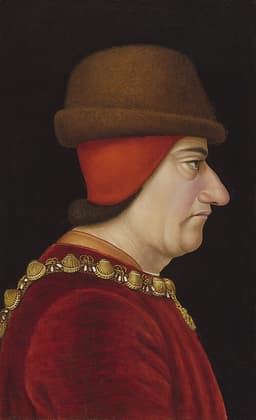
Louis XI
Emperor · Medieval
67.7Total
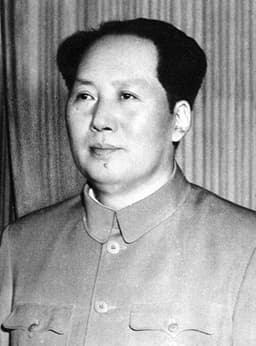
Mao Zedong
Politician · Modern
79.4Total
Basic Information
Born
1423
1893
Died
1483
1976
Era
Medieval
Modern
Nationality
France
China
Occupation
Emperor
Politician
Civilization
Western
Eastern
Score Comparison
Military (10%)
45.0
75.0
Political (20%)
78.0
88.0
Influence (20%)
68.0
85.0
Legacy (20%)
65.0
70.0
Leadership (15%)
85.0
85.0
Strategy (15%)
55.0
72.0
TOTAL
67.7
79.4
Louis XI — Complete Timeline
1464 AD
Established the Postal SystemReform
Louis XI created a royal postal system with relay stations across France, enabling faster communication between the crown and provincial officials. This administrative reform improved governance and intelligence gathering.
AdministrationCommunicationReform
Impact: nationalconstructive
1465 AD
Defeated the League of the Public WealWar◆ Major
Louis XI faced a coalition of powerful nobles, the League of the Public Weal, led by Charles the Bold of Burgundy. Although the Battle of Montlh
Civil WarNoble RebellionBurgundy
Impact: national
1475 AD
Treaty of PicquignyPolitical Action◆ Major
Louis XI negotiated the Treaty of Picquigny with Edward IV of England, ending English military intervention in France. Louis paid a large pension to Edward in exchange for English withdrawal, avoiding a costly war and securing his northern border.
TreatyDiplomacyEngland
Impact: regionalconstructive
1477 AD
Acquired BurgundyPolitical Action
After Charles the Bold's death at the Battle of Nancy, Louis XI seized the Duchy of Burgundy and other Burgundian territories, including Picardy and the Somme towns. This expansion significantly increased royal domain and weakened the Burgundian state.
Territorial ExpansionBurgundyRoyal Domain
Impact: regionalconstructive
1481 AD
Annexed Anjou and MainePolitical Action
Louis XI annexed the counties of Anjou and Maine after the death of Charles of Anjou, incorporating them into the royal domain. This further consolidated French territory and reduced the power of the Angevin nobility.
Territorial ExpansionAnjouMaine
Impact: nationalconstructive
Mao Zedong — Complete Timeline
1934 AD
Long MarchWar
Mao Zedong led the Chinese Red Army on a strategic retreat from Nationalist forces, covering approximately 6,000 miles over 370 days. The march solidified Mao's leadership within the Chinese Communist Party and became a foundational myth of the Communist revolution.
Chinese Civil WarCommunist RevolutionRetreat
Impact: national
1949 AD
Proclamation of the People's Republic of ChinaPolitical Action
Mao Zedong declared the founding of the People's Republic of China from Tiananmen Gate in Beijing. This ended the Chinese Civil War and established Communist rule over mainland China, with Mao as Chairman of the Central People's Government.
Founding of PRCCommunist VictoryRevolution
Impact: global
1958 AD
Great Leap ForwardReform◆ Major
Mao launched a campaign to rapidly industrialize China and collectivize agriculture. The policy led to widespread mismanagement, resulting in a famine that caused an estimated 15-45 million deaths between 1959 and 1961.
FamineIndustrializationCollectivization
Impact: nationaldestructive
1960 AD
Sino-Soviet SplitPolitical Action◆ Major
Mao's ideological differences with Soviet leader Nikita Khrushchev led to a breakdown in relations between China and the Soviet Union. The split ended the Sino-Soviet alliance and reshaped global Cold War dynamics, with China pursuing an independent path.
Cold WarIdeological ConflictAlliance Breakdown
Impact: global
1966 AD
Cultural RevolutionPolitical Action
Mao initiated a sociopolitical movement to purge capitalist and traditional elements from Chinese society. The Red Guard youth groups attacked intellectuals and officials, leading to widespread violence, destruction of cultural artifacts, and an estimated 1-2 million deaths.
Political PurgeSocial UpheavalRed Guard
Impact: nationaldestructive
1971 AD
Ping-Pong DiplomacyCultural◆ Major
Mao approved an invitation for the U.S. table tennis team to visit China, initiating a thaw in Sino-American relations. This cultural exchange paved the way for President Nixon's visit to China in 1972 and the eventual normalization of diplomatic ties.
DiplomacyU.S.-China RelationsCultural Exchange
Impact: globalconstructive
Expert Analysis
Mao Zedong vs Louis XI
# The Spider and the Dragon
History has a peculiar way of pairing unlikely counterparts. In the cold dawn of November 1477, Louis XI of France stood before the ruins of Burgundian power, his spider's web finally complete. Nearly five centuries later, on a warm October afternoon in 1949, Mao Zedong stood atop Tiananmen Gate, proclaiming a new China to a nation that had waited millennia. Both men were architects of unification, yet their methods, their eras, and their fates could not have been more different. What drove a medieval king and a modern revolutionary down such divergent paths?
Origins
Louis XI was born into a world of shattered certainties. The Hundred Years' War had left France a patchwork of feudal loyalties, where a king's authority extended only as far as his army could march. His father, Charles VII, had reclaimed much of France from the English, but the crown remained weak, hemmed in by dukes who commanded their own armies and minted their own coin. The young Louis learned early that power was a game of shadows, not swords. He spent his youth scheming against his own father, a habit that would define his reign.
Mao Zedong emerged from an entirely different collapse. The Qing Dynasty fell in 1912, plunging China into a century of humiliation, warlord chaos, and foreign predation. Born in 1893 to a prosperous peasant family in Hunan, Mao witnessed firsthand the brutality of a feudal system crumbling under modern pressures. His father beat him; his village starved. Where Louis saw a kingdom to be stitched together, Mao saw a civilization to be reborn.
The difference in their worlds was vast. Louis operated in a medieval Europe where power was personal, land was wealth, and God still crowned kings. Mao lived through the age of mass politics, industrial warfare, and ideological revolution. One man's tools were marriage alliances and bribes; the other's were peasant armies and Marxist theory.
Rise to Power
Louis XI ascended the French throne in 1461 at age thirty-eight, but he had been preparing his entire life. As Dauphin, he had rebelled against his father, fled to the court of Burgundy, and learned statecraft from his family's greatest enemy. When he finally became king, he understood that the French nobility were not subjects to be commanded but rivals to be outmaneuvered. His path was one of patience, deception, and relentless calculation.
Mao's rise was forged in fire. The Long March of 1934-1935 transformed him from a marginal party figure into the undisputed leader of Chinese communism. Covering six thousand miles through some of the world's most hostile terrain, Mao turned military defeat into political legend. He saw that China's revolution would not come from urban workers, as Marxist orthodoxy demanded, but from the vast, illiterate peasantry. This insight—born of necessity and genius—became the foundation of his power.
Both men entered history through doors that seemed blocked to others. Louis used the weakness of the French crown as his opportunity; Mao transformed China's humiliation into his mandate.
Leadership & Governance
Louis XI governed through what contemporaries called "the spider's web." He never commanded a great army—his military score of 14.5 reflects this—but he understood that victory came through the pen, not the sword. The Treaty of Picquigny in 1475 ended English intervention in France not through battle but through bribery: Louis paid Edward IV to go home. When Charles the Bold died at Nancy in 1477, Louis moved with breathtaking speed, seizing Burgundy before any rival could react. He established France's first royal postal system in 1464, understanding that information was the true currency of power.
Mao governed through mass mobilization. His military and strategy scores of 65.0 and 76.5 reflect a very different approach: where Louis bribed, Mao inspired. The Great Leap Forward of 1958 was a colossal gamble, an attempt to industrialize China overnight by unleashing the energy of hundreds of millions of peasants. It failed catastrophically, leading to famine. The Cultural Revolution of 1966 was even more radical—an attempt to purge China of its past and create a new socialist humanity. Mao's political score of 82.0 reflects his mastery of power, but his methods were those of a man who believed that revolution must be permanent.
The contrast is stark. Louis ruled by dividing his enemies; Mao united his followers by creating enemies. The French king built institutions; the Chinese chairman destroyed them and rebuilt from ashes.
Triumph & Tragedy
Louis's greatest triumph was the acquisition of Burgundy, which doubled the royal domain and broke the last great feudal challenge to French unity. His tragedy was personal: he died in 1483, feared and isolated, his own courtiers calling him "the Universal Spider" behind his back. He had unified France, but at the cost of being loved.
Mao's triumph was the creation of a unified, independent China—a nation that could stand before the world without bowing. His tragedy was the human cost of that unification. The Great Leap Forward and Cultural Revolution left tens of millions dead, families shattered, and a generation scarred. Mao died in 1976, a god to some, a monster to others, his legacy irreconcilably divided.
Character & Destiny
Louis XI was a man of shadows. He wore plain clothes, avoided ceremony, and surrounded himself with barbers and low-born advisors. He trusted no one and nothing except his own cunning. His personality shaped a reign of calculation: every treaty was a trap, every alliance a temporary convenience.
Mao was a man of fire. He wrote poetry, swam rivers, and spoke of storms and revolutions. His personality demanded total transformation—of himself, of China, of history itself. Where Louis saw the world as it was and manipulated it, Mao saw the world as it should be and tried to shatter everything in between.
Legacy
Louis left behind a unified France, a strengthened monarchy, and the foundations of the modern state. His legacy score of 80.0 reflects the durability of his work: the France that would become a European power was his creation. He is remembered as a cunning realist, the king who finished what Joan of Arc started.
Mao's legacy is more contested. His influence score of 79.7 and leadership of 80.6 place him among history's titans, but his policies killed millions. He left behind a China that was industrialized, nuclear-armed, and independent—but also traumatized. Today, his face still hangs in Tiananmen Square, but the China he created has largely abandoned his revolutionary economics.
Conclusion
What then connects the Spider and the Dragon? Both understood that unity requires ruthlessness. Both lived in times when the old order was dying and a new one had to be born. But their methods reflected their eras: Louis could afford patience because his world was slow; Mao needed speed because his world was on fire. One built a kingdom; the other built a revolution. History judges them both, but perhaps the truest measure is this: Louis made France France, and Mao made China China. The cost of that making—in lives, in suffering, in dreams—is the price their peoples paid for the luxury of a nation that could call itself whole.
Rankings
🥇
Mao ZedongLeader
Mil: 75.0Pol: 88.0Inf: 85.0
79.4
🥈
Louis XI
Mil: 45.0Pol: 78.0Inf: 68.0
67.7
+11.7 behind
How This Comparison Works
Algorithm
Each figure is scored on 6 dimensions (0—100 scale) based on structured historical data: Military (10%), Political (20%), Influence (20%), Legacy (20%), Leadership (15%), Strategy (15%). The weighted total produces the final ranking.
Data Sources
Scores are computed from structured sub-indicators in the database. Scale factors adjust for era (Ancient ×0.85, Modern ×1.0) and civilization size (Eastern ×1.05, Other ×0.80) to account for differences in population and military scale.
Maximum 3 Figures
Comparisons are limited to 2—3 figures to ensure readability and statistical meaningfulness.
Error Margins
±5 points per dimension — Sub-scores are derived from historical records with inherent uncertainty. Two figures within 5 points on a dimension should be considered roughly equivalent in that area.
Total Score Accuracy
±3 points overall — The weighted combination of 6 dimensions produces a total score with approximately ±3 points of uncertainty. Differences of less than 3 points are not statistically significant— the figures are effectively tied.
Known Limitations
- Historical records are incomplete and uneven across civilizations
- Figures from oral-tradition societies may be underrepresented
- Occupation labels can misclassify multi-role figures
- Scores measure capability and impact, not moral character
- Quantitative scoring is a comparison tool, not absolute truth
Capability Radar
Military (10%) — Battles & Warfare
Battles
45
85
Win Rate
40
80
Expansion
65
85
Political (20%) — Governance & Reform
Reform
80
95
Diplomacy
95
80
Economy
70
70
Influence (20%) — Cultural & Global Reach
Cultural
55
90
Global
60
90
Legacy (20%) — Historical Impact
Historical
75
95
Longevity
70
85
Leadership (15%) — Power & Stability
Tenure
75
95
Stability
65
60
Strategy (15%) — Tactics & Innovation
Strategy
70
85
Tactics
55
75
Reform
60
90
Similar Comparisons
Comments & Discussion
SpiderKing876/16/2026
Louis XI was a tactical genius who understood that medieval power came from patience, not battle. He didn't win Burgundy with armies—he won with bribes, betrayed alliances, and diplomatic isolation. Compare that to Mao's brute-force unification through the Long March and civil war. Louis played chess; Mao played checkers with nukes. The Spider's web lasted centuries; the Dragon's revolution devoured its own children within a generation.
历史量化控6/16/2026
数据不会骗人:路易十一统治结束时法国人口约1400万,领土扩大三倍,财政盈余;而毛时代大跃进造成至少4500万非正常死亡,文革期间经济倒退十年。一个织网,一个放火,别拿统一当借口美化暴政。路易至少没让法国人吃树皮。若按人均死亡率算,毛比中世纪国王还血腥。
ClassicsScribe6/16/2026
Both men faced fractured realms, but Louis XI had the luxury of a pre-modern world where loyalty was transactional and treachery was expected. Mao operated in an age of ideology, mass mobilization, and total war. Louis bribed nobles; Mao liquidated classes. One built a monarchy from feudalism's remains; the other engineered a state from revolution's ash. Context matters, but so does scale: Louis's victims numbered in hundreds, Mao's in millions.
文艺复兴野史6/16/2026
别把路易十一想得太文明。他发明了“王室邮政”监视贵族,把反对者关进铁笼活活饿死,还不忘收税压榨农民。但有一点:他保留了教会、行会、地方议会,让法国社会有喘息空间。毛呢?打碎一切旧的,连祖宗牌位都烧了。一个在旧结构上修修补补,一个把房子炸了重盖。谁更聪明?看你站废墟还是活人。
RealPolitikWatchdog6/16/2026
The comparison misses the core: Louis XI centralized power without destroying the engines of economic growth—feudal lords became courtiers, revenue streams stayed intact. Mao's centralization required the complete demolition of pre-existing power structures, sparking decades of chaos. One collected taxes, the other collected souls. Louis would have been appalled by Mao's inefficiency; Mao would have dismissed Louis as a feudal relic. Both won, but only one left behind a system that could survive