Loading...
Louis XI of France vs Yitzhak Rabin
Yitzhak Rabin leads by 0.2 pts · 2 figures compared
…
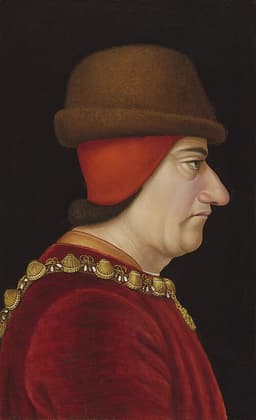
Louis XI of France
Emperor · Medieval
66.2Total
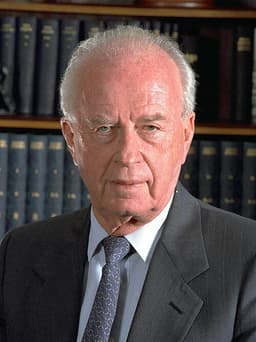
Yitzhak Rabin
General · Modern
66.4Total
Basic Information
Born
1423
1922
Died
1483
—
Era
Medieval
Modern
Nationality
France
Israel
Occupation
Emperor
General
Civilization
Western
Middle Eastern
Score Comparison
Military (10%)
47.5
61.7
Political (20%)
78.0
82.0
Influence (20%)
65.0
68.0
Legacy (20%)
65.0
55.0
Leadership (15%)
78.0
78.0
Strategy (15%)
55.0
55.0
TOTAL
66.2
66.4
Louis XI of France — Complete Timeline
1464 AD
Established the Postal ServiceReform
Louis XI established a royal postal service, creating a network of relay stations for rapid communication across France. This system improved administrative efficiency and royal control over the realm.
Postal ServiceAdministrationCommunication
Impact: nationalconstructive
1465 AD
Defeated the League of the Public WealWar◆ Major
Louis XI defeated the League of the Public Weal, a coalition of rebellious nobles led by the Duke of Burgundy and the Duke of Berry. The victory at the Battle of Montlh
Civil WarNobilityRoyal Authority
Impact: national
1469 AD
Imprisoned Cardinal BaluePolitical Action
Louis XI imprisoned his own minister, Cardinal Jean Balue, for treason after discovering his secret correspondence with Charles the Bold. Balue was held in an iron cage for over a decade, demonstrating Louis's ruthless treatment of disloyal officials.
ImprisonmentTreasonIron Cage
Impact: nationaldestructive
1474 AD
Supported the Swiss Confederacy against BurgundyWar
Louis XI provided financial and diplomatic support to the Swiss Confederacy in their war against Charles the Bold of Burgundy. This alliance contributed to Burgundy's defeat and the eventual collapse of the Burgundian state.
AllianceSwissBurgundian Wars
Impact: regionalconstructive
1475 AD
Signed the Treaty of PicquignyPolitical Action◆ Major
Louis XI signed the Treaty of Picquigny with King Edward IV of England, ending the Hundred Years' War. The treaty included a payment to Edward IV to withdraw his invading army, securing peace and saving France from invasion.
TreatyHundred Years' WarDiplomacy
Impact: regionalconstructive
1477 AD
Acquired the Duchy of BurgundyWar◆ Major
After the death of Charles the Bold at the Battle of Nancy, Louis XI seized the Duchy of Burgundy and other Burgundian territories. This acquisition significantly expanded the French crown's lands and reduced Burgundian power.
Territorial ExpansionBurgundyRoyal Domain
Impact: regionalconstructive
Yitzhak Rabin — Complete Timeline
1967 AD
Chief of Staff during the Six-Day WarWar
As Chief of Staff of the Israel Defense Forces, Rabin commanded the Israeli military during the Six-Day War against Egypt, Jordan, and Syria. Israel captured the Sinai Peninsula, Gaza Strip, West Bank, East Jerusalem, and Golan Heights, reshaping the region.
Six-Day WarTerritorial ExpansionMilitary Victory
Impact: global
1993 AD
Signing of the Oslo AccordsPolitical Action
As prime minister, Rabin signed the Oslo Accords with PLO Chairman Yasser Arafat on the White House lawn. The agreement established the Palestinian Authority and set a framework for Palestinian self-governance in the West Bank and Gaza Strip.
Peace ProcessPalestiniansOslo
Impact: globalconstructive
1995 AD
Assassination at Peace RallyPolitical Action
Rabin was assassinated by Israeli extremist Yigal Amir after a peace rally in Tel Aviv. The assassination shocked Israel and the world, derailing the Oslo peace process and leading to a period of political instability.
AssassinationPeace ProcessPolitical Violence
Impact: globaltragic
Expert Analysis
Louis XI of France vs Yitzhak Rabin
### The Spider and the Sabra
On a balmy November evening in 1995, a crowd of 100,000 people sang a song of peace in Tel Aviv’s Kings of Israel Square. The man on the stage, Yitzhak Rabin, a weathered general with a gruff exterior, had just led his nation to the precipice of a historic accord. Minutes later, three bullets from a Jewish extremist would shatter his body and the fragile hope he embodied. Five centuries earlier, in a cold stone fortress at Plessis-lès-Tours, another leader, Louis XI of France, lay dying in 1483, surrounded by the astrologers and relics he had hoarded in a lifetime of paranoia. One man fell in a blaze of public faith; the other withered in private fear. Both were masterful politicians who reshaped their nations, yet their fates could not have been more different. Why did the Sabra, a son of the soil, meet a martyr’s end, while the Spider, a king of shadows, died in his bed, having woven a web that held France together for centuries?
### Origins
Yitzhak Rabin was born in 1922 in Jerusalem, then part of the British Mandate of Palestine, to a family of socialist Zionist pioneers. His upbringing was forged in the crucible of a nascent state: a world of kibbutzim, collective farms, and the grim necessity of self-defense. Rabin was a *sabra*—literally a cactus fruit, tough and prickly on the outside, sweet within—a product of a generation that believed in building a nation with their hands and their guns. His era was one of existential struggle, where a single war could erase his people from the map.
Louis XI was born in 1423 in Bourges, France, into the dying embers of the Hundred Years’ War. His father, Charles VII, was the “King of Bourges” before he reclaimed Paris, and young Louis grew up in a world of feudal chaos, where the crown was a pawn of powerful dukes. He was a prince of the old order, steeped in the Machiavellian politics of a fractured Christendom. His era demanded cunning, not courage; patience, not passion. One man was shaped by the desperate urgency of building a state from scratch; the other, by the slow, grinding task of taming one that already existed.
### Rise to Power
Rabin’s ascent was a soldier’s story. He joined the Palmach, the elite strike force of the Jewish underground, and by 1967, at the age of 45, he was Chief of Staff of the Israel Defense Forces. His defining moment came in June of that year, when he commanded the lightning campaign of the Six-Day War. In just six days, his forces crushed the armies of Egypt, Jordan, and Syria, capturing the Sinai, the West Bank, and the Golan Heights. It was a triumph of strategy and nerve, and it made Rabin a national hero. But he was a reluctant warrior; the victory brought him no joy, only the weight of occupation.
Louis XI’s path was far more serpentine. As Dauphin, he openly rebelled against his own father, forming alliances with the Duke of Burgundy—the very enemy of France. When he finally became king in 1461, at age 38, he was already a man with a reputation for treachery. He did not win his crown on a battlefield; he inherited it, and then spent the next twenty-two years clawing power back from the nobles who thought they owned it. His greatest early test came in 1465, when the League of the Public Weal—a coalition of dukes led by Charles the Bold of Burgundy—nearly unseated him. Louis lost the battle, but won the war by biding his time, offering bribes, and sowing discord among his enemies.
### Leadership & Governance
As a leader, Rabin was a pragmatist, not an ideologue. His military mind saw wars as necessary evils, and his political genius lay in understanding that security could not be won by force alone. In 1993, he shook the world by signing the Oslo Accords with PLO Chairman Yasser Arafat on the White House lawn. “We say to you today in a loud and clear voice,” he declared, “enough of blood and tears. Enough!” It was a radical shift for a man who had spent a lifetime fighting the Palestinians. He pushed for a two-state solution, dismantling settlements and negotiating with former enemies, all while battling the growing settler movement within Israel.
Louis XI governed through a web of spies, patronage, and relentless centralization. He established a royal postal service in 1464, a network of relay stations that allowed his decrees to reach every corner of France faster than any noble could muster an army. He promoted trade, built roads, and encouraged industry, all while systematically crushing the feudal lords. His political wisdom was cold and calculating: he knew that a king’s power came from the purse, not the sword. When Cardinal Balue, his own minister, betrayed him in 1469, Louis had him imprisoned in an iron cage for eleven years—a message that loyalty was the only currency that mattered.
### Triumph & Tragedy
Rabin’s greatest triumph was also his tragedy. The Oslo Accords earned him a Nobel Peace Prize in 1994, and for a moment, peace seemed possible. But the accords were deeply flawed; they left the most difficult issues—Jerusalem, refugees, borders—for later. Violence erupted on both sides: Hamas bombed Israeli buses, and Israeli extremists plotted against their own government. On November 4, 1995, Rabin attended a peace rally in Tel Aviv, singing “The Song of Peace” with the crowd. As he walked to his car, a young law student named Yigal Amir fired three shots. Rabin died on the operating table. The tragedy was not just his death, but the collapse of the peace process that followed.
Louis XI’s triumph was the destruction of Burgundy. In 1477, after years of maneuvering, he supported the Swiss Confederacy against his arch-rival Charles the Bold. At the Battle of Nancy, Charles was killed, and Louis moved swiftly to seize the Duchy of Burgundy itself, along with the rich territories of Artois and Franche-Comté. The Treaty of Picquigny in 1475 had already bought off the English with a pension, ending the Hundred Years’ War for good. But Louis’s tragedy was his own soul. He spent his final years in a paranoid fortress, terrified of poison and betrayal, hoarding relics and consulting astrologers. He died in 1483, a king who had unified France but could not trust a single soul.
### Character & Destiny
Rabin’s character was that of a reluctant hero. He was not a charismatic speaker; he was blunt, even awkward, a man who preferred action to words. But his integrity was his strength. When he decided that peace was the only path, he pursued it with the same relentless determination he had shown in war. His destiny was to be a bridge—and to be destroyed by the very people who refused to cross it. His assassination was a direct result of his willingness to compromise, a fate that a more cynical man might have avoided.
Louis XI was the opposite: a master of deception who trusted no one. He was called the “Universal Spider” for a reason—he spun a web of spies, letters, and alliances that trapped his enemies. His character was shaped by a deep, almost pathological caution. He never led an army into battle; he preferred to let others fight and die for him. His destiny was to die a lonely, frightened man, but his legacy was a united France. Where Rabin’s openness led to his fall, Louis’s secrecy ensured his survival.
### Legacy
Today, Yitzhak Rabin is remembered as a martyr for peace. His name is etched into the memory of Israel and the world, a symbol of what might have been. The square where he was shot is now named Rabin Square, and every year, Israelis gather to remember him. But his legacy is contested; the peace he died for remains elusive, and his vision of two states seems more distant than ever. His total score of 70.6 reflects a leader of great political skill (77.7) and leadership (83.4), but whose military and strategic scores (62.0 and 59.7) hint at a man who outgrew the sword.
Louis XI’s legacy is less romantic but more concrete. He is remembered as the architect of modern France, the king who broke the back of feudalism and built a centralized state. His postal system, his economic reforms, and his ruthless consolidation of power laid the groundwork for the absolute monarchy of Louis XIV. His legacy score of 80.0 is the highest among his metrics, a testament to the enduring impact of his reign. Yet he is also remembered as a cold, paranoid figure, a king who ruled through fear and cunning. In the French imagination, he is a necessary evil—a spider who wove a web that held the kingdom together.
### Conclusion
Two leaders, five centuries apart, yet bound by the same tragic contradiction: the pursuit of unity in a fractured world. Rabin tried to build peace through trust, and was killed by the hatred he sought to overcome. Louis XI built unity through fear, and died alone in a fortress of his own making. One gave his life for a dream; the other gave his soul for a kingdom. Their stories remind us that leadership is never a clean equation—it is a gamble, where the same force that builds nations can also destroy the men who build them. The Spider wove France together; the Sabra tried to weave peace. In the end, both were caught in their own webs.
Rankings
🥇
Yitzhak RabinLeader
Mil: 61.7Pol: 82.0Inf: 68.0
66.4
🥈
Louis XI of France
Mil: 47.5Pol: 78.0Inf: 65.0
66.2
+0.2 behind
How This Comparison Works
Algorithm
Each figure is scored on 6 dimensions (0—100 scale) based on structured historical data: Military (10%), Political (20%), Influence (20%), Legacy (20%), Leadership (15%), Strategy (15%). The weighted total produces the final ranking.
Data Sources
Scores are computed from structured sub-indicators in the database. Scale factors adjust for era (Ancient ×0.85, Modern ×1.0) and civilization size (Eastern ×1.05, Other ×0.80) to account for differences in population and military scale.
Maximum 3 Figures
Comparisons are limited to 2—3 figures to ensure readability and statistical meaningfulness.
Error Margins
±5 points per dimension — Sub-scores are derived from historical records with inherent uncertainty. Two figures within 5 points on a dimension should be considered roughly equivalent in that area.
Total Score Accuracy
±3 points overall — The weighted combination of 6 dimensions produces a total score with approximately ±3 points of uncertainty. Differences of less than 3 points are not statistically significant— the figures are effectively tied.
Known Limitations
- Historical records are incomplete and uneven across civilizations
- Figures from oral-tradition societies may be underrepresented
- Occupation labels can misclassify multi-role figures
- Scores measure capability and impact, not moral character
- Quantitative scoring is a comparison tool, not absolute truth
Capability Radar
Military (10%) — Battles & Warfare
Battles
45
65
Win Rate
50
70
Expansion
60
50
Political (20%) — Governance & Reform
Reform
80
65
Diplomacy
90
85
Economy
75
60
Influence (20%) — Cultural & Global Reach
Cultural
60
55
Global
65
70
Legacy (20%) — Historical Impact
Historical
80
75
Longevity
75
60
Leadership (15%) — Power & Stability
Tenure
85
70
Stability
70
40
Strategy (15%) — Tactics & Innovation
Strategy
70
75
Tactics
55
60
Reform
65
55
Similar Comparisons
Comments & Discussion
No comments yet. Be the first to share your thoughts!