Loading...
Cleisthenes vs Louis XI of France
Cleisthenes leads by 12.1 pts · 2 figures compared
…
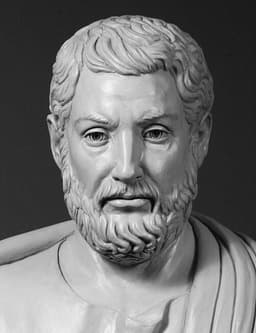
Cleisthenes
Politician · Ancient
78.3Total
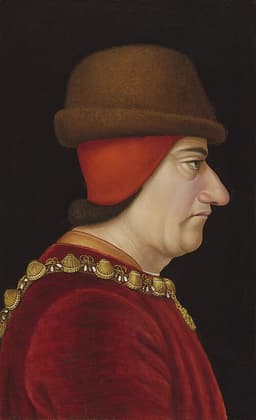
Louis XI of France
Emperor · Medieval
66.2Total
Basic Information
Born
-570
1423
Died
-508
1483
Era
Ancient
Medieval
Nationality
Greece
France
Occupation
Politician
Emperor
Civilization
Western
Western
Score Comparison
Military (10%)
49.4
47.5
Political (20%)
62.7
78.0
Influence (20%)
92.0
65.0
Legacy (20%)
92.0
65.0
Leadership (15%)
72.0
78.0
Strategy (15%)
71.3
55.0
TOTAL
78.3
66.2
Cleisthenes — Complete Timeline
510 BC
Expulsion of the PeisistratidsPolitical Action◆ Major
Cleisthenes, with the support of the Alcmaeonid family and Spartan assistance, led the overthrow of the tyrant Hippias, son of Peisistratus. This ended the Peisistratid tyranny in Athens and opened the way for democratic reforms.
Tyranny OverthrownAthensSparta
Impact: nationalconstructive
508 BC
Reforms of CleisthenesReform
Cleisthenes reorganized the Athenian citizen body into ten new tribes based on demes, replacing the old four Ionian tribes. He established the Council of 500 (Boule) and introduced ostracism, creating a system of isonomia (equal rights) that is considered the foundation of Athenian democracy.
Athenian DemocracyConstitutional ReformAncient Greece
Impact: globalprogressive
507 BC
Introduction of OstracismReform◆ Major
Cleisthenes instituted ostracism, a procedure allowing Athenian citizens to vote annually to exile a prominent citizen deemed a threat to democracy for ten years. This mechanism aimed to prevent the rise of a new tyrant and stabilize the democratic system.
Athenian DemocracyPolitical MechanismExile
Impact: national
Louis XI of France — Complete Timeline
1464 AD
Established the Postal ServiceReform
Louis XI established a royal postal service, creating a network of relay stations for rapid communication across France. This system improved administrative efficiency and royal control over the realm.
Postal ServiceAdministrationCommunication
Impact: nationalconstructive
1465 AD
Defeated the League of the Public WealWar◆ Major
Louis XI defeated the League of the Public Weal, a coalition of rebellious nobles led by the Duke of Burgundy and the Duke of Berry. The victory at the Battle of Montlh
Civil WarNobilityRoyal Authority
Impact: national
1469 AD
Imprisoned Cardinal BaluePolitical Action
Louis XI imprisoned his own minister, Cardinal Jean Balue, for treason after discovering his secret correspondence with Charles the Bold. Balue was held in an iron cage for over a decade, demonstrating Louis's ruthless treatment of disloyal officials.
ImprisonmentTreasonIron Cage
Impact: nationaldestructive
1474 AD
Supported the Swiss Confederacy against BurgundyWar
Louis XI provided financial and diplomatic support to the Swiss Confederacy in their war against Charles the Bold of Burgundy. This alliance contributed to Burgundy's defeat and the eventual collapse of the Burgundian state.
AllianceSwissBurgundian Wars
Impact: regionalconstructive
1475 AD
Signed the Treaty of PicquignyPolitical Action◆ Major
Louis XI signed the Treaty of Picquigny with King Edward IV of England, ending the Hundred Years' War. The treaty included a payment to Edward IV to withdraw his invading army, securing peace and saving France from invasion.
TreatyHundred Years' WarDiplomacy
Impact: regionalconstructive
1477 AD
Acquired the Duchy of BurgundyWar◆ Major
After the death of Charles the Bold at the Battle of Nancy, Louis XI seized the Duchy of Burgundy and other Burgundian territories. This acquisition significantly expanded the French crown's lands and reduced Burgundian power.
Territorial ExpansionBurgundyRoyal Domain
Impact: regionalconstructive
Expert Analysis
Cleisthenes vs Louis XI of France
### The Architect and the Spider
Two men, separated by nearly two thousand years, each faced a common enemy: the entrenched power of a hereditary aristocracy. One chose to dissolve that power by redrawing the map of citizenship itself. The other chose to strangle it, thread by thread, from a web of royal decrees and secret alliances. Cleisthenes of Athens and Louis XI of France never met, never corresponded, and governed worlds that seem utterly alien to one another. Yet both were revolutionaries in their own age, and both left behind a state transformed. The question is not merely what they did, but why one is celebrated as a democrat and the other remembered as a spider.
### Origins
Cleisthenes was born around 570 BC into the Alcmaeonid family, one of Athens’ most powerful and controversial aristocratic clans. The Alcmaeonids were cursed—literally, in the eyes of their rivals—for a massacre of suppliants generations earlier. This stain meant that Cleisthenes grew up in a world of shifting alliances, exile, and political vendettas. His family had been expelled from Athens, had fought their way back, and understood that survival depended on a broader base of support than noble blood alone.
Louis XI was born in 1423, the son of Charles VII, the king who had driven the English from most of France with the help of Joan of Arc. But Louis loathed his father, and the feeling was mutual. As a young prince, he rebelled openly, joined plots against the crown, and was eventually forced to flee to the court of the Duke of Burgundy—his father’s greatest enemy. He learned statecraft not from tutors but from the hard school of exile and betrayal. Where Cleisthenes had been shaped by the competition of aristocratic factions, Louis was shaped by the brutal realities of feudal power.
### Rise to Power
Cleisthenes entered the historical stage not as a reformer but as a faction leader. In 510 BC, he helped expel the tyrant Hippias, ending the Peisistratid dynasty. The victory was not his alone—Spartan soldiers did the heavy lifting—but it gave him the opening he needed. For a moment, Athens was free. The old aristocratic order, however, immediately reasserted itself. A rival named Isagoras, backed by the Spartans, seized control. Cleisthenes was exiled again.
But he did not flee quietly. He rallied the common people—the *demos*—promising them a new kind of politics. When Isagoras tried to purge his supporters, the Athenian people rose up, besieged the Acropolis, and forced the Spartans to withdraw. Cleisthenes returned not as an aristocrat but as the people’s champion. In 508 BC, he began his reforms.
Louis XI became king in 1461, at the age of thirty-eight. He had waited long enough. His first acts were to purge his father’s advisors and reverse many of his policies. But the French nobility, led by the Duke of Burgundy and the Duke of Berry (the king’s own brother), saw an opportunity. In 1465, they formed the League of the Public Weal, a coalition that nearly unseated Louis at the Battle of Montlhéry. The king was wounded, his army bloodied. He was forced to sign a treaty that gave away much of his authority.
But Louis was not defeated. He had learned, as a spider learns, that the web endures even when the spider retreats. He spent the next decade slowly, patiently, dismantling his enemies one by one.
### Leadership & Governance
The reforms of Cleisthenes were not merely political; they were architectural. He reorganized the entire citizen body of Athens into ten new tribes, each composed of demes—local villages and neighborhoods—drawn from three different regions: the city, the coast, and the interior. No longer could a powerful family control a single region and dominate the assembly. Every Athenian now belonged to a tribe that was a cross-section of the entire polis. In 507 BC, he introduced ostracism: a yearly vote in which citizens could write a name on a potsherd and exile that person for ten years. It was a peaceful way to remove a would-be tyrant without civil war.
Louis XI governed by the opposite principle. He centralized everything. In 1464, he established a royal postal service, a network of relay stations that allowed him to send messages across France faster than any noble could ride. He created a standing army loyal to the crown, not to feudal lords. He promoted trade, built roads, and encouraged the growth of towns whose merchants owed their prosperity to the king, not the local duke. He imprisoned his own minister, Cardinal Balue, in an iron cage for treason. He made deals with the Swiss, the English, and the Italians—anyone who could help him weaken Burgundy.
Cleisthenes gave power to the many. Louis took power from the few. Both succeeded.
### Triumph & Tragedy
Cleisthenes’ greatest moment was the creation of Athenian democracy itself. For the first time in history, ordinary men—farmers, craftsmen, rowers—had a voice in how their city was governed. The system he built would survive for nearly two centuries and would produce the Golden Age of Pericles. His tragedy is that we know almost nothing of his later life. He disappears from the historical record after 507 BC. Perhaps he was ostracized himself. Perhaps he died quietly. We do not know.
Louis XI’s triumph came in 1477, with the death of Charles the Bold at the Battle of Nancy. Charles had been the greatest threat to the French crown—the Duke of Burgundy, master of the Low Countries, ally of England. When he fell, Louis moved swiftly. He seized the Duchy of Burgundy itself, along with Picardy and the Somme towns. The acquisition doubled the royal domain. But Louis’s tragedy was personal. He spent his final years in terror of death, locked in his fortress at Plessis-lez-Tours, surrounded by astrologers and guards, convinced that everyone was plotting against him. The spider had woven himself a cage.
### Character & Destiny
Cleisthenes was an aristocrat who chose to trust the people. This was not sentiment; it was strategy. He understood that in a world of rival clans, the only way to break the cycle of revenge was to create a new loyalty—to the city itself. His reforms were radical, but they were also practical. He gave the poor a stake in the system, and in return, they gave him their support.
Louis XI was a king who trusted no one. He wore shabby clothes, ate simple food, and spent his days reading reports and writing letters. He was called the “Universal Spider” not for cruelty but for patience. He spun webs of alliance, bribery, and betrayal. He preferred negotiation to war, and when he did fight, he let others do the bleeding. His character was shaped by his long exile and his father’s disdain. He learned to survive by outthinking his enemies, not by outfighting them.
Cleisthenes built a system that could survive him. Louis built a system that could not function without him.
### Legacy
Cleisthenes is remembered as the Father of Athenian Democracy. His name is taught in every classroom that studies the birth of Western politics. The reforms he instituted—the demes, the tribes, the Council of Five Hundred—became the foundation of Athenian governance for generations. His legacy is one of inclusion, of breaking down the barriers between the powerful and the powerless.
Louis XI is remembered as the king who unified France. He is not loved—his face is pinched, his methods devious—but he is respected. He ended the Hundred Years’ War with the Treaty of Picquigny in 1475, buying off the English king with a pension. He crushed the great nobles. He built the administrative state that would make France the most powerful kingdom in Europe. His legacy is one of order, of strength, of the crown triumphant.
### Conclusion
One man gave his city the gift of freedom. The other gave his kingdom the gift of order. Both were necessary, and both were flawed. Cleisthenes’ democracy could not prevent the rise of demagogues or the disaster of the Peloponnesian War. Louis XI’s absolutism could not prevent the Wars of Religion that would tear France apart a century later. But in their own time, each saw a problem that seemed unsolvable—the tyranny of the few—and each found a way to break it.
The architect and the spider. One opened the gates. The other locked them. And both, in their way, built something that lasted.
Rankings
🥇
CleisthenesLeader
Mil: 49.4Pol: 62.7Inf: 92.0
78.3
🥈
Louis XI of France
Mil: 47.5Pol: 78.0Inf: 65.0
66.2
+12.1 behind
How This Comparison Works
Algorithm
Each figure is scored on 6 dimensions (0—100 scale) based on structured historical data: Military (10%), Political (20%), Influence (20%), Legacy (20%), Leadership (15%), Strategy (15%). The weighted total produces the final ranking.
Data Sources
Scores are computed from structured sub-indicators in the database. Scale factors adjust for era (Ancient ×0.85, Modern ×1.0) and civilization size (Eastern ×1.05, Other ×0.80) to account for differences in population and military scale.
Maximum 3 Figures
Comparisons are limited to 2—3 figures to ensure readability and statistical meaningfulness.
Error Margins
±5 points per dimension — Sub-scores are derived from historical records with inherent uncertainty. Two figures within 5 points on a dimension should be considered roughly equivalent in that area.
Total Score Accuracy
±3 points overall — The weighted combination of 6 dimensions produces a total score with approximately ±3 points of uncertainty. Differences of less than 3 points are not statistically significant— the figures are effectively tied.
Known Limitations
- Historical records are incomplete and uneven across civilizations
- Figures from oral-tradition societies may be underrepresented
- Occupation labels can misclassify multi-role figures
- Scores measure capability and impact, not moral character
- Quantitative scoring is a comparison tool, not absolute truth
Capability Radar
Military (10%) — Battles & Warfare
Battles
58
45
Win Rate
62
50
Expansion
59
60
Political (20%) — Governance & Reform
Reform
95
80
Diplomacy
70
90
Economy
40
75
Influence (20%) — Cultural & Global Reach
Cultural
85
60
Global
85
65
Legacy (20%) — Historical Impact
Historical
90
80
Longevity
95
75
Leadership (15%) — Power & Stability
Tenure
30
85
Stability
60
70
Strategy (15%) — Tactics & Innovation
Strategy
62
70
Tactics
67
55
Reform
72
65
Similar Comparisons
Comments & Discussion
SPARTACLES_BUT_CLASSICAL6/16/2026
If you're ranking state-builders by how cleanly they destroyed aristocratic power, Louis XI mops the floor with Cleisthenes. Cleisthenes basically gave the nobles a participation trophy by letting them keep their wealth and just reshuffling tribes. Louis actually broke their spines—executing the Duke of Nemours, crushing the League of the Public Weal, and seizing Burgundy. Democracy is nice, but real power comes from royal guillotines, not voting reforms.
泰西格斗者6/16/2026
数据党看历史,Cleisthenes的部落重组确实漂亮,但他的人口基数才几万人;路易十一控制的是1500万人口的法国。你说民主伟大?那雅典公民里只有10%有投票权,女性、奴隶、外邦人全被排除。路易至少用集权统一了税收、法律和货币,实际改善的效率人数远超雅典。别吹情怀,算算真实影响力。
BOW_TIE_BUT_GREEK6/16/2026
One word: demes. Cleisthenes didn't just tinker with voting blocks—he fundamentally reimagined what it meant to be Athenian by shattering kinship-based identity. No more scions of noble families; now you're a citizen because you're from Acharnai or Alopeke. That's a philosophical earthquake. Louis just played courtier politics with the Parlement and noble marriages. Sure, he centralized, but he never changed the feudal soul of France. Cleisthenes rewrote the soul of a city.
铁犁史学6/16/2026
我读了下原文,夸Cleisthenes民主的人从来不提他放逐政敌的手段。他用ostracism把有威胁的人直接赶出城邦,不需要审判。这跟路易十一的暗杀手段有什么本质区别?只不过一个用贝壳投票,一个用毒药和绞刑架。别假装道德上有高下——两人都是铁腕清洗派,只是包装不同。说Cleisthenes是民主之父的人,一定是忘了被放逐的阿里斯蒂德斯是怎么被赶走的。