Loading...
Louis XI of France vs Lucius Junius Brutus
Lucius Junius Brutus leads by 6.5 pts · 2 figures compared
…
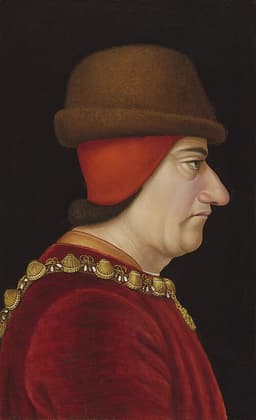
Louis XI of France
Emperor · Medieval
66.2Total
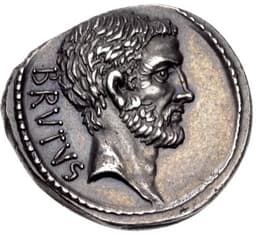
Lucius Junius Brutus
Politician · Ancient
72.7Total
Basic Information
Born
1423
-540
Died
1483
-509
Era
Medieval
Ancient
Nationality
France
Roman Republic
Occupation
Emperor
Politician
Civilization
Western
Western
Score Comparison
Military (10%)
47.5
45.0
Political (20%)
78.0
72.0
Influence (20%)
65.0
75.0
Legacy (20%)
65.0
90.0
Leadership (15%)
78.0
71.0
Strategy (15%)
55.0
54.8
TOTAL
66.2
72.7
Louis XI of France — Complete Timeline
1464 AD
Established the Postal ServiceReform
Louis XI established a royal postal service, creating a network of relay stations for rapid communication across France. This system improved administrative efficiency and royal control over the realm.
Postal ServiceAdministrationCommunication
Impact: nationalconstructive
1465 AD
Defeated the League of the Public WealWar◆ Major
Louis XI defeated the League of the Public Weal, a coalition of rebellious nobles led by the Duke of Burgundy and the Duke of Berry. The victory at the Battle of Montlh
Civil WarNobilityRoyal Authority
Impact: national
1469 AD
Imprisoned Cardinal BaluePolitical Action
Louis XI imprisoned his own minister, Cardinal Jean Balue, for treason after discovering his secret correspondence with Charles the Bold. Balue was held in an iron cage for over a decade, demonstrating Louis's ruthless treatment of disloyal officials.
ImprisonmentTreasonIron Cage
Impact: nationaldestructive
1474 AD
Supported the Swiss Confederacy against BurgundyWar
Louis XI provided financial and diplomatic support to the Swiss Confederacy in their war against Charles the Bold of Burgundy. This alliance contributed to Burgundy's defeat and the eventual collapse of the Burgundian state.
AllianceSwissBurgundian Wars
Impact: regionalconstructive
1475 AD
Signed the Treaty of PicquignyPolitical Action◆ Major
Louis XI signed the Treaty of Picquigny with King Edward IV of England, ending the Hundred Years' War. The treaty included a payment to Edward IV to withdraw his invading army, securing peace and saving France from invasion.
TreatyHundred Years' WarDiplomacy
Impact: regionalconstructive
1477 AD
Acquired the Duchy of BurgundyWar◆ Major
After the death of Charles the Bold at the Battle of Nancy, Louis XI seized the Duchy of Burgundy and other Burgundian territories. This acquisition significantly expanded the French crown's lands and reduced Burgundian power.
Territorial ExpansionBurgundyRoyal Domain
Impact: regionalconstructive
Lucius Junius Brutus — Complete Timeline
509 BC
Battle of Silva ArsiaWar◆ Major
Brutus led the Roman army against the forces of Tarquinius Superbus and his Etruscan allies at Silva Arsia. During the battle, Brutus and Arruns Tarquinius, the king's son, killed each other in single combat, but the Romans ultimately won the battle, securing the Republic's survival.
BattleSingle CombatFounding Myth
Impact: nationaltragic
Expulsion of the TarquinsPolitical Action
Lucius Junius Brutus led a revolt against the Tarquin monarchy after the rape of Lucretia by Sextus Tarquinius. He organized the Senate and the people to expel the royal family, ending the Roman Kingdom and establishing the Roman Republic with himself as one of the first consuls.
RevolutionFounding of RepublicOverthrow of Monarchy
Impact: globalprogressive
Execution of His SonsPolitical Action◆ Major
Brutus discovered that his own sons, Titus and Tiberius, had conspired to restore the Tarquins. As consul, he ordered their arrest, trial, and execution by beheading in the Forum, demonstrating his unwavering commitment to the Republic over family loyalty.
ExecutionConspiracyRepublican Virtue
Impact: nationaltragic
Oath of BrutusPolitical Action◆ Major
After the expulsion of the Tarquins, Brutus made the Roman people swear an oath never to allow a king to rule Rome again. This oath became a foundational principle of the Republic, reinforcing the commitment to liberty and opposition to tyranny.
OathRepublican IdeologyAnti-Monarchy
Impact: nationalprogressive
Expert Analysis
Lucius Junius Brutus vs Louis XI of France
### The Spider and the Father: Two Founders of Order
On a summer day in 1483, the most feared man in France lay dying in his castle at Plessis-lez-Tours, surrounded by talismans and astrologers. He had spent a lifetime weaving webs of intrigue, crushing nobles, and building a state. More than a thousand years earlier, in the Roman Forum, another man stood before a crowd, watching his own sons being beaten to death with rods for the crime of treason. The dying king was Louis XI, the “Universal Spider.” The stern executioner was Lucius Junius Brutus, the father of the Roman Republic. Both men destroyed what they loved to create something greater. But the webs they wove, and the worlds they left behind, were profoundly different.
### Origins
Louis XI was born in 1423 into a France still bleeding from the Hundred Years’ War. His father, Charles VII, was a pious and hesitant king, and young Louis chafed against his court. He grew up in a world where the great dukes of Burgundy, Brittany, and Anjou were nearly as powerful as the king. This was not a kingdom but a patchwork of feudal lordships. Louis learned early that a crown meant little without the force to back it. He was bookish, secretive, and deeply superstitious, a man who trusted no one and planned everything.
Lucius Junius Brutus was born around 540 BC into a very different world: a small, struggling city-state on the Tiber, ruled by Etruscan kings. Rome was a place of harsh laws and harsher necessities. The Tarquin monarchy had grown tyrannical, and Brutus, a nobleman, had seen his own brother killed by the king. To survive, he played the fool—hence his surname *Brutus*, meaning “dullard.” Under that mask, he nursed a cold, republican fire. His era was one of clan loyalty and personal honor, not yet of institutions.
### Rise to Power
Louis XI did not inherit power peacefully. As a prince, he rebelled against his own father, joining the noble opposition in the 1440s. His path to the throne was stained with filial betrayal. When he finally became king in 1461, he was already a master of intrigue, not a warrior. His rise was a long, patient climb over the bodies of allies and enemies alike.
Brutus’s rise was a single, explosive act. In 509 BC, after the rape of Lucretia, he threw off his mask. He led the people in expelling the Tarquins and was elected the first consul of the new Republic. He did not scheme for years; he seized the moment. His power came not from patience but from a revolutionary act that defined Roman identity for centuries.
### Leadership & Governance
As king, Louis XI governed through a vast network of spies, informants, and loyal commoners. He established a royal postal service in 1464, creating relay stations that allowed him to communicate faster than any rival. He broke the power of the great nobles not by chivalric battle but by money, marriage, and treachery. When the League of the Public Weal rose against him in 1465, he defeated them not in a single battle but by dividing and negotiating, buying off some rebels while crushing others. In 1475, he signed the Treaty of Picquigny with Edward IV of England, effectively ending the Hundred Years’ War with a bribe rather than a war. He even imprisoned his own minister, Cardinal Balue, in 1469 for secret correspondence with the Duke of Burgundy.
Brutus’s governance was starker. As consul, his power was shared and limited by law. He did not build a bureaucracy; he built a precedent. His greatest act was not a reform but a sacrifice: when his sons conspired to restore the Tarquins, he ordered their execution. “They must die,” he said, according to Livy, “for the safety of the state.” He led the army to victory at the Battle of Silva Arsia in 509 BC, but he died in that very battle, falling on the same field where he had fought for a republic that would outlive him.
### Triumph & Tragedy
Louis XI’s greatest triumph was the acquisition of the Duchy of Burgundy in 1477. When his nemesis, Charles the Bold, died at the Battle of Nancy, Louis moved swiftly to seize the richest lands in Europe. It was a masterstroke of opportunism. His tragedy was his own nature: he died isolated, paranoid, and unloved, a king who had saved the crown but lost his soul.
Brutus’s triumph was the Republic itself. He gave Rome a form of government that would last nearly five centuries. His tragedy was personal: he had to kill his own blood to preserve that republic. He became a symbol of implacable justice, but he was also a man who lived long enough to see his own family destroyed by his principles.
### Character & Destiny
Louis XI was a spider: patient, calculating, and venomous. He believed that the ends justified any means, and his means were often sordid. He wore shabby clothes, ate simple food, and surrounded himself with low-born advisors. His destiny was to centralize France, but his personality ensured he would be remembered with fear, not love.
Brutus was a father in the most terrible sense. He believed in law above family, duty above love. His personality was forged in the fire of tyranny, and he became the unyielding sword of liberty. His destiny was to found a republic that would conquer the Mediterranean, but his character made him a tragic hero, not a happy one.
### Legacy
Louis XI left behind a France that was stronger, richer, and more unified. The monarchy he built would culminate in the absolute power of Louis XIV. His legacy score of 80.0 reflects his importance, but he is remembered as the Spider—a master of the dark arts of statecraft.
Brutus left behind an idea: that no man, not even a father, is above the law. His legacy score of 90.0 is earned by the sheer endurance of his example. The Roman Republic would inspire generations, from the American Founders to modern democrats. Yet he is remembered as the man who killed his sons—a monument to virtue that is also a monument to pain.
### Conclusion
Both men were founders of order, but one founded a kingdom and the other a republic. Louis XI built a state on secrecy and fear; Brutus built one on law and sacrifice. The Spider died in his bed, surrounded by his webs. The Father died on a battlefield, holding a sword. In the end, they remind us that every foundation is laid with something broken—whether it is a nobleman’s pride or a father’s heart. And history, impartial as stone, remembers both.
Rankings
🥇
Lucius Junius BrutusLeader
Mil: 45.0Pol: 72.0Inf: 75.0
72.7
🥈
Louis XI of France
Mil: 47.5Pol: 78.0Inf: 65.0
66.2
+6.5 behind
How This Comparison Works
Algorithm
Each figure is scored on 6 dimensions (0—100 scale) based on structured historical data: Military (10%), Political (20%), Influence (20%), Legacy (20%), Leadership (15%), Strategy (15%). The weighted total produces the final ranking.
Data Sources
Scores are computed from structured sub-indicators in the database. Scale factors adjust for era (Ancient ×0.85, Modern ×1.0) and civilization size (Eastern ×1.05, Other ×0.80) to account for differences in population and military scale.
Maximum 3 Figures
Comparisons are limited to 2—3 figures to ensure readability and statistical meaningfulness.
Error Margins
±5 points per dimension — Sub-scores are derived from historical records with inherent uncertainty. Two figures within 5 points on a dimension should be considered roughly equivalent in that area.
Total Score Accuracy
±3 points overall — The weighted combination of 6 dimensions produces a total score with approximately ±3 points of uncertainty. Differences of less than 3 points are not statistically significant— the figures are effectively tied.
Known Limitations
- Historical records are incomplete and uneven across civilizations
- Figures from oral-tradition societies may be underrepresented
- Occupation labels can misclassify multi-role figures
- Scores measure capability and impact, not moral character
- Quantitative scoring is a comparison tool, not absolute truth
Capability Radar
Military (10%) — Battles & Warfare
Battles
45
10
Win Rate
50
10
Expansion
60
10
Political (20%) — Governance & Reform
Reform
80
90
Diplomacy
90
40
Economy
75
30
Influence (20%) — Cultural & Global Reach
Cultural
60
70
Global
65
70
Legacy (20%) — Historical Impact
Historical
80
80
Longevity
75
80
Leadership (15%) — Power & Stability
Tenure
85
30
Stability
70
40
Strategy (15%) — Tactics & Innovation
Strategy
70
10
Tactics
55
10
Reform
65
20
Similar Comparisons
Comments & Discussion
No comments yet. Be the first to share your thoughts!