Loading...
Louis XI of France vs Themistocles
Themistocles leads by 2.2 pts · 2 figures compared
…
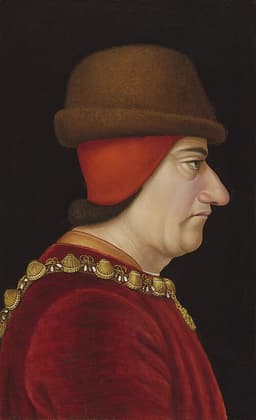
Louis XI of France
Emperor · Medieval
66.2Total
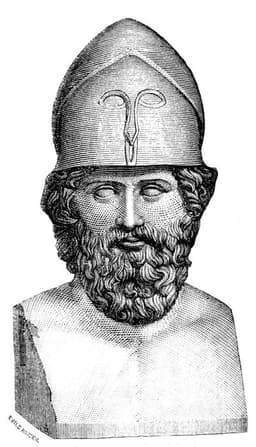
Themistocles
Politician · Ancient
68.4Total
Basic Information
Born
1423
-524
Died
1483
-459
Era
Medieval
Ancient
Nationality
France
Greece
Occupation
Emperor
Politician
Civilization
Western
Western
Score Comparison
Military (10%)
47.5
80.0
Political (20%)
78.0
72.0
Influence (20%)
65.0
40.0
Legacy (20%)
65.0
80.0
Leadership (15%)
78.0
79.8
Strategy (15%)
55.0
76.0
TOTAL
66.2
68.4
Louis XI of France — Complete Timeline
1464 AD
Established the Postal ServiceReform
Louis XI established a royal postal service, creating a network of relay stations for rapid communication across France. This system improved administrative efficiency and royal control over the realm.
Postal ServiceAdministrationCommunication
Impact: nationalconstructive
1465 AD
Defeated the League of the Public WealWar◆ Major
Louis XI defeated the League of the Public Weal, a coalition of rebellious nobles led by the Duke of Burgundy and the Duke of Berry. The victory at the Battle of Montlh
Civil WarNobilityRoyal Authority
Impact: national
1469 AD
Imprisoned Cardinal BaluePolitical Action
Louis XI imprisoned his own minister, Cardinal Jean Balue, for treason after discovering his secret correspondence with Charles the Bold. Balue was held in an iron cage for over a decade, demonstrating Louis's ruthless treatment of disloyal officials.
ImprisonmentTreasonIron Cage
Impact: nationaldestructive
1474 AD
Supported the Swiss Confederacy against BurgundyWar
Louis XI provided financial and diplomatic support to the Swiss Confederacy in their war against Charles the Bold of Burgundy. This alliance contributed to Burgundy's defeat and the eventual collapse of the Burgundian state.
AllianceSwissBurgundian Wars
Impact: regionalconstructive
1475 AD
Signed the Treaty of PicquignyPolitical Action◆ Major
Louis XI signed the Treaty of Picquigny with King Edward IV of England, ending the Hundred Years' War. The treaty included a payment to Edward IV to withdraw his invading army, securing peace and saving France from invasion.
TreatyHundred Years' WarDiplomacy
Impact: regionalconstructive
1477 AD
Acquired the Duchy of BurgundyWar◆ Major
After the death of Charles the Bold at the Battle of Nancy, Louis XI seized the Duchy of Burgundy and other Burgundian territories. This acquisition significantly expanded the French crown's lands and reduced Burgundian power.
Territorial ExpansionBurgundyRoyal Domain
Impact: regionalconstructive
Themistocles — Complete Timeline
483 BC
Construction of the Athenian FleetReform◆ Major
Themistocles persuaded the Athenian assembly to use silver from the Laurion mines to build a fleet of 200 triremes. This naval expansion transformed Athens into a major maritime power and was crucial for the victory at Salamis.
AthensNaval PowerReform
Impact: nationalconstructive
480 BC
Battle of SalamisWar
Themistocles commanded the Greek navy against the Persian fleet at Salamis. He lured the Persians into the narrow straits, where the Greek ships destroyed the larger Persian fleet. This victory ended the Persian threat to Greece and preserved Greek independence.
Greco-Persian WarsNaval BattleAthens
Impact: regionalconstructive
472 BC
Ostracism from AthensPolitical Action◆ Major
Themistocles was ostracized by the Athenian assembly, likely due to political rivalries and accusations of arrogance. He went into exile, first to Argos, then to Persia, where he was received by King Artaxerxes I.
AthensExileOstracism
Impact: nationaltragic
465 BC
Service under the Persian KingPolitical Action
After his ostracism, Themistocles fled to Persia and offered his services to King Artaxerxes I. He was granted governorship of Magnesia and other cities in Asia Minor, where he lived until his death. This act was seen as treason by many Athenians.
PersiaExileTreason
Impact: regional
Expert Analysis
Themistocles vs Louis XI of France
### The Spider and the Mariner
History has a strange fondness for pairing men who, though born worlds apart, faced the same fundamental question: how to save a civilization from destruction. Two such men were Themistocles of Athens and Louis XI of France. One commanded the wooden walls that saved the West from Persian conquest; the other spun a web of intrigue that turned a fractured kingdom into the most powerful state in Europe. Both were brilliant, ruthless, and ultimately despised by their own people. Yet one died in exile, serving the enemy he had once defeated, while the other died in his bed, the master of a united France. Why did their fates diverge so sharply? The answer lies not in their genius—both possessed it in abundance—but in the nature of the worlds they sought to reshape.
### Origins
Themistocles was born around 524 BCE into a world of fragile democracies and looming empires. His father was a minor noble, his mother a foreigner, a stain of mixed blood that Athenian gossips never let him forget. The city-state of Athens was still finding its feet as a naval power, and the Persian Empire under Darius and Xerxes cast a shadow over the entire Aegean. Themistocles grew up in a society where every man was expected to speak his mind in the assembly, where political survival depended on persuasion, and where the line between hero and traitor was drawn by the votes of jealous citizens. He was a child of the agora—argumentative, ambitious, and hungry for glory.
Louis XI was born in 1423 into a very different world: the twilight of the Hundred Years' War, when France was a patchwork of warring duchies and the English still held Paris. His father, Charles VII, was a pious, hesitant king, and the young Louis grew up watching his kingdom bleed from a thousand wounds. But he also saw the first stirrings of something new: a professional army, a royal treasury, and the slow consolidation of power. Where Themistocles learned to charm a crowd, Louis learned to read a man. He was cold, calculating, and deeply suspicious—a prince who preferred the company of merchants and spies to that of knights and nobles. His nickname, "the Universal Spider," was earned not for weaving webs of conquest, but for spinning nets of influence that caught everyone, friend and foe alike.
### Rise to Power
Themistocles rose through the ranks of Athenian politics by sheer force of vision. In 483 BCE, he stood before the assembly and made an audacious proposal: instead of distributing the silver from the Laurion mines among the citizens, they should use it to build a fleet of 200 triremes. The people grumbled, but Themistocles painted a terrifying picture—the Persians were coming, and only a navy could save them. He was not a general born to command, but a politician who understood that the future belonged to those who controlled the sea. His moment came in 480 BCE at the Battle of Salamis. By luring the Persian fleet into the narrow strait, he turned their numerical advantage into a death trap. The victory was total, and Themistocles was hailed as the savior of Greece.
Louis XI's rise was far less dramatic. He became king in 1461, inheriting a kingdom that was still bleeding from war. His first challenge came in 1465, when a coalition of nobles known as the League of the Public Weal rose against him. Louis did not crush them in a glorious battle; instead, he outmaneuvered them, bribed their allies, and signed a treaty that gave them nothing while buying time. Where Themistocles had shouted in the assembly, Louis whispered in dark corridors. He established a royal postal service in 1464 to speed his communications, and he filled his court with commoners who owed everything to him. His power did not come from the sword, but from the slow, patient accumulation of leverage.
### Leadership & Governance
Themistocles was a leader of inspiration. He could make men believe in impossible things—that a fleet of wooden ships could defeat an empire, that a democracy could stand against a king. But his genius was tactical, not administrative. After Salamis, he did not build institutions; he built monuments to his own glory. He was arrogant, boastful, and careless with the feelings of the powerful men who had once been his allies. The same assembly that had funded his fleet grew tired of his pride. In 472 BCE, they ostracized him, sending him into exile for ten years. It was the democratic version of a guillotine: bloodless, but final.
Louis XI governed by patience and paranoia. He did not inspire; he manipulated. He imprisoned his own minister, Cardinal Balue, for treason in 1469, and he supported the Swiss Confederacy against his greatest rival, Charles the Bold of Burgundy, in 1474. When Charles died at the Battle of Nancy in 1477, Louis seized the Duchy of Burgundy without a fight. He signed the Treaty of Picquigny with England in 1475, buying peace with a pension rather than a battle. His victories were not won on the field, but at the negotiating table. He centralized the French administration, reformed the tax system, and built a network of loyal officials that would serve the crown for generations. He was not loved, but he was feared—and that, for a king, was enough.
### Triumph & Tragedy
Themistocles' greatest moment was Salamis. The sight of the Persian fleet burning in the narrow strait, the cries of drowning men echoing off the cliffs, the sudden realization that freedom had been saved—this was his triumph, and it was absolute. But his tragedy was equally profound. He had saved Athens, but Athens could not forgive him for being too great. He fled to Persia, of all places, and offered his services to King Artaxerxes I in 465 BCE. The man who had defeated Xerxes now governed a Persian province. He died in exile, a servant of the very empire he had broken.
Louis XI's triumph was quieter but more lasting. He died in 1483, surrounded by the machinery of a state he had built with his own hands. His tragedy was that he never knew peace. He spent his life in a war of nerves against his own nobility, his own family, his own fears. He trusted no one, and in the end, no one truly trusted him. But he died in his bed, a king to the last.
### Character & Destiny
Themistocles was a man of fire and salt. He burned with ambition, and his tongue was sharp enough to cut stone. He believed that greatness was its own justification, and that the people who had elected him should be grateful for his brilliance. But democracy does not reward gratitude; it rewards humility, or at least the appearance of it. Themistocles could not feign humility, and so the democracy he had saved devoured him.
Louis XI was a man of shadow and silk. He was cold, calculating, and utterly without vanity. He did not need to be loved; he needed to be obeyed. He understood that power was not a prize to be won, but a plant to be watered, slowly, year after year. He outlived his enemies, outmaneuvered his rivals, and outlasted the chaos of his age. His character was not heroic, but it was effective.
### Legacy
Themistocles is remembered as the architect of Athenian naval power, the man who saved Greece from Persia. His legacy is the Parthenon, the Golden Age, the birth of Western civilization itself. But he is also a cautionary tale: the hero who was forgotten by the city he saved.
Louis XI is remembered as the father of modern France. He broke the power of the feudal nobility, unified the kingdom, and laid the foundations for the absolute monarchy that would reach its peak under Louis XIV. But he is also the Spider—a figure of dark legend, a king who ruled by fear and cunning.
### Conclusion
In the end, Themistocles and Louis XI ask the same uncomfortable question: what does it take to save a civilization? One answer is brilliance, courage, and a willingness to risk everything for a single moment of glory. The other is patience, cunning, and a willingness to sacrifice everything—including the love of your people—for the slow, grinding work of building a state. Themistocles won the battle; Louis XI won the war. And perhaps that is the deepest difference between them: one man was a hero, and the other was a king. History remembers the hero, but it is the king who endures.
Rankings
🥇
ThemistoclesLeader
Mil: 80.0Pol: 72.0Inf: 40.0
68.4
🥈
Louis XI of France
Mil: 47.5Pol: 78.0Inf: 65.0
66.2
+2.2 behind
How This Comparison Works
Algorithm
Each figure is scored on 6 dimensions (0—100 scale) based on structured historical data: Military (10%), Political (20%), Influence (20%), Legacy (20%), Leadership (15%), Strategy (15%). The weighted total produces the final ranking.
Data Sources
Scores are computed from structured sub-indicators in the database. Scale factors adjust for era (Ancient ×0.85, Modern ×1.0) and civilization size (Eastern ×1.05, Other ×0.80) to account for differences in population and military scale.
Maximum 3 Figures
Comparisons are limited to 2—3 figures to ensure readability and statistical meaningfulness.
Error Margins
±5 points per dimension — Sub-scores are derived from historical records with inherent uncertainty. Two figures within 5 points on a dimension should be considered roughly equivalent in that area.
Total Score Accuracy
±3 points overall — The weighted combination of 6 dimensions produces a total score with approximately ±3 points of uncertainty. Differences of less than 3 points are not statistically significant— the figures are effectively tied.
Known Limitations
- Historical records are incomplete and uneven across civilizations
- Figures from oral-tradition societies may be underrepresented
- Occupation labels can misclassify multi-role figures
- Scores measure capability and impact, not moral character
- Quantitative scoring is a comparison tool, not absolute truth
Capability Radar
Military (10%) — Battles & Warfare
Battles
45
75
Win Rate
50
85
Expansion
60
60
Political (20%) — Governance & Reform
Reform
80
75
Diplomacy
90
85
Economy
75
65
Influence (20%) — Cultural & Global Reach
Cultural
60
70
Global
65
75
Legacy (20%) — Historical Impact
Historical
80
85
Longevity
75
80
Leadership (15%) — Power & Stability
Tenure
85
70
Stability
70
60
Strategy (15%) — Tactics & Innovation
Strategy
70
90
Tactics
55
95
Reform
65
80
Similar Comparisons
Comments & Discussion
THE SPIDER-KING’S APOLOGIST6/16/2026
Louis XI was the better strategist because he understood that war isn't fought on battlefields but in ledgers, marriage contracts, and secret letters. Themistocles won a single naval battle that everyone romanticizes, then got himself ostracized and died a traitor serving Persia. Louis destroyed the Burgundian state without ever fighting a major set-piece battle against Charles the Bold. He preferred poison to phalanxes—and that’s how you build a nation. Salamis is a moment; the Arras treaty is
数据真相官6/16/2026
说数据?Themistocles在萨拉米斯用380艘船干翻波斯1200艘,战损比1:8。路易十一搞垮勃艮第花了整整20年,中间还打输过两次野战。效率上雅典人完胜。而且路易的"统一"靠的是趁对手战死捡便宜——大胆查理死后才吞并领地,这叫运气不叫谋略。希腊人的含金量高多了。
SALAMIS OR BUST6/16/2026
Classics scholar here: Themistocles didn't just win a battle—he invented the entire concept of naval supremacy as national strategy. Before him, Greeks thought hoplites won wars. He literally forced Athens to build 200 triremes from silver mines, bet the entire city on wooden walls, and was right. Louis XI inherited a stable kingdom and made it messy; Themistocles took a vulnerable backwater and made it the terror of the Aegean. His exile wasn't failure—it's the price genius pays in democracies.