Loading...
Fu Jian vs Louis XI of France
Louis XI of France leads by 1.8 pts · 2 figures compared
…
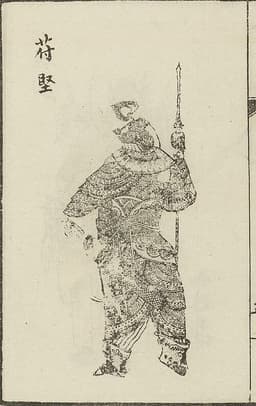
Fu Jian
Emperor · Ancient
64.4Total
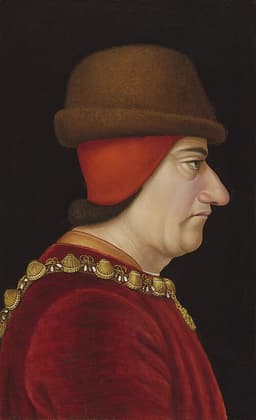
Louis XI of France
Emperor · Medieval
66.2Total
Basic Information
Born
338
1423
Died
385
1483
Era
Ancient
Medieval
Nationality
China
France
Occupation
Emperor
Emperor
Civilization
Eastern
Western
Score Comparison
Military (10%)
78.0
47.5
Political (20%)
72.0
78.0
Influence (20%)
59.0
65.0
Legacy (20%)
50.0
65.0
Leadership (15%)
85.0
78.0
Strategy (15%)
58.0
55.0
TOTAL
64.4
66.2
Fu Jian — Complete Timeline
370 AD
Conquest of Former YanWar◆ Major
Fu Jian's Former Qin forces conquered the Former Yan state, annexing its territory in northern China. This victory significantly expanded Former Qin's power and territory, bringing Fu Jian closer to unifying the north.
ConquestExpansion
Impact: regionalconstructive
376 AD
Conquest of Former LiangWar◆ Major
Fu Jian's forces conquered the Former Liang state in the northwest, incorporating its territory into Former Qin. This further consolidated his control over northern China.
ConquestExpansion
Impact: regionalconstructive
Conquest of DaiWar
Fu Jian's army conquered the Dai state, a Xianbei confederation in the north. This eliminated a rival and extended Former Qin's influence into the steppe region.
ConquestExpansion
Impact: regionalconstructive
379 AD
Capture of XiangyangWar
Fu Jian's forces captured the strategic city of Xiangyang from the Eastern Jin dynasty. This victory gave Former Qin a foothold south of the Huai River, setting the stage for the invasion that led to the Battle of Fei River.
ConquestCampaign
Impact: regionalconstructive
383 AD
Battle of Fei RiverWar
Fu Jian led a massive Former Qin army against the Eastern Jin dynasty at the Fei River. The Jin forces defeated the Qin army, causing a catastrophic rout. This defeat shattered Fu Jian's unification efforts and led to the collapse of Former Qin.
BattleUnificationDefeat
Impact: regionaltragic
Louis XI of France — Complete Timeline
1464 AD
Established the Postal ServiceReform
Louis XI established a royal postal service, creating a network of relay stations for rapid communication across France. This system improved administrative efficiency and royal control over the realm.
Postal ServiceAdministrationCommunication
Impact: nationalconstructive
1465 AD
Defeated the League of the Public WealWar◆ Major
Louis XI defeated the League of the Public Weal, a coalition of rebellious nobles led by the Duke of Burgundy and the Duke of Berry. The victory at the Battle of Montlh
Civil WarNobilityRoyal Authority
Impact: national
1469 AD
Imprisoned Cardinal BaluePolitical Action
Louis XI imprisoned his own minister, Cardinal Jean Balue, for treason after discovering his secret correspondence with Charles the Bold. Balue was held in an iron cage for over a decade, demonstrating Louis's ruthless treatment of disloyal officials.
ImprisonmentTreasonIron Cage
Impact: nationaldestructive
1474 AD
Supported the Swiss Confederacy against BurgundyWar
Louis XI provided financial and diplomatic support to the Swiss Confederacy in their war against Charles the Bold of Burgundy. This alliance contributed to Burgundy's defeat and the eventual collapse of the Burgundian state.
AllianceSwissBurgundian Wars
Impact: regionalconstructive
1475 AD
Signed the Treaty of PicquignyPolitical Action◆ Major
Louis XI signed the Treaty of Picquigny with King Edward IV of England, ending the Hundred Years' War. The treaty included a payment to Edward IV to withdraw his invading army, securing peace and saving France from invasion.
TreatyHundred Years' WarDiplomacy
Impact: regionalconstructive
1477 AD
Acquired the Duchy of BurgundyWar◆ Major
After the death of Charles the Bold at the Battle of Nancy, Louis XI seized the Duchy of Burgundy and other Burgundian territories. This acquisition significantly expanded the French crown's lands and reduced Burgundian power.
Territorial ExpansionBurgundyRoyal Domain
Impact: regionalconstructive
Expert Analysis
Fu Jian vs Louis XI of France
# The Spider and the Emperor: Two Visions of Power in a Fractured World
In the autumn of 383, on the banks of the Fei River in southern China, a man who had conquered nearly all of the north watched his army of perhaps 800,000 men dissolve into chaos before a fraction of that number. Fu Jian, Emperor of Former Qin, had staked everything on one battle—and lost. Less than a century earlier, across the world in France, another ruler would have understood his mistake instantly. Louis XI, the “Universal Spider,” never fought such a battle. He didn’t need to. Where Fu Jian sought to crush his enemies in a single, glorious stroke, Louis wove webs of intrigue, patience, and cold calculation. One man tried to unite a fractured world through overwhelming force; the other did so through relentless, quiet pressure. Their divergent fates reveal the deepest truths about power, personality, and the eras that shaped them.
Origins
Fu Jian was born in 338 into the Di people, a non-Han ethnic group that had carved out a kingdom amid the chaos of the Sixteen Kingdoms period. He became emperor at nineteen, inheriting a realm that was little more than a tribal confederation. His world was one of constant war, where legitimacy came from the sword and survival depended on conquest. He was raised on horseback, steeped in the martial traditions of the steppe, but he also admired Chinese civilization—its bureaucracy, its philosophy, its promise of order. This tension between warrior and scholar would define his reign.
Louis XI came into the world in 1423, a prince of the House of Valois, during the final, grinding decades of the Hundred Years’ War. His father, Charles VII, was a king who had been saved by Joan of Arc but remained weak, indecisive, and surrounded by treacherous nobles. Louis grew up in a court where loyalty was a currency that could be counterfeited, where the great dukes of Burgundy, Brittany, and Armagnac wielded more power than the crown. He learned early that the throne was not a seat of authority but a prize to be defended—and that the most dangerous enemies often wore crowns themselves.
Rise to Power
Fu Jian’s ascent was swift and brutal. In 370, he crushed the Former Yan state, annexing its vast territories in a single campaign. By 376, he had swallowed the Former Liang in the northwest and the Dai confederation in the north. City after city fell: Xiangyang in 379, a strategic gateway to the south. He was not merely conquering; he was building an empire that promised to reunite China after centuries of division. His success bred confidence, and confidence bred ambition.
Louis XI became king in 1461, but his rise was not a series of battles. It was a labyrinth of diplomacy, betrayal, and patience. As dauphin, he had rebelled against his own father, fled to the court of Burgundy, and learned the arts of intrigue from his enemies. When he finally took the throne, he faced the League of the Public Weal in 1465—a coalition of nobles so powerful they could dictate terms to a king. Louis lost the initial war but won the peace, buying off his enemies, sowing discord among them, and waiting for them to destroy each other.
Leadership & Governance
Fu Jian ruled as a conqueror-emperor, but he tried to be more. He appointed Chinese scholars to his court, promoted Confucian learning, and attempted to integrate his diverse subjects—Di, Xianbei, Qiang, Han—into a single, harmonious state. He was generous to defeated enemies, often giving them high office. This was not weakness; it was a vision of unity through inclusion. But it was also a gamble. His army was a patchwork of conquered peoples whose loyalty was to their own leaders, not to him.
Louis XI governed as a spider in the center of a web. He established a royal postal service in 1464, creating a network of relay stations that allowed him to communicate with any part of France faster than any noble could. He promoted trade, fostered industry, and built alliances with the rising merchant class. He understood that power was not about the size of your army but the reach of your information. When Cardinal Balue, his own minister, betrayed him in 1469, Louis imprisoned him in an iron cage for eleven years. The message was clear: the king saw everything.
Triumph & Tragedy
Fu Jian’s greatest moment was also his greatest tragedy. At the Fei River in 383, he faced the Eastern Jin dynasty, the last remnant of a unified China. He had every advantage: numbers, momentum, a string of victories. But his army was a coalition, not a nation. When the Jin forces feigned retreat and the Qin lines began to waver, a single cry—“The emperor’s army is defeated!”—spread panic through the ranks. The retreat became a rout. Fu Jian watched his empire dissolve in a single afternoon.
Louis XI’s triumph came in 1477, after the death of his greatest enemy, Charles the Bold of Burgundy, at the Battle of Nancy. Louis had not fought the battle; he had funded the Swiss mercenaries who won it. He then moved swiftly to seize the Duchy of Burgundy, the richest territory in Europe, and absorbed it into the French crown. He did not need to win a great victory—he needed only to be there when his enemy fell.
Character & Destiny
Fu Jian was a man of grand visions and fatal generosity. He believed that if he treated his enemies well, they would become his friends. He was wrong. The Xianbei and Qiang generals he had spared and promoted were the ones who tore his empire apart after Fei River. His tragedy was not that he was cruel, but that he was too trusting in a world that rewarded suspicion.
Louis XI was suspicious to the point of paranoia. He wore plain clothes, lived in fortified castles, and trusted almost no one. He was called the “Universal Spider” not just for his web of intrigue but for his appearance—pale, thin, with long fingers and a hunched back. Yet his paranoia served him. He survived assassination attempts, outmaneuvered the most powerful nobles in Europe, and died in his bed in 1483, having made France the strongest kingdom on the continent.
Legacy
Fu Jian is remembered as a tragic figure, a man who almost united China but failed because he could not control the forces he had unleashed. His defeat at Fei River became a cautionary tale about overreach, about the limits of military power, about the dangers of trusting former enemies. His name lives on, but as a warning.
Louis XI is remembered as a founder, the king who laid the foundations of the French absolute monarchy. His methods were cunning, his character cold, but his results were undeniable. He transformed a kingdom of warring duchies into a centralized state. The postal system he created would last for centuries. The spider’s web held.
Conclusion
What separates a conqueror from a builder? Fu Jian and Louis XI both faced a world of fragments—one of warring states, the other of warring nobles. Both sought unity. But Fu Jian tried to forge it with the sword, while Louis wove it with silk threads of diplomacy, patience, and intelligence. One trusted too much; the other trusted too little. In the end, the spider outlived the emperor, not because he was braver or more virtuous, but because he understood that the hardest battles are not fought on fields but in the minds of men. The Fei River taught a lesson that Louis XI already knew: sometimes the best way to win is not to fight at all.
Rankings
🥇
Louis XI of FranceLeader
Mil: 47.5Pol: 78.0Inf: 65.0
66.2
🥈
Fu Jian
Mil: 78.0Pol: 72.0Inf: 59.0
64.4
+1.8 behind
How This Comparison Works
Algorithm
Each figure is scored on 6 dimensions (0—100 scale) based on structured historical data: Military (10%), Political (20%), Influence (20%), Legacy (20%), Leadership (15%), Strategy (15%). The weighted total produces the final ranking.
Data Sources
Scores are computed from structured sub-indicators in the database. Scale factors adjust for era (Ancient ×0.85, Modern ×1.0) and civilization size (Eastern ×1.05, Other ×0.80) to account for differences in population and military scale.
Maximum 3 Figures
Comparisons are limited to 2—3 figures to ensure readability and statistical meaningfulness.
Error Margins
±5 points per dimension — Sub-scores are derived from historical records with inherent uncertainty. Two figures within 5 points on a dimension should be considered roughly equivalent in that area.
Total Score Accuracy
±3 points overall — The weighted combination of 6 dimensions produces a total score with approximately ±3 points of uncertainty. Differences of less than 3 points are not statistically significant— the figures are effectively tied.
Known Limitations
- Historical records are incomplete and uneven across civilizations
- Figures from oral-tradition societies may be underrepresented
- Occupation labels can misclassify multi-role figures
- Scores measure capability and impact, not moral character
- Quantitative scoring is a comparison tool, not absolute truth
Capability Radar
Military (10%) — Battles & Warfare
Battles
75
45
Win Rate
70
50
Expansion
80
60
Political (20%) — Governance & Reform
Reform
70
80
Diplomacy
60
90
Economy
65
75
Influence (20%) — Cultural & Global Reach
Cultural
50
60
Global
45
65
Legacy (20%) — Historical Impact
Historical
60
80
Longevity
40
75
Leadership (15%) — Power & Stability
Tenure
65
85
Stability
55
70
Strategy (15%) — Tactics & Innovation
Strategy
70
70
Tactics
65
55
Reform
60
65
Similar Comparisons
Comments & Discussion
FeiRiverButcher6/16/2026
Anyone who cites Fu Jian’s 800,000 as “evidence” of his power doesn’t understand logistics. That number is a propaganda figure from hostile Jin dynasty sources. Real military historians know you can’t feed, command, or maneuver such a force in fourth-century terrain. Fu Jian’s real failure wasn’t overconfidence—it was that he couldn’t even count his own army. Louis XI, for all his sneaky reputation, never inflated his numbers because he didn’t need to. He knew power isn’t about how many men you
铁血蜘蛛6/16/2026
别把路易十一吹得那么神。他最著名的“蜘蛛网”不过是靠金钱收买贵族和外国雇佣兵,这是懦夫的策略。符坚至少敢在淝水硬碰硬,输了也是堂堂正正。路易十一打过一场像样的仗吗?他连正面交锋的勇气都没有。真正的帝王应该像符坚那样,哪怕失败,也要像流星一样燃烧过。阴谋家永远比不上真正的战士。