Loading...
Louis XI of France vs Nur ad-Din
Nur ad-Din leads by 2.1 pts · 2 figures compared
…
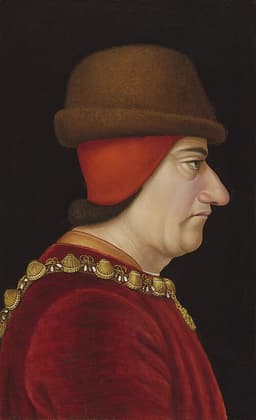
Louis XI of France
Emperor · Medieval
66.2Total
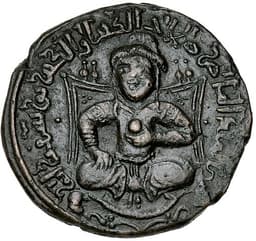
Nur ad-Din
Emperor · Medieval
68.3Total
Basic Information
Born
1423
1118
Died
1483
1174
Era
Medieval
Medieval
Nationality
France
Zengid dynasty
Occupation
Emperor
Emperor
Civilization
Western
Middle Eastern
Score Comparison
Military (10%)
47.5
78.0
Political (20%)
78.0
62.7
Influence (20%)
65.0
56.7
Legacy (20%)
65.0
72.0
Leadership (15%)
78.0
79.8
Strategy (15%)
55.0
69.1
TOTAL
66.2
68.3
Louis XI of France — Complete Timeline
1464 AD
Established the Postal ServiceReform
Louis XI established a royal postal service, creating a network of relay stations for rapid communication across France. This system improved administrative efficiency and royal control over the realm.
Postal ServiceAdministrationCommunication
Impact: nationalconstructive
1465 AD
Defeated the League of the Public WealWar◆ Major
Louis XI defeated the League of the Public Weal, a coalition of rebellious nobles led by the Duke of Burgundy and the Duke of Berry. The victory at the Battle of Montlh
Civil WarNobilityRoyal Authority
Impact: national
1469 AD
Imprisoned Cardinal BaluePolitical Action
Louis XI imprisoned his own minister, Cardinal Jean Balue, for treason after discovering his secret correspondence with Charles the Bold. Balue was held in an iron cage for over a decade, demonstrating Louis's ruthless treatment of disloyal officials.
ImprisonmentTreasonIron Cage
Impact: nationaldestructive
1474 AD
Supported the Swiss Confederacy against BurgundyWar
Louis XI provided financial and diplomatic support to the Swiss Confederacy in their war against Charles the Bold of Burgundy. This alliance contributed to Burgundy's defeat and the eventual collapse of the Burgundian state.
AllianceSwissBurgundian Wars
Impact: regionalconstructive
1475 AD
Signed the Treaty of PicquignyPolitical Action◆ Major
Louis XI signed the Treaty of Picquigny with King Edward IV of England, ending the Hundred Years' War. The treaty included a payment to Edward IV to withdraw his invading army, securing peace and saving France from invasion.
TreatyHundred Years' WarDiplomacy
Impact: regionalconstructive
1477 AD
Acquired the Duchy of BurgundyWar◆ Major
After the death of Charles the Bold at the Battle of Nancy, Louis XI seized the Duchy of Burgundy and other Burgundian territories. This acquisition significantly expanded the French crown's lands and reduced Burgundian power.
Territorial ExpansionBurgundyRoyal Domain
Impact: regionalconstructive
Nur ad-Din — Complete Timeline
1149 AD
Battle of InabWar◆ Major
Nur ad-Din defeated the Crusader Principality of Antioch at the Battle of Inab. Prince Raymond of Antioch was killed, and the victory weakened Crusader control in northern Syria, marking a turning point in the Muslim counter-crusade.
BattleCrusadesAntioch
Impact: regional
1150 AD
Promotion of Sunni OrthodoxyCultural◆ Major
Nur ad-Din built numerous madrasas, mosques, and hospitals across Syria, promoting Sunni Islam and countering Shi'a influence. His patronage of religious institutions strengthened the Sunni identity of his realm and laid the ideological foundation for jihad against the Crusaders.
Sunni RevivalMadrasaJihad
Impact: regionalconstructive
1154 AD
Unification of SyriaWar◆ Major
Nur ad-Din captured Damascus from the Burid dynasty, uniting Syria under his rule. This consolidation created a powerful Muslim state that could effectively confront the Crusader states in the Levant.
ConquestSyriaUnification
Impact: regional
1164 AD
Siege of HarimWar
Nur ad-Din captured the fortress of Harim from the Crusaders after a prolonged siege. This victory further reduced Crusader territory in Syria and demonstrated Nur ad-Din's military persistence.
SiegeCrusadesFortress
1169 AD
Mentorship of SaladinPolitical Action◆ Major
Nur ad-Din sent his general Shirkuh, accompanied by his nephew Saladin, to Egypt to intervene in Fatimid politics. After Shirkuh's death, Saladin became vizier of Egypt, eventually breaking from Nur ad-Din's control, but the campaign laid the groundwork for Saladin's later successes.
SaladinEgyptFatimids
Impact: regional
Expert Analysis
Origins
Louis XI of France was born in 1423, son of King Charles VII and Marie of Anjou. He grew up during the final stages of the Hundred Years' War, witnessing French recovery after Joan of Arc. His education emphasized statecraft, and he developed a reputation for intrigue early, earning the nickname 'Universal Spider.'
Nur ad-Din, born in 1118 in Mosul, was the son of Zengi, the atabeg of Mosul and Aleppo. He grew up in a military and political household, learning governance and war from his father. His early life was shaped by the struggle against the Crusader states.
Rise to Power
Louis XI ascended the throne in 1461, but his reign began with conflict. He faced the League of the Public Weal in 1465, a coalition of nobles led by Charles the Bold of Burgundy. Louis defeated them at the Battle of Montlhéry (score 47.5 military) and used diplomacy to divide his enemies, securing a temporary truce.
Nur ad-Din became ruler of Aleppo after his father's assassination in 1146. He quickly consolidated power, capturing Edessa in 1146. His major breakthrough came in 1154 when he took Damascus, uniting Syria under his rule. This political move (score 62.7) created a powerful Sunni state.
Leadership & Governance
Louis XI centralized French administration. He established a royal postal service for rapid communication and reformed the tax system. He favored low-born officials over nobles, weakening feudal power. His governance score is 78.0, reflecting his ability to control the state.
Nur ad-Din promoted Sunni orthodoxy, building madrasas and hospitals. He patronized scholars and established a legal system based on Sharia. His leadership score is 79.8, showing his effectiveness in both military and religious spheres.
Triumph & Tragedy
Louis XI's greatest triumph was acquiring Burgundy after Charles the Bold's death in 1477, expanding French territory significantly. He also signed the Treaty of Picquigny in 1475, ending English claims in France. His tragedy was his paranoia; he imprisoned Cardinal Balue for treason and lived in fear of assassination, isolating himself in his final years.
Nur ad-Din's triumph was the unification of Syria and his victories at Inab (1149) and Harim (1164). He laid the groundwork for Saladin's success. His tragedy was his failure to capture Egypt himself; his general Shirkuh and Saladin took power there, and Nur ad-Din died in 1174 before he could fully control the region.
Character & Destiny
Louis XI was secretive, calculating, and ruthless. He used spies and bribery extensively. His character shaped his fate: his cunning allowed him to outmaneuver enemies, but his distrust led to isolation. He died in 1483, leaving a unified France.
Nur ad-Din was pious, just, and determined. He was known for his humility and dedication to jihad. His character earned him respect from allies and enemies. He died in 1174, possibly poisoned, but his legacy endured through Saladin.
Legacy
Louis XI's legacy is the unification of France under a strong monarchy, which paved the way for the Renaissance monarchy. His administrative reforms influenced French governance for centuries. His legacy score is 65.0.
Nur ad-Din's legacy is the unification of Syria and the promotion of Sunni Islam. He is remembered as a just ruler who inspired Saladin. His legacy score is 72.0, reflecting his enduring impact on Islamic history.
Conclusion
While Louis XI unified France through political manipulation (total score 66.2), Nur ad-Din's military and religious contributions (total score 68.3) had a broader impact on the Crusades and Islamic unity. Nur ad-Din's mentorship of Saladin led to the recapture of Jerusalem, a more transformative event than Louis's territorial consolidation. Therefore, Nur ad-Din had greater historical impact.
Rankings
🥇
Nur ad-DinLeader
Mil: 78.0Pol: 62.7Inf: 56.7
68.3
🥈
Louis XI of France
Mil: 47.5Pol: 78.0Inf: 65.0
66.2
+2.1 behind
How This Comparison Works
Algorithm
Each figure is scored on 6 dimensions (0—100 scale) based on structured historical data: Military (10%), Political (20%), Influence (20%), Legacy (20%), Leadership (15%), Strategy (15%). The weighted total produces the final ranking.
Data Sources
Scores are computed from structured sub-indicators in the database. Scale factors adjust for era (Ancient ×0.85, Modern ×1.0) and civilization size (Eastern ×1.05, Other ×0.80) to account for differences in population and military scale.
Maximum 3 Figures
Comparisons are limited to 2—3 figures to ensure readability and statistical meaningfulness.
Error Margins
±5 points per dimension — Sub-scores are derived from historical records with inherent uncertainty. Two figures within 5 points on a dimension should be considered roughly equivalent in that area.
Total Score Accuracy
±3 points overall — The weighted combination of 6 dimensions produces a total score with approximately ±3 points of uncertainty. Differences of less than 3 points are not statistically significant— the figures are effectively tied.
Known Limitations
- Historical records are incomplete and uneven across civilizations
- Figures from oral-tradition societies may be underrepresented
- Occupation labels can misclassify multi-role figures
- Scores measure capability and impact, not moral character
- Quantitative scoring is a comparison tool, not absolute truth
Capability Radar
Military (10%) — Battles & Warfare
Battles
45
75
Win Rate
50
80
Expansion
60
80
Political (20%) — Governance & Reform
Reform
80
85
Diplomacy
90
90
Economy
75
75
Influence (20%) — Cultural & Global Reach
Cultural
60
65
Global
65
60
Legacy (20%) — Historical Impact
Historical
80
80
Longevity
75
70
Leadership (15%) — Power & Stability
Tenure
85
80
Stability
70
70
Strategy (15%) — Tactics & Innovation
Strategy
70
85
Tactics
55
70
Reform
65
75
Similar Comparisons
Comments & Discussion
No comments yet. Be the first to share your thoughts!