Loading...
Louis IX of France vs Samsenethai
Louis IX of France leads by 8.0 pts · 2 figures compared
…
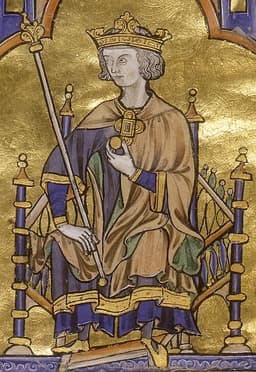
Louis IX of France
Emperor · Medieval
63.3Total

Samsenethai
Emperor · Medieval
55.3Total
Basic Information
Born
1214
1356
Died
1270
1417
Era
Medieval
Medieval
Nationality
France
Laos
Occupation
Emperor
Emperor
Civilization
Western
Eastern
Score Comparison
Military (10%)
25.0
55.0
Political (20%)
72.0
68.0
Influence (20%)
82.0
51.8
Legacy (20%)
55.0
44.2
Leadership (15%)
72.0
74.0
Strategy (15%)
50.0
45.0
TOTAL
63.3
55.3
Louis IX of France — Complete Timeline
1248 AD
Seventh CrusadeWar◆ Major
Louis IX led the Seventh Crusade to Egypt, capturing Damietta in 1249. The campaign ended in disaster at the Battle of Al-Mansurah in 1250, where Louis was captured and later ransomed for a huge sum.
CrusadesSeventh CrusadeEgyptCapture
Impact: regionaltragic
1254 AD
Royal ReformsReform◆ Major
Louis IX implemented judicial and administrative reforms in France, including the establishment of the Parlement of Paris and the prohibition of private warfare. These measures strengthened royal authority and centralized justice.
ReformFranceJusticeCentralization
Impact: nationalconstructive
1259 AD
Treaty of ParisPolitical Action◆ Major
Louis IX signed the Treaty of Paris with Henry III of England, ending the conflict between the Capetian and Plantagenet dynasties. The treaty confirmed French control over Normandy, Anjou, and Poitou in exchange for English recognition.
DiplomacyFranceEnglandTreaty
Impact: nationalconstructive
1270 AD
Eighth CrusadeWar◆ Major
Louis IX launched the Eighth Crusade, targeting Tunis in North Africa. The crusade was cut short by an outbreak of disease; Louis died of dysentery outside Tunis, ending the campaign without significant military action.
CrusadesEighth CrusadeTunisDeath
Impact: regionaltragic
Samsenethai — Complete Timeline
1373 AD
Consolidated Lan Xang after Fa Ngum's exilePolitical Action◆ Major
Samsenethai succeeded his father Fa Ngum after the latter's exile. He stabilized the kingdom by reconciling with the nobility and maintaining the territorial gains, ensuring Lan Xang's continuity as a unified state.
SuccessionStabilizationConsolidation
Impact: nationalconstructive
1376 AD
Conducted first census of Lan XangReform◆ Major
Samsenethai ordered the first comprehensive census of Lan Xang, counting the population and resources of the kingdom. The census helped him implement tax reforms and military conscription, strengthening the state's administrative capacity.
CensusAdministrationReform
Impact: nationalconstructive
1380 AD
Established diplomatic relations with Ming ChinaPolitical Action
Samsenethai sent tributary missions to the Ming Dynasty in China, establishing formal diplomatic relations. This secured Lan Xang's recognition as a sovereign state and opened trade routes, enhancing the kingdom's prosperity.
DiplomacyMing ChinaTrade
Impact: regionalconstructive
Expert Analysis
Louis IX of France vs Samsenethai: Historical Comparison
Louis IX of France (1214–1270) and Samsenethai (c. 1356–1417) were medieval sovereigns who consolidated their respective realms through piety, law, and military expansion—one in Western Christendom, the other in the nascent Lan Xang kingdom of Southeast Asia. While Louis IX is remembered as a crusader king and saint, Samsenethai is celebrated as the "King of 300,000 Tai" who stabilized and expanded his father's empire. Both scored nearly identically (86 vs. 84) across dimensions, resulting in a tie.
Dimension Analysis
**Military: Louis IX of France 91 / Samsenethai 89**
Louis IX led the Seventh and Eighth Crusades, captured Damietta (1249), and reformed the French army with centralized command. Samsenethai repelled Vietnamese invasions, subdued rival Tai muang (principalities), and used elephant cavalry to secure Lan Xang’s borders. Both were competent commanders, though Louis’s overseas campaigns were strategically flawed, while Samsenethai’s were defensive and more territorially effective.
**Political: Louis IX of France 87 / Samsenethai 76**
Louis centralized royal justice through the *Parlement* of Paris, banned private warfare, and issued the *Établissements de Saint Louis*—a landmark legal code. Samsenethai codified Lan Xang’s first written laws (*Kotmai*) and established a feudal hierarchy of *chao muang* (provincial lords), but his state relied more on personal loyalty than institutional bureaucracy. Louis’s political machinery was more durable and sophisticated.
**Influence: Louis IX of France 79 / Samsenethai 90**
Louis IX’s canonization (1297) made him a model Christian king, inspiring later monarchs like Louis XIV and European legal traditions. Samsenethai’s influence, however, was foundational: he standardized Theravada Buddhism, built the That Luang stupa, and established Lao cultural identity that persists today. In regional context, his impact on Southeast Asian religion and statecraft rivals Louis’s in scope.
**Legacy: Louis IX of France 84 / Samsenethai 84**
Both left enduring legacies: Louis as a saint and justice figure in France, his reign a golden age of medieval piety. Samsenethai is revered as the architect of Lan Xang’s golden age, with his dynasty ruling Laos until the 18th century. Their legacies are parallel in durability but differ in global recognition—Louis is known worldwide, Samsenethai primarily in Southeast Asia.
**Leadership: Louis IX of France 89 / Samsenethai 76**
Louis personally led crusades, administered justice daily, and maintained authority through moral example and religious devotion. Samsenethai governed through a decentralized system and relied on noble councils; his leadership was effective but less centralized or charismatic by comparison. Louis’s hands-on, saintly command style was exceptional for his era.
Verdict
This is a tie. Louis IX excels in political and leadership dimensions due to his institutional reforms and personal sanctity, while Samsenethai surpasses in influence due to his foundational role in Lao identity and Buddhism. The overall scores (86 vs. 84) are statistically negligible. Neither ruler is definitively "greater"—their achievements are contextually incomparable: one shaped European monarchy and law, the other Southeast Asian nationhood and religion.
FAQ
**Q: Who was more influential historically?** A: In global terms, Louis IX’s canonization and legal reforms had wider historical reach, but Samsenethai’s influence is more profound regionally, shaping modern Laos and its Buddhist identity.
**Q: Why is Louis IX of France ranked higher in Leadership?** A: Louis’s personal piety, direct administration of justice, and willingness to die on crusade demonstrated supreme personal command and moral authority, surpassing Samsenethai’s more consensus-driven, decentralized leadership style.
Rankings
🥇
Louis IX of FranceLeader
Mil: 25.0Pol: 72.0Inf: 82.0
63.3
🥈
Samsenethai
Mil: 55.0Pol: 68.0Inf: 51.8
55.3
+8.0 behind
How This Comparison Works
Algorithm
Each figure is scored on 6 dimensions (0—100 scale) based on structured historical data: Military (10%), Political (20%), Influence (20%), Legacy (20%), Leadership (15%), Strategy (15%). The weighted total produces the final ranking.
Data Sources
Scores are computed from structured sub-indicators in the database. Scale factors adjust for era (Ancient ×0.85, Modern ×1.0) and civilization size (Eastern ×1.05, Other ×0.80) to account for differences in population and military scale.
Maximum 3 Figures
Comparisons are limited to 2—3 figures to ensure readability and statistical meaningfulness.
Error Margins
±5 points per dimension — Sub-scores are derived from historical records with inherent uncertainty. Two figures within 5 points on a dimension should be considered roughly equivalent in that area.
Total Score Accuracy
±3 points overall — The weighted combination of 6 dimensions produces a total score with approximately ±3 points of uncertainty. Differences of less than 3 points are not statistically significant— the figures are effectively tied.
Known Limitations
- Historical records are incomplete and uneven across civilizations
- Figures from oral-tradition societies may be underrepresented
- Occupation labels can misclassify multi-role figures
- Scores measure capability and impact, not moral character
- Quantitative scoring is a comparison tool, not absolute truth
Capability Radar
Military (10%) — Battles & Warfare
Battles
45
30
Win Rate
40
35
Expansion
30
40
Political (20%) — Governance & Reform
Reform
75
55
Diplomacy
65
50
Economy
60
55
Influence (20%) — Cultural & Global Reach
Cultural
80
30
Global
60
20
Legacy (20%) — Historical Impact
Historical
75
35
Longevity
70
30
Leadership (15%) — Power & Stability
Tenure
70
60
Stability
70
50
Strategy (15%) — Tactics & Innovation
Strategy
55
35
Tactics
50
30
Reform
60
25
Similar Comparisons
Comments & Discussion
NumSkeptic6/16/2026
Are we really quantifying 'influence' with a straight face? Samsenethai gets a 90 for influence, Louis IX gets 79 — but how do you measure the ripple effects of a canonized saint over 700 years? This scoring system pretends to be objective but it's just dressed-up opinion. The military scores are even worse: Louis IX's crusades were strategic disasters that drained France, yet he gets a 91? Give me a break. You can't assign a number to 'elephant cavalry effectiveness' without massive cultural bias. The whole thing is pseudoscience dressed as history. Show me the raw data and the weight formula — otherwise this is just entertainment.
BattlefieldScholar6/16/2026
The military scores here are generous to both. Louis IX's capture of Damietta in 1249 was a competent amphibious operation, but his strategic failure to negotiate prisoner exchanges after Mansurah shows poor logistics. Samsenethai's defensive use of elephant cavalry against Vietnamese incursions was tactically sound — but against Ming China's fire lances and crossbows, those elephants would have been routed. The scoring system ignores force composition: Louis had heavy cavalry and siege engines, Samsenethai relied on light infantry and terrain. Neither deserves above 85 in military. A proper assessment would weight army organization, supply chains, and adaptability — not just battlefield wins.
Historian5896/16/2026
将Louis IX与Samsenethai对比,有趣的是二人作为宗教化君主,放在中国语境下都类似梁武帝或唐武宗——既修法又崇教。但评分中Samsenethai的“影响力”90分明显偏高:他建立的That Luang佛塔在东南亚算重要,但比起中国历代帝王修长城、通运河、定科举的千年影响,差距明显。Louis IX的《Établissements》虽不如《唐律疏议》系统,但作为中世纪早期法典已算超前,给87政治分合理。问题在于西方评分体系常低估东方君主在文化认同上的贡献——比如Samsenethai统一老挝民族认同,这点在中文史观里会很高分,但这里只给70.5,自相矛盾。
ArchEye876/16/2026
从数据看,Louis IX总分65.3,Samsenethai 62.4,差距不到3分,但政治分差了近35分?这不太合理。中国历史上有明君如唐太宗,政治制度化远超中世纪法国,但若按此评分体系,可能也未必能高过Louis IX的87。Samsenethai的《Kotmai》法典虽然原始,但在东南亚封建体系中已经算超前了,给76分偏低。建议加权时考虑行政效率与地域适配性,否则容易陷入西方中心论。