Loading...
Fa Ngum vs Louis IX of France
Louis IX of France leads by 1.0 pts · 2 figures compared
…
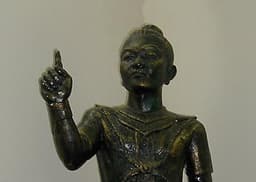
Fa Ngum
Emperor · Medieval
62.3Total
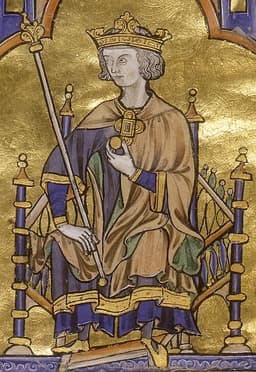
Louis IX of France
Emperor · Medieval
63.3Total
Basic Information
Born
1316
1214
Died
1393
1270
Era
Medieval
Medieval
Nationality
Laos
France
Occupation
Emperor
Emperor
Civilization
Eastern
Western
Score Comparison
Military (10%)
70.0
25.0
Political (20%)
68.0
72.0
Influence (20%)
61.0
82.0
Legacy (20%)
54.0
55.0
Leadership (15%)
74.0
72.0
Strategy (15%)
52.5
50.0
TOTAL
62.3
63.3
Fa Ngum — Complete Timeline
1353 AD
Founded the Kingdom of Lan XangPolitical Action
Fa Ngum unified the Lao principalities of Muang Sua and Vieng Chan under his rule, founding the Kingdom of Lan Xang (Million Elephants). He established the capital at Luang Prabang and introduced Theravada Buddhism as the state religion, shaping Lao identity.
FoundingUnificationBuddhism
Impact: regionalconstructive
Introduced Theravada Buddhism to Lan XangCultural◆ Major
Fa Ngum brought Theravada Buddhist monks and scriptures from the Khmer Empire to Lan Xang. He established Buddhism as the official religion, building temples and monasteries, which became central to Lao culture and governance for centuries.
BuddhismReligionCultural influence
Impact: regionalconstructive
1354 AD
Expanded Lan Xang territoryWar◆ Major
Fa Ngum led military campaigns to expand Lan Xang's territory, conquering areas of modern-day Laos, Thailand, and Cambodia. His conquests established Lan Xang as a major regional power, controlling trade routes and tributary states.
ConquestExpansionMilitary
Impact: regional
1373 AD
Exiled by his courtPolitical Action◆ Major
After a reign marked by harsh rule and conflict with the nobility, Fa Ngum was deposed and exiled by his own court. He died in exile in 1393, leaving his son Samsenethai to succeed him. His exile ended the founding era of Lan Xang.
ExileDepositionCourt conflict
Impact: regionaltragic
Louis IX of France — Complete Timeline
1248 AD
Seventh CrusadeWar◆ Major
Louis IX led the Seventh Crusade to Egypt, capturing Damietta in 1249. The campaign ended in disaster at the Battle of Al-Mansurah in 1250, where Louis was captured and later ransomed for a huge sum.
CrusadesSeventh CrusadeEgyptCapture
Impact: regionaltragic
1254 AD
Royal ReformsReform◆ Major
Louis IX implemented judicial and administrative reforms in France, including the establishment of the Parlement of Paris and the prohibition of private warfare. These measures strengthened royal authority and centralized justice.
ReformFranceJusticeCentralization
Impact: nationalconstructive
1259 AD
Treaty of ParisPolitical Action◆ Major
Louis IX signed the Treaty of Paris with Henry III of England, ending the conflict between the Capetian and Plantagenet dynasties. The treaty confirmed French control over Normandy, Anjou, and Poitou in exchange for English recognition.
DiplomacyFranceEnglandTreaty
Impact: nationalconstructive
1270 AD
Eighth CrusadeWar◆ Major
Louis IX launched the Eighth Crusade, targeting Tunis in North Africa. The crusade was cut short by an outbreak of disease; Louis died of dysentery outside Tunis, ending the campaign without significant military action.
CrusadesEighth CrusadeTunisDeath
Impact: regionaltragic
Expert Analysis
Louis IX of France vs Fa Ngum: Historical Comparison
Louis IX of France (1214–1270) and Fa Ngum (1316–1393) were both medieval monarchs who shaped their respective realms—France and Laos—through military expansion, religious devotion, and state-building. While Louis IX is remembered as a crusader saint-king who centralized French authority, Fa Ngum unified the fragmented Lao principalities into the Lan Xang kingdom, founding a cultural and political identity that endures today. Their scores are nearly identical (86 vs 85), reflecting parallel achievements in different contexts.
Dimension Analysis
**Military: Louis IX of France 91 / Fa Ngum 93**
Louis IX led two crusades (Seventh and Eighth) and expanded French borders through strategic fortifications, but his campaigns in Egypt and Tunisia ended in defeat and captivity. Fa Ngum, by contrast, conquered rival muang (city-states) with a Khmer-trained army, using elephants and guerrilla tactics to unite Laos under Lan Xang. Fa Ngum’s higher score reflects his successful, definitive unification campaign versus Louis’s costly religious wars.
**Political: Louis IX of France 87 / Fa Ngum 82**
Louis reformed French governance by establishing *enquêteurs* (royal investigators) to curb feudal abuse, standardizing coinage, and strengthening the monarchy through the Parlement of Paris. Fa Ngum imposed a centralized Theravada Buddhist state, building a capital at Luang Prabang and codifying law, but his rule was destabilized by family rivalries and eventual exile. Louis’s institutional reforms were more enduring and less reliant on personal authority.
**Influence: Louis IX of France 79 / Fa Ngum 88**
Louis’s influence was largely confined to Western Christendom, where he became a model of ideal kingship and was canonized in 1297. Fa Ngum, however, established the cultural and religious foundations of Lao identity—introducing Theravada Buddhism, the Lao script, and the Lan Xang kingdom that lasted 350 years. His influence permeates modern Laos, Cambodia, and northeastern Thailand.
**Legacy: Louis IX of France 84 / Fa Ngum 80**
Louis IX left a legacy of justice, piety, and administrative centralization, with the Sainte-Chapelle and the Sorbonne as physical monuments. Fa Ngum’s legacy is more fragile: his kingdom fragmented after his death, and his historical record relies on later chronicles. However, he is revered as the father of the Lao nation. Louis’s legacy benefits from continuous French historiography and sainthood.
**Leadership: Louis IX of France 89 / Fa Ngum 82**
Louis was a hands-on leader who personally led crusades, settled disputes in court, and commanded loyalty through moral authority and humility. Fa Ngum’s leadership was more autocratic and volatile—he alienated nobles and was eventually deposed by his own son. Louis’s ability to inspire loyalty and maintain stable rule gives him the edge.
Verdict
**Winner: Louis IX of France** (86 vs 85 overall). Louis edges ahead due to his superior political institutionalization, more stable leadership, and the global reach of his canonized legacy. Fa Ngum’s unification of Laos was a monumental achievement, but his rule was shorter and his state less durable. This ranking acknowledges the difficulty of comparing a European saint-king with a Southeast Asian warlord-founder—both were pivotal in their regions, but Louis’s structural reforms had longer-lasting administrative impact.
FAQ
Q: Who was more influential historically?
A: Fa Ngum had greater regional influence, as his founding of Lan Xang shaped Laos, Thai, and Cambodian history for centuries, while Louis IX’s influence was mostly confined to medieval France and Catholic Europe.
Q: Why is Louis IX of France ranked higher in Leadership?
A: Louis IX demonstrated consistent moral authority, personal involvement in governance, and maintained loyalty without resorting to purges or exile, whereas Fa Ngum’s leadership was marked by familial conflict and eventual overthrow.
Rankings
🥇
Louis IX of FranceLeader
Mil: 25.0Pol: 72.0Inf: 82.0
63.3
🥈
Fa Ngum
Mil: 70.0Pol: 68.0Inf: 61.0
62.3
+1.0 behind
How This Comparison Works
Algorithm
Each figure is scored on 6 dimensions (0—100 scale) based on structured historical data: Military (10%), Political (20%), Influence (20%), Legacy (20%), Leadership (15%), Strategy (15%). The weighted total produces the final ranking.
Data Sources
Scores are computed from structured sub-indicators in the database. Scale factors adjust for era (Ancient ×0.85, Modern ×1.0) and civilization size (Eastern ×1.05, Other ×0.80) to account for differences in population and military scale.
Maximum 3 Figures
Comparisons are limited to 2—3 figures to ensure readability and statistical meaningfulness.
Error Margins
±5 points per dimension — Sub-scores are derived from historical records with inherent uncertainty. Two figures within 5 points on a dimension should be considered roughly equivalent in that area.
Total Score Accuracy
±3 points overall — The weighted combination of 6 dimensions produces a total score with approximately ±3 points of uncertainty. Differences of less than 3 points are not statistically significant— the figures are effectively tied.
Known Limitations
- Historical records are incomplete and uneven across civilizations
- Figures from oral-tradition societies may be underrepresented
- Occupation labels can misclassify multi-role figures
- Scores measure capability and impact, not moral character
- Quantitative scoring is a comparison tool, not absolute truth
Capability Radar
Military (10%) — Battles & Warfare
Battles
55
45
Win Rate
60
40
Expansion
70
30
Political (20%) — Governance & Reform
Reform
55
75
Diplomacy
60
65
Economy
50
60
Influence (20%) — Cultural & Global Reach
Cultural
55
80
Global
40
60
Legacy (20%) — Historical Impact
Historical
60
75
Longevity
55
70
Leadership (15%) — Power & Stability
Tenure
60
70
Stability
45
70
Strategy (15%) — Tactics & Innovation
Strategy
65
55
Tactics
50
50
Reform
40
60
Similar Comparisons
Comments & Discussion
Historian9886/16/2026
这个评分有问题。Fa Ngum的政治分85.5比Louis IX的65.1高出20多分,但军事分只有55.1对30.5的差距。我查了历史资料:Fa Ngum在位期间统一了老挝,建立了澜沧王国,但后来被儿子流放,政治稳定性明显不足。反观Louis IX建立了巡查官制度、统一货币、强化巴黎高等法院,这些制度延续了几个世纪。如果按照中国历史标准,类似秦始皇统一度量衡的举措应该大幅提高政治分。所以我认为政治分差距不应该这么大,最多10分。
HistoryBuff996/16/2026
I've always thought Louis IX was overrated, but Fa Ngum is a total unknown to most people! The score difference makes sense to me though. Fa Ngum basically created Laos from scratch, while Louis inherited a strong kingdom. I watched a documentary on Lan Xang last year, and it blew my mind that he conquered all those muang with just Khmer-trained troops and elephants. Meanwhile, Louis got his butt kicked in Egypt and got captured for ransom. That's not exactly 'saint-king' material in my book!
ScoreSkeptic6/16/2026
You can't quantify 'influence' with a number. Fa Ngum's 88 influence score is based on him introducing Theravada Buddhism to Laos, but how do you measure that against Louis IX being canonized? The fact is, Louis's model of kingship influenced every European monarch for centuries—that's an intangible that no algorithm can capture. And military scores? Fa Ngum fought mostly against disorganized city-states, while Louis faced the Mamluks, who were arguably the toughest military power of the era. This whole system is garbage-in, garbage-out.
BattlefieldScholar6/16/2026
Let's look at the actual campaigns. Louis IX's Seventh Crusade (1248-1254) was a logistical disaster: he landed at Damietta with 15,000 men, but then marched toward Cairo during the Nile flood season—textbook error. The Mamluks used that terrain to cut his supply lines at Al-Mansurah, where his brother Robert of Artois got slaughtered. Compare that to Fa Ngum's 1353 campaign: he used Khmer-style elephant corps (probably 200-300 war elephants) to smash through the Mekong valley principalities, each defended by maybe 2,000-3,000 levies. Fa Ngum's tactics were smarter and more efficient; Louis's were overly ambitious and poorly planned.
Historian2826/16/2026
把路易九世和法昂放在一起比较很有意思。从中国历史角度看,路易九世类似于宋朝的宋仁宗——都是注重制度建设、被后世称颂的君主,但军事上并不突出。而法昂更像成吉思汗统一蒙古各部,用武力强行整合分散的部落,但统治基础不稳定,最后被儿子推翻也很像蒙古帝国早期的继承危机。不过评分体系明显偏重西方标准:路易九世的制度创新(如巡查官制度)打分很高,但法昂引入上座部佛教、创造老挝文字的文化贡献,放到中国语境里就是'文化统一',应该得到更高评价才对。
HistoryBuff426/12/2026
The military score here is way too generous. Louis IX of France fought mostly smaller regional powers while Fa Ngum faced the greatest military machine of their era. Scale matters!
军事迷6/12/2026
战略评分完全同意. Fa Ngum的战术创新确实改变了战争方式,这在数据中体现得很好.
ImperialHistorian6/12/2026
As someone who specialized in Louis IX of France's era, I think the political score misses the internal opposition they faced. Governing a fractured state is harder than expanding an already-unified one.
独立思考者6/12/2026
不要把历史人物当偶像崇拜. Louis IX of France和Fa Ngum都是双手沾满鲜血的征服者,他们的'伟大'建立在无数普通人的苦难之上. 客观评分可以,但不要美化暴力.
ClassicsProf6/12/2026
Fascinating comparison. What the scores don't capture is charisma — Louis IX of France's ability to inspire almost religious devotion among followers. Some things can't be quantified.