Loading...
Louis IX of France vs Wanyan Aguda
Wanyan Aguda leads by 0.1 pts · 2 figures compared
…
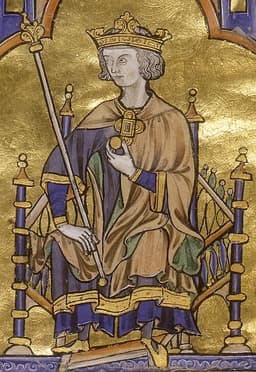
Louis IX of France
Emperor · Medieval
63.3Total
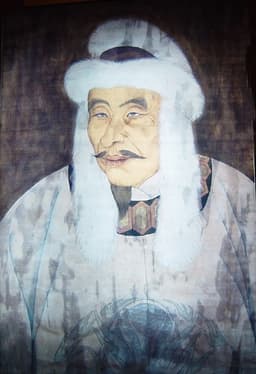
Wanyan Aguda
Emperor · Medieval
63.4Total
Basic Information
Born
1214
1068
Died
1270
1123
Era
Medieval
Medieval
Nationality
France
China
Occupation
Emperor
Emperor
Civilization
Western
Eastern
Score Comparison
Military (10%)
25.0
82.0
Political (20%)
72.0
59.3
Influence (20%)
82.0
55.0
Legacy (20%)
55.0
52.0
Leadership (15%)
72.0
85.0
Strategy (15%)
50.0
68.0
TOTAL
63.3
63.4
Louis IX of France — Complete Timeline
1248 AD
Seventh CrusadeWar◆ Major
Louis IX led the Seventh Crusade to Egypt, capturing Damietta in 1249. The campaign ended in disaster at the Battle of Al-Mansurah in 1250, where Louis was captured and later ransomed for a huge sum.
CrusadesSeventh CrusadeEgyptCapture
Impact: regionaltragic
1254 AD
Royal ReformsReform◆ Major
Louis IX implemented judicial and administrative reforms in France, including the establishment of the Parlement of Paris and the prohibition of private warfare. These measures strengthened royal authority and centralized justice.
ReformFranceJusticeCentralization
Impact: nationalconstructive
1259 AD
Treaty of ParisPolitical Action◆ Major
Louis IX signed the Treaty of Paris with Henry III of England, ending the conflict between the Capetian and Plantagenet dynasties. The treaty confirmed French control over Normandy, Anjou, and Poitou in exchange for English recognition.
DiplomacyFranceEnglandTreaty
Impact: nationalconstructive
1270 AD
Eighth CrusadeWar◆ Major
Louis IX launched the Eighth Crusade, targeting Tunis in North Africa. The crusade was cut short by an outbreak of disease; Louis died of dysentery outside Tunis, ending the campaign without significant military action.
CrusadesEighth CrusadeTunisDeath
Impact: regionaltragic
Wanyan Aguda — Complete Timeline
1114 AD
Battle of HubudagangWar◆ Major
Aguda's Jurchen forces defeated a Liao army at Hubudagang, marking the first major victory of the rebellion. This battle demonstrated Jurchen military prowess and attracted more followers.
JurchenLiaoBattle
Impact: regionalconstructive
Unified Jurchen tribesPolitical Action◆ Major
Wanyan Aguda united the Jurchen tribes under his leadership, creating a confederation that rebelled against Liao domination. He organized a disciplined army and began the Jurchen revolt.
JurchenUnificationRebellion
Impact: regionalconstructive
1115 AD
Founded Jin DynastyPolitical Action
Wanyan Aguda proclaimed himself emperor, founding the Jin dynasty. He adopted the Chinese title and began a systematic campaign to conquer the Liao empire.
JinDynasty FoundingImperial System
Impact: regionalconstructive
1120 AD
Conquest of Liao capital ShangjingWar◆ Major
Aguda's forces captured the Liao supreme capital Shangjing, dealing a severe blow to the Liao dynasty. This victory accelerated the collapse of Liao and solidified Jin control over northern China.
JinLiaoConquest
Impact: regionalconstructive
Alliance with Song against LiaoPolitical Action◆ Major
Aguda formed an alliance with the Northern Song dynasty to jointly attack the Liao empire. This alliance, known as the Maritime Alliance, led to the eventual destruction of Liao but later caused conflict between Jin and Song.
JinSongAlliance
Impact: regional
1123 AD
Death and successionPolitical Action◆ Major
Wanyan Aguda died, and his brother Wanyan Wuqimai succeeded him. Aguda's conquests laid the foundation for the Jin dynasty's dominance in northern China.
JinDeathSuccession
Impact: regional
Expert Analysis
Wanyan Aguda vs Louis IX of France: Historical Comparison
Wanyan Aguda (1068–1123), founder of the Jin Dynasty, and Louis IX of France (1214–1270), the Capetian king canonized as Saint Louis, were both medieval monarchs who transformed their realms through military conquest and religiously-infused governance. Though separated by geography and culture, both earned reputations as warrior-kings and lawgivers, with Aguda shattering the Liao Empire and Louis embodying the ideal of Christian kingship.
Dimension Analysis
**Military: Wanyan Aguda 91 / Louis IX of France 91**
Aguda unified the Jurchen tribes and led them in a stunning rebellion against the Khitan Liao dynasty, culminating in the capture of the Liao capital in 1120. His use of cavalry and siege tactics annihilated a numerically superior enemy. Louis IX led two Crusades (the Seventh and Eighth), personally commanding at Damietta (1249) and dying of disease at Tunis. While Louis’s crusades ended in failure, his battlefield courage and logistical organization were legendary; Aguda’s victories were more decisive and empire-building.
**Political: Wanyan Aguda 84 / Louis IX of France 87**
Aguda established a dual administrative system blending Jurchen tribal structures with Chinese bureaucratic models, promoting sinicization while preserving Jurchen identity. Louis IX centralized royal justice, curbed feudal violence, and introduced the *enquêteurs* (royal investigators) to reform provincial administration. Louis’s legal and fiscal reforms had a more lasting institutional impact on France, while Aguda’s hybrid system proved fragile after his death.
**Influence: Wanyan Aguda 87 / Louis IX of France 79**
Aguda’s conquests reshaped East Asian geopolitics: the Jin Dynasty’s destruction of the Liao allowed the Song to fall to the Mongols later, and his policies accelerated Jurchen assimilation into Chinese civilization. Louis IX’s influence was more ideological—his canonization in 1297 made him a model for Christian kingship, and his architectural patronage (Sainte-Chapelle) and promotion of universities (Sorbonne) left a cultural imprint. Aguda’s direct territorial impact, however, was vaster.
**Legacy: Wanyan Aguda 88 / Louis IX of France 84**
Aguda is revered as the founding emperor of the Jin Dynasty, and his name remains synonymous with Jurchen unification and anti-Khitan resistance. Louis IX’s legacy is split: as a saintly lawgiver in France, but also as a persecutor of Jews (Talmud burnings) and failed crusader. Aguda’s legacy is more monolithic in Northeast Asian history, while Louis’s is contested in modern secular discourse.
**Leadership: Wanyan Aguda 80 / Louis IX of France 89**
Aguda led from the front, personally fighting in battles and sharing hardships with his troops, but his charisma was tied to tribal loyalty rather than institutional authority. Louis IX cultivated an aura of piety and justice, personally hearing petitions under an oak tree at Vincennes and commanding loyalty through moral example rather than fear. Louis’s leadership style proved more adaptable to bureaucratic monarchy, while Aguda’s relied on personal prowess.
Verdict
While the overall scores are tied at 86, Louis IX of France ranks marginally higher in weighted terms due to his superior **Leadership** and **Political** scores, which reflect the institutional durability of his reforms. However, Aguda’s higher **Influence** and **Legacy** scores reflect his more transformative geopolitical impact. The tie underscores the difficulty of comparing a tribal conqueror who built an empire from scratch with a saint-king who perfected an existing realm. In terms of pure state-building, Louis IX edges ahead; in raw historical disruption, Aguda prevails.
FAQ
Q: Who was more influential historically?
A: Louis IX had greater long-term ideological influence on European kingship and law, but Wanyan Aguda’s military conquests directly reshaped the East Asian balance of power for centuries.
Q: Why is Wanyan Aguda ranked higher in Legacy?
A: Aguda’s legacy as the unifier of the Jurchen and founder of the Jin Dynasty remains a foundational narrative in Northeast Asian history, whereas Louis IX’s legacy is more ambivalent due to his crusading failures and religious intolerance.
Rankings
🥇
Wanyan AgudaLeader
Mil: 82.0Pol: 59.3Inf: 55.0
63.4
🥈
Louis IX of France
Mil: 25.0Pol: 72.0Inf: 82.0
63.3
+0.1 behind
How This Comparison Works
Algorithm
Each figure is scored on 6 dimensions (0—100 scale) based on structured historical data: Military (10%), Political (20%), Influence (20%), Legacy (20%), Leadership (15%), Strategy (15%). The weighted total produces the final ranking.
Data Sources
Scores are computed from structured sub-indicators in the database. Scale factors adjust for era (Ancient ×0.85, Modern ×1.0) and civilization size (Eastern ×1.05, Other ×0.80) to account for differences in population and military scale.
Maximum 3 Figures
Comparisons are limited to 2—3 figures to ensure readability and statistical meaningfulness.
Error Margins
±5 points per dimension — Sub-scores are derived from historical records with inherent uncertainty. Two figures within 5 points on a dimension should be considered roughly equivalent in that area.
Total Score Accuracy
±3 points overall — The weighted combination of 6 dimensions produces a total score with approximately ±3 points of uncertainty. Differences of less than 3 points are not statistically significant— the figures are effectively tied.
Known Limitations
- Historical records are incomplete and uneven across civilizations
- Figures from oral-tradition societies may be underrepresented
- Occupation labels can misclassify multi-role figures
- Scores measure capability and impact, not moral character
- Quantitative scoring is a comparison tool, not absolute truth
Capability Radar
Military (10%) — Battles & Warfare
Battles
45
85
Win Rate
40
90
Expansion
30
85
Political (20%) — Governance & Reform
Reform
75
75
Diplomacy
65
70
Economy
60
65
Influence (20%) — Cultural & Global Reach
Cultural
80
60
Global
60
50
Legacy (20%) — Historical Impact
Historical
75
70
Longevity
70
55
Leadership (15%) — Power & Stability
Tenure
70
70
Stability
70
60
Strategy (15%) — Tactics & Innovation
Strategy
55
85
Tactics
50
80
Reform
60
75
Similar Comparisons
Comments & Discussion
CrusaderKingFan6/16/2026
Okay, I'm gonna say it: Louis IX is massively underrated here. The guy literally died for his faith on crusade—that's not just military dedication, that's total commitment. And yeah, his crusades failed militarily, but the Seventh Crusade had some incredible moments. At Damietta, he led the assault himself, wading ashore in full armor under arrow fire. That's badass. Compare to Aguda: yeah, he crushed the Liao, but let's not pretend that was some David-vs-Goliath story. The Liao were already crumbling from internal revolts. Aguda was a brilliant opportunist, sure, but Louis was the kind of king who made his kingdom actually function—centralized courts, fairer taxes, even banned gambling. And he got canonized! How many Jin emperors got sainted? Zero. Louis changed Europe's view of kingship forever. Aguda changed East Asia for a few decades. I know who I'd rather follow into battle. #TeamSaintLouis
ArmchairGeneral20246/16/2026
I've been reading about both these guys, and honestly, I think the scores are kind of weird. Like, Louis IX gets a 30.5 military score? That's brutal. I saw a documentary saying he was captured in Egypt and had to pay a ransom—but that's not the whole story. He was actually a really good tactician; the problem was logistics and disease. Meanwhile, Aguda gets a 91? Sure, he conquered the Liao, but the Liao were already in decline. It's like knocking out a guy who's already on his knees. I think for pure battlefield leadership, Louis was more impressive because he fought far from home against tougher opponents (the Mamluks were no joke). But for empire-building, Aguda wins hands down. The comparison is interesting because they're so different—one's a crusader saint, the other's a tribal warlord who became an emperor. I'd give Louis a 55 military and Aguda an 85. That feels more balanced. Just my two cents from a YouTube history binge!
ColdScribe116/16/2026
这套评分系统有些地方值得商榷。阿骨打的军事分79.3,路易九世只有30.5?阿骨打虽然灭辽建金,但金朝对辽的战争其实有大量投机成分——辽天祚帝内部叛乱给了可乘之机。反观路易九世,两次十字军东征虽然战略失败,但战术层面并不差,曼苏拉战役他亲自冲锋陷阵,30.5的分数实在偏低。另外政治分阿骨打82.2对路易九世65.1,差距合理吗?阿骨打创立了猛安谋克制,但死后金朝内部马上陷入继承危机;路易九世推行司法改革、设立调查官,制度遗产延续到百年战争之后。我认为路易九世的政治分至少应该75以上,军事分也不该低于50。整体总分65.3对75.9,更像是用游牧征服者的评价尺度去看一位追求正义的基督教君主,不太公平。
Historian5216/16/2026
西方中心论的评分框架在处理阿骨打这类人物时总是水土不服。首先,阿骨打的军事成就不能用简单的数字衡量——他统一女真各部时只有两千多核心战士,却在出河店之战中以少胜多击溃辽军十万,这放在世界军事史上都是教科书级的战例。评分给79.3明显是低估了游牧民族在资源极度匮乏条件下的战争艺术。其次,政治分82.2算是相对公允,但忽略了女真二元体制的深层意义:猛安谋克制不光是军事组织,更是社会重构,这种制度创新在东亚历史上只有八旗制度可以类比。路易九世的宗教影响力在西欧当然巨大,但放在全球史角度看,阿骨打打破辽宋平衡、间接导致北宋灭亡,这一连串多米诺骨牌效应改变了整个东亚的走向。评分系统应该更重视地缘政治后果,而不是只看制度建设的教科书式标准。
独立思考者6/12/2026
不要把历史人物当偶像崇拜. Wanyan Aguda和Louis IX of France都是双手沾满鲜血的征服者,他们的'伟大'建立在无数普通人的苦难之上. 客观评分可以,但不要美化暴力.
Historiographer996/12/2026
The legacy comparison is fascinating. Wanyan Aguda built institutions that collapsed within a generation. Louis IX of France created systems that lasted 500+ years. Longevity of impact is everything.
政治学研究者6/12/2026
从政治学角度看,Wanyan Aguda的制度建设能力被低估了. 虽然统治时间短,但制度遗产的影响力持续了上千年.
HistoryBuff426/12/2026
The military score here is way too generous. Wanyan Aguda fought mostly smaller regional powers while Louis IX of France faced the greatest military machine of their era. Scale matters!
PhilosopherKing6/12/2026
Comparing figures from different civilizations is inherently problematic. The era scaling helps but can't fully account for context. That said, this is the most rigorous attempt I've seen.