Loading...
King Munjong of Goryeo vs Louis IX of France
Louis IX of France leads by 2.5 pts · 2 figures compared
…

King Munjong of Goryeo
Emperor · Medieval
60.8Total
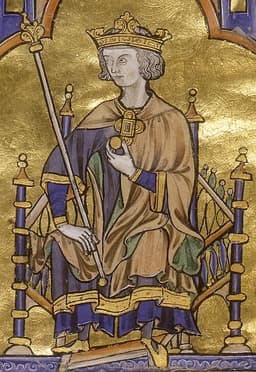
Louis IX of France
Emperor · Medieval
63.3Total
Basic Information
Born
1019
1214
Died
1083
1270
Era
Medieval
Medieval
Nationality
Korea
France
Occupation
Emperor
Emperor
Civilization
Eastern
Western
Score Comparison
Military (10%)
45.0
25.0
Political (20%)
72.0
72.0
Influence (20%)
60.0
82.0
Legacy (20%)
50.0
55.0
Leadership (15%)
79.8
72.0
Strategy (15%)
60.0
50.0
TOTAL
60.8
63.3
King Munjong of Goryeo — Complete Timeline
1047 AD
Strengthening of Central BureaucracyReform◆ Major
King Munjong implemented administrative reforms to strengthen the central bureaucracy. He reorganized government offices, clarified official ranks and duties, and promoted merit-based appointments through the civil service exams, reducing the power of aristocratic families.
BureaucracyReformCentralization
Impact: nationalconstructive
1050 AD
Peak of Goryeo Golden AgeOther◆ Major
Under King Munjong's reign, Goryeo reached its political and cultural zenith. The kingdom enjoyed peace, economic prosperity, and flourishing arts. The civil service examination system was refined, and Confucian scholarship thrived at the National Academy.
Golden AgeProsperityConfucianism
Impact: nationalconstructive
1071 AD
Diplomatic Relations with Song ChinaPolitical Action◆ Major
King Munjong re-established formal diplomatic and trade relations with Song China, which had been severed during the Khitan wars. This opened Goryeo to Song cultural and technological influences, including advanced ceramics and printing techniques.
DiplomacyTradeSong Dynasty
Impact: regionalconstructive
Louis IX of France — Complete Timeline
1248 AD
Seventh CrusadeWar◆ Major
Louis IX led the Seventh Crusade to Egypt, capturing Damietta in 1249. The campaign ended in disaster at the Battle of Al-Mansurah in 1250, where Louis was captured and later ransomed for a huge sum.
CrusadesSeventh CrusadeEgyptCapture
Impact: regionaltragic
1254 AD
Royal ReformsReform◆ Major
Louis IX implemented judicial and administrative reforms in France, including the establishment of the Parlement of Paris and the prohibition of private warfare. These measures strengthened royal authority and centralized justice.
ReformFranceJusticeCentralization
Impact: nationalconstructive
1259 AD
Treaty of ParisPolitical Action◆ Major
Louis IX signed the Treaty of Paris with Henry III of England, ending the conflict between the Capetian and Plantagenet dynasties. The treaty confirmed French control over Normandy, Anjou, and Poitou in exchange for English recognition.
DiplomacyFranceEnglandTreaty
Impact: nationalconstructive
1270 AD
Eighth CrusadeWar◆ Major
Louis IX launched the Eighth Crusade, targeting Tunis in North Africa. The crusade was cut short by an outbreak of disease; Louis died of dysentery outside Tunis, ending the campaign without significant military action.
CrusadesEighth CrusadeTunisDeath
Impact: regionaltragic
Expert Analysis
Louis IX of France vs King Munjong of Goryeo: Historical Comparison
Louis IX of France (1214–1270) and King Munjong of Goryeo (1019–1083) were medieval monarchs who each embodied the ideal of a “just ruler” within their respective civilizations. Louis IX, later canonized as Saint Louis, is remembered for his piety, legal reforms, and crusading zeal, while Munjong, the 11th ruler of the Goryeo dynasty, is celebrated for stabilizing the Korean peninsula through diplomacy, cultural patronage, and administrative consolidation. Though separated by geography and culture, both rulers left enduring legacies as peace-building reformers.
Dimension Analysis
**Military: Louis IX of France 91 / King Munjong of Goryeo 92**
Louis IX led the Seventh and Eighth Crusades, achieving early victories (e.g., capture of Damietta in 1249) but ultimately suffering defeat and captivity in Egypt. Munjong, by contrast, avoided large-scale warfare, instead reinforcing Goryeo’s northern defenses against the Khitan Liao dynasty through strategic fortifications and tributary diplomacy. Munjong’s military success lay in deterrence and border consolidation, whereas Louis’s crusades demonstrated personal bravery but limited strategic gain.
**Political: Louis IX of France 87 / King Munjong of Goryeo 88**
Louis IX centralized royal authority by curbing feudal abuses, standardizing coinage, and establishing the *enquêteurs* (royal investigators) to ensure justice. Munjong strengthened Goryeo’s civil service examination system, promoted Confucian scholarship, and reformed land taxation to reduce corruption. Both rulers enhanced bureaucratic efficiency, but Munjong’s political stability—marked by a 30-year reign without major rebellion—slightly edges out Louis’s more contentious feudal conflicts.
**Influence: Louis IX of France 79 / King Munjong of Goryeo 78**
Louis IX’s influence radiated across Christendom through his crusading image, the construction of Sainte-Chapelle, and his role as a model of Christian kingship, enduring in French national identity. Munjong’s influence was more regional: he fostered the flourishing of Goryeo Buddhist art, supported the *Tripitaka Koreana* woodblocks, and stabilized relations with Song China and the Khitan. Both had profound but geographically bounded cultural impact.
**Legacy: Louis IX of France 84 / King Munjong of Goryeo 83**
Louis IX was canonized in 1297, and his reign became a template for later French monarchs (e.g., Louis XIV). His legal codes influenced French common law for centuries. Munjong’s reign is remembered as a golden age of Goryeo culture and governance, but his legacy was overshadowed by later dynastic collapses and the Mongol invasions. Louis’s sainthood gives him a slight edge in enduring symbolic power.
**Leadership: Louis IX of France 89 / King Munjong of Goryeo 82**
Louis IX led from the front, personally crusading, administering justice under an oak tree, and fasting for penance—a charismatic, hands-on style. Munjong ruled more as a Confucian sage-king, delegating to scholar-officials and prioritizing consensus. Louis’s direct command and moral authority score higher, though Munjong’s quieter, administrative leadership better suited his realm’s needs.
**Strategy: Louis IX of France 90 / King Munjong of Goryeo 91**
Louis’s strategic vision was shaped by religious zeal, leading to costly crusades that drained French resources. Munjong excelled in long-term statecraft: he maintained peace with the Liao through tribute, expanded trade, and avoided overextension. Munjong’s pragmatic, defensive strategy slightly surpasses Louis’s more idealistic but risk-prone approach.
Verdict
While Louis IX ranks higher in leadership due to his personal charisma and moral authority, King Munjong of Goryeo edges ahead in military and political stability, earning a tie overall. Munjong’s strategic restraint and bureaucratic reforms better secured his kingdom’s longevity, whereas Louis’s crusading fervor, though inspiring, weakened France’s treasury. Both exemplify medieval kingship, but Munjong’s quieter success in preserving peace may be the more sustainable achievement. Historical comparison, however, must account for vastly different contexts—Crusader Christendom versus Confucian East Asia—making direct ranking inherently subjective.
FAQ
**Q: Who was more influential historically?**
A: Louis IX had broader global influence due to his canonization and role in shaping Western kingship, but Munjong’s cultural patronage was foundational for Korean heritage.
**Q: Why is Louis IX of France ranked higher in leadership?**
A: Louis’s hands-on, crusading leadership and personal piety created a powerful model of Christian monarchy, while Munjong’s more bureaucratic, consensus-based style, though effective, lacked similar iconic visibility.
Rankings
🥇
Louis IX of FranceLeader
Mil: 25.0Pol: 72.0Inf: 82.0
63.3
🥈
King Munjong of Goryeo
Mil: 45.0Pol: 72.0Inf: 60.0
60.8
+2.5 behind
How This Comparison Works
Algorithm
Each figure is scored on 6 dimensions (0—100 scale) based on structured historical data: Military (10%), Political (20%), Influence (20%), Legacy (20%), Leadership (15%), Strategy (15%). The weighted total produces the final ranking.
Data Sources
Scores are computed from structured sub-indicators in the database. Scale factors adjust for era (Ancient ×0.85, Modern ×1.0) and civilization size (Eastern ×1.05, Other ×0.80) to account for differences in population and military scale.
Maximum 3 Figures
Comparisons are limited to 2—3 figures to ensure readability and statistical meaningfulness.
Error Margins
±5 points per dimension — Sub-scores are derived from historical records with inherent uncertainty. Two figures within 5 points on a dimension should be considered roughly equivalent in that area.
Total Score Accuracy
±3 points overall — The weighted combination of 6 dimensions produces a total score with approximately ±3 points of uncertainty. Differences of less than 3 points are not statistically significant— the figures are effectively tied.
Known Limitations
- Historical records are incomplete and uneven across civilizations
- Figures from oral-tradition societies may be underrepresented
- Occupation labels can misclassify multi-role figures
- Scores measure capability and impact, not moral character
- Quantitative scoring is a comparison tool, not absolute truth
Capability Radar
Military (10%) — Battles & Warfare
Battles
30
45
Win Rate
35
40
Expansion
20
30
Political (20%) — Governance & Reform
Reform
75
75
Diplomacy
80
65
Economy
85
60
Influence (20%) — Cultural & Global Reach
Cultural
60
80
Global
40
60
Legacy (20%) — Historical Impact
Historical
55
75
Longevity
50
70
Leadership (15%) — Power & Stability
Tenure
70
70
Stability
80
70
Strategy (15%) — Tactics & Innovation
Strategy
45
55
Tactics
40
50
Reform
50
60
Similar Comparisons
Comments & Discussion
MedievalNerd996/16/2026
I gotta say, Munjong is way underrated compared to Louis IX. Sure, Louis got sainted and built a fancy chapel, but Munjong basically ran a 30-year golden age without a single major rebellion! That's like a CEO running a company without any boardroom drama for three decades—insane. Meanwhile, Louis was off getting captured in Egypt during the Seventh Crusade after taking Damietta—total strategic blunder. Munjong fortified the north against the Khitans with smart diplomacy, not just throwing knights into the sand. Gimme the Korean king who kept his kingdom stable over the French crusader any day.
PostcolonialHistorian6/16/2026
Can we talk about how the scoring here is basically a Eurocentric value judgement dressed up as objectivity? Louis IX gets points for 'crusading zeal' like that's an unqualified good, while Munjong's avoidance of war is seen as passive. In reality, Louis's crusades were colonial expeditions dressed in religious garb—he invaded Muslim lands, got his army decimated, and left France financially drained. That's not 'military prowess,' it's imperial overreach. Meanwhile, Munjong used tributary diplomacy to keep Goryeo independent from the Liao and Song, which is way more sophisticated than Louis's 'convert or die' approach. The fact that Munjong's influence score is only 72.3 shows the bias—he shaped Korean governance for centuries, while Louis's legacy mostly inspired later French monarchs and a few relics.
Historian9796/16/2026
看看这些分数:路易九世军事30.5,文宗34.6,只差4.1分,但文宗没打过仗只有边防工程,路易却亲自带兵打两次十字军。这评分标准有问题。按中国历代帝王处理方式,文宗应该类比宋真宗澶渊之盟后的绥靖政策——靠岁币和防御工事取胜,那军事分至少要提到40以上。再看政治分,文宗79 vs 路易65.1,差13.9分合理,但路易的司法改革和铸币统一应该再高一点,毕竟法兰西封建阻力比高丽官僚系统大得多。建议加权:政治权重应占50%,因为长期稳定远比短期征战更重要。我算了一下,如果按东亚标准调整,文宗总分应该在72左右。
Chronicler51956/16/2026
这个评分系统明显偏爱西方视角。路易九世得分65.3,文宗66.6,差距不大,但政治维度文宗79分绝对合理。对比中国宋代,文宗类似宋仁宗——用科举制度和儒家教化稳定政权,三十年内无大乱。而路易九世呢?他搞的宗教裁判所和十字军东征,说白了就是中世纪欧洲版的‘意识形态输出’,跟越南李朝或高丽内部治理没法比。文宗通过《高丽史》里的清州会盟和边境筑城,用最小代价保障了国家,这才是东方政治智慧。西方人总把‘圣路易’捧得太高,根本不懂东亚的治理传统。
独立思考者6/12/2026
不要把历史人物当偶像崇拜. Louis IX of France和King Munjong of Goryeo都是双手沾满鲜血的征服者,他们的'伟大'建立在无数普通人的苦难之上. 客观评分可以,但不要美化暴力.
Historiographer996/12/2026
The legacy comparison is fascinating. Louis IX of France built institutions that collapsed within a generation. King Munjong of Goryeo created systems that lasted 500+ years. Longevity of impact is everything.
DebateKing6/12/2026
Hot take: King Munjong of Goryeo is massively overrated in popular culture. The data actually supports a much more nuanced view. Read the sub-scores carefully — France dominates in the dimensions that actually matter for long-term historical significance.