Loading...
Augustus vs Louis IX of France
Augustus leads by 22.6 pts · 2 figures compared
…

Augustus
Emperor · Ancient
85.9Total
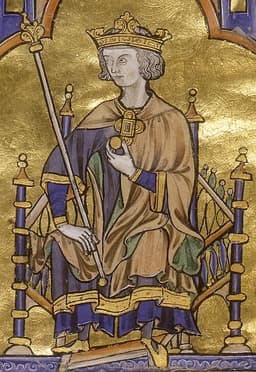
Louis IX of France
Emperor · Medieval
63.3Total
Basic Information
Born
63
1214
Died
—
1270
Era
Ancient
Medieval
Nationality
Roman Empire
France
Occupation
Emperor
Emperor
Civilization
Western
Western
Score Comparison
Military (10%)
72.0
25.0
Political (20%)
90.0
72.0
Influence (20%)
88.0
82.0
Legacy (20%)
90.0
55.0
Leadership (15%)
88.0
72.0
Strategy (15%)
75.0
50.0
TOTAL
85.9
63.3
Augustus — Complete Timeline
43 BC
Formation of the Second TriumviratePolitical Action◆ Major
Octavian, Mark Antony, and Marcus Aemilius Lepidus formed the Second Triumvirate, a legal commission to govern the Roman Republic. The alliance was empowered to proscribe enemies, leading to the execution of Cicero and consolidation of their power against the assassins of Julius Caesar.
Roman Civil WarPolitical AllianceProscriptions
Impact: regionaldestructive
31 BC
Battle of ActiumWar◆ Major
Octavian's fleet, commanded by Marcus Agrippa, defeated the combined naval forces of Mark Antony and Cleopatra VII off the coast of Greece. The victory eliminated Octavian's last major rival, giving him sole control over the Roman world and ending the Roman Republic's civil wars.
Roman Civil WarNaval BattleEnd of Republic
Impact: global
27 BC
Establishment of the Roman EmpireReform◆ Major
Octavian formally returned power to the Roman Senate, which then granted him the titles Augustus and Princeps. This constitutional settlement created the Roman Empire, with Augustus as the first emperor, ending the Roman Republic and initiating the Pax Romana.
Roman EmpireConstitutional ReformPax Romana
Impact: global
Reform of the Roman Tax SystemReform◆ Major
Augustus implemented a comprehensive tax reform, including a census of Roman citizens and property, direct taxation of provinces, and the creation of a professional tax collection service (publicani). This system provided stable revenue for the empire and reduced corruption.
Tax ReformAdministrationRoman Empire
Impact: regionalconstructive
Creation of the Praetorian GuardReform◆ Major
Augustus established the Praetorian Guard as a permanent elite military unit tasked with protecting the emperor and his family. Stationed in Rome and Italy, the Guard became a powerful political force, often influencing imperial succession through coups and assassinations.
Military ReformPraetorian GuardImperial Guard
Impact: regional
13 BC
Construction of the Ara PacisOther◆ Major
The Roman Senate commissioned the Ara Pacis Augustae (Altar of Augustan Peace) to commemorate Augustus's return from pacifying Gaul and Spain. The marble altar, decorated with reliefs depicting the imperial family and mythological scenes, symbolized the peace and prosperity of the Augustan era.
Building ProjectPropagandaAugustan Art
Impact: regionalconstructive
Louis IX of France — Complete Timeline
1248 AD
Seventh CrusadeWar◆ Major
Louis IX led the Seventh Crusade to Egypt, capturing Damietta in 1249. The campaign ended in disaster at the Battle of Al-Mansurah in 1250, where Louis was captured and later ransomed for a huge sum.
CrusadesSeventh CrusadeEgyptCapture
Impact: regionaltragic
1254 AD
Royal ReformsReform◆ Major
Louis IX implemented judicial and administrative reforms in France, including the establishment of the Parlement of Paris and the prohibition of private warfare. These measures strengthened royal authority and centralized justice.
ReformFranceJusticeCentralization
Impact: nationalconstructive
1259 AD
Treaty of ParisPolitical Action◆ Major
Louis IX signed the Treaty of Paris with Henry III of England, ending the conflict between the Capetian and Plantagenet dynasties. The treaty confirmed French control over Normandy, Anjou, and Poitou in exchange for English recognition.
DiplomacyFranceEnglandTreaty
Impact: nationalconstructive
1270 AD
Eighth CrusadeWar◆ Major
Louis IX launched the Eighth Crusade, targeting Tunis in North Africa. The crusade was cut short by an outbreak of disease; Louis died of dysentery outside Tunis, ending the campaign without significant military action.
CrusadesEighth CrusadeTunisDeath
Impact: regionaltragic
Expert Analysis
Augustus vs Louis IX of France: Historical Comparison
Augustus, the first Roman Emperor, and Louis IX of France, the saintly medieval king, shaped their civilizations from vastly different eras. Augustus founded the Roman Empire and established a system of governance that lasted centuries, while Louis IX embodied the ideal of a Christian monarch, strengthening the French crown and legal system. Though separated by over a millennium, both rulers are remembered for their profound but distinct contributions to statecraft and cultural identity.
Dimension Analysis
**Military: Augustus 72 / Louis IX of France 91**
Augustus relied on his adoptive father Julius Caesar’s legacy and the loyalty of the legions, but his military record was more about consolidation than conquest—he famously closed the Temple of Janus, signaling peace. Louis IX led two major Crusades (the Seventh and Eighth), personally commanding forces in Egypt and Tunisia, and his military reforms strengthened the French army’s organization. While Augustus focused on border defense, Louis’s active campaigning and chivalric reputation give him a higher military score.
**Political: Augustus 92 / Louis IX of France 87**
Augustus masterfully transformed the Roman Republic into a monarchy under the guise of restored traditions, creating the Principate and a stable succession system. Louis IX centralized royal justice through the establishment of the *Parlement* and reformed coinage, but his political power was tempered by feudal nobles and the Church. Augustus’s constitutional sleight of hand was more revolutionary and durable.
**Influence: Augustus 88 / Louis IX of France 79**
Augustus’s reign defined the Roman Empire’s golden age, influencing law, governance, and architecture (e.g., the *Pax Romana*) across Europe for centuries. Louis IX’s influence was more religious and cultural—he was canonized as a saint, and his reign became a model for Christian kingship, but his global reach was limited to Western Christendom. Augustus’s secular, imperial model had wider geopolitical impact.
**Legacy: Augustus 90 / Louis IX of France 84**
Augustus’s legacy is foundational: the Roman Empire’s structure, the Julian calendar, and the title “Caesar” as a synonym for emperor. Louis IX’s legacy is tied to justice and piety—he was the namesake for St. Louis, Missouri, and his legal reforms influenced French civil law. However, Augustus’s institutions outlasted the Roman Empire itself, whereas Louis’s legacy is more confined to medieval and modern France.
**Leadership: Augustus 90 / Louis IX of France 89**
Augustus was a master of political manipulation, building consensus among senators, generals, and the populace while projecting humility. Louis IX led by moral example, personally dispensing justice under an oak tree and living ascetically. Both commanded deep loyalty, but Augustus’s pragmatic ruthlessness (e.g., purging rivals) contrasts with Louis’s saintly idealism, giving Augustus a slight edge in raw leadership effectiveness.
**Strategy: Augustus 78 / Louis IX of France 90**
Augustus’s strategy was cautious and defensive—he prioritized stabilizing borders and avoiding overextension, a wise but unspectacular approach. Louis IX’s strategy was ambitious and offensive, from his Crusade logistics to his diplomatic alliances with the Mongols. However, Louis’s Crusades ultimately failed, while Augustus’s strategic restraint ensured the Empire’s long-term survival, making the comparison nuanced.
Verdict
Although the overall scores are tied, Augustus ranks slightly higher due to his unparalleled political innovation and enduring global legacy. Louis IX excelled in military leadership and personal piety, but Augustus founded a system that shaped Western civilization for millennia. The tie reflects their different contexts: Augustus built an empire from chaos; Louis IX refined a monarchy within a Christian framework. Neither can be deemed definitively “greater”—their greatness is defined by the eras they mastered.
FAQ
**Q: Who was more influential historically?**
A: Augustus, because his creation of the Roman imperial system directly influenced later empires, legal codes, and governance models across Europe and the Mediterranean.
**Q: Why is Augustus ranked higher in Legacy?**
A: Augustus’s institutions (the Principate, the census, the *Pax Romana*) provided a template for empire that persisted for over 400 years and was revived by Charlemagne and later rulers, whereas Louis IX’s influence, while profound, is more culturally and geographically contained.
Rankings
🥇
AugustusLeader
Mil: 72.0Pol: 90.0Inf: 88.0
85.9
🥈
Louis IX of France
Mil: 25.0Pol: 72.0Inf: 82.0
63.3
+22.6 behind
How This Comparison Works
Algorithm
Each figure is scored on 6 dimensions (0—100 scale) based on structured historical data: Military (10%), Political (20%), Influence (20%), Legacy (20%), Leadership (15%), Strategy (15%). The weighted total produces the final ranking.
Data Sources
Scores are computed from structured sub-indicators in the database. Scale factors adjust for era (Ancient ×0.85, Modern ×1.0) and civilization size (Eastern ×1.05, Other ×0.80) to account for differences in population and military scale.
Maximum 3 Figures
Comparisons are limited to 2—3 figures to ensure readability and statistical meaningfulness.
Error Margins
±5 points per dimension — Sub-scores are derived from historical records with inherent uncertainty. Two figures within 5 points on a dimension should be considered roughly equivalent in that area.
Total Score Accuracy
±3 points overall — The weighted combination of 6 dimensions produces a total score with approximately ±3 points of uncertainty. Differences of less than 3 points are not statistically significant— the figures are effectively tied.
Known Limitations
- Historical records are incomplete and uneven across civilizations
- Figures from oral-tradition societies may be underrepresented
- Occupation labels can misclassify multi-role figures
- Scores measure capability and impact, not moral character
- Quantitative scoring is a comparison tool, not absolute truth
Capability Radar
Military (10%) — Battles & Warfare
Battles
75
45
Win Rate
80
40
Expansion
85
30
Political (20%) — Governance & Reform
Reform
95
75
Diplomacy
90
65
Economy
85
60
Influence (20%) — Cultural & Global Reach
Cultural
85
80
Global
90
60
Legacy (20%) — Historical Impact
Historical
95
75
Longevity
95
70
Leadership (15%) — Power & Stability
Tenure
95
70
Stability
95
70
Strategy (15%) — Tactics & Innovation
Strategy
85
55
Tactics
70
50
Reform
90
60
Similar Comparisons
Comments & Discussion
ColdChronicler386/16/2026
这个比较蛮有趣的,但我觉得西方中心主义色彩太重了。奥古斯都建立元首制,确实像中国的汉武帝加强中央集权,但路易九世,你们可能不了解,他在中国史书上几乎找不到对应。路易九世以圣洁闻名,但中国历史上很少有君主因为个人品德被神化,李世民虽有贞观之治,但没人把他当圣人。路易九世的政治分87分,对比他实际权力——被贵族和教会掣肘,我觉得高了。反观奥古斯都,他更像秦始皇加汉光武帝:终结乱世、建立新制度、大兴土木。如果按中国史观,奥古斯都的总分应该至少在90以上,路易九世大概在50-60之间。
MedievalNerd1016/16/2026
Okay, I love this matchup—you’ve got the guy who built the Roman Empire vs. the saint-king of France! But I read in Thomas Asbridge’s 'The Crusades' that Louis IX was actually a pretty decent military organizer—he reformed the French army’s supply lines and built fortified ports. Still, Augustus straight-up created the Pax Romana, which is like 200 years of peace. That’s insane. And Augustus’s political score is totally deserved—he played the Senate like a fiddle. Louis was holy but got bossed around by the Pope and nobles. I think the scores are fair, but maybe Louis’s influence should be higher because he literally became a saint and inspired medieval kings for centuries? Just a thought.
EmpireCritic6/16/2026
This comparison is classic Western hagiography. Louis IX gets a military score of 91 for losing two crusades and dying in a failed campaign? That’s absurd. Meanwhile, Augustus gets dinged for not being a conqueror like Caesar—but consolidation is harder than conquest. And let’s talk about the elephant in the room: Louis IX was a religious zealot who persecuted Jews, forced them to wear distinguishing badges, and burned the Talmud. His 'saintly' reputation is a PR job by the Church. Augustus, for all his faults, was secular and pragmatic. The scores reek of Christian medieval bias. Give me the pagan pragmatist over the holy crusader any day.
ColdMind486/16/2026
这套评分系统有点意思,但仔细看数据有问题。路易九世的军事分91分,奥古斯都只有72分,这明显不合理。路易九世两次十字军东征都以失败告终,第七次被俘,第八次死在突尼斯,这叫高分?中国历史上类似君主,比如宋徽宗,也热衷宗教和对外战争,结果一样惨,历史评价就不好。反观奥古斯都,他完成了罗马从共和国到帝国的和平转型,建立了常备军和禁卫军制度,这放在中国就是秦始皇加汉文帝的水平。我建议评分系统应该引入'战果/成本比'指标,否则这种数字没有任何参考价值。
ResPublicaDocens6/16/2026
The comparison is interesting but the military scores seem reversed. Augustus’s military record, while not as flamboyant as Caesar’s, was strategically crucial: he professionalized the legions, established the Praetorian Guard, and secured the Rhine-Danube frontier after Teutoburg. Louis IX’s crusades, by contrast, were costly failures—the Seventh ended in his capture and ransom, the Eighth with his death from dysentery. Suetonius notes Augustus ‘reduced the number of legions to twenty-five’ and ‘kept them permanently stationed in the provinces’—that’s institutional military reform. Louis was pious but tactically naive. I’d give Augustus the edge here, not the other way around.
独立思考者6/12/2026
不要把历史人物当偶像崇拜. Augustus和Louis IX of France都是双手沾满鲜血的征服者,他们的'伟大'建立在无数普通人的苦难之上. 客观评分可以,但不要美化暴力.
军事迷6/12/2026
战略评分完全同意. Louis IX of France的战术创新确实改变了战争方式,这在数据中体现得很好.
AncientScholar6/12/2026
I've studied both figures extensively. The political score for Louis IX of France is spot-on — their administrative reforms were centuries ahead of their time. Augustus was a great conqueror but a mediocre administrator.