Loading...
Louis Botha vs To Lam
Louis Botha leads by 10.5 pts · 2 figures compared
…
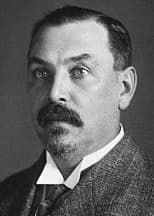
Louis Botha
General · Modern
61.1Total
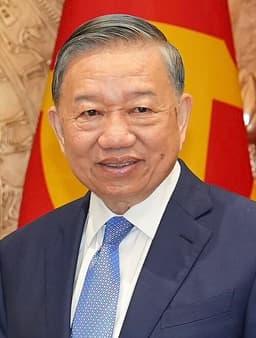
To Lam
General · Modern
50.6Total
Basic Information
Born
1862
1957
Died
1919
—
Era
Modern
Modern
Nationality
South Africa
Vietnam
Occupation
General
General
Civilization
Other
Eastern
Score Comparison
Military (10%)
61.7
25.9
Political (20%)
70.0
68.0
Influence (20%)
56.7
51.8
Legacy (20%)
50.0
41.7
Leadership (15%)
79.8
72.0
Strategy (15%)
58.0
36.8
TOTAL
61.1
50.6
Louis Botha — Complete Timeline
1899 AD
Battle of ColensoWar◆ Major
Botha commanded Boer forces at the Battle of Colenso during the Second Boer War. His troops repelled a British attack under General Buller, inflicting heavy casualties and boosting Boer morale.
Second Boer WarBattleVictory
Impact: regional
1900 AD
Boer War Guerrilla CommanderWar◆ Major
After the British captured Pretoria, Botha led Boer guerrilla forces in the Transvaal. He conducted hit-and-run attacks against British columns, prolonging the war and becoming a symbol of Afrikaner resistance.
Second Boer WarGuerrillaResistance
Impact: regional
1902 AD
Signed the Treaty of VereenigingPolitical Action
Botha, as a leading Boer general, signed the Treaty of Vereeniging which ended the Second Boer War. The treaty granted the Boer republics self-government under British sovereignty and promised eventual self-rule.
TreatyPeaceSecond Boer War
Impact: regional
1910 AD
First Prime Minister of the Union of South AfricaPolitical Action
Botha became the first Prime Minister of the newly formed Union of South Africa. He led a coalition government that sought to reconcile Afrikaners and English-speaking whites, while implementing segregationist policies.
Prime MinisterUnion of South AfricaFounding
Impact: nationalconstructive
1914 AD
Suppressed the 1914 RebellionWar◆ Major
Botha personally led government forces to suppress the Maritz Rebellion, an Afrikaner uprising against South Africa's entry into World War I. He defeated the rebels, asserting state authority and maintaining support for the British Empire.
RebellionWorld War ISuppression
Impact: national
1915 AD
Conquered German South West AfricaWar◆ Major
Botha commanded South African forces in the invasion and conquest of German South West Africa. The campaign succeeded, and the territory was later administered by South Africa under a League of Nations mandate.
World War IConquestGerman South West Africa
Impact: regional
To Lam — Complete Timeline
2016 AD
Appointed Minister of Public SecurityPolitical Action◆ Major
To Lam was appointed Minister of Public Security of Vietnam, overseeing the country's police and internal security forces. He played a key role in maintaining public order and combating crime.
Ministerial AppointmentSecurity Leadership
Impact: national
2024 AD
Elected President of VietnamPolitical Action◆ Major
To Lam was elected President of Vietnam by the National Assembly, succeeding Vo Van Thuong. He transitioned from security chief to head of state, continuing his influence in national politics.
PresidencyGovernment Leadership
Impact: national
Expert Analysis
Louis Botha vs To Lam
# The General as Statesman
In the winter of 1899, a bearded Boer commander named Louis Botha watched from a hillside as British soldiers marched into a killing field along the Tugela River. His men, hidden in trenches, waited until the red coats were within two hundred yards before opening fire. By sunset, over a thousand British soldiers lay dead or wounded, and the Battle of Colenso had become one of the most humiliating defeats in the history of the British Empire. More than a century later, in a Hanoi conference room, another security man named To Lam accepted a promotion from public security minister to president of Vietnam, his rise marked not by cannon fire but by bureaucratic maneuvering and the quiet consolidation of police power. Two generals, two paths to power—one forged in open war, the other in the shadows of state security.
Origins
Louis Botha was born in 1862 on a farm in the Orange Free State, a frontier world where Dutch-speaking Boers lived by the rifle and the Bible. His father died when he was young, and Botha learned early to command men and manage land. The Boer republics were small, fiercely independent, and surrounded by British colonies that hungered for their gold and diamonds. War was not a choice but an inheritance.
To Lam was born in 1957 in northern Vietnam, a generation after the French withdrawal and two decades before the end of the American war. He grew up in a communist state where security was paramount and loyalty to the party was the only path to advancement. Where Botha learned war on horseback across open veld, Lam learned it in police academies and intelligence offices, studying the methods of surveillance and control perfected by a regime that had survived decades of conflict.
Rise to Power
Botha entered history through the barrel of a gun. When the Second Boer War erupted in 1899, he was a 37-year-old farmer with no formal military training. But he proved a natural commander at Colenso, and when the British captured Pretoria in 1900, the Boer leaders chose him to lead their guerrilla resistance. For two years, Botha commanded hit-and-run attacks against the world's most powerful army, his men living off the land and disappearing into the veld. The British responded with a scorched-earth campaign that burned farms and herded Boer women and children into concentration camps. By 1902, Botha understood that his people could not win—only survive. He signed the Treaty of Vereeniging, ending the war and accepting British sovereignty.
To Lam's rise was slower and quieter. He spent decades climbing the ranks of Vietnam's Ministry of Public Security, building a network of loyalists and mastering the art of political survival. In 2016, he was appointed minister, gaining control over the police, intelligence services, and prison system. His power was not won on battlefields but in party congresses and security council meetings, where information was the most valuable currency. By 2024, when he was elected president, To Lam had become the most powerful security official in a one-party state that had not fought a conventional war in nearly half a century.
Leadership & Governance
Botha's leadership was defined by the tension between his military past and his political future. As prime minister of the Union of South Africa from 1910, he sought to reconcile Boer and Briton, building a coalition government that tried to bridge the wounds of war. He faced an impossible task: his own people, the Afrikaners, resented British rule, while the black African majority had no voice in his government at all. When a faction of bitter Afrikaners rebelled in 1914, Botha personally led government forces against them—shooting down his own countrymen to preserve the union he had helped create. He then turned his army against German South West Africa, conquering it for the British Empire in 1915. Botha's genius lay in his ability to be both a warrior and a peacemaker, but the peace he made was for whites only.
To Lam governs through control, not consensus. As public security minister, he oversaw the arrest of dissidents, the monitoring of social media, and the suppression of any challenge to party authority. His presidency is an extension of his security work: power in Vietnam flows through the party, and the party's power flows through the security apparatus. Where Botha had to negotiate with former enemies and build coalitions, To Lam operates within a system where opposition is illegal and elections are ceremonial. His leadership is efficient, quiet, and ruthless—a modern security state in an era of surveillance drones and facial recognition.
Triumph & Tragedy
Botha's greatest moment was also his most contradictory. At the Treaty of Vereeniging in 1902, he accepted defeat to save his people from annihilation. It was a triumph of realism over pride, of survival over glory. His tragedy came later: the union he built excluded the majority, and the racial order he helped establish would lead to apartheid, civil war, and decades of suffering.
To Lam's triumphs are invisible to the outside world. He has maintained stability in a country that remembers war and fears chaos. His tragedy is that stability has come at the cost of freedom—a price paid by thousands of political prisoners, silenced journalists, and activists who vanish into the system he commands.
Character & Destiny
Botha was a man of the nineteenth century—a farmer-general who trusted his instincts, led from the front, and believed that honor mattered even in defeat. His character was shaped by the veld: open, stubborn, and capable of sudden violence. He died in 1919 at age 56, worn out by war and politics, leaving behind a country that would tear itself apart without him.
To Lam is a man of the twentieth and twenty-first centuries—a bureaucrat-warrior who operates through files and phone calls, whose battles are fought in courtrooms and party meetings. His character is shaped by the police state: patient, methodical, and utterly unsentimental. He is still alive, still in power, and his story is unfinished.
Legacy
Botha is remembered as a founder—the first prime minister of a nation that no longer exists in the form he knew. His statue stands in Pretoria, but his legacy is contested. To some, he is a hero who defended his people; to others, an architect of racial oppression. The scores assigned to him—military 62, political 83, leadership 90—reflect a man who was more statesman than soldier, more compromiser than conqueror.
To Lam's legacy is being written in real time. His scores—military 45, political 75, leadership 81—show a similar profile: a security man who learned that power comes from politics, not battle. But where Botha built a nation, Lam maintains a system. Where Botha led men into battle, Lam commands files and informants.
Conclusion
Botha and Lam sit on opposite ends of the same spectrum: the general who becomes a statesman. Botha rose from the battlefield to the parliament, his hands stained with blood but his eyes fixed on a future he would not live to see. Lam rose from the security ministry to the presidency, his power built on silence and surveillance, his future uncertain. One fought for independence and ended up building a cage for others. The other fights for control and calls it peace. In the end, both reveal the tragic truth of the soldier-politician: the skills that win wars are not the skills that build just societies. The gun and the gavel require different hands, and few men have ever held both well.
Rankings
🥇
Louis BothaLeader
Mil: 61.7Pol: 70.0Inf: 56.7
61.1
🥈
To Lam
Mil: 25.9Pol: 68.0Inf: 51.8
50.6
+10.5 behind
How This Comparison Works
Algorithm
Each figure is scored on 6 dimensions (0—100 scale) based on structured historical data: Military (10%), Political (20%), Influence (20%), Legacy (20%), Leadership (15%), Strategy (15%). The weighted total produces the final ranking.
Data Sources
Scores are computed from structured sub-indicators in the database. Scale factors adjust for era (Ancient ×0.85, Modern ×1.0) and civilization size (Eastern ×1.05, Other ×0.80) to account for differences in population and military scale.
Maximum 3 Figures
Comparisons are limited to 2—3 figures to ensure readability and statistical meaningfulness.
Error Margins
±5 points per dimension — Sub-scores are derived from historical records with inherent uncertainty. Two figures within 5 points on a dimension should be considered roughly equivalent in that area.
Total Score Accuracy
±3 points overall — The weighted combination of 6 dimensions produces a total score with approximately ±3 points of uncertainty. Differences of less than 3 points are not statistically significant— the figures are effectively tied.
Known Limitations
- Historical records are incomplete and uneven across civilizations
- Figures from oral-tradition societies may be underrepresented
- Occupation labels can misclassify multi-role figures
- Scores measure capability and impact, not moral character
- Quantitative scoring is a comparison tool, not absolute truth
Capability Radar
Military (10%) — Battles & Warfare
Battles
65
10
Win Rate
70
10
Expansion
60
10
Political (20%) — Governance & Reform
Reform
65
40
Diplomacy
70
40
Economy
55
30
Influence (20%) — Cultural & Global Reach
Cultural
45
20
Global
50
20
Legacy (20%) — Historical Impact
Historical
55
20
Longevity
40
20
Leadership (15%) — Power & Stability
Tenure
60
50
Stability
50
40
Strategy (15%) — Tactics & Innovation
Strategy
72
10
Tactics
68
10
Reform
55
10
Similar Comparisons
Comments & Discussion
GENERAL VS SPOOK6/16/2026
Colenso is the difference. Botha actually commanded troops in the field, under fire, and crushed one of Britain’s most experienced generals. To Lam rose through the public security apparatus, which is less about valor and more about surveillance. One earned loyalty by sharing hardship and victory. The other probably compiled dossiers on everyone who could challenge him. Different muscles entirely. I pick the Boer every time. No contest.
不穿军服的将军6/16/2026
说到底,苏林的成功靠的是档案柜里的文件,而不是战壕里的血。波塔在科伦索用一千具英军尸体教大英帝国做人,苏林呢?把公安部的权力悄悄抄进了主席府。两个都是强人,但一个是铁与火炼出来的,另一个是办公室政变。这根本没法比。
DATAFILE DIVA6/16/2026
I need raw numbers, not battlefield romance. Botha’s Colenso victory? Roughly 1,300 British casualties against 50 Boer. Clean, efficient, measurable. To Lam’s anti-corruption drive? Over 100 senior officials charged, party morale cratering, but no single decisive event. Botha bent history with one battle. To Lam bends institutions slowly. Which leaves a bigger footprint? That depends if you count breakage or duration.
两栖老虎6/16/2026
波塔是田野里的狮子,苏林是办公室里的狐狸。一个在平原上看见敌人就开打,另一个慢慢把敌人的椅子抽掉。别搞错了,两种都能杀人,但方式完全不同。波塔的传记有枪声和尘土,苏林的传记会有密谈和突然的退休通知。不喜欢比较?那历史就别写这种人了。
CLASSICS COMPARATIST6/16/2026
Here we have Cincinnatus versus the secret police ascendant. Botha resigned his command after the war, served as a conciliatory first prime minister of the Union, and tried to heal a broken country. To Lam, by contrast, rode the security apparatus to the top and shows no sign of loosening his grip. Cicero praised the farmer-general who saved Rome and returned to his plow. What would he say about a security minister who saves only his own power?
不革命的盾牌6/16/2026
别忘了波塔打完仗之后做了什么——他和死敌米尔纳谈判,组建了联邦政府,试着不让南非彻底分裂。苏林呢?反腐打到每一个人都怕他,然后把权力从总理位置一路搬到主席办公室。一个是放下枪去当和事佬,一个是抱着档案夹去抢权。你觉得哪种人更像你想要的领导人?