Loading...
Louis Botha vs Sitiveni Rabuka
Louis Botha leads by 9.4 pts · 2 figures compared
…
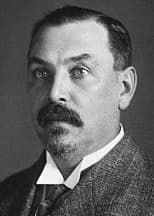
Louis Botha
General · Modern
61.1Total
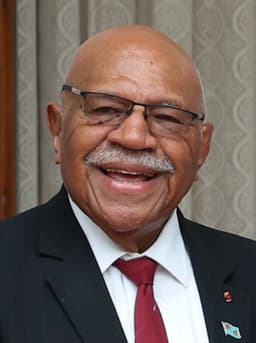
Sitiveni Rabuka
General · Modern
51.7Total
Basic Information
Born
1862
1948
Died
1919
—
Era
Modern
Modern
Nationality
South Africa
Fiji
Occupation
General
General
Civilization
Other
Other
Score Comparison
Military (10%)
61.7
10.2
Political (20%)
70.0
60.0
Influence (20%)
56.7
53.3
Legacy (20%)
50.0
46.7
Leadership (15%)
79.8
85.0
Strategy (15%)
58.0
39.6
TOTAL
61.1
51.7
Louis Botha — Complete Timeline
1899 AD
Battle of ColensoWar◆ Major
Botha commanded Boer forces at the Battle of Colenso during the Second Boer War. His troops repelled a British attack under General Buller, inflicting heavy casualties and boosting Boer morale.
Second Boer WarBattleVictory
Impact: regional
1900 AD
Boer War Guerrilla CommanderWar◆ Major
After the British captured Pretoria, Botha led Boer guerrilla forces in the Transvaal. He conducted hit-and-run attacks against British columns, prolonging the war and becoming a symbol of Afrikaner resistance.
Second Boer WarGuerrillaResistance
Impact: regional
1902 AD
Signed the Treaty of VereenigingPolitical Action
Botha, as a leading Boer general, signed the Treaty of Vereeniging which ended the Second Boer War. The treaty granted the Boer republics self-government under British sovereignty and promised eventual self-rule.
TreatyPeaceSecond Boer War
Impact: regional
1910 AD
First Prime Minister of the Union of South AfricaPolitical Action
Botha became the first Prime Minister of the newly formed Union of South Africa. He led a coalition government that sought to reconcile Afrikaners and English-speaking whites, while implementing segregationist policies.
Prime MinisterUnion of South AfricaFounding
Impact: nationalconstructive
1914 AD
Suppressed the 1914 RebellionWar◆ Major
Botha personally led government forces to suppress the Maritz Rebellion, an Afrikaner uprising against South Africa's entry into World War I. He defeated the rebels, asserting state authority and maintaining support for the British Empire.
RebellionWorld War ISuppression
Impact: national
1915 AD
Conquered German South West AfricaWar◆ Major
Botha commanded South African forces in the invasion and conquest of German South West Africa. The campaign succeeded, and the territory was later administered by South Africa under a League of Nations mandate.
World War IConquestGerman South West Africa
Impact: regional
Sitiveni Rabuka — Complete Timeline
1987 AD
1987 Fijian Coup d'étatPolitical Action
Rabuka, as a colonel in the Fijian military, led a coup overthrowing the elected government of Timoci Bavadra. The coup was motivated by ethnic Fijian opposition to Indo-Fijian political influence. Rabuka declared Fiji a republic.
CoupMilitary InterventionEthnic Tension
Impact: nationaldestructive
1992 AD
1992 Election as Prime MinisterPolitical Action◆ Major
Rabuka transitioned from military leader to civilian politician, winning the 1992 general election as leader of the Fijian Political Party. He became Prime Minister, serving until 1999.
ElectionCivilian GovernmentPolitical Transition
Impact: national
1997 AD
1997 Constitution ReformReform◆ Major
Rabuka's government oversaw the adoption of a new constitution that removed ethnic-based voting and provided for a multi-ethnic government. The constitution aimed to reduce ethnic tensions and promote national unity.
ConstitutionReformEthnic Reconciliation
Impact: nationalconstructive
1999 AD
1999 General Election DefeatPolitical Action◆ Major
Rabuka's government was defeated in the general election by the Labour Party led by Mahendra Chaudhry. Rabuka stepped down as Prime Minister, marking the end of his first period in power.
Election DefeatGovernment ChangeChaudhry
Impact: national
2022 AD
2022 Return as Prime MinisterPolitical Action◆ Major
Rabuka led the People's Alliance to victory in the 2022 general election, forming a coalition government. He became Prime Minister again, 23 years after his previous tenure, promising democratic reforms.
ElectionReturn to PowerCoalition Government
Impact: national
Expert Analysis
Sitiveni Rabuka vs Louis Botha
# The General Who Became a Statesman
In the summer of 1987, a Fijian colonel in his late thirties strode into Parliament House in Suva, armed men at his back, and ended a democratically elected government. A continent away, seventy-five years earlier, a Boer general in his forties had laid down his rifle at Vereeniging, surrendering a bitter war but winning a peace that would make him a prime minister. Both men began as soldiers who overthrew or defied established order; both ended as democratic leaders. Yet their journeys—and their nations—took radically different paths. Why did one become a symbol of reconciliation and the other a figure of enduring controversy?
Origins
Sitiveni Rabuka was born in 1948 on the island of Vanua Levu, the son of a Methodist minister. Fiji was then a British colony, its society divided along ethnic lines between indigenous Fijians and Indo-Fijians, descendants of indentured laborers brought by the British. Rabuka grew up in a world where tradition and Christianity intertwined, where chiefly authority still commanded respect, and where the ethnic balance of power was a source of simmering tension. He joined the military, rising through the ranks of a small but professional army, a path that offered advancement to ambitious indigenous Fijians.
Louis Botha was born in 1862 in the Natal colony, the son of a Voortrekker family—Afrikaners who had fled British rule into the interior of southern Africa. He grew up on a farm, speaking Afrikaans, hunting, and learning the hard skills of frontier survival. The British annexation of the Transvaal in 1877, when Botha was fifteen, planted a seed of resentment that would flower into armed resistance. Like Rabuka, Botha was shaped by a colonial context where ethnic identity and land ownership were explosive issues. But where Rabuka’s world was an archipelago of small islands, Botha’s was a vast, harsh landscape of veld and mountain, where war was a way of life.
Rise to Power
Rabuka’s entry onto the historical stage was sudden and violent. On May 14, 1987, as a colonel, he led a coup against the newly elected government of Timoci Bavadra, a coalition that included Indo-Fijian ministers. Rabuka claimed he was defending indigenous Fijian interests against what he saw as Indian domination. The coup was bloodless but devastating to Fiji’s democracy. It was a raw assertion of ethnic power, executed by a man who believed the military had a duty to protect the indigenous majority.
Botha’s rise was forged in the crucible of the Second Boer War (1899–1902). He commanded Boer forces at the Battle of Colenso in December 1899, where his troops inflicted a heavy defeat on the British under General Redvers Buller. When the British captured Pretoria in 1900, Botha became a guerrilla leader, waging a hit-and-run campaign across the Transvaal. His military skill earned him a place at the negotiating table. At the Treaty of Vereeniging in May 1902, Botha signed the surrender—but also secured promises of self-government for the Boer republics. It was a turning point: he had lost the war but won the chance to lead in peace.
Leadership & Governance
As prime minister from 1910, Botha pursued reconciliation between Boer and Briton. He formed a coalition government, worked with British administrators, and led South Africa into World War I on the side of the British Empire. In 1914, when Afrikaner nationalists rebelled against this decision, Botha personally led government forces to crush the Maritz Rebellion. In 1915, he commanded the invasion of German South West Africa, capturing the colony for the Union. His leadership was pragmatic, sometimes ruthless, but aimed at building a unified white South African state.
Rabuka’s governance was more troubled. After the 1987 coup, he initially ruled as a military dictator but quickly sought legitimacy. In 1992, he won the general election as leader of the Fijian Political Party, becoming prime minister. His most significant achievement was the 1997 Constitution, which removed ethnic-based voting and created a multiracial electoral system. It was a genuine attempt to heal the wounds of the coup. Yet his government was defeated in 1999 by the Labour Party under Mahendra Chaudhry, Fiji’s first Indo-Fijian prime minister. Rabuka stepped down peacefully—a rare moment of democratic transition in a coup-prone nation.
Triumph & Tragedy
Botha’s greatest moment was also his most controversial: the suppression of the 1914 rebellion. He rode at the head of his troops, a general turned statesman, crushing his own people to uphold the union he had helped create. His tragedy was that he never fully reconciled the Boer and British visions of South Africa; the seeds of apartheid were already germinating during his tenure. He died in 1919, still in office, his dream of a unified white South Africa incomplete.
Rabuka’s triumph was the 1997 Constitution, a document that promised equality across ethnic lines. His tragedy was that it failed. The constitution did not prevent the 2000 coup that overthrew Chaudhry, nor the 2006 coup led by Frank Bainimarama. Rabuka himself spent years in political exile, his legacy tainted by the 1987 coup. Yet in a stunning reversal, he returned as prime minister in 2022, leading the People’s Alliance to victory. At 74, he was once again the nation’s leader, a figure of both division and redemption.
Character & Destiny
Botha was a man of the frontier: tough, pragmatic, and capable of immense violence in service of a larger vision. He believed in a united South Africa under white leadership, and he was willing to fight his own people to achieve it. His character was that of a builder, but a builder of a house that excluded the majority.
Rabuka was more conflicted. He was a Methodist lay preacher who overthrew a government, a nationalist who later championed multiracialism. His decisions were often reactive, driven by ethnic fears rather than a coherent ideology. He was not a strategist like Botha; his military score of 19.9 versus Botha’s 62.0 reflects this. But his political score of 72.0 to Botha’s 83.0 shows he was a capable politician, if not a visionary. Botha shaped his era; Rabuka was shaped by it.
Legacy
Botha is remembered as the father of the Union of South Africa, a founder of the modern state. But his legacy is shadowed by the apartheid system that followed. He is a hero to some Afrikaners, a symbol of white supremacy to others.
Rabuka’s legacy is more ambiguous. He is the man who destroyed Fiji’s democracy and the man who tried to rebuild it. His 2022 return suggests a nation still wrestling with its ethnic divisions. He is neither a hero nor a villain—a flawed leader in a flawed system.
Conclusion
Both generals became prime ministers, but their paths reveal the difference between building a nation and repairing one. Botha built on conquest and compromise; Rabuka on coup and constitution. One died in office, his work unfinished; the other returned, his work still undone. In the end, both remind us that the soldier who becomes a statesman carries the scars of war into the halls of peace—and that those scars never fully heal.
Rankings
🥇
Louis BothaLeader
Mil: 61.7Pol: 70.0Inf: 56.7
61.1
🥈
Sitiveni Rabuka
Mil: 10.2Pol: 60.0Inf: 53.3
51.7
+9.4 behind
How This Comparison Works
Algorithm
Each figure is scored on 6 dimensions (0—100 scale) based on structured historical data: Military (10%), Political (20%), Influence (20%), Legacy (20%), Leadership (15%), Strategy (15%). The weighted total produces the final ranking.
Data Sources
Scores are computed from structured sub-indicators in the database. Scale factors adjust for era (Ancient ×0.85, Modern ×1.0) and civilization size (Eastern ×1.05, Other ×0.80) to account for differences in population and military scale.
Maximum 3 Figures
Comparisons are limited to 2—3 figures to ensure readability and statistical meaningfulness.
Error Margins
±5 points per dimension — Sub-scores are derived from historical records with inherent uncertainty. Two figures within 5 points on a dimension should be considered roughly equivalent in that area.
Total Score Accuracy
±3 points overall — The weighted combination of 6 dimensions produces a total score with approximately ±3 points of uncertainty. Differences of less than 3 points are not statistically significant— the figures are effectively tied.
Known Limitations
- Historical records are incomplete and uneven across civilizations
- Figures from oral-tradition societies may be underrepresented
- Occupation labels can misclassify multi-role figures
- Scores measure capability and impact, not moral character
- Quantitative scoring is a comparison tool, not absolute truth
Capability Radar
Military (10%) — Battles & Warfare
Battles
65
5
Win Rate
70
5
Expansion
60
5
Political (20%) — Governance & Reform
Reform
65
50
Diplomacy
70
45
Economy
55
40
Influence (20%) — Cultural & Global Reach
Cultural
45
30
Global
50
20
Legacy (20%) — Historical Impact
Historical
55
40
Longevity
40
30
Leadership (15%) — Power & Stability
Tenure
60
55
Stability
50
35
Strategy (15%) — Tactics & Innovation
Strategy
72
10
Tactics
68
10
Reform
55
5
Similar Comparisons
Comments & Discussion
The Contrasting Paths to Power6/16/2026
Botha surrendered Boer independence at Vereeniging in 1902 — a humiliating end. Yet he turned that loss into political gold, becoming first PM of the Union. Rabuka? He staged two coups in 1987 to protect indigenous Fijian supremacy, then later, in 2022, became PM through democracy. Botha built a unified white nation; Rabuka still wrestles with Fiji's ethnic wounds. Rabuka's late conversion feels less like statesmanship and more like political survival after the coup legacy stained his hands.
历史棋手6/16/2026
博塔在费雷尼欣投降,看似结束了布尔人的独立梦,但他用这场败局换来了南非联邦的首任总理宝座。拉布卡呢?1987年发动政变推翻民选政府,理由是保护原住民权益,却让斐济陷入长期政治动荡。等到2022年他再登总理之位,民族裂痕依然深如鸿沟。博塔是建桥者,拉布卡更像拆了桥又回头补修的人——时机不同,格局差太多。
The Data Skeptic’s Dilemma6/16/2026
Let’s talk numbers. Botha’s Union of South Africa in 1910 encompassed 4 million whites ruling over 6 million blacks — a racial hierarchy baked into the constitution. Rabuka’s Fiji, post-1987, imposed a constitution reserving 37 of 71 parliamentary seats for indigenous Fijians. Both implemented ethnic-based systems. The “reconciliation” narrative for Botha ignores the systemic segregation he entrenched. Rabuka, at least, eventually helped restore Fiji’s multiracial constitution in 2013. Apples an
古典学派的冷眼6/16/2026
从古典角度看,博塔和拉布卡都是战争英雄转型政客的典型,但气质截然不同。博塔像罗马的苏拉——打了胜仗,却把军事权力转化为政治秩序,建立了一个虽不平等却稳定的体系。拉布卡更像僭主,政变后修改宪法稳固原住民统治,直到2006年被人赶下台,二十年后再靠选举回归。苏拉退休种田,拉布卡至今仍在权力中心游走。谁更像古典意义上的“国父”?答案是博塔,尽管他的“国”是白人至上的。
The Revisionist’s Rebuttal6/16/2026
Everyone romanticizes Botha as the magnanimous peacemaker at Vereeniging. Let’s not forget that in 1914, as PM, he crushed a Boer rebellion with military force — including executing his former comrades. That’s hardly reconciliation. Rabuka, by contrast, never turned guns on his own people after the coups; he stepped aside and eventually embraced democracy. Botha unified Afrikaners by eliminating dissent