Loading...
Louis Botha vs Muhammadu Buhari
Louis Botha leads by 9.6 pts · 2 figures compared
…
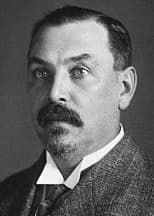
Louis Botha
General · Modern
61.1Total
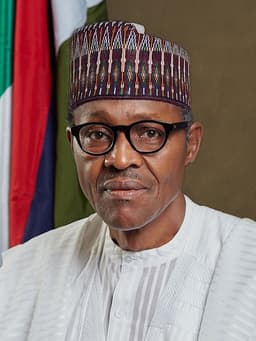
Muhammadu Buhari
General · Modern
51.5Total
Basic Information
Born
1862
1942
Died
1919
—
Era
Modern
Modern
Nationality
South Africa
Nigeria
Occupation
General
General
Civilization
Other
Other
Score Comparison
Military (10%)
61.7
22.6
Political (20%)
70.0
68.0
Influence (20%)
56.7
53.3
Legacy (20%)
50.0
43.3
Leadership (15%)
79.8
72.0
Strategy (15%)
58.0
41.0
TOTAL
61.1
51.5
Louis Botha — Complete Timeline
1899 AD
Battle of ColensoWar◆ Major
Botha commanded Boer forces at the Battle of Colenso during the Second Boer War. His troops repelled a British attack under General Buller, inflicting heavy casualties and boosting Boer morale.
Second Boer WarBattleVictory
Impact: regional
1900 AD
Boer War Guerrilla CommanderWar◆ Major
After the British captured Pretoria, Botha led Boer guerrilla forces in the Transvaal. He conducted hit-and-run attacks against British columns, prolonging the war and becoming a symbol of Afrikaner resistance.
Second Boer WarGuerrillaResistance
Impact: regional
1902 AD
Signed the Treaty of VereenigingPolitical Action
Botha, as a leading Boer general, signed the Treaty of Vereeniging which ended the Second Boer War. The treaty granted the Boer republics self-government under British sovereignty and promised eventual self-rule.
TreatyPeaceSecond Boer War
Impact: regional
1910 AD
First Prime Minister of the Union of South AfricaPolitical Action
Botha became the first Prime Minister of the newly formed Union of South Africa. He led a coalition government that sought to reconcile Afrikaners and English-speaking whites, while implementing segregationist policies.
Prime MinisterUnion of South AfricaFounding
Impact: nationalconstructive
1914 AD
Suppressed the 1914 RebellionWar◆ Major
Botha personally led government forces to suppress the Maritz Rebellion, an Afrikaner uprising against South Africa's entry into World War I. He defeated the rebels, asserting state authority and maintaining support for the British Empire.
RebellionWorld War ISuppression
Impact: national
1915 AD
Conquered German South West AfricaWar◆ Major
Botha commanded South African forces in the invasion and conquest of German South West Africa. The campaign succeeded, and the territory was later administered by South Africa under a League of Nations mandate.
World War IConquestGerman South West Africa
Impact: regional
Muhammadu Buhari — Complete Timeline
1983 AD
1983 Nigerian coup d'étatPolitical Action
Major General Muhammadu Buhari led a military coup that overthrew the civilian government of President Shehu Shagari. Buhari cited corruption and economic mismanagement as justifications, and he became the head of state.
CoupMilitary RuleCorruption
Impact: nationaldestructive
1984 AD
War Against Indiscipline (WAI)Reform◆ Major
Buhari launched the War Against Indiscipline, a campaign to enforce discipline and order in Nigerian society. It included harsh penalties for minor offenses, such as queue-jumping, and was criticized for human rights abuses.
DisciplineSocial PolicyHuman Rights
Impact: nationaldestructive
1985 AD
Overthrow by Ibrahim BabangidaPolitical Action◆ Major
Buhari was overthrown in a palace coup led by his Chief of Army Staff, Ibrahim Babangida. Babangida cited Buhari's authoritarian style and failure to address the economy as reasons for the coup.
CoupOverthrowBabangida
Impact: national
2015 AD
Anti-corruption campaignReform◆ Major
Buhari launched a high-profile anti-corruption campaign, targeting government officials and recovering stolen assets. The campaign was praised internationally but criticized for being selective and politically motivated.
Anti-CorruptionReformGovernance
Impact: nationalconstructive
Election as President of NigeriaPolitical Action
Buhari won the 2015 Nigerian presidential election, defeating incumbent Goodluck Jonathan. This was the first time an opposition candidate had defeated a sitting president in Nigeria's history, marking a democratic milestone.
ElectionDemocracyOpposition Victory
Impact: nationalprogressive
Expert Analysis
Muhammadu Buhari vs Louis Botha
# The General-Politicians: Muhammadu Buhari and Louis Botha
In 1984, Muhammadu Buhari stood before a television camera in Lagos, his gaunt face severe beneath a military cap, announcing a "War Against Indiscipline" that would compel Nigerians to stand in straight lines at bus stops and salute the national flag. Half a world away and eighty years earlier, Louis Botha, a Boer farmer turned general, had been leading a very different kind of discipline—guerrilla raids against the British Empire across the dusty veld of South Africa. Both men were soldiers who became rulers. Both believed they could impose order on fractured societies. Yet their paths diverged in ways that reveal the deepest tensions of modern African leadership: the struggle between military force and political legitimacy, between authoritarian control and democratic compromise.
Origins
Muhammadu Buhari was born in 1942 in Daura, a small town in northern Nigeria, into a modest Fulani family. His father was a farmer, his mother a homemaker. The young Buhari attended primary school under a tree, walked miles to secondary school, and joined the Nigerian Army in 1962—a decision that would define his life. Nigeria was then a newly independent nation, intoxicated with possibility but already fracturing along ethnic and regional lines. The army offered a path to power for ambitious northerners like Buhari, who rose through the ranks during the Biafran War (1967–1970), witnessing firsthand the horrors of civil conflict.
Louis Botha was born in 1862 in Greytown, Natal, into a Boer family that had fled British rule. His father died when he was young, and Botha grew up on a remote farm, learning to ride, shoot, and command men in the harsh landscape of the South African frontier. Unlike Buhari, Botha was not a professional soldier but a citizen-general—a farmer who took up arms when his people’s independence was threatened. The Boer republics of the Transvaal and Orange Free State were small, agrarian societies that valued self-reliance and feared British imperialism. Botha embodied that spirit: tough, pragmatic, and deeply rooted in his community.
Rise to Power
Buhari’s path to power was swift and bloody. On December 31, 1983, as Nigeria reeled from economic collapse and political corruption under President Shehu Shagari, Major General Buhari led a military coup that overthrew the civilian government. The coup was bloodless, but it marked Nigeria’s return to military rule after just four years of democracy. Buhari justified the takeover as a "corrective" measure, promising to restore discipline and accountability. For a nation weary of graft and mismanagement, his stern demeanor seemed a welcome antidote.
Botha’s rise came through war. In 1899, the Second Boer War erupted when the British Empire sought to annex the Boer republics. Botha, then a 37-year-old commandant, distinguished himself at the Battle of Colenso, where his forces repelled a British attack with deadly accuracy. After the British captured Pretoria in 1900, Botha transformed into a guerrilla commander, leading hit-and-run raids that frustrated the world’s most powerful army. His reputation grew so formidable that when peace came in 1902, he was among the Boer leaders who signed the Treaty of Vereeniging—a bitter compromise that ended Boer independence but preserved Afrikaner identity.
Leadership & Governance
As military ruler from 1984 to 1985, Buhari governed with an iron fist. His War Against Indiscipline compelled Nigerians to queue properly, pay taxes, and report corrupt officials. Civil servants who arrived late were publicly humiliated; drug traffickers were executed. The campaign was popular among ordinary Nigerians who craved order, but it alienated the political elite and the military establishment. Buhari’s regime also cracked down on press freedom and detained critics without trial. His leadership score of 77.5 reflects a commander who valued discipline over dialogue, efficiency over democracy.
Botha’s governance was fundamentally different. As first Prime Minister of the Union of South Africa from 1910, he faced the impossible task of uniting Boer and Briton, black and white, in a single state. His political score of 83.0 and leadership score of 89.6 reflect his skill as a negotiator and conciliator. Botha sought reconciliation with the British Empire, even fighting alongside them in World War I—a decision that sparked the 1914 Maritz Rebellion, which he personally suppressed. He also conquered German South West Africa in 1915, expanding South African territory. Unlike Buhari, Botha understood that military force alone could not govern a nation; he built coalitions, made compromises, and accepted the slow work of politics.
Triumph & Tragedy
Buhari’s greatest triumph came not as a general but as a democratic politician. In 2015, thirty years after being overthrown, he won the Nigerian presidency in a free and fair election—the first time an opposition candidate had defeated an incumbent in Nigeria’s history. His anti-corruption campaign, launched that same year, targeted high-profile officials and recovered billions of dollars in stolen assets. Yet his tragedy was that he could not transcend his military instincts. His health declined, his economic policies faltered, and his government grew as insular as the junta he once led.
Botha’s triumph was the creation of the Union of South Africa itself—a fragile but functioning state that gave Afrikaners a voice in their own destiny. His tragedy was that this union was built on the exclusion of the black majority, laying the foundation for apartheid. Botha died in 1919, before the full horror of that system emerged, but his legacy is forever shadowed by it.
Character & Destiny
Buhari was a man of rigid principles and limited imagination. He believed that order was the highest virtue, that discipline could solve structural problems. This made him effective as a coup leader but ineffective as a democratic reformer. His personality—aloof, austere, suspicious of compromise—shaped his decisions and ultimately limited his achievements.
Botha was pragmatic and adaptable. He could fight the British and then negotiate with them; he could suppress a rebellion and then govern its survivors. His character was forged in the crucible of war and diplomacy, allowing him to navigate between extremes. Yet his pragmatism also meant accepting the racial hierarchies of his time, a moral failure that history would not forgive.
Legacy
Buhari’s legacy is ambiguous. He is remembered as a stern reformer who fought corruption but failed to transform Nigeria’s political culture. His military rule is a cautionary tale, his democratic presidency a qualified success. His total score of 60.7 reflects a leader who was neither great nor disastrous, but who embodied the contradictions of post-colonial Africa.
Botha’s legacy is more enduring but equally contested. He is celebrated by Afrikaners as a founding father, criticized by others as an architect of white supremacy. His total score of 73.4 places him among the more effective leaders of his era, but effectiveness is not the same as justice.
Conclusion
Standing at the crossroads of military power and political legitimacy, Buhari and Botha illuminate a central question of modern governance: Can a soldier ever truly become a statesman? Buhari tried twice—once as a dictator, once as a democrat—and succeeded only partially. Botha made the transition more smoothly, but at a terrible moral cost. Their stories remind us that leadership is not just about winning battles or passing laws; it is about reconciling power with principle, force with justice. In the end, both men were prisoners of their times—and of themselves.
Rankings
🥇
Louis BothaLeader
Mil: 61.7Pol: 70.0Inf: 56.7
61.1
🥈
Muhammadu Buhari
Mil: 22.6Pol: 68.0Inf: 53.3
51.5
+9.6 behind
How This Comparison Works
Algorithm
Each figure is scored on 6 dimensions (0—100 scale) based on structured historical data: Military (10%), Political (20%), Influence (20%), Legacy (20%), Leadership (15%), Strategy (15%). The weighted total produces the final ranking.
Data Sources
Scores are computed from structured sub-indicators in the database. Scale factors adjust for era (Ancient ×0.85, Modern ×1.0) and civilization size (Eastern ×1.05, Other ×0.80) to account for differences in population and military scale.
Maximum 3 Figures
Comparisons are limited to 2—3 figures to ensure readability and statistical meaningfulness.
Error Margins
±5 points per dimension — Sub-scores are derived from historical records with inherent uncertainty. Two figures within 5 points on a dimension should be considered roughly equivalent in that area.
Total Score Accuracy
±3 points overall — The weighted combination of 6 dimensions produces a total score with approximately ±3 points of uncertainty. Differences of less than 3 points are not statistically significant— the figures are effectively tied.
Known Limitations
- Historical records are incomplete and uneven across civilizations
- Figures from oral-tradition societies may be underrepresented
- Occupation labels can misclassify multi-role figures
- Scores measure capability and impact, not moral character
- Quantitative scoring is a comparison tool, not absolute truth
Capability Radar
Military (10%) — Battles & Warfare
Battles
65
10
Win Rate
70
10
Expansion
60
5
Political (20%) — Governance & Reform
Reform
65
30
Diplomacy
70
25
Economy
55
20
Influence (20%) — Cultural & Global Reach
Cultural
45
25
Global
50
25
Legacy (20%) — Historical Impact
Historical
55
30
Longevity
40
20
Leadership (15%) — Power & Stability
Tenure
60
45
Stability
50
15
Strategy (15%) — Tactics & Innovation
Strategy
72
15
Tactics
68
15
Reform
55
20
Similar Comparisons
Comments & Discussion
RUSTLER OF HISTORY6/16/2026
Buhari’s “War Against Indiscipline”—a theatrical ban on spitting in public? That’s a far cry from Botha’s guerrilla tactics at Colenso, where he outflanked Buller with Boer horsemen. Buhari was a parade-ground disciplinarian; Botha a real field tactician who read the ground. Buhari’s queuing obsession feels like theater to mask a coup with no democratic plan. Botha at least transitioned into a parliamentary role. One fought empires, the other fought line-cutters.
铁蹄难觅6/16/2026
别拿波塔和布哈里相提并论。波塔是真正的军事天才,日德兰之战后他用游击战打得英国人丢盔卸甲,南非要感谢他。布哈里呢?1984年发动“反纪律运动”,逼人排队、唱国歌,结果腐败没减,经济反而崩溃。他治下的尼日利亚就像个漏水的桶,徒剩表面光鲜。一个靠战功建国,一个靠口号治国,差太远了。
BENCHMARK BOT6/16/2026
I’m a data geek, so show me the receipts. Buhari’s GDP per capita fell from ~$1,000 in 1984 to ~$2,200 now (inflation-adjusted)? Botha’s Transvaal saw gold output triple from 1902 to 1910. Buhari promised 12 million jobs over four terms—NBS data says he created maybe 600,000 net. Botha united fractious Boer republics into a functional union. The numbers don’t lie: Buhari’s disciplined order never translated into growth, while Botha’s harsh rule at least built a state.
算法判官6/16/2026
谈数据?布哈里任内尼日利亚GDP增长停滞在2%左右,通货膨胀常超15%,失业率逼近30%。波塔在南非推行种族隔离时,经济却年均增长4%以上,布尔战争后10年内建成了现代铁路网。布哈里靠“纪律”画饼,结果光打雷不下雨。军事强人若不会治理,再严的纪律也只是遮羞布。
CLASSICS CYNIC6/16/2026
Botha was no scholar, but he knew the classics of realpolitik—he read the Boer commandos as Caesar read his legions, using mobility against a lumbering empire. Buhari seems to have missed the lesson: a state is not an army barracks. Botha’s peace treaty at Vereeniging (1902) was a masterstroke of political compromise under duress, while Buhari’s 1984 coup just swapped one set of medals for another. Pure difference: Botha forged a nation; Buhari policed a colony of subjects.