Loading...
Louis Botha vs Suharto
Louis Botha leads by 3.9 pts · 2 figures compared
…
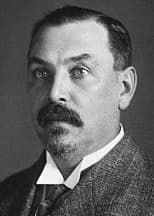
Louis Botha
General · Modern
61.1Total
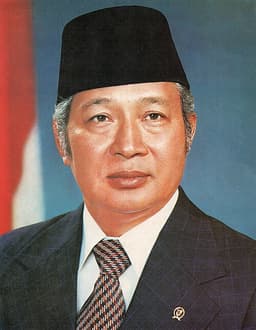
Suharto
General · Modern
57.2Total
Basic Information
Born
1862
1921
Died
1919
—
Era
Modern
Modern
Nationality
South Africa
Indonesia
Occupation
General
General
Civilization
Other
Eastern
Score Comparison
Military (10%)
61.7
20.0
Political (20%)
70.0
59.3
Influence (20%)
56.7
60.0
Legacy (20%)
50.0
52.0
Leadership (15%)
79.8
82.0
Strategy (15%)
58.0
60.0
TOTAL
61.1
57.2
Louis Botha — Complete Timeline
1899 AD
Battle of ColensoWar◆ Major
Botha commanded Boer forces at the Battle of Colenso during the Second Boer War. His troops repelled a British attack under General Buller, inflicting heavy casualties and boosting Boer morale.
Second Boer WarBattleVictory
Impact: regional
1900 AD
Boer War Guerrilla CommanderWar◆ Major
After the British captured Pretoria, Botha led Boer guerrilla forces in the Transvaal. He conducted hit-and-run attacks against British columns, prolonging the war and becoming a symbol of Afrikaner resistance.
Second Boer WarGuerrillaResistance
Impact: regional
1902 AD
Signed the Treaty of VereenigingPolitical Action
Botha, as a leading Boer general, signed the Treaty of Vereeniging which ended the Second Boer War. The treaty granted the Boer republics self-government under British sovereignty and promised eventual self-rule.
TreatyPeaceSecond Boer War
Impact: regional
1910 AD
First Prime Minister of the Union of South AfricaPolitical Action
Botha became the first Prime Minister of the newly formed Union of South Africa. He led a coalition government that sought to reconcile Afrikaners and English-speaking whites, while implementing segregationist policies.
Prime MinisterUnion of South AfricaFounding
Impact: nationalconstructive
1914 AD
Suppressed the 1914 RebellionWar◆ Major
Botha personally led government forces to suppress the Maritz Rebellion, an Afrikaner uprising against South Africa's entry into World War I. He defeated the rebels, asserting state authority and maintaining support for the British Empire.
RebellionWorld War ISuppression
Impact: national
1915 AD
Conquered German South West AfricaWar◆ Major
Botha commanded South African forces in the invasion and conquest of German South West Africa. The campaign succeeded, and the territory was later administered by South Africa under a League of Nations mandate.
World War IConquestGerman South West Africa
Impact: regional
Suharto — Complete Timeline
1966 AD
Supersemar and Transfer of PowerPolitical Action
President Sukarno signed the Supersemar order, delegating authority to General Suharto to restore order after the 30 September Movement. Suharto used this to ban the Communist Party, purge leftists, and gradually assume executive power, effectively beginning his New Order regime.
SupersemarNew OrderIndonesia
Impact: nationaldestructive
1967 AD
New Order Economic DevelopmentReform◆ Major
Suharto implemented the New Order's economic policies, focusing on foreign investment, agricultural self-sufficiency, and industrialization. The government achieved high growth rates, reduced poverty, and stabilized the economy, but also fostered crony capitalism and corruption.
Economic GrowthDevelopmentIndonesia
Impact: nationalconstructive
1975 AD
Invasion of East TimorWar◆ Major
Suharto ordered the invasion of East Timor after Portugal withdrew. Indonesian forces occupied the territory, leading to a 24-year occupation marked by widespread human rights abuses, including massacres and forced displacement, resulting in an estimated 100,000-200,000 deaths.
East TimorOccupationHuman Rights
Impact: regionaldestructive
1998 AD
Asian Financial Crisis and Fall from PowerPolitical Action
The Asian Financial Crisis devastated Indonesia's economy, leading to massive unemployment and food shortages. Widespread protests and riots forced Suharto to resign in May 1998 after 31 years in power, ending his authoritarian rule and ushering in the Reformasi era.
Financial CrisisResignationReformasi
Impact: nationaltragic
Expert Analysis
Louis Botha vs Suharto
# The General Who Became Father of a Nation: Suharto and Louis Botha Compared
In 1998, as flames consumed Jakarta’s Chinatown and students stormed the parliament building, a frail old man in a simple white shirt sat alone in his study, listening to the mob’s roar. Three decades earlier, halfway across the world, another general had faced his own moment of reckoning—not with fire, but with ink. In 1902, Louis Botha signed a treaty that surrendered his people’s dream of independence, knowing it was the only path to survival. One man fell from power amid chaos; the other died in office, mourned by a nation he helped create. What drove these two soldiers—both hailed as liberators in their youth, both condemned as authoritarians in their twilight—to such different ends?
Origins
Suharto was born in 1921 into the Javanese peasantry of Kemusu, a village so obscure that its name barely appears on maps. His father, a minor irrigation official, died when Suharto was young, leaving him to be raised by relatives. The boy learned early that survival meant submission—to elders, to tradition, to the invisible hierarchies of Javanese culture. He never finished high school, but he absorbed something more powerful: the art of reading power dynamics, of knowing when to bow and when to strike.
Louis Botha came from a different soil. Born in 1862 on a farm in the Orange Free State, he grew up under the vast African sky, where a man’s worth was measured by his rifle and his horse. His father was a Boer farmer—stubborn, independent, suspicious of all authority except God and family. Botha learned to ride before he could read, and the veld taught him lessons no school could: patience in ambush, courage in retreat, and the cold calculus of when to fight another day.
Rise to Power
Suharto’s path was slow, careful, almost invisible. He joined the Dutch colonial army, served the Japanese occupation, then fought in Indonesia’s war of independence. He was competent but unremarkable—a major at thirty, a colonel at forty. The turning point came in 1965, when a mysterious coup attempt blamed on the Communist Party threw Indonesia into chaos. Suharto, then commander of the strategic reserve, did not seize power; he let power come to him. In March 1966, President Sukarno signed the Supersemar order, delegating authority to Suharto to restore order. It was a transfer so subtle that many Indonesians barely noticed—until they realized their president had become a figurehead.
Botha’s rise was swifter and more dramatic. At thirty-seven, he was a farmer with no military experience. By thirty-eight, he was a general. The Second Boer War (1899-1902) transformed him. At the Battle of Colenso in December 1899, he commanded Boer forces that repelled a British attack with devastating fire. His men saw him ride calmly under enemy fire, shouting orders, never flinching. When the British captured Pretoria in 1900, Botha refused surrender. He became a guerrilla commander, striking British supply lines, vanishing into the veld, earning the respect of his enemies. Winston Churchill, who fought against him, later called him “the ablest of the Boer leaders.”
Leadership & Governance
Suharto’s New Order was a paradox: economic growth and political stagnation. He invited foreign investment, achieved rice self-sufficiency, and built roads, schools, and factories. Indonesia’s GDP grew at 7% annually for decades. But this prosperity came at a price. Dissent was crushed, journalists jailed, elections fixed. Suharto ruled through a network of family, cronies, and military commanders. He was not a reformer but a stabilizer—a man who believed that order was the highest good.
Botha’s governance was shaped by reconciliation. As first prime minister of the Union of South Africa in 1910, he faced an impossible task: unite Boer and Briton, farmer and industrialist, victor and vanquished. He formed a coalition government, granted amnesty to former enemies, and worked to heal the wounds of war. His leadership was tested in 1914, when Afrikaner rebels rose against South Africa’s alliance with Britain. Botha, a Boer himself, personally led government forces to suppress the rebellion—a decision that broke his heart but saved his country. He then conquered German South West Africa in 1915, proving that the former enemy could fight for the empire.
Triumph & Tragedy
Suharto’s greatest triumph was economic transformation. In the 1980s, Indonesia was hailed as a “miracle economy.” His tragedy was that this miracle was built on sand. When the Asian Financial Crisis struck in 1997-1998, the rupiah collapsed, unemployment soared, and riots erupted. Suharto, then seventy-seven, clung to power for months, but his family’s corruption had become a national scandal. In May 1998, he resigned—a fall as sudden as his rise had been gradual.
Botha’s triumph was nation-building. He forged a unified South Africa from the ashes of war. His tragedy was that his vision of unity was limited to whites. The black majority, who had fought alongside the British, were excluded from power. When Botha died in 1919, he left a country where racial segregation was already hardening into apartheid—a system he had not created but had not dismantled.
Character & Destiny
Suharto was a man of masks. In public, he smiled, spoke softly, and projected grandfatherly calm. In private, he was ruthless, calculating, and deeply suspicious. He trusted no one completely, not even his own children. This paranoia drove him to build a system of patronage that ultimately destroyed his legacy. He could not imagine a future without himself.
Botha was a man of principle, but principles can be as limiting as paranoia. He believed in reconciliation between Boer and Briton because he had fought alongside them. He could not extend that vision to Africans because he had never seen them as equals. His greatness and his blindness came from the same source: his Boer upbringing, which taught him courage, loyalty, and the sanctity of white dominion.
Legacy
Today, Suharto’s name is synonymous with corruption and dictatorship. Indonesia’s democracy, born from his fall, has rejected everything he stood for. Yet his economic achievements remain—the roads, the schools, the factories that lifted millions from poverty. He is a ghost that haunts modern Indonesia: hated, but not entirely forgotten.
Botha is remembered as a founder—a man who put country above tribe, who chose unity over revenge. His statue stands in Pretoria, and his name adorns streets and schools. But that legacy is contested. For many black South Africans, Botha is not a hero but a forerunner of apartheid, a man who built the cage they would later break.
Conclusion
Two generals, two nations, two paths. Suharto built a house of cards that collapsed when the wind blew. Botha built a house of stone, but only for some. Perhaps the difference lies not in their character but in their circumstances: Suharto ruled a nation of 200 million, where power was absolute and corruption inevitable; Botha led a nation of 5 million, where compromise was possible and democracy plausible. Or perhaps the difference is simpler: one man believed he was indispensable; the other knew he was temporary. In the end, both were wrong—and both were right. That is the tragedy of generals who become statesmen: they are remembered not for what they built, but for what they left unfinished.
Rankings
🥇
Louis BothaLeader
Mil: 61.7Pol: 70.0Inf: 56.7
61.1
🥈
Suharto
Mil: 20.0Pol: 59.3Inf: 60.0
57.2
+3.9 behind
How This Comparison Works
Algorithm
Each figure is scored on 6 dimensions (0—100 scale) based on structured historical data: Military (10%), Political (20%), Influence (20%), Legacy (20%), Leadership (15%), Strategy (15%). The weighted total produces the final ranking.
Data Sources
Scores are computed from structured sub-indicators in the database. Scale factors adjust for era (Ancient ×0.85, Modern ×1.0) and civilization size (Eastern ×1.05, Other ×0.80) to account for differences in population and military scale.
Maximum 3 Figures
Comparisons are limited to 2—3 figures to ensure readability and statistical meaningfulness.
Error Margins
±5 points per dimension — Sub-scores are derived from historical records with inherent uncertainty. Two figures within 5 points on a dimension should be considered roughly equivalent in that area.
Total Score Accuracy
±3 points overall — The weighted combination of 6 dimensions produces a total score with approximately ±3 points of uncertainty. Differences of less than 3 points are not statistically significant— the figures are effectively tied.
Known Limitations
- Historical records are incomplete and uneven across civilizations
- Figures from oral-tradition societies may be underrepresented
- Occupation labels can misclassify multi-role figures
- Scores measure capability and impact, not moral character
- Quantitative scoring is a comparison tool, not absolute truth
Capability Radar
Military (10%) — Battles & Warfare
Battles
65
40
Win Rate
70
45
Expansion
60
30
Political (20%) — Governance & Reform
Reform
65
55
Diplomacy
70
60
Economy
55
65
Influence (20%) — Cultural & Global Reach
Cultural
45
40
Global
50
50
Legacy (20%) — Historical Impact
Historical
55
55
Longevity
40
45
Leadership (15%) — Power & Stability
Tenure
60
85
Stability
50
50
Strategy (15%) — Tactics & Innovation
Strategy
72
40
Tactics
68
35
Reform
55
50
Similar Comparisons
Comments & Discussion
BOER BASHER6/16/2026
Botha's 1902 Treaty of Vereeniging wasn't noble sacrifice—it was betrayal dressed as pragmatism. He handed over Boer independence for British patronage, then spent his premiership crushing Afrikaner resistance. Suharto at least built an economy from rubble; Botha dismantled a nation's soul. Compare their body counts: Botha's consensus killed a dream, while Suharto's bullets killed 500,000 communists. Which is worse? I'd take sangre over surrender any day.
帝政考古老学究6/16/2026
比较两人治国手段:苏哈托用印尼语统一多民族国家,波塔用英语统治布尔人。表面后者温和,实则文化灭绝更毒——波塔时代阿非利卡语从政府文件消失,比苏哈托的军队镇压更阴险。一个用坦克屠杀异议者,一个用墨水抹杀认同,都是独裁硬币的正反面。
SUMATRA SKEPTIC6/16/2026
Numbers don't lie: Suharto's New Order grew GDP 7% annually for 30 years. Botha's post-war Transvaal? A mining colony where British investors owned 90% of gold shares. Your romantic Boer general was a British puppet before he died in 1919—his "independent" South Africa couldn't even control its own currency. Show me a Botha-era factory that wasn't British-owned. I'll wait.
士大夫拆台派6/16/2026
别被殖民史观骗了:波塔1899年还是抗英英雄,1902年就签署投降条约,1914年更镇压布尔人起义——标准的买办投机客。反观苏哈托,1966年收编共产党后至少让爪哇农民吃上饱饭。波塔唯一遗产是让南非成了英国的后院,连语言都要用征服者的。
VOC VINDICATOR6/16/2026
Botha understood strategic surrender better than Suharto ever grasped realpolitik. When you're outnumbered 40:1 by British imperial forces, swallowing pride keeps your people alive. Suharto's 1998 collapse proves stability without succession planning is just a house of cards. Botha's legacy? A pragmatic foundation that let Afrikaners rebuild influence over decades. Sometimes losing the battle wins the war.
海疆独眼龙6/16/2026
从战略地理看:苏哈托控制的马六甲海峡每天通过全球25%贸易,波塔的德兰士瓦只有黄金,没有航线。前者掌握21世纪命脉,后者守着19世纪死矿。波塔输给的是大英帝国航运霸权,苏哈托则败于亚洲金融海啸——但谁能控制海峡,谁才是1900年后的真正赢家。波塔连海军都养不起,比什么?