Loading...
Louis Botha vs Sengge Rinchen
Louis Botha leads by 4.2 pts · 2 figures compared
…
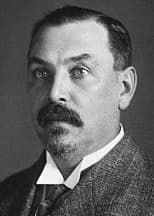
Louis Botha
General · Modern
61.1Total
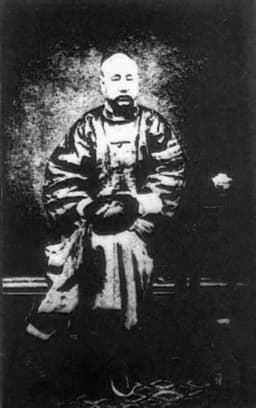
Sengge Rinchen
General · Modern
56.9Total
Basic Information
Born
1862
1811
Died
1919
1865
Era
Modern
Modern
Nationality
South Africa
China
Occupation
General
General
Civilization
Other
Eastern
Score Comparison
Military (10%)
61.7
70.0
Political (20%)
70.0
43.7
Influence (20%)
56.7
55.0
Legacy (20%)
50.0
54.0
Leadership (15%)
79.8
67.0
Strategy (15%)
58.0
60.7
TOTAL
61.1
56.9
Louis Botha — Complete Timeline
1899 AD
Battle of ColensoWar◆ Major
Botha commanded Boer forces at the Battle of Colenso during the Second Boer War. His troops repelled a British attack under General Buller, inflicting heavy casualties and boosting Boer morale.
Second Boer WarBattleVictory
Impact: regional
1900 AD
Boer War Guerrilla CommanderWar◆ Major
After the British captured Pretoria, Botha led Boer guerrilla forces in the Transvaal. He conducted hit-and-run attacks against British columns, prolonging the war and becoming a symbol of Afrikaner resistance.
Second Boer WarGuerrillaResistance
Impact: regional
1902 AD
Signed the Treaty of VereenigingPolitical Action
Botha, as a leading Boer general, signed the Treaty of Vereeniging which ended the Second Boer War. The treaty granted the Boer republics self-government under British sovereignty and promised eventual self-rule.
TreatyPeaceSecond Boer War
Impact: regional
1910 AD
First Prime Minister of the Union of South AfricaPolitical Action
Botha became the first Prime Minister of the newly formed Union of South Africa. He led a coalition government that sought to reconcile Afrikaners and English-speaking whites, while implementing segregationist policies.
Prime MinisterUnion of South AfricaFounding
Impact: nationalconstructive
1914 AD
Suppressed the 1914 RebellionWar◆ Major
Botha personally led government forces to suppress the Maritz Rebellion, an Afrikaner uprising against South Africa's entry into World War I. He defeated the rebels, asserting state authority and maintaining support for the British Empire.
RebellionWorld War ISuppression
Impact: national
1915 AD
Conquered German South West AfricaWar◆ Major
Botha commanded South African forces in the invasion and conquest of German South West Africa. The campaign succeeded, and the territory was later administered by South Africa under a League of Nations mandate.
World War IConquestGerman South West Africa
Impact: regional
Sengge Rinchen — Complete Timeline
1859 AD
Battle of Dagu FortsWar◆ Major
Sengge Rinchen commanded Qing forces defending the Dagu Forts against a British and French naval attack. His forces repelled the assault, sinking several enemy ships and inflicting heavy casualties, a rare Qing victory in the Second Opium War.
Second Opium WarBattleVictory
Impact: regional
1860 AD
Battle of PalikaoWar◆ Major
Sengge Rinchen commanded Qing cavalry at the Battle of Palikao against Anglo-French forces. His forces were decisively defeated by superior firepower, leading to the fall of Beijing and the burning of the Old Summer Palace.
Second Opium WarBattleDefeat
Impact: regionaltragic
1863 AD
Suppression of the Nian RebellionWar◆ Major
Sengge Rinchen led Qing forces against the Nian rebels in northern China. He achieved several victories but was ultimately killed in battle against the Nian in 1865, marking a turning point in the rebellion.
Nian RebellionCampaignDeath
Impact: regionaltragic
Expert Analysis
Louis Botha vs Sengge Rinchen
# The General Who Could Not Change, and the General Who Could
On a summer morning in 1860, a Mongol prince in the service of the Qing dynasty watched his world collapse. Sengge Rinchen had commanded the finest cavalry in Asia, warriors who had ridden with Genghis Khan’s shadow still hanging over the steppes. Now, at the Battle of Palikao, he ordered a massed charge against British and French infantry. The result was not a clash of equals but a slaughter—rifles and artillery cutting down horsemen who never reached the enemy line. Forty years later, on a South African kopje, another general faced a similar moment. Louis Botha watched British troops advance across open ground at Colenso, and he did something Sengge Rinchen could not: he adapted. His Boer marksmen, firing from trenches with modern Mausers, broke the British assault. Botha would go on to lose the war but win the peace, becoming a prime minister. Sengge Rinchen would lose everything, his body left on a battlefield he could no longer control.
Origins
Sengge Rinchen was born in 1811 into the Mongol aristocracy, a world where honor meant cavalry charges and loyalty to the Manchu emperor. The Qing dynasty had ruled China for nearly two centuries, but its military system had ossified. The Eight Banners, once the terror of Asia, were now a pensioned relic. Sengge Rinchen grew up in a culture that revered the bow and the lance, not the rifle and the cannon. He was a product of a civilization that had once been the world’s most advanced but was now falling catastrophically behind.
Louis Botha, born in 1862, came from a different world entirely. The Boers of South Africa were farmers, not aristocrats. They had no ancient military tradition—their warfare was born of necessity, fighting Zulu warriors and British redcoats with whatever worked. Botha grew up on a frontier where adaptability meant survival. His people had no glorious past to cling to; they had only a harsh present and an uncertain future.
Rise to Power
Sengge Rinchen rose through the Qing military hierarchy because he was a Mongol prince who knew how to ride and fight. His great moment came in 1859 at the Dagu Forts, where he commanded the defense against a British and French naval attack. His forces repelled the assault, sinking several ships and inflicting heavy casualties. For a brief moment, it seemed the old ways could still triumph. The emperor showered him with honors.
Botha’s rise was more organic. He was not born to command but earned it through competence. When the Second Boer War broke out in 1899, he was a farmer in his late thirties. His leadership at Colenso, where he directed fire so effectively that the British lost over a thousand men while the Boers lost fewer than fifty, made him a national hero. He became a general because he won battles, not because of his birth.
Leadership & Governance
The contrast in their leadership styles is stark. Sengge Rinchen commanded through hierarchy and tradition. His cavalry charges were magnificent but predictable. He had no concept of modern logistics, no understanding of how to supply an army in the field against an industrialized enemy. After his defeat at Palikao, he retreated into guerrilla warfare in the north, but even there, he fought the Nian rebels with the same tactics that had failed against the British. He achieved some victories, but he could not adapt.
Botha, by contrast, was a master of adaptation. After the British captured Pretoria in 1900, he transformed his conventional army into a guerrilla force that harassed the British for two more years. He understood that war was not about glory but about results. When the war became unwinnable, he signed the Treaty of Vereeniging in 1902, accepting British sovereignty to preserve his people’s future. Then, in 1910, he became the first prime minister of the Union of South Africa, governing a nation that included both Boers and British. He suppressed the Maritz Rebellion in 1914, a revolt by Afrikaners who thought he had betrayed them, and in 1915 he conquered German South West Africa for the British Empire. He had gone from fighting the British to fighting for them.
Triumph & Tragedy
Sengge Rinchen’s greatest triumph was the defense of Dagu in 1859. It was a genuine victory, one of the few the Qing won against Western powers in the nineteenth century. But it was also a tragedy, because it convinced the Qing court that they did not need to modernize. The next year, at Palikao, the illusion shattered. Sengge Rinchen’s cavalry was annihilated. He spent his final years fighting the Nian Rebellion, a civil war that no one could win. In 1865, he was killed in battle, his death a footnote in a dynasty’s collapse.
Botha’s triumphs were more complex. He won at Colenso, but he lost the war. He became prime minister, but he governed a deeply divided nation. He conquered German South West Africa, but at the cost of alienating many of his own people. His tragedy was that he succeeded too well: by reconciling with the British, he set the stage for the apartheid system that would oppress South Africa’s black majority for generations.
Character & Destiny
Sengge Rinchen’s character was his destiny. He was brave, loyal, and honorable—all the virtues of a Mongol warrior. But those virtues were anachronisms. He could not change because his identity was built on not changing. He was a man of the steppes in an age of steam engines and rifled artillery.
Botha’s character was more pragmatic. He was not a visionary but a realist. He knew when to fight and when to negotiate. He understood that power came not from tradition but from results. His destiny was to bridge two worlds: the Boer republics and the British Empire, the nineteenth century and the twentieth. He did it imperfectly, but he did it.
Legacy
Sengge Rinchen is remembered in China as a tragic hero, a symbol of resistance against foreign invasion. His statue stands in Beijing, a reminder of a time when the Middle Kingdom fought back. But his legacy is also a warning: tradition without adaptation leads to ruin.
Louis Botha’s legacy is more ambiguous. He is honored as a founding father of South Africa, but his nation has since rejected much of what he stood for. The Union he created is gone, replaced by a democratic South Africa that condemns the racial policies he helped entrench. Yet his ability to transform from enemy to ally, from general to statesman, remains a model of political flexibility.
Conclusion
The difference between these two men is not one of courage or intelligence. Both were brave, both were skilled. The difference is that Louis Botha understood that the world had changed, while Sengge Rinchen did not. One man learned to fight a new kind of war and then to build a new kind of peace. The other fought the old war until it killed him. In the end, the question is not who was the better general, but who was the better student of history. And history, as Botha knew, does not reward those who refuse to learn.
Rankings
🥇
Louis BothaLeader
Mil: 61.7Pol: 70.0Inf: 56.7
61.1
🥈
Sengge Rinchen
Mil: 70.0Pol: 43.7Inf: 55.0
56.9
+4.2 behind
How This Comparison Works
Algorithm
Each figure is scored on 6 dimensions (0—100 scale) based on structured historical data: Military (10%), Political (20%), Influence (20%), Legacy (20%), Leadership (15%), Strategy (15%). The weighted total produces the final ranking.
Data Sources
Scores are computed from structured sub-indicators in the database. Scale factors adjust for era (Ancient ×0.85, Modern ×1.0) and civilization size (Eastern ×1.05, Other ×0.80) to account for differences in population and military scale.
Maximum 3 Figures
Comparisons are limited to 2—3 figures to ensure readability and statistical meaningfulness.
Error Margins
±5 points per dimension — Sub-scores are derived from historical records with inherent uncertainty. Two figures within 5 points on a dimension should be considered roughly equivalent in that area.
Total Score Accuracy
±3 points overall — The weighted combination of 6 dimensions produces a total score with approximately ±3 points of uncertainty. Differences of less than 3 points are not statistically significant— the figures are effectively tied.
Known Limitations
- Historical records are incomplete and uneven across civilizations
- Figures from oral-tradition societies may be underrepresented
- Occupation labels can misclassify multi-role figures
- Scores measure capability and impact, not moral character
- Quantitative scoring is a comparison tool, not absolute truth
Capability Radar
Military (10%) — Battles & Warfare
Battles
65
75
Win Rate
70
60
Expansion
60
20
Political (20%) — Governance & Reform
Reform
65
20
Diplomacy
70
50
Economy
55
20
Influence (20%) — Cultural & Global Reach
Cultural
45
40
Global
50
35
Legacy (20%) — Historical Impact
Historical
55
55
Longevity
40
30
Leadership (15%) — Power & Stability
Tenure
60
40
Stability
50
30
Strategy (15%) — Tactics & Innovation
Strategy
72
70
Tactics
68
80
Reform
55
30
Similar Comparisons
Comments & Discussion
TrenchDweller6/16/2026
Botha's real genius wasn't tactical adaptation—it was knowing when to quit. Sengge Rinchen died faithful to his banner; Botha surrendered, then became prime minister of the very empire he fought. That's the difference between a martyr and a pragmatist. Botha understood war as a political tool, not a blood oath. Give me the general who lives to negotiate over the one who dies for tradition any day.
马鞍与米袋子6/16/2026
拿博塔和僧格林沁比?根本是两码事。僧格林沁的八旗骑兵用的是弓箭马刀,对面英法联军已经装备米涅步枪和线膛炮了。这不是"不愿改变",是清廷腐败到连换装的钱都拿不出。博塔的布尔人拿的可是毛瑟1895,跟英军李-恩菲尔德比并不落后。装备代差面前,谁指挥都白搭。
ColensoCritic6/16/2026
Let's pump the brakes on the Botha worship. He won Colenso because the British were incompetent, not because he was a tactical savant. Buller literally tried the same frontal assault three times. Against competent generalship—Roberts, Kitchener—Botha got outmaneuvered every time. His marksmen were deadly, sure, but his strategic vision was just "hide behind rocks and shoot." Compare that to Sengge Rinchen, who was fighting a genuine combined-arms nightmare with feudal cavalry. Context matters.
历史计量员6/16/2026
拿战损比说事要小心。八里桥之战,僧格林沁的蒙古马队阵亡约1200人,英法联军死伤不到50。但科伦索呢?布尔人伤亡约130人,英军却损失超过1300人。表面看博塔完胜,但你要知道,英国在1910年就让布尔人的领袖当总理了,清朝呢?直接让列强瓜分。战争胜负从来不只是战场上的数字游戏。