Loading...
Louis Botha vs Samori Toure
Samori Toure leads by 9.4 pts · 2 figures compared
…
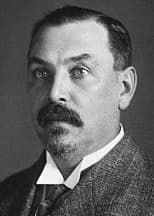
Louis Botha
General · Modern
61.1Total
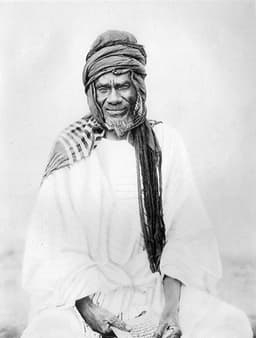
Samori Toure
General · Modern
70.5Total
Basic Information
Born
1862
1830
Died
1919
1900
Era
Modern
Modern
Nationality
South Africa
Wassoulou Empire
Occupation
General
General
Civilization
Other
Other
Score Comparison
Military (10%)
61.7
60.0
Political (20%)
70.0
78.0
Influence (20%)
56.7
68.0
Legacy (20%)
50.0
72.0
Leadership (15%)
79.8
72.0
Strategy (15%)
58.0
70.0
TOTAL
61.1
70.5
Louis Botha — Complete Timeline
1899 AD
Battle of ColensoWar◆ Major
Botha commanded Boer forces at the Battle of Colenso during the Second Boer War. His troops repelled a British attack under General Buller, inflicting heavy casualties and boosting Boer morale.
Second Boer WarBattleVictory
Impact: regional
1900 AD
Boer War Guerrilla CommanderWar◆ Major
After the British captured Pretoria, Botha led Boer guerrilla forces in the Transvaal. He conducted hit-and-run attacks against British columns, prolonging the war and becoming a symbol of Afrikaner resistance.
Second Boer WarGuerrillaResistance
Impact: regional
1902 AD
Signed the Treaty of VereenigingPolitical Action
Botha, as a leading Boer general, signed the Treaty of Vereeniging which ended the Second Boer War. The treaty granted the Boer republics self-government under British sovereignty and promised eventual self-rule.
TreatyPeaceSecond Boer War
Impact: regional
1910 AD
First Prime Minister of the Union of South AfricaPolitical Action
Botha became the first Prime Minister of the newly formed Union of South Africa. He led a coalition government that sought to reconcile Afrikaners and English-speaking whites, while implementing segregationist policies.
Prime MinisterUnion of South AfricaFounding
Impact: nationalconstructive
1914 AD
Suppressed the 1914 RebellionWar◆ Major
Botha personally led government forces to suppress the Maritz Rebellion, an Afrikaner uprising against South Africa's entry into World War I. He defeated the rebels, asserting state authority and maintaining support for the British Empire.
RebellionWorld War ISuppression
Impact: national
1915 AD
Conquered German South West AfricaWar◆ Major
Botha commanded South African forces in the invasion and conquest of German South West Africa. The campaign succeeded, and the territory was later administered by South Africa under a League of Nations mandate.
World War IConquestGerman South West Africa
Impact: regional
Samori Toure — Complete Timeline
1878 AD
Establishment of the Wassoulou EmpirePolitical Action
Samori Toure founded the Wassoulou Empire in West Africa, uniting various Mandinka states under his rule. He established a centralized administration and a professional army, creating a powerful state that resisted French expansion.
EmpireWassoulouUnification
Impact: regionalconstructive
1880 AD
Military Reforms and ModernizationReform◆ Major
Samori Toure modernized his army by importing firearms from European traders and establishing a standing army of up to 35,000 men. He organized his forces into regular units and introduced new tactics, making them effective against French troops.
Military ReformFirearmsArmy
Impact: regionalconstructive
1882 AD
First Franco-Wassoulou WarWar◆ Major
Samori Toure's forces fought the French army in the first major conflict between the Wassoulou Empire and France. The war ended with a treaty in 1886, recognizing Samori's control over the Niger River region.
WarFranceTreaty
Impact: regional
1891 AD
Second Franco-Wassoulou WarWar◆ Major
The French resumed hostilities, forcing Samori to retreat eastward. He employed a scorched-earth strategy, destroying villages and crops to deny resources to the French, prolonging the conflict for years.
WarScorched EarthRetreat
Impact: regionaltragic
1898 AD
Capture and ExileWar
Samori Toure was captured by French forces after a long campaign. He was exiled to Gabon, where he died in 1900. His capture ended the Wassoulou Empire and marked the completion of French conquest in West Africa.
CaptureExileEnd of Empire
Impact: regionaltragic
Expert Analysis
Louis Botha vs Samori Toure
# The Lion and the Farmer: Two Paths Through Africa’s Colonial Storm
On a dusty morning in September 1898, a 68-year-old West African emperor sat in chains, his empire in ashes, his sons dead, his people scattered. Samori Toure, who had outrun, outsmarted, and outfought the French army for nearly two decades, had finally been cornered. Half a continent away and sixteen years later, a stout Boer general named Louis Botha stood in a Pretoria parlor, shaking hands with the very British officers he had been ambushing in the veld. Botha would go on to become his nation’s first prime minister. Samori Toure would die in exile, a broken old man in a Gabonese jungle. Both men fought European empires. Both were brilliant commanders. Why did one end in triumph and the other in tragedy?
Origins
Samori Toure began life in the 1830s as a trader’s son in what is now Guinea, a region convulsed by slave raiding and Islamic jihad. He was a self-made man—illiterate in European languages, but fluent in the politics of the savanna. He rose from a humble soldier to a regional warlord by sheer will and tactical cunning. His world was one of decentralized chieftaincies, shifting alliances, and the slow, creeping menace of French gunboats pushing up the Niger River.
Louis Botha was born in 1862 on a Boer farm in the Orange Free State, a descendant of Dutch settlers who had been carving out homesteads in southern Africa for two centuries. He grew up on horseback, rifle in hand, learning to read the land as naturally as he read the Bible. His world was one of white republics, British imperialism, and a simmering resentment against the English who had annexed the Transvaal in 1877. Botha was a farmer first, a general second—and that distinction would shape everything.
Rise to Power
Samori’s path was forged in fire. In the 1870s, he began uniting the Mandinka states of the upper Niger under his banner, a process that culminated in 1878 with the proclamation of the Wassoulou Empire. He was not a king by birthright; he was a king by conquest. His empire was a personal creation, held together by his military reputation and his ability to dispense patronage. Every victory expanded his domain; every defeat threatened its very existence.
Botha’s rise was more conventional—and more political. He entered the Transvaal parliament in the 1890s, a young farmer with a gift for oratory and a reputation for level-headedness. When the Second Boer War erupted in 1899, he was thrust into command not because he was a professional soldier, but because the Boers had no professional army. He learned war on the job, and he learned it well. At the Battle of Colenso in December 1899, his defensive tactics shattered a British offensive, killing hundreds of redcoats while suffering minimal losses. That victory made him a national hero.
Leadership & Governance
Here the two men diverged most sharply. Samori was a warrior-king in the ancient mold. He ruled through personal authority and military force. His capital was wherever his army camped. He built a standing army of up to 30,000 men, imported breech-loading rifles from European traders, and established rudimentary factories to repair weapons. He was a brilliant strategist—his 1891 scorched-earth retreat eastward, burning villages and poisoning wells to deny the French supplies, was a masterpiece of asymmetric warfare. But he never built lasting institutions. His empire was his shadow; when he moved, it moved; when he fell, it vanished.
Botha, by contrast, was a politician who happened to be good at war. After the Boer surrender in 1902, he signed the Treaty of Vereeniging, accepting British sovereignty in exchange for self-government. It was a bitter pill for many Boers, who saw it as betrayal. But Botha understood something Samori never could: that survival required compromise. As prime minister of the Union of South Africa from 1910, he built a coalition government that included both Boers and English-speakers. He crushed the 1914 Maritz Rebellion—an Afrikaner uprising against his own government—with the same ruthlessness he had once used against the British. He led South African troops to conquer German South West Africa in 1915, proving his loyalty to the empire he had once fought.
Triumph & Tragedy
Samori’s greatest triumph was his longevity. For eighteen years, he held off the most powerful army in Europe. His greatest tragedy was that he never understood that the war could not be won. The French had unlimited men, unlimited resources, and unlimited patience. Samori had only his own genius, and genius eventually tires.
Botha’s greatest triumph was his transformation from rebel to statesman. He walked into the halls of power that had once hunted him, and he made them his own. His tragedy was subtler: he became the man who sold out his own people to their conquerors. Many Afrikaners never forgave him for the Treaty of Vereeniging or for suppressing the 1914 rebellion. He died in 1919, still prime minister, still respected, but deeply lonely.
Character & Destiny
Samori was proud, stubborn, and uncompromising. He believed that to yield was to die. When the French offered him terms in 1895—a small kingdom in the mountains, if he would surrender—he refused. He would rather fight to the end than rule as a vassal. That pride made him a legend; it also made him a prisoner.
Botha was pragmatic, flexible, and patient. He believed that to survive was to adapt. He had seen the British burn Boer farms and herd women into concentration camps. He knew that resistance, however noble, had a price. He chose peace over pride, power over purity. That pragmatism made him the father of a nation; it also made him a traitor in the eyes of many.
Legacy
Samori Toure is remembered today as a symbol of African resistance, a hero who fought colonialism to his last breath. His name adorns streets, schools, and statues across West Africa. But his empire died with him, and he left no institutional legacy.
Louis Botha is remembered as a founding father of South Africa, a man who bridged the gap between Boer and Briton. His face once appeared on banknotes; his name graces towns and monuments. But his legacy is complicated: he built a union that excluded the black majority, and his compromises laid the groundwork for apartheid.
Conclusion
In the end, the difference between Samori Toure and Louis Botha is the difference between the lion and the farmer. The lion fights until it dies; the farmer learns to live with the fence. Both choices demand courage. Both exact a price. One leaves a legend; the other leaves a nation. Which is greater? History does not answer. It only asks the question.
Rankings
🥇
Samori ToureLeader
Mil: 60.0Pol: 78.0Inf: 68.0
70.5
🥈
Louis Botha
Mil: 61.7Pol: 70.0Inf: 56.7
61.1
+9.4 behind
How This Comparison Works
Algorithm
Each figure is scored on 6 dimensions (0—100 scale) based on structured historical data: Military (10%), Political (20%), Influence (20%), Legacy (20%), Leadership (15%), Strategy (15%). The weighted total produces the final ranking.
Data Sources
Scores are computed from structured sub-indicators in the database. Scale factors adjust for era (Ancient ×0.85, Modern ×1.0) and civilization size (Eastern ×1.05, Other ×0.80) to account for differences in population and military scale.
Maximum 3 Figures
Comparisons are limited to 2—3 figures to ensure readability and statistical meaningfulness.
Error Margins
±5 points per dimension — Sub-scores are derived from historical records with inherent uncertainty. Two figures within 5 points on a dimension should be considered roughly equivalent in that area.
Total Score Accuracy
±3 points overall — The weighted combination of 6 dimensions produces a total score with approximately ±3 points of uncertainty. Differences of less than 3 points are not statistically significant— the figures are effectively tied.
Known Limitations
- Historical records are incomplete and uneven across civilizations
- Figures from oral-tradition societies may be underrepresented
- Occupation labels can misclassify multi-role figures
- Scores measure capability and impact, not moral character
- Quantitative scoring is a comparison tool, not absolute truth
Capability Radar
Military (10%) — Battles & Warfare
Battles
65
75
Win Rate
70
65
Expansion
60
60
Political (20%) — Governance & Reform
Reform
65
75
Diplomacy
70
80
Economy
55
60
Influence (20%) — Cultural & Global Reach
Cultural
45
65
Global
50
55
Legacy (20%) — Historical Impact
Historical
55
70
Longevity
40
60
Leadership (15%) — Power & Stability
Tenure
60
70
Stability
50
55
Strategy (15%) — Tactics & Innovation
Strategy
72
85
Tactics
68
80
Reform
55
70
Similar Comparisons
Comments & Discussion
VELDREBEL6/16/2026
Botha was the smarter politician, not the better fighter. Samori held off the French for 18 years across a huge empire, using scorched earth and lightning cavalry strikes—actual asymmetric warfare. Botha surrendered after three years because he knew when to fold. That’s not “triumph,” that’s pragmatism selling out. Samori’s tragedy was his honor; he refused to bow until his army starved. One built a nation, sure. The other built a legend that still rattles Paris.
NIJERWOLF6/16/2026
萨摩里·图雷才是真英雄,路易斯·博塔就是个殖民者走狗。你看,图雷用落后的武器跟法国人打了快二十年,还搞出了自己的军事体系,连法国将军都得承认他厉害。博塔呢?跟英国人打完仗转头就当上了首相,镇压黑人比英国人还狠。南非种族隔离的种子就是他种的。一个为自由战死流亡,一个为权力背叛同胞,这有什么好比的?
KARTRIDDLE6/16/2026
Data says Botha walks away with a nation, Toure walks away dead in exile. That’s not subjective. Botha faced a British army that was willing to negotiate after the Boer War—his timing and local politics aligned. Toure fought the French Third Republic at its imperial peak, when Paris wouldn’t even pretend to compromise. Different opponents, different outcomes. Comparing them is like asking why a rugby player lost to a sumo wrestler. They weren’t playing the same game.
兵马俑迷6/16/2026
从军事史角度看,萨摩里的战略天才被严重低估了。他发明了一种机动防御战术,用骑兵和民兵在热带雨林里打游击,让法国人花了整整16年才抓住他。这比博塔在草原上跟英国人打阵地战难多了。博塔的打法说白了就是老式欧洲战争,萨摩里可是用前工业时代的资源对抗工业帝国。我觉得,博塔的名字在军事教材里都进不去前五十,萨摩里至少能排前三。
TACTICANT6/16/2026
Statistically, Botha’s career is a safe bet: win some skirmishes, negotiate, become PM. Toure’s résumé reads like a tragic epic—18 years of warfare, multiple empires, a mobile capital. But here’s the rub: Botha died in office, respected. Toure died chained, forgotten by the press. History loves winners, not martyrs. If you’re ranking greatness, that’s a matter of taste. If you’re ranking success, the numbers are clear. Botha tactically withdrew; Toure fought to the bitter end. One lived to lead;