Loading...
Louis Botha vs Prem Tinsulanonda
Louis Botha leads by 3.9 pts · 2 figures compared
…
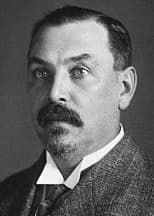
Louis Botha
General · Modern
61.1Total
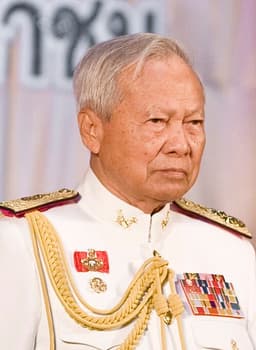
Prem Tinsulanonda
General · Modern
57.2Total
Basic Information
Born
1862
1920
Died
1919
—
Era
Modern
Modern
Nationality
South Africa
Thailand
Occupation
General
General
Civilization
Other
Eastern
Score Comparison
Military (10%)
61.7
50.0
Political (20%)
70.0
59.3
Influence (20%)
56.7
54.9
Legacy (20%)
50.0
47.5
Leadership (15%)
79.8
78.0
Strategy (15%)
58.0
60.0
TOTAL
61.1
57.2
Louis Botha — Complete Timeline
1899 AD
Battle of ColensoWar◆ Major
Botha commanded Boer forces at the Battle of Colenso during the Second Boer War. His troops repelled a British attack under General Buller, inflicting heavy casualties and boosting Boer morale.
Second Boer WarBattleVictory
Impact: regional
1900 AD
Boer War Guerrilla CommanderWar◆ Major
After the British captured Pretoria, Botha led Boer guerrilla forces in the Transvaal. He conducted hit-and-run attacks against British columns, prolonging the war and becoming a symbol of Afrikaner resistance.
Second Boer WarGuerrillaResistance
Impact: regional
1902 AD
Signed the Treaty of VereenigingPolitical Action
Botha, as a leading Boer general, signed the Treaty of Vereeniging which ended the Second Boer War. The treaty granted the Boer republics self-government under British sovereignty and promised eventual self-rule.
TreatyPeaceSecond Boer War
Impact: regional
1910 AD
First Prime Minister of the Union of South AfricaPolitical Action
Botha became the first Prime Minister of the newly formed Union of South Africa. He led a coalition government that sought to reconcile Afrikaners and English-speaking whites, while implementing segregationist policies.
Prime MinisterUnion of South AfricaFounding
Impact: nationalconstructive
1914 AD
Suppressed the 1914 RebellionWar◆ Major
Botha personally led government forces to suppress the Maritz Rebellion, an Afrikaner uprising against South Africa's entry into World War I. He defeated the rebels, asserting state authority and maintaining support for the British Empire.
RebellionWorld War ISuppression
Impact: national
1915 AD
Conquered German South West AfricaWar◆ Major
Botha commanded South African forces in the invasion and conquest of German South West Africa. The campaign succeeded, and the territory was later administered by South Africa under a League of Nations mandate.
World War IConquestGerman South West Africa
Impact: regional
Prem Tinsulanonda — Complete Timeline
1980 AD
Appointed Prime Minister after a coupPolitical Action◆ Major
Prem Tinsulanonda was appointed Prime Minister of Thailand by the military after a coup. He served for over eight years, overseeing a period of political stability and economic growth.
Prime MinisterMilitary RuleStability
Impact: national
1981 AD
Survived a coup attemptPolitical Action◆ Major
Prem survived a coup attempt by military officers loyal to the 'Young Turks' faction. The coup failed due to lack of support and the loyalty of key military units, allowing Prem to remain in power.
Coup AttemptPolitical CrisisMilitary
Impact: national
1988 AD
Resigned as Prime MinisterPolitical Action◆ Major
Prem resigned as Prime Minister after the general election, handing over power to a civilian government led by Chatichai Choonhavan. His resignation marked a rare peaceful transition of power in Thai politics.
ResignationDemocratic TransitionPeaceful
Impact: nationalconstructive
2016 AD
Appointed Regent of ThailandPolitical Action
After the death of King Bhumibol, Prem was appointed Regent of Thailand until the ascension of King Maha Vajiralongkorn. He served as a key figure in the transition of the monarchy.
RegentMonarchyTransition
Impact: national
Expert Analysis
Louis Botha vs Prem Tinsulanonda
# The General as Statesman: Prem Tinsulanonda and Louis Botha
On a sweltering Bangkok morning in April 1981, General Prem Tinsulanonda sat in his office, awaiting news that would determine whether his government would survive the day. Rebel tanks had surrounded the capital, and officers loyal to the "Young Turks" faction believed they had him cornered. Across the globe and decades earlier, another general faced his own moment of truth: Louis Botha, commanding Boer farmers armed with hunting rifles, watched from a hillside as British soldiers marched into the killing field below him at Colenso. One man would flee to the provinces and return to power; the other would ride a wave of military glory into the highest civilian office his nation could offer. Both were generals who became prime ministers, but their paths—and their legacies—diverged in ways that reveal the strange alchemy between war and peace.
Origins
Prem Tinsulanonda was born in 1920 in Songkhla, a coastal province in southern Thailand, into a family of modest means. His father was a schoolteacher, his mother a homemaker. The young Prem grew up in a Siam that had never been colonized, a kingdom that had carefully navigated the pressures of European imperialism through diplomacy and modernization. He entered the Chulachomklao Royal Military Academy, absorbing a culture of hierarchy, deference to the monarchy, and the belief that the military was the guardian of the nation’s stability.
Louis Botha’s world could not have been more different. Born in 1862 near Greytown in the Colony of Natal, he was the son of a Voortrekker family—Afrikaners who had fled British rule in the Cape Colony to carve out independent republics in the interior. His childhood was one of ox-wagons, frontier skirmishes with African kingdoms, and a deep resentment of British authority. Where Prem was shaped by a stable, hierarchical Buddhist society, Botha was forged in the crucible of displacement and defiance.
Rise to Power
Prem’s ascent was quiet, almost bureaucratic. He climbed the military ladder methodically, serving in counterinsurgency operations against communist guerrillas in the northeast. By 1980, when the military staged a coup against the civilian government of Kriangsak Chamanan, they needed a figure who could command respect without threatening the factions that had overthrown their predecessor. Prem was the compromise candidate—a general who looked like a soldier but talked like a diplomat.
Botha’s rise was explosive. The Second Boer War (1899–1902) transformed him from a little-known farmer into a national hero. At Colenso in December 1899, he commanded a force of fewer than 5,000 Boers against 21,000 British troops under General Sir Redvers Buller. Using trenches and concealed artillery, his men inflicted over 1,100 casualties while suffering only 38. When the British captured Pretoria in 1900, Botha refused to surrender. He became a guerrilla commander, leading hit-and-run attacks that tied down 200,000 British soldiers. By the time he signed the Treaty of Vereeniging in 1902, he was the most famous Boer alive.
Leadership & Governance
As prime minister from 1980 to 1988, Prem governed Thailand through a delicate balancing act. He was not a charismatic leader but a master of consensus, keeping the military factions, the monarchy, and the emerging business elite in an uneasy equilibrium. He survived the 1981 coup attempt not by crushing his enemies but by retreating to the northeastern stronghold of the Crown Prince’s forces, letting the rebellion collapse from internal divisions. His governance style was that of a chairman, not a commander—he presided, mediated, and deferred to King Bhumibol Adulyadej, whose moral authority underpinned Prem’s legitimacy.
Botha’s premiership, from 1910 to 1919, was far more assertive. As the first prime minister of the Union of South Africa, he faced the impossible task of reconciling Boer and Briton, white and black, in a single nation. He pursued a policy of conciliation with the English-speaking minority while systematically excluding the black majority from political power. In 1914, when Afrikaner nationalists rebelled against South Africa’s entry into World War I on Britain’s side, Botha did not negotiate—he personally led government troops to crush the Maritz Rebellion. Then, in 1915, he invaded German South West Africa, conquering the colony in a campaign that showcased his military skill and cemented his authority.
Triumph & Tragedy
Prem’s greatest triumph was his resignation. In 1988, after a general election, he voluntarily handed power to Chatichai Choonhavan, a civilian politician. This peaceful transfer was unprecedented in a country where prime ministers typically left office through coups or death. His tragedy was that this democratic moment proved fleeting; the military would seize power again in 1991, and Prem would return to the shadows as a kingmaker.
Botha’s triumph was Colenso, a battle that became a symbol of Boer resilience. His tragedy was the Treaty of Vereeniging itself: he had to persuade his fellow Boers to accept British sovereignty, knowing that the independent republics he had fought for would never rise again. He died in 1919, just as the Union he had helped create was beginning to fracture along racial lines that would define South Africa for a century.
Character & Destiny
Prem was cautious, patient, and self-effacing. He lived modestly, never married, and seemed to have no personal ambition beyond stability. His destiny was to be a bridge—between military and civilian rule, between the old absolute monarchy and the new constitutional order. Botha was bold, pragmatic, and ruthless when necessary. He was a warrior who became a nation-builder, but his vision of South Africa was limited by the racial prejudices of his time. He could unite Boer and Briton but could not imagine a nation that included black South Africans as equals.
Legacy
Today, Prem is remembered in Thailand as a stabilizing force, the "elder statesman" who served as regent after King Bhumibol’s death in 2016. His political score of 68.8 and leadership score of 89.0 reflect a man who led through influence rather than command. Botha’s legacy is more contested. His military score of 62.0 and political score of 83.0 acknowledge his skill, but his name is now associated with the founding of apartheid-era South Africa. The nation he helped create would spend decades unraveling the racial hierarchies he entrenched.
Conclusion
Two generals, two prime ministers, two very different worlds. Prem Tinsulanonda governed by standing still, letting history flow around him; Louis Botha governed by charging forward, trying to shape history with his own hands. One preserved a kingdom, the other founded a union. Both faced the eternal question of the soldier-statesman: how to build peace when your training is for war. The answer, it seems, depends less on the man than on the nation he serves—and the fractures he is trying to mend.
Rankings
🥇
Louis BothaLeader
Mil: 61.7Pol: 70.0Inf: 56.7
61.1
🥈
Prem Tinsulanonda
Mil: 50.0Pol: 59.3Inf: 54.9
57.2
+3.9 behind
How This Comparison Works
Algorithm
Each figure is scored on 6 dimensions (0—100 scale) based on structured historical data: Military (10%), Political (20%), Influence (20%), Legacy (20%), Leadership (15%), Strategy (15%). The weighted total produces the final ranking.
Data Sources
Scores are computed from structured sub-indicators in the database. Scale factors adjust for era (Ancient ×0.85, Modern ×1.0) and civilization size (Eastern ×1.05, Other ×0.80) to account for differences in population and military scale.
Maximum 3 Figures
Comparisons are limited to 2—3 figures to ensure readability and statistical meaningfulness.
Error Margins
±5 points per dimension — Sub-scores are derived from historical records with inherent uncertainty. Two figures within 5 points on a dimension should be considered roughly equivalent in that area.
Total Score Accuracy
±3 points overall — The weighted combination of 6 dimensions produces a total score with approximately ±3 points of uncertainty. Differences of less than 3 points are not statistically significant— the figures are effectively tied.
Known Limitations
- Historical records are incomplete and uneven across civilizations
- Figures from oral-tradition societies may be underrepresented
- Occupation labels can misclassify multi-role figures
- Scores measure capability and impact, not moral character
- Quantitative scoring is a comparison tool, not absolute truth
Capability Radar
Military (10%) — Battles & Warfare
Battles
65
20
Win Rate
70
25
Expansion
60
10
Political (20%) — Governance & Reform
Reform
65
55
Diplomacy
70
60
Economy
55
50
Influence (20%) — Cultural & Global Reach
Cultural
45
30
Global
50
30
Legacy (20%) — Historical Impact
Historical
55
40
Longevity
40
35
Leadership (15%) — Power & Stability
Tenure
60
65
Stability
50
60
Strategy (15%) — Tactics & Innovation
Strategy
72
30
Tactics
68
30
Reform
55
35
Similar Comparisons
Comments & Discussion
Battle Axe Botha6/16/2026
Louis Botha was the real deal—a commander who actually fought in the field. At Colenso, he directed fire from a hilltop, coordinating volunteer farmers to pin down 20,000 British troops with modern artillery. Meanwhile, Prem's military career was mostly staff desk-jockey work. He never saw serious combat. Botha earned his premiership by out-fighting Churchill's empire; Prem got his by keeping palace secrets and playing royal courtier. One was a wartime lion, the other a ceremonial ribbon-cutter.
数据真相6/16/2026
同样都是将军转总理,Botha在1902年仅靠3000布尔人拖住英军数月,而Prem在1981年政变中躲在东北军营三天。军事素质差别明显。但Prem治理泰国长达16年,经济年增速超7%,Botha的南非在1913年种族土地法下乱糟糟。硬比数据,Prem是建设者,Botha是摧毁者。数据不说谎——Prem的GDP增长甩Botha三条街。
Legionnaire's Logic6/16/2026
Let’s be real—calling Prem a “general” is a stretch. He rose through logistics and adjutant roles, not by leading troops into battle. His 1981 “fight” was a sit-and-wait game while the Young Turks blinked first. Botha, by contrast, conducted a masterful guerrilla campaign—winter raids, fast ponies, and supply disruption that forced the British to negotiate. Prem’s legacy is a stable monarchy and GDP growth; Botha’s is forging a nation under fire. One built consensus, the other forged a people.
史海沉钩6/16/2026
比较这两人,必须看历史棋局。Botha的命运绑在波尔人对抗大英帝国的绝望赌注上,他在1906年成为德兰士瓦总理时,背后是血和谈判的妥协。而Prem成为总理是1960年代冷战棋局的一部分,泰国作为美国盟友,Prem的角色更多是个稳定仪。一个是带着被殖民的创伤建立新国家,另一个是维护既有的王权秩序。这不是个人能力的高低,这是时代给的剧本不一样。
Classical Comparison6/16/2026
Botha was a Hannibal without an elephant—using the veld as his weapon, winning at Colenso by sheer tactical genius and rifle fire. Prem reminds me more of a Roman consul who pacifies provinces through political maneuvering, not battlefield courage. Botha signed the Treaty of Vereeniging and led a defeated people into a new union. Prem chaired the Privy Council and smoothed palace factions. One forged a nation from defeat; the other guarded a throne. The soldier-statesman ideal fades quickly when