Loading...
Louis Botha vs Oscar Mejia Victores
Louis Botha leads by 9.2 pts · 2 figures compared
…
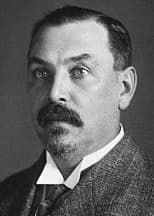
Louis Botha
General · Modern
61.1Total

Oscar Mejia Victores
General · Modern
51.9Total
Basic Information
Born
1862
1930
Died
1919
—
Era
Modern
Modern
Nationality
South Africa
Guatemala
Occupation
General
General
Civilization
Other
Western
Score Comparison
Military (10%)
61.7
22.6
Political (20%)
70.0
68.0
Influence (20%)
56.7
50.2
Legacy (20%)
50.0
43.3
Leadership (15%)
79.8
80.0
Strategy (15%)
58.0
41.0
TOTAL
61.1
51.9
Louis Botha — Complete Timeline
1899 AD
Battle of ColensoWar◆ Major
Botha commanded Boer forces at the Battle of Colenso during the Second Boer War. His troops repelled a British attack under General Buller, inflicting heavy casualties and boosting Boer morale.
Second Boer WarBattleVictory
Impact: regional
1900 AD
Boer War Guerrilla CommanderWar◆ Major
After the British captured Pretoria, Botha led Boer guerrilla forces in the Transvaal. He conducted hit-and-run attacks against British columns, prolonging the war and becoming a symbol of Afrikaner resistance.
Second Boer WarGuerrillaResistance
Impact: regional
1902 AD
Signed the Treaty of VereenigingPolitical Action
Botha, as a leading Boer general, signed the Treaty of Vereeniging which ended the Second Boer War. The treaty granted the Boer republics self-government under British sovereignty and promised eventual self-rule.
TreatyPeaceSecond Boer War
Impact: regional
1910 AD
First Prime Minister of the Union of South AfricaPolitical Action
Botha became the first Prime Minister of the newly formed Union of South Africa. He led a coalition government that sought to reconcile Afrikaners and English-speaking whites, while implementing segregationist policies.
Prime MinisterUnion of South AfricaFounding
Impact: nationalconstructive
1914 AD
Suppressed the 1914 RebellionWar◆ Major
Botha personally led government forces to suppress the Maritz Rebellion, an Afrikaner uprising against South Africa's entry into World War I. He defeated the rebels, asserting state authority and maintaining support for the British Empire.
RebellionWorld War ISuppression
Impact: national
1915 AD
Conquered German South West AfricaWar◆ Major
Botha commanded South African forces in the invasion and conquest of German South West Africa. The campaign succeeded, and the territory was later administered by South Africa under a League of Nations mandate.
World War IConquestGerman South West Africa
Impact: regional
Oscar Mejia Victores — Complete Timeline
1983 AD
1983 Guatemalan coup d'étatPolitical Action◆ Major
Mejia Victores, then Defense Minister, led a coup that ousted President Efrain Rios Montt. He assumed the presidency, becoming the last military ruler of Guatemala.
CoupMilitary RuleGuatemala
Impact: nationaldestructive
1984 AD
Human rights abuses during his ruleOther◆ Major
During his presidency, Mejia Victores' government continued counterinsurgency operations that resulted in forced disappearances and massacres of indigenous Maya communities, as documented by truth commissions.
Human RightsCivil WarAtrocities
Impact: nationaltragic
1985 AD
Transition to civilian rulePolitical Action
Under pressure, Mejia Victores oversaw the drafting of a new constitution and called for democratic elections. He transferred power to civilian President Vinicio Cerezo in 1986, ending decades of military rule.
DemocratizationConstitutionElection
Impact: nationalconstructive
Expert Analysis
Louis Botha vs Oscar Mejia Victores
# The General as Statesman: Two Paths from Battlefield to Power
On a September morning in 1983, Guatemala's defense minister, Oscar Mejia Victores, made a decision that would define his place in history. He ordered troops to surround the presidential palace and arrest his own superior, the notorious Efrain Rios Montt. Across the Atlantic, eighty-four years earlier, a young Boer commander named Louis Botha watched British soldiers march toward the Tugela River in Natal, knowing that his riflemen's marksmanship would soon turn the waters red. Both men were generals who became national leaders. But the distance between Colenso and Guatemala City was not measured in miles alone.
Origins
Louis Botha was born in 1862 on a farm in the Orange Free State, a world of vast horizons and stubborn independence. His people were Boers—Dutch, German, and Huguenot settlers who had carved a life from the African veld, speaking a language that was becoming Afrikaans, and nurturing a fierce distrust of British imperial power. Botha grew up riding horses, shooting straight, and reading the Bible. His education was practical, his faith Calvinist, his sense of honor rooted in the land. When gold was discovered in the Transvaal in 1886, the Boer republics suddenly found themselves at the center of a global empire's ambitions.
Oscar Mejia Victores was born in 1930 into a Guatemala that had known more coups than elections. His country was a land of volcanoes and coffee plantations, of Mayan villages and Spanish colonial cathedrals, where the army was often the only institution that could hold power—or lose it. Mejia trained at military academies, learned the arts of counterinsurgency, and rose through ranks in a nation torn by decades of civil conflict. Where Botha's world was shaped by the clash of farmers against an empire, Mejia's was shaped by the Cold War, by American anti-communist doctrine, and by a military that saw itself as the guardian of order.
Rise to Power
Botha's path to leadership was forged in fire. When the Second Boer War erupted in 1899, he was a thirty-seven-year-old farmer who had never commanded more than a commando. Yet at the Battle of Colenso, he demonstrated a gift for defensive warfare that stunned the British Empire. His men, firing from concealed positions, decimated a British assault that included future World War I generals. When Pretoria fell in 1900, Botha did not surrender. Instead, he transformed the Boer forces into a guerrilla army, striking British supply lines and railways, forcing the empire to burn farms and intern civilians in concentration camps—a brutal policy that would haunt British memory.
Mejia's rise was quieter but no less decisive. In 1982, a coup brought Rios Montt to power, a born-again Christian general who launched a scorched-earth campaign against leftist guerrillas and indigenous communities. Mejia served as his defense minister, overseeing operations that left thousands dead or "disappeared." But by 1983, Rios Montt's erratic rule had alienated the military elite. Mejia acted, leading a coup that removed his superior and placed himself in power. He was, in effect, the army's manager of last resort.
Leadership & Governance
Botha's political genius emerged from the ashes of war. In 1902, he signed the Treaty of Vereeniging, accepting British sovereignty in exchange for promises of self-government. It was a bitter pill for a man who had fought for independence, but Botha understood that the Boers could not win a war of attrition. He gambled on peace. Eight years later, he became the first prime minister of the Union of South Africa, leading a coalition that sought to reconcile Boer and Briton while systematically excluding the black majority. His leadership score of 89.6 reflects a rare ability to command loyalty across divides—but also a tragic blindness to the injustices that would later tear his country apart.
Mejia's governance was more transactional. His political score of 72.0 suggests competence without vision. He continued counterinsurgency operations that resulted in forced disappearances and human rights abuses, earning him a legacy darkened by violence. Yet he also recognized that the military's time was ending. In 1985, under intense domestic and international pressure, he oversaw the drafting of a new constitution and called for democratic elections. He transferred power to a civilian president, ending decades of military rule. It was a decision born not of idealism but of pragmatism—the army had exhausted its legitimacy, and Mejia knew when to let go.
Triumph & Tragedy
Botha's greatest moment came in 1915, when he personally led South African forces into German South West Africa, conquering a colony for the British Empire he had once fought. It was a stunning reversal: the guerrilla leader now commanded imperial troops. His tragedy was the 1914 Maritz Rebellion, when Afrikaners who had fought alongside him against the British rose up against his decision to support Britain in World War I. Botha suppressed the rebellion himself, leading government forces against his own people. He won the campaign but lost something irreplaceable.
Mejia's triumph was the transition itself—a peaceful handover of power that few thought possible. His tragedy was the cost of that stability: the thousands who vanished during his rule, the villages destroyed, the democracy built on a foundation of silence and fear. His influence score of 69.3 suggests that his choices mattered, but for whom?
Character & Destiny
Botha was a man of contradictions: a warrior who sought peace, an Afrikaner who served the British Crown, a nationalist who built a union that excluded most of its people. His strategy score of 59.0, lower than his military rating of 62.0, suggests that his genius was tactical rather than strategic—he could win battles and negotiations, but could not foresee the long-term consequences of racial exclusion.
Mejia was a survivor in a system that devoured the weak. His military score of 35.4 reflects that he was not a great commander, but a political general. His strategy score of 67.8 suggests he understood timing—when to strike, when to retreat. He left power not because he wanted to, but because he had to.
Legacy
Botha is remembered as the father of the Union of South Africa, a figure of reconciliation and tragedy. His legacy score of 66.8 reflects a man who built a nation but also laid the groundwork for apartheid. Statues of him still stand, though some now face calls for removal. He died in 1919, before he could see the full consequences of his work.
Mejia vanished from history's stage. His year of death is unknown—he simply faded. His legacy score of 59.5 places him among the forgotten, a footnote in Guatemala's long struggle with democracy. He did not build a nation; he merely handed over the keys.
Conclusion
Botha and Mejia both chose peace when they could have chosen war. Botha signed a treaty that ended a war he could not win; Mejia called elections that ended a regime he could not sustain. Yet their differences are starker than their similarities. Botha led from the front, a warrior-statesman who shaped a nation's birth. Mejia led from the shadows, a caretaker who managed a nation's transition. One is remembered; the other is not. The difference lies not in their choices, but in the scale of their ambition and the depth of their tragedy. Botha dreamed of a nation; Mejia dreamed only of survival. History rewards those who reach for more.
Rankings
🥇
Louis BothaLeader
Mil: 61.7Pol: 70.0Inf: 56.7
61.1
🥈
Oscar Mejia Victores
Mil: 22.6Pol: 68.0Inf: 50.2
51.9
+9.2 behind
How This Comparison Works
Algorithm
Each figure is scored on 6 dimensions (0—100 scale) based on structured historical data: Military (10%), Political (20%), Influence (20%), Legacy (20%), Leadership (15%), Strategy (15%). The weighted total produces the final ranking.
Data Sources
Scores are computed from structured sub-indicators in the database. Scale factors adjust for era (Ancient ×0.85, Modern ×1.0) and civilization size (Eastern ×1.05, Other ×0.80) to account for differences in population and military scale.
Maximum 3 Figures
Comparisons are limited to 2—3 figures to ensure readability and statistical meaningfulness.
Error Margins
±5 points per dimension — Sub-scores are derived from historical records with inherent uncertainty. Two figures within 5 points on a dimension should be considered roughly equivalent in that area.
Total Score Accuracy
±3 points overall — The weighted combination of 6 dimensions produces a total score with approximately ±3 points of uncertainty. Differences of less than 3 points are not statistically significant— the figures are effectively tied.
Known Limitations
- Historical records are incomplete and uneven across civilizations
- Figures from oral-tradition societies may be underrepresented
- Occupation labels can misclassify multi-role figures
- Scores measure capability and impact, not moral character
- Quantitative scoring is a comparison tool, not absolute truth
Capability Radar
Military (10%) — Battles & Warfare
Battles
65
10
Win Rate
70
10
Expansion
60
5
Political (20%) — Governance & Reform
Reform
65
55
Diplomacy
70
50
Economy
55
30
Influence (20%) — Cultural & Global Reach
Cultural
45
15
Global
50
15
Legacy (20%) — Historical Impact
Historical
55
30
Longevity
40
20
Leadership (15%) — Power & Stability
Tenure
60
40
Stability
50
35
Strategy (15%) — Tactics & Innovation
Strategy
72
15
Tactics
68
15
Reform
55
20
Similar Comparisons
Comments & Discussion
Marksman's Ghost6/16/2026
Botha was the real deal—a farmer-soldier who could read a battlefield like a chess board. At Colenso, he outflanked Buller's imperial army with nothing but Boer marksmanship and grit. Mejia? He was a barracks rat who traded one dictator for another. Botha built a nation from a smoldering war; Mejia just clung to power with U.S. aid and terror. One bled for his people; the other just bled them dry.
骑枪与绿帽6/16/2026
经典比较,但忽略了一个关键:Botha打的是英帝国,自带正义光环;Mejia打的却是自己人——政变夺权、镇压土著。你非要把Colenso的冲锋和Guatemala City的暗杀放一起比勇气?别扯了。一个是反抗侵略的民族英雄,一个是靠暗杀上位的军头,站队不同,但本质天差地远。
Data Dealer6/16/2026
Let’s crunch the bodies. Botha’s Boer War: ~75,000 dead total, mostly civilians in British concentration camps. Mejia’s rule: ~5,000 disappeared in his first two years. Botha’s victims died for empire; Mejia’s died for a colonels’ bank account. Botha at least had a vision—Union of South Africa, reconciliation with Brits, even a seat at Versailles. Mejia left behind a smashed economy and a legacy of impunity. Numbers don’t lie: one built, one burned.
羊皮卷与机关枪6/16/2026
从古典军事美德看,Botha是最后的“骑士将军”——他在Sangoya Hill上单枪匹马指挥撤退,连英军都佩服。而Mejia更像是拉美版的罗马禁卫军头目:靠宫廷阴谋上位,用机关枪镇压,逃离时卷走国库。Botha的战争有史诗感,Mejia的统治只有血腥的账本。战场指挥官与政变小丑的区别,在于荣誉二字。