Loading...
Louis Botha vs Olusegun Obasanjo
Louis Botha leads by 0.9 pts · 2 figures compared
…
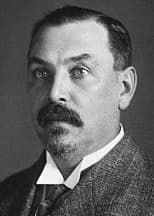
Louis Botha
General · Modern
61.1Total
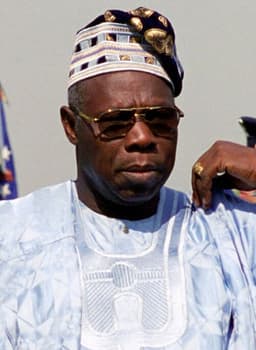
Olusegun Obasanjo
General · Modern
60.2Total
Basic Information
Born
1862
1937
Died
1919
—
Era
Modern
Modern
Nationality
South Africa
Nigeria
Occupation
General
General
Civilization
Other
Other
Score Comparison
Military (10%)
61.7
45.0
Political (20%)
70.0
72.0
Influence (20%)
56.7
55.0
Legacy (20%)
50.0
54.0
Leadership (15%)
79.8
78.0
Strategy (15%)
58.0
60.0
TOTAL
61.1
60.2
Louis Botha — Complete Timeline
1899 AD
Battle of ColensoWar◆ Major
Botha commanded Boer forces at the Battle of Colenso during the Second Boer War. His troops repelled a British attack under General Buller, inflicting heavy casualties and boosting Boer morale.
Second Boer WarBattleVictory
Impact: regional
1900 AD
Boer War Guerrilla CommanderWar◆ Major
After the British captured Pretoria, Botha led Boer guerrilla forces in the Transvaal. He conducted hit-and-run attacks against British columns, prolonging the war and becoming a symbol of Afrikaner resistance.
Second Boer WarGuerrillaResistance
Impact: regional
1902 AD
Signed the Treaty of VereenigingPolitical Action
Botha, as a leading Boer general, signed the Treaty of Vereeniging which ended the Second Boer War. The treaty granted the Boer republics self-government under British sovereignty and promised eventual self-rule.
TreatyPeaceSecond Boer War
Impact: regional
1910 AD
First Prime Minister of the Union of South AfricaPolitical Action
Botha became the first Prime Minister of the newly formed Union of South Africa. He led a coalition government that sought to reconcile Afrikaners and English-speaking whites, while implementing segregationist policies.
Prime MinisterUnion of South AfricaFounding
Impact: nationalconstructive
1914 AD
Suppressed the 1914 RebellionWar◆ Major
Botha personally led government forces to suppress the Maritz Rebellion, an Afrikaner uprising against South Africa's entry into World War I. He defeated the rebels, asserting state authority and maintaining support for the British Empire.
RebellionWorld War ISuppression
Impact: national
1915 AD
Conquered German South West AfricaWar◆ Major
Botha commanded South African forces in the invasion and conquest of German South West Africa. The campaign succeeded, and the territory was later administered by South Africa under a League of Nations mandate.
World War IConquestGerman South West Africa
Impact: regional
Olusegun Obasanjo — Complete Timeline
1976 AD
Military coup that brought Obasanjo to powerPolitical Action
Following the assassination of General Murtala Mohammed in a failed coup, Obasanjo, as Chief of Staff, Supreme Headquarters, succeeded him as head of state. He oversaw the continuation of the transition to civilian rule.
CoupSuccessionMilitary Rule
Impact: national
1979 AD
Handover of power to civilian governmentPolitical Action
Obasanjo voluntarily handed over power to the elected civilian government of Shehu Shagari, marking the first peaceful transfer of power from military to civilian rule in Nigeria. This act established a precedent for democratic transition.
DemocracyTransitionCivilian Rule
Impact: nationalconstructive
1999 AD
Election as President of NigeriaPolitical Action
Obasanjo won the 1999 Nigerian presidential election as the candidate of the People's Democratic Party (PDP). His victory ended 16 years of military rule and began the Fourth Nigerian Republic.
ElectionDemocracyFourth Republic
Impact: nationalprogressive
2005 AD
Debt relief from Paris ClubPolitical Action◆ Major
Obasanjo's government negotiated a debt relief agreement with the Paris Club, resulting in the cancellation of $18 billion of Nigeria's external debt. This freed up resources for domestic spending and was a major economic achievement.
Debt ReliefEconomyNegotiation
Impact: nationalconstructive
2006 AD
Third term bid failurePolitical Action◆ Major
Obasanjo attempted to amend the Nigerian constitution to allow him to run for a third term. The bid was rejected by the National Assembly, marking a significant political defeat and reinforcing term limits.
Third TermConstitutionDefeat
Impact: national
Expert Analysis
Louis Botha vs Olusegun Obasanjo
### The General Who Gave Away Power, and the General Who Built a Nation
On a dusty October morning in 1979, Olusegun Obasanjo did what no other military ruler in Africa had done before: he took off his uniform, handed the presidential sash to an elected civilian, and walked away. Half a world away, thirty years earlier, another general in another uniform faced a very different choice. Louis Botha, having led his Boer commandos through the brutal guerrilla war against the British Empire, chose instead to take up the tools of governance and forge a new nation from the ashes of defeat. Two soldiers, two paths, two destinies—one defined by a voluntary surrender of power, the other by a lifetime of building it.
### Origins
Olusegun Obasanjo was born in 1937 in the village of Ibogun-Olaogun, in what was then British Nigeria. The son of a farmer, he grew up in a world of subsistence agriculture and colonial administration. He joined the Nigerian Army in 1958, a young man from the Yoruba-speaking southwest entering an institution that would become the crucible of his ambition. His rise came through the ranks, not through bloodlines. He was shaped by the chaos of Nigeria’s early independence—the coups, the civil war, the bitter ethnic rivalries. He learned early that survival meant pragmatism.
Louis Botha was born in 1862 in Greytown, Natal, into a very different kind of frontier. His family were Boer farmers, descendants of Dutch settlers who had trekked into the interior to escape British rule. The veld was his classroom, the rifle his textbook. He grew up in a world where land was freedom and the British were the enemy. By the time he was a young man, the tension between Boer republics and the British Empire was a ticking bomb. Botha’s world was one of stark choices: submission or resistance.
### Rise to Power
Obasanjo’s rise was accidental. In 1976, a group of disgruntled officers assassinated General Murtala Mohammed in a failed coup. Obasanjo, then Chief of Staff, Supreme Headquarters, was the highest-ranking survivor. He did not seize power; it fell into his lap. He had no choice but to take command. The country was in shock, the coup plotters were being hunted, and the military needed a steady hand. Obasanjo provided it—not with charisma, but with calm.
Botha’s rise was forged in fire. At the Battle of Colenso in 1899, he commanded Boer forces that repelled a British attack with devastating rifle fire. The British commander, General Sir Redvers Buller, was humiliated. When the British captured Pretoria in 1900, Botha transformed into a guerrilla commander, leading hit-and-run attacks across the Transvaal. He became the face of Boer resistance, a symbol of defiance. By the time the war ended in 1902 with the Treaty of Vereeniging, Botha was not just a general; he was the voice of a defeated but unbowed people.
### Leadership & Governance
Obasanjo governed as a reluctant autocrat. He inherited a military regime, but he never seemed comfortable in it. His defining moment came in 1979, when he handed power to Shehu Shagari, Nigeria’s first elected civilian president in over a decade. It was a gamble—many predicted the democracy would collapse—but Obasanjo insisted that the military’s job was to return to the barracks. When he returned to power in 1999, this time as an elected president, his style was more pragmatic than visionary. He negotiated $18 billion in debt relief from the Paris Club in 2005, a major economic victory. But his attempt to amend the constitution for a third term in 2006 failed, exposing his ambition and the limits of his political capital.
Botha governed as a builder. As the first Prime Minister of the Union of South Africa in 1910, he faced an impossible task: uniting bitter enemies. The Boers had lost the war; the British held the power. Botha chose reconciliation over revenge. He formed a coalition government, sought to bridge the divide between English and Afrikaans speakers, and led South Africa into World War I on the side of the British. When Afrikaner hardliners rebelled in 1914, Botha personally led troops to suppress the Maritz Rebellion. He then conquered German South West Africa in 1915, expanding South African territory. He was a warrior who became a statesman, but his loyalty to the empire cost him the love of many of his own people.
### Triumph & Tragedy
Obasanjo’s greatest triumph was the 1979 handover. It remains a rare moment in African history—a military ruler voluntarily surrendering power. His tragedy was the third-term bid. It tarnished his legacy, revealing that even a democratizer could be tempted by the throne.
Botha’s triumph was the creation of the Union of South Africa itself. He took a fractured, war-torn land and gave it a government. His tragedy was that his vision of unity excluded the majority black population. The Union he built was a white man’s project, and the seeds of apartheid were planted in its foundations.
### Character & Destiny
Obasanjo was a survivor. He adapted to circumstances, never clinging too tightly to ideology. He was patient, calculating, and willing to retreat when necessary. His decision to step down in 1979 was not a grand moral gesture; it was a political calculation that the military’s legitimacy was fading. His third-term bid was the same calculation, but this time the math failed him. He was a man of his time—the era of African strongmen, but also the era of democratic experiments.
Botha was a man of conviction. He believed in the Boer cause, but he also believed in the British Empire’s promise of self-governance. He was caught between two worlds: the old Boer republics and the new British dominion. He chose the latter, but it cost him the loyalty of the former. He died in 1919, exhausted and criticized by both Afrikaner nationalists and British imperialists.
### Legacy
Obasanjo is remembered as a flawed democratizer. He is praised for the 1979 handover and the debt relief, but criticized for the third-term attempt and for his role in the flawed 2007 elections. His legacy is contested: some see him as a stabilizing force, others as a guardian of the elite.
Botha is remembered as the father of the Union of South Africa, but also as a figure who paved the way for apartheid. His statue in Pretoria stands as a reminder of a white-ruled nation that no longer exists. He is a hero to some, a symbol of oppression to others.
### Conclusion
Two generals, two nations, two legacies. Obasanjo gave away power and then came back to take it again. Botha took power and never let go, even when his own people turned against him. One chose to step aside; the other chose to stay and build. Both faced the same fundamental question: What does a soldier do when the war is over? Obasanjo answered by walking away—at least for a while. Botha answered by staying, and building a nation that would outlive him, for better and for worse. Their stories remind us that the hardest decisions are not made on the battlefield, but in the quiet moments after the guns fall silent.
Rankings
🥇
Louis BothaLeader
Mil: 61.7Pol: 70.0Inf: 56.7
61.1
🥈
Olusegun Obasanjo
Mil: 45.0Pol: 72.0Inf: 55.0
60.2
+0.9 behind
How This Comparison Works
Algorithm
Each figure is scored on 6 dimensions (0—100 scale) based on structured historical data: Military (10%), Political (20%), Influence (20%), Legacy (20%), Leadership (15%), Strategy (15%). The weighted total produces the final ranking.
Data Sources
Scores are computed from structured sub-indicators in the database. Scale factors adjust for era (Ancient ×0.85, Modern ×1.0) and civilization size (Eastern ×1.05, Other ×0.80) to account for differences in population and military scale.
Maximum 3 Figures
Comparisons are limited to 2—3 figures to ensure readability and statistical meaningfulness.
Error Margins
±5 points per dimension — Sub-scores are derived from historical records with inherent uncertainty. Two figures within 5 points on a dimension should be considered roughly equivalent in that area.
Total Score Accuracy
±3 points overall — The weighted combination of 6 dimensions produces a total score with approximately ±3 points of uncertainty. Differences of less than 3 points are not statistically significant— the figures are effectively tied.
Known Limitations
- Historical records are incomplete and uneven across civilizations
- Figures from oral-tradition societies may be underrepresented
- Occupation labels can misclassify multi-role figures
- Scores measure capability and impact, not moral character
- Quantitative scoring is a comparison tool, not absolute truth
Capability Radar
Military (10%) — Battles & Warfare
Battles
65
25
Win Rate
70
30
Expansion
60
20
Political (20%) — Governance & Reform
Reform
65
65
Diplomacy
70
75
Economy
55
55
Influence (20%) — Cultural & Global Reach
Cultural
45
45
Global
50
60
Legacy (20%) — Historical Impact
Historical
55
55
Longevity
40
50
Leadership (15%) — Power & Stability
Tenure
60
70
Stability
50
60
Strategy (15%) — Tactics & Innovation
Strategy
72
40
Tactics
68
35
Reform
55
50
Similar Comparisons
Comments & Discussion
RANCID TRUFFLE6/16/2026
Botha was a sellout – he traded Boer freedom for a seat at the British grown-up table. After winning the guerrilla phase against the world's greatest empire, he could've dragged the Anglo-Boer War on for another decade. Instead, he chose reconciliation? More like collaboration. Meanwhile, Obasanjo's 1976–79 handover was real; he actually walked away. Botha gave Afrikaners a prison of friendliness with English overlords. Verwoerd's apartheid was the bitter pill Botha's generation deserved to swal
历史拆柜侠6/16/2026
把布尔人和尼日利亚将军放在一起比较,就像把铁锤和手术刀放在一起。博塔选择了“和解”,实际上是让英国控制南非直到1994年。奥巴桑乔不一样——他放下了权力,但后来又以平民身份重返总统宝座,这才是真正的权力游戏。很多人只记得1979年的“主动交权”,却忘了1999年后他又干了八年,把民主当成了跳板。博塔是投降者,奥巴桑乔是战略家。
RABBIT HOLE TRACKER6/16/2026
Here’s the problem: you’re falling for the myth of the “benevolent general.” Obasanjo didn’t “give away power” – he was forced out by the sheer impossibility of a military junta maintaining legitimacy after Murtala Mohammed’s assassination. He saw the writing on the wall. And Botha? He didn’t “build a nation”; he built a white minority state that needed labor from black Mozambicans. The units of “power given away” and “nations built” are completely made up. What’s the control group?
考证派说书人6/16/2026
数据不说谎:博塔的南非联邦在1910年成立时,只有不到20%的男性(全部是白人)有投票权。奥巴桑乔交权后的尼日利亚第二共和国,选举在1979年举行,覆盖了成年人的所有种族。但这里的关键是基数:博塔统一了四个殖民地,人口约600万;奥巴桑乔的大国有8000万张嘴要喂。交权容易吗?对博塔是放弃特权,对奥巴桑乔是放弃暴力——级别完全不同。别把苹果和橙子混在一起。