Loading...
Louis Botha vs Nicolas Soult
Nicolas Soult leads by 1.6 pts · 2 figures compared
…
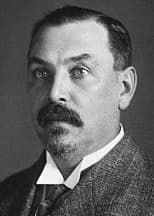
Louis Botha
General · Modern
61.1Total
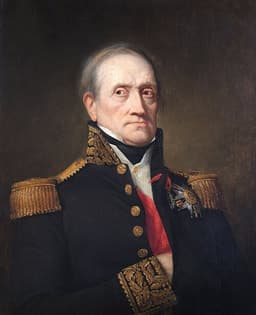
Nicolas Soult
General · Modern
62.7Total
Basic Information
Born
1862
1769
Died
1919
1851
Era
Modern
Modern
Nationality
South Africa
France
Occupation
General
General
Civilization
Other
Western
Score Comparison
Military (10%)
61.7
74.7
Political (20%)
70.0
55.0
Influence (20%)
56.7
61.0
Legacy (20%)
50.0
54.0
Leadership (15%)
79.8
78.0
Strategy (15%)
58.0
65.4
TOTAL
61.1
62.7
Louis Botha — Complete Timeline
1899 AD
Battle of ColensoWar◆ Major
Botha commanded Boer forces at the Battle of Colenso during the Second Boer War. His troops repelled a British attack under General Buller, inflicting heavy casualties and boosting Boer morale.
Second Boer WarBattleVictory
Impact: regional
1900 AD
Boer War Guerrilla CommanderWar◆ Major
After the British captured Pretoria, Botha led Boer guerrilla forces in the Transvaal. He conducted hit-and-run attacks against British columns, prolonging the war and becoming a symbol of Afrikaner resistance.
Second Boer WarGuerrillaResistance
Impact: regional
1902 AD
Signed the Treaty of VereenigingPolitical Action
Botha, as a leading Boer general, signed the Treaty of Vereeniging which ended the Second Boer War. The treaty granted the Boer republics self-government under British sovereignty and promised eventual self-rule.
TreatyPeaceSecond Boer War
Impact: regional
1910 AD
First Prime Minister of the Union of South AfricaPolitical Action
Botha became the first Prime Minister of the newly formed Union of South Africa. He led a coalition government that sought to reconcile Afrikaners and English-speaking whites, while implementing segregationist policies.
Prime MinisterUnion of South AfricaFounding
Impact: nationalconstructive
1914 AD
Suppressed the 1914 RebellionWar◆ Major
Botha personally led government forces to suppress the Maritz Rebellion, an Afrikaner uprising against South Africa's entry into World War I. He defeated the rebels, asserting state authority and maintaining support for the British Empire.
RebellionWorld War ISuppression
Impact: national
1915 AD
Conquered German South West AfricaWar◆ Major
Botha commanded South African forces in the invasion and conquest of German South West Africa. The campaign succeeded, and the territory was later administered by South Africa under a League of Nations mandate.
World War IConquestGerman South West Africa
Impact: regional
Nicolas Soult — Complete Timeline
1805 AD
Battle of AusterlitzWar◆ Major
Soult commanded the IV Corps at Austerlitz. He led the assault on the Pratzen Heights, breaking the Allied center and securing the decisive French victory.
Napoleonic WarsBattleCorps Command
Impact: global
1806 AD
Battle of Jena-AuerstedtWar◆ Major
Soult commanded the IV Corps at Jena. His forces pursued the retreating Prussian army, capturing thousands of prisoners and contributing to the collapse of the Prussian state.
Napoleonic WarsBattlePursuit
Impact: regional
1811 AD
Battle of AlbueraWar◆ Major
Soult commanded the French army at Albuera in Spain. His forces fought a bloody battle against the Anglo-Spanish army, resulting in a tactical stalemate but strategic French withdrawal.
Peninsular WarBattleStalemate
Impact: regional
1814 AD
Battle of ToulouseWar◆ Major
Soult commanded the French army at Toulouse against Wellington. The battle occurred after Napoleon's abdication, and Soult surrendered the city, ending the Peninsular War.
Peninsular WarBattleDefeat
Impact: regional
1830 AD
Minister of WarPolitical Action◆ Major
Soult served as Minister of War under King Louis-Philippe. He reorganized the French army, introduced conscription reforms, and prepared for colonial campaigns in Algeria.
MinistryReformsJuly Monarchy
Impact: nationalconstructive
1832 AD
Prime Minister of FrancePolitical Action◆ Major
Soult served as Prime Minister of France under Louis-Philippe. His government focused on maintaining order, suppressing republican uprisings, and consolidating the July Monarchy.
Prime MinisterJuly MonarchyGovernment
Impact: national
Expert Analysis
Louis Botha vs Nicolas Soult
# The Marshal and the Farmer: Two Paths from Battlefield to Power
On a rain-soaked morning in February 1814, Nicolas Soult, Marshal of France, stood before the walls of Toulouse, his army battered but unbowed. He did not know that Napoleon had already abdicated; he fought on, a general fighting a war already lost. Across the decades and half a world away, in the dusty highveld of South Africa, Louis Botha, a Boer farmer turned commander, watched British columns advance on Colenso in December 1899. He, too, was fighting against overwhelming odds—but his war would end not in abdication, but in a treaty that made him a nation’s founder. Both men were soldiers who became prime ministers. Why did one fade into the footnotes of history while the other helped shape a country?
Origins
Nicolas Soult was born in 1769 in the small town of Saint-Amans-la-Bastide, in southern France. His father was a notary, a man of modest legal standing, and young Nicolas grew up in a world of provincial order. When the French Revolution erupted, Soult was 20 years old—old enough to seize the opportunities that chaos offered, young enough to adapt. He joined the revolutionary armies as a common soldier, and his rise was a product of merit, not birth. The Revolution had shattered the old aristocratic monopoly on command, and men like Soult—disciplined, calculating, ruthlessly competent—could climb fast.
Louis Botha was born in 1862 in Greytown, Natal, a frontier settlement in British South Africa. His parents were Voortrekkers, Dutch-speaking farmers who had fled British rule decades earlier. Botha grew up on a farm, learning to ride and shoot as naturally as he learned to read. His world was one of isolation, self-reliance, and a deep, simmering resentment of British imperialism. The Boer republics—the Transvaal and the Orange Free State—were small, agrarian, and fiercely independent. Botha was shaped not by revolutionary upheaval but by the slow, grinding pressure of an expanding empire.
Rise to Power
Soult’s rise was meteoric. By 1805, at age 36, he commanded the IV Corps of Napoleon’s Grand Army. At the Battle of Austerlitz that December, he delivered the decisive blow: his men stormed the Pratzen Heights, splitting the Austro-Russian army in two. Napoleon personally praised him, and Soult’s reputation as a master of maneuver was sealed. A year later, at Jena-Auerstedt, his corps pursued the shattered Prussian army across northern Germany, capturing thousands. Soult was not a flamboyant commander; he was methodical, patient, and deadly efficient.
Botha’s path was different. He was not a professional soldier but a farmer who took up arms when war came. In 1899, at the outbreak of the Second Boer War, he was 37. His tactical brilliance emerged at the Battle of Colenso, where his Boer marksmen, entrenched on the banks of the Tugela River, repelled a British attack under General Buller with devastating fire. The British lost over 1,100 men; the Boers, fewer than 50. Botha’s leadership was personal—he rode among his men, a rifle in his hand, sharing their danger. When the British captured Pretoria in 1900, Botha transformed into a guerrilla commander, leading hit-and-run raids that kept the war alive for two more years.
Leadership & Governance
Soult’s military genius lay in the set-piece battle. At Austerlitz and Jena, he demonstrated a gift for timing and terrain. But in Spain, his limitations became clear. At the Battle of Albuera in 1811, he fought a bloody, inconclusive engagement against Wellington’s Anglo-Spanish army. Soult was competent but not inspired; he could win battles but not wars. His political career, however, was a different story. After Napoleon’s fall, Soult served King Louis-Philippe as Minister of War in 1830, reorganizing the French army and introducing conscription reforms. He became Prime Minister in 1832, governing with a heavy hand, suppressing uprisings and maintaining order. He was a survivor, not a visionary.
Botha’s leadership was transformative. After signing the Treaty of Vereeniging in 1902, which ended the Boer War and granted self-government to the Transvaal, he turned from soldier to statesman. In 1910, he became the first Prime Minister of the Union of South Africa, leading a coalition of Boer and British interests. His government sought reconciliation—a difficult task after a bitter war. When World War I broke out in 1914, Botha faced a rebellion by hardline Afrikaners who opposed fighting for Britain. He personally led government forces to suppress the uprising, then turned to conquer German South West Africa in 1915. He was a pragmatist, building a nation from the ruins of conflict.
Triumph & Tragedy
Soult’s greatest moment was Austerlitz, where his assault on the Pratzen Heights decided the fate of Europe. His deepest failure came at Toulouse in 1814, when he fought a battle after Napoleon had already abdicated—a pointless slaughter that cost 6,000 casualties. He later served a restored monarchy, which many saw as betrayal. Botha’s triumph was the Treaty of Vereeniging, which gave the Boers a voice in their own future. His tragedy was the Maritz Rebellion of 1914, when he was forced to crush his own people to preserve the union he had built.
Character & Destiny
Soult was calculating, ambitious, and adaptable to a fault. He served the Revolution, Napoleon, and the monarchy with equal ease—a man who put survival above principle. Botha was stubborn, principled, and deeply rooted in his Afrikaner identity. He fought the British, then made peace with them, because he believed in a larger vision: a united South Africa. Soult’s flexibility allowed him to outlast Napoleon; Botha’s conviction allowed him to found a nation.
Legacy
Soult is remembered today as a capable marshal in Napoleon’s shadow, a footnote in the history of France. His name appears in the arcades of the Arc de Triomphe, but few recall his deeds. Botha is remembered as a founding father of South Africa—a complex figure, celebrated by some for his reconciliation, criticized by others for his suppression of Afrikaner rebels and his role in laying the groundwork for segregation.
Conclusion
Soult and Botha both rose from the battlefield to the prime minister’s chair, but their trajectories reveal a deeper truth. Soult served a collapsing empire; Botha built a new nation. One was a survivor, the other a founder. In the end, history remembers those who build more than those who merely endure.
Rankings
🥇
Nicolas SoultLeader
Mil: 74.7Pol: 55.0Inf: 61.0
62.7
🥈
Louis Botha
Mil: 61.7Pol: 70.0Inf: 56.7
61.1
+1.6 behind
How This Comparison Works
Algorithm
Each figure is scored on 6 dimensions (0—100 scale) based on structured historical data: Military (10%), Political (20%), Influence (20%), Legacy (20%), Leadership (15%), Strategy (15%). The weighted total produces the final ranking.
Data Sources
Scores are computed from structured sub-indicators in the database. Scale factors adjust for era (Ancient ×0.85, Modern ×1.0) and civilization size (Eastern ×1.05, Other ×0.80) to account for differences in population and military scale.
Maximum 3 Figures
Comparisons are limited to 2—3 figures to ensure readability and statistical meaningfulness.
Error Margins
±5 points per dimension — Sub-scores are derived from historical records with inherent uncertainty. Two figures within 5 points on a dimension should be considered roughly equivalent in that area.
Total Score Accuracy
±3 points overall — The weighted combination of 6 dimensions produces a total score with approximately ±3 points of uncertainty. Differences of less than 3 points are not statistically significant— the figures are effectively tied.
Known Limitations
- Historical records are incomplete and uneven across civilizations
- Figures from oral-tradition societies may be underrepresented
- Occupation labels can misclassify multi-role figures
- Scores measure capability and impact, not moral character
- Quantitative scoring is a comparison tool, not absolute truth
Capability Radar
Military (10%) — Battles & Warfare
Battles
65
75
Win Rate
70
70
Expansion
60
65
Political (20%) — Governance & Reform
Reform
65
55
Diplomacy
70
65
Economy
55
50
Influence (20%) — Cultural & Global Reach
Cultural
45
45
Global
50
50
Legacy (20%) — Historical Impact
Historical
55
55
Longevity
40
50
Leadership (15%) — Power & Stability
Tenure
60
70
Stability
50
55
Strategy (15%) — Tactics & Innovation
Strategy
72
72
Tactics
68
78
Reform
55
60
Similar Comparisons
Comments & Discussion
突围元帅6/16/2026
把农场主和元帅并列简直可笑。索尔特指挥过二十万大军的帝国战役,拿过帝国元帅权杖,波塔最多带过两万布尔民兵。七十年后的英布战争,英军对付牧民只能用焦土战术,而索尔特面对的可是威灵顿公爵!这不是同一量级的较量。波塔是合格的政治家,但军事上根本不配和法兰西雄狮比较。
Highveld_Hussar6/16/2026
Missing the political translation. Soult's premiership lasted three months (1832) and ended because the king couldn't trust a former Imperial marshal; Botha's 1910-1919 term created a nation. Botha's 1902 Treaty of Vereeniging prevented total white surrender, preserving Afrikaner institutions—Soult's 1814 Toulousains greeted the Bourbon restoration by burning his house. Command success is worthless without political legacy. Botha won the peace.
沉静的主编6/16/2026
你们都被拿破仑神话洗脑了。索尔特不过是法国革命军官僚体系的产物,他的晋升完全依赖运气和系统,而非真正的天赋。1813年维多利亚战役被威灵顿彻底击溃,输掉整个西班牙战局。而波塔在斯皮恩科普靠地形和战术四两拨千斤,以三千人拖住英军两万。若说天赋,农场主比贵族军官强十倍。
Historian8346/16/2026
The "strategic effectiveness" comparison is lazy. Botha's Boer commandoes never exceeded 75,000 total vs British Empire's 500,000+ deployment; Soult commanded 72,000 at Toulouse alone against Wellington's 50,000. The ratio difference is staggering—Botha fought a demoralization campaign, Soult a conventional defensive. Factoring relative resources, Soult's leadership at Toulouse deserves higher tactical credit. Botha was brilliant, but don't conflate guerrilla efficiency with conventional general