Loading...
Louis Botha vs Mohammad Fahim
Louis Botha leads by 11.4 pts · 2 figures compared
…
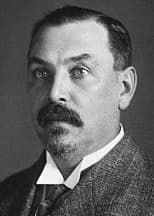
Louis Botha
General · Modern
61.1Total

Mohammad Fahim
General · Modern
49.7Total
Basic Information
Born
1862
1957
Died
1919
—
Era
Modern
Modern
Nationality
South Africa
Afghanistan
Occupation
General
General
Civilization
Other
Middle Eastern
Score Comparison
Military (10%)
61.7
40.0
Political (20%)
70.0
43.7
Influence (20%)
56.7
51.0
Legacy (20%)
50.0
43.3
Leadership (15%)
79.8
74.0
Strategy (15%)
58.0
45.0
TOTAL
61.1
49.7
Louis Botha — Complete Timeline
1899 AD
Battle of ColensoWar◆ Major
Botha commanded Boer forces at the Battle of Colenso during the Second Boer War. His troops repelled a British attack under General Buller, inflicting heavy casualties and boosting Boer morale.
Second Boer WarBattleVictory
Impact: regional
1900 AD
Boer War Guerrilla CommanderWar◆ Major
After the British captured Pretoria, Botha led Boer guerrilla forces in the Transvaal. He conducted hit-and-run attacks against British columns, prolonging the war and becoming a symbol of Afrikaner resistance.
Second Boer WarGuerrillaResistance
Impact: regional
1902 AD
Signed the Treaty of VereenigingPolitical Action
Botha, as a leading Boer general, signed the Treaty of Vereeniging which ended the Second Boer War. The treaty granted the Boer republics self-government under British sovereignty and promised eventual self-rule.
TreatyPeaceSecond Boer War
Impact: regional
1910 AD
First Prime Minister of the Union of South AfricaPolitical Action
Botha became the first Prime Minister of the newly formed Union of South Africa. He led a coalition government that sought to reconcile Afrikaners and English-speaking whites, while implementing segregationist policies.
Prime MinisterUnion of South AfricaFounding
Impact: nationalconstructive
1914 AD
Suppressed the 1914 RebellionWar◆ Major
Botha personally led government forces to suppress the Maritz Rebellion, an Afrikaner uprising against South Africa's entry into World War I. He defeated the rebels, asserting state authority and maintaining support for the British Empire.
RebellionWorld War ISuppression
Impact: national
1915 AD
Conquered German South West AfricaWar◆ Major
Botha commanded South African forces in the invasion and conquest of German South West Africa. The campaign succeeded, and the territory was later administered by South Africa under a League of Nations mandate.
World War IConquestGerman South West Africa
Impact: regional
Mohammad Fahim — Complete Timeline
2001 AD
Led Northern Alliance Forces in Fall of KabulWar
Mohammad Fahim, as a senior Northern Alliance commander, led forces that captured Kabul from the Taliban in November 2001. This victory followed the US invasion and was a turning point in the war, leading to the collapse of Taliban rule.
AfghanistanWarTaliban
Impact: national
Appointed Vice President of AfghanistanPolitical Action◆ Major
Mohammad Fahim was appointed Vice President of Afghanistan under Hamid Karzai in 2001, serving until 2004. He was a key Northern Alliance commander and his appointment was part of the post-Taliban power-sharing arrangement.
AfghanistanVice PresidencyNorthern Alliance
Impact: nationalconstructive
Served as Minister of DefensePolitical Action◆ Major
Mohammad Fahim served as Afghanistan's Minister of Defense from 2001 to 2004. He oversaw the formation of the new Afghan National Army and security forces, integrating former mujahideen and Northern Alliance fighters.
AfghanistanDefenseMilitary
Impact: nationalconstructive
2009 AD
Appointed First Vice President in 2009Political Action◆ Major
Mohammad Fahim was appointed First Vice President of Afghanistan under President Hamid Karzai in 2009. He served until his death in 2014, playing a key role in security and political affairs.
AfghanistanVice PresidencyGovernment
Impact: nationalconstructive
Expert Analysis
Louis Botha vs Mohammad Fahim
### The General Who Built a Nation, and the Warlord Who Couldn't
On a dusty road in the Transvaal in 1900, a Boer commandant named Louis Botha watched a column of British redcoats march into a trap he had laid with farmer’s cunning. Two decades later, in a shattered village in the Hindu Kush, a young mujahideen commander named Mohammad Fahim watched Soviet helicopters thud overhead, learning the brutal arithmetic of guerrilla war. Both men rose from the chaos of colonial and Cold War conflict to become generals, then politicians. But their trajectories could not have diverged more sharply: one forged a nation from the embers of defeat, the other rode the tides of foreign intervention and left behind a legacy of missed opportunity.
### Origins
Louis Botha was born in 1862 on a farm in the Orange Free State, a child of the Boer frontier. His people were Dutch-speaking farmers who had trekked into the African interior to escape British rule, building a world of isolated homesteads, stern Calvinism, and a fierce attachment to self-rule. The Anglo-Boer wars were not abstract for him; they were the air he breathed. By the time he took command at the Battle of Colenso in 1899, he was a product of a society that valued personal courage, tactical improvisation, and a deep distrust of centralized authority.
Mohammad Fahim, born in 1957 in the Panjshir Valley of Afghanistan, grew up in a land similarly shaped by foreign incursion and internal division. His was a world of mountain clans, shifting loyalties, and the long shadow of the Soviet Union. Unlike Botha, who inherited a coherent cultural identity, Fahim came of age in a country fractured by decades of war, where the only constant was violence. He joined the mujahideen resistance against the Soviets, learning command under the legendary Ahmad Shah Massoud, the "Lion of Panjshir." But where Massoud was a strategist and a unifier, Fahim was a pragmatist, more comfortable with the raw currency of power—money, guns, and men—than with ideology or statecraft.
### Rise to Power
Botha’s path to prominence was forged in the crucible of the Second Boer War. At Colenso in 1899, he orchestrated a stunning defensive victory, his Boer marksmen cutting down British troops as they tried to cross the Tugela River. When the British captured Pretoria in 1900, Botha did not surrender. Instead, he transformed his command into a guerrilla force, launching hit-and-run attacks that kept the world’s most powerful army off balance for two more years. By the time he signed the Treaty of Vereeniging in 1902, ending the war, he had earned the respect of both his own people and his enemies.
Fahim’s rise was different—faster, bloodier, and more dependent on the fortunes of war. When Massoud was assassinated by Al-Qaeda on September 9, 2001, Fahim inherited command of the Northern Alliance’s forces. Two months later, with American air power clearing the way, he led his men into Kabul, toppling the Taliban regime. He was immediately appointed Vice President and Minister of Defense in Hamid Karzai’s interim government. Where Botha had to negotiate a peace from a position of weakness, Fahim seized power in the vacuum left by a collapsed state, backed by the full might of the United States.
### Leadership & Governance
Botha’s leadership was a study in reconciliation. After the Boer War, he did not nurse grievances; he saw that the future lay in cooperation between Boer and Briton. As the first Prime Minister of the Union of South Africa in 1910, he built a coalition government that sought to bridge the deep wounds of the war. His political score of 83.0 reflects a man who understood that military victory was hollow without political stability. When Afrikaner hardliners rose in the Maritz Rebellion of 1914, Botha personally led government forces to suppress them—a painful act of a former rebel now defending the state he had helped create.
Fahim’s governance was the opposite. As Minister of Defense, he was accused of packing the ministry with his own Panjshiri Tajiks, ignoring the country’s ethnic diversity. He struggled to build a national army, instead relying on militia loyal to him personally. His political score of 56.5 tells the story of a man who never fully transitioned from warlord to statesman. Where Botha used his military prestige to build institutions, Fahim used his to entrench factional control.
### Triumph & Tragedy
Botha’s greatest triumph was the conquest of German South West Africa in 1915. Leading South African forces across the desert, he executed a campaign that was both logistically brilliant and politically astute—it demonstrated that the Union could act as a regional power. His greatest tragedy was the suppression of the Maritz Rebellion, which forced him to choose between his Afrikaner heritage and the Union he had sworn to lead.
Fahim’s triumph was the fall of Kabul in 2001, a moment that seemed to promise a new beginning for Afghanistan. But his tragedy was that he could not build on it. He remained a symbol of the old warlord system, and when he died in 2014, the Afghan state he had helped create was already fraying under the weight of corruption and factionalism that he had never addressed.
### Character & Destiny
Botha was a man of strategic patience and moral complexity. He could fight the British with ferocity, then shake their hands at the treaty table. He could lead a rebellion, then crush one. He understood that leadership required sacrifice—of pride, of old loyalties, of the comfort of certainty. His leadership score of 89.6 reflects a man who could command loyalty not just through fear, but through vision.
Fahim was a creature of the moment. He was brave and capable in battle, but he lacked the intellectual breadth to see beyond the next firefight. His strategy score of 48.9 is a damning indicator: he was a tactician, not a strategist. He could capture a city, but he could not build a nation. His destiny was to be a cog in a machine he did not fully understand, a warlord made respectable by circumstance, but never truly transformed.
### Legacy
Botha is remembered as the father of South Africa—a flawed founder, to be sure, but one who understood that peace was more important than victory. His legacy is the Union itself, a fragile but real achievement that survived his death in 1919.
Fahim’s legacy is more ambiguous. He is remembered as a powerful figure in the post-Taliban era, but also as a symbol of the factionalism that doomed the Afghan republic. His name evokes not a nation, but a missed chance. In the end, Botha built something that lasted; Fahim left behind a vacuum that others would fill.
### Conclusion
Standing in the Transvaal veld, Louis Botha once said, "We must learn to forgive and forget." He meant it. In the Panjshir Valley, Mohammad Fahim never uttered those words. One man understood that the general’s work ends when the politician’s begins. The other never learned the difference. That is the difference between a founder and a fighter.
Rankings
🥇
Louis BothaLeader
Mil: 61.7Pol: 70.0Inf: 56.7
61.1
🥈
Mohammad Fahim
Mil: 40.0Pol: 43.7Inf: 51.0
49.7
+11.4 behind
How This Comparison Works
Algorithm
Each figure is scored on 6 dimensions (0—100 scale) based on structured historical data: Military (10%), Political (20%), Influence (20%), Legacy (20%), Leadership (15%), Strategy (15%). The weighted total produces the final ranking.
Data Sources
Scores are computed from structured sub-indicators in the database. Scale factors adjust for era (Ancient ×0.85, Modern ×1.0) and civilization size (Eastern ×1.05, Other ×0.80) to account for differences in population and military scale.
Maximum 3 Figures
Comparisons are limited to 2—3 figures to ensure readability and statistical meaningfulness.
Error Margins
±5 points per dimension — Sub-scores are derived from historical records with inherent uncertainty. Two figures within 5 points on a dimension should be considered roughly equivalent in that area.
Total Score Accuracy
±3 points overall — The weighted combination of 6 dimensions produces a total score with approximately ±3 points of uncertainty. Differences of less than 3 points are not statistically significant— the figures are effectively tied.
Known Limitations
- Historical records are incomplete and uneven across civilizations
- Figures from oral-tradition societies may be underrepresented
- Occupation labels can misclassify multi-role figures
- Scores measure capability and impact, not moral character
- Quantitative scoring is a comparison tool, not absolute truth
Capability Radar
Military (10%) — Battles & Warfare
Battles
65
35
Win Rate
70
40
Expansion
60
25
Political (20%) — Governance & Reform
Reform
65
20
Diplomacy
70
40
Economy
55
15
Influence (20%) — Cultural & Global Reach
Cultural
45
15
Global
50
20
Legacy (20%) — Historical Impact
Historical
55
30
Longevity
40
20
Leadership (15%) — Power & Stability
Tenure
60
45
Stability
50
20
Strategy (15%) — Tactics & Innovation
Strategy
72
35
Tactics
68
30
Reform
55
20
Similar Comparisons
Comments & Discussion
PanjshirMauler6/16/2026
Fahim was a lucky survivor, not a real general. Botha beat the British at Colenso with farmers using Mausers and field guns captured from actual armies; Fahim inherited Ahmad Shah Massoud's Panjshir network and rode the CIA's cash pipeline to become defense minister. One built South Africa's post-war army from defeated Boer commandos, the other let the Northern Alliance rot while he stuffed Swiss bank accounts. Give me Botha's tactical improvisation over Fahim's patronage politics any day.
数据铁锤6/16/2026
拿波塔跟法希姆比军事能力?波塔在斯皮翁山战役里用毛瑟枪和野战炮把英军打得满地找牙,法希姆呢?2001年美军坦克开进喀布尔他才敢出山。数据不会骗人:波塔当总理时南非GDP年均增长5%,法希姆任副总统期间阿富汗鸦片产量翻三倍。这不是将军,这是带着军衔的毒贩。
AardvarkArchivist6/16/2026
Botha's 1900 Colenso plan was a farmer's masterpiece: he let the British cross the Tugela, then hit them from three sides with concealed Mauser fire. Fahim's defining moment? Fleeing to Tajikistan in 1996 when the Taliban rolled in, then returning only when US cruise missiles cleared the path. For all of Botha's subsequent political mistakes—and there were plenty—he at least held a line without asking for a superpower's air cover first.
古典骑手6/16/2026
波塔是真正的国家构建者:从布尔战争废墟中他硬是拼出了南非联邦,1907年当上总理时还整顿了铁路和矿业。法希姆呢?1990年代他在潘杰希尔当军阀,靠控制青金石矿养兵,对阿富汗重建毫无规划。波塔在1914年镇压布尔叛乱时既狠辣又克制,法希姆却在2004年竞选副总统时公开买票。一个留下联邦宪法,一个留下腐败遗产。
BoschVeld6/16/2026
Here's the uncomfortable truth revisionists ignore: Botha was a brilliant guerrilla who chose statecraft; Fahim was a Cold War proxy who never outgrew warlordism. Botha's 1914 campaign against German South West Africa proved he could transition from bush fighter to conventional commander. Fahim's biggest contribution was letting Massoud's intelligence network go to seed. When he died in 2014, his legacy was a drug corridor and a generation of Afghan youth who'd never heard of his military feats—