Loading...
Louis Botha vs Marouf al-Bakhit
Louis Botha leads by 19.5 pts · 2 figures compared
…
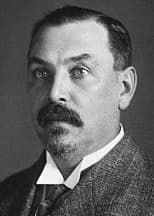
Louis Botha
General · Modern
61.1Total
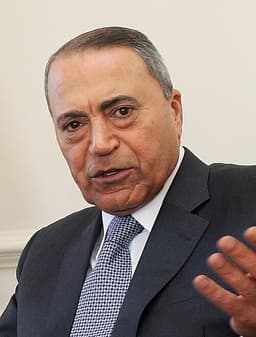
Marouf al-Bakhit
General · Modern
41.6Total
Basic Information
Born
1862
1947
Died
1919
—
Era
Modern
Modern
Nationality
South Africa
Jordan
Occupation
General
General
Civilization
Other
Middle Eastern
Score Comparison
Military (10%)
61.7
10.2
Political (20%)
70.0
61.3
Influence (20%)
56.7
48.6
Legacy (20%)
50.0
38.3
Leadership (15%)
79.8
40.0
Strategy (15%)
58.0
36.8
TOTAL
61.1
41.6
Louis Botha — Complete Timeline
1899 AD
Battle of ColensoWar◆ Major
Botha commanded Boer forces at the Battle of Colenso during the Second Boer War. His troops repelled a British attack under General Buller, inflicting heavy casualties and boosting Boer morale.
Second Boer WarBattleVictory
Impact: regional
1900 AD
Boer War Guerrilla CommanderWar◆ Major
After the British captured Pretoria, Botha led Boer guerrilla forces in the Transvaal. He conducted hit-and-run attacks against British columns, prolonging the war and becoming a symbol of Afrikaner resistance.
Second Boer WarGuerrillaResistance
Impact: regional
1902 AD
Signed the Treaty of VereenigingPolitical Action
Botha, as a leading Boer general, signed the Treaty of Vereeniging which ended the Second Boer War. The treaty granted the Boer republics self-government under British sovereignty and promised eventual self-rule.
TreatyPeaceSecond Boer War
Impact: regional
1910 AD
First Prime Minister of the Union of South AfricaPolitical Action
Botha became the first Prime Minister of the newly formed Union of South Africa. He led a coalition government that sought to reconcile Afrikaners and English-speaking whites, while implementing segregationist policies.
Prime MinisterUnion of South AfricaFounding
Impact: nationalconstructive
1914 AD
Suppressed the 1914 RebellionWar◆ Major
Botha personally led government forces to suppress the Maritz Rebellion, an Afrikaner uprising against South Africa's entry into World War I. He defeated the rebels, asserting state authority and maintaining support for the British Empire.
RebellionWorld War ISuppression
Impact: national
1915 AD
Conquered German South West AfricaWar◆ Major
Botha commanded South African forces in the invasion and conquest of German South West Africa. The campaign succeeded, and the territory was later administered by South Africa under a League of Nations mandate.
World War IConquestGerman South West Africa
Impact: regional
Marouf al-Bakhit — Complete Timeline
2005 AD
Appointed Prime Minister of JordanPolitical Action◆ Major
King Abdullah II appointed Marouf al-Bakhit as Prime Minister of Jordan in November 2005, following the 2005 Amman bombings. Al-Bakhit, a former intelligence chief, was tasked with restoring security and stability.
JordanPrime MinisterAppointment
Impact: national
2007 AD
Resigned as Prime MinisterPolitical Action
Marouf al-Bakhit resigned as Prime Minister of Jordan in November 2007 after parliamentary elections. His resignation followed criticism of economic policies and political reforms.
JordanPrime MinisterResignation
Impact: national
2011 AD
Appointed Prime Minister for Second TermPolitical Action◆ Major
King Abdullah II appointed Marouf al-Bakhit as Prime Minister again in February 2011, during the Arab Spring protests. Al-Bakhit was tasked with implementing political reforms to address public demands.
JordanArab SpringPrime Minister
Impact: national
Resigned as Prime Minister for Second TermPolitical Action
Marouf al-Bakhit resigned as Prime Minister in October 2011, after failing to satisfy protesters' demands for faster political reforms. His resignation marked the end of his second term.
JordanArab SpringResignation
Impact: national
Expert Analysis
Louis Botha vs Marouf al-Bakhit
### The General and the Governor: Two Paths from the Battlefield to Power
In the winter of 1914, as the world plunged into the First World War, two generals faced very different choices. Louis Botha, the first Prime Minister of the Union of South Africa, mounted his horse and personally led a commando of loyalists across the arid plains of the Transvaal—not against a foreign enemy, but to crush a rebellion of his own Afrikaner people who refused to fight for the British Empire. Half a world away and a century later, in the spring of 2011, Marouf al-Bakhit, a former Jordanian intelligence chief, sat in his office in Amman, staring at a list of demands from protesters who had filled the streets. Both men were generals turned politicians, but their stories reveal how the same title—prime minister—can mean wildly different things, shaped by the crucible of war, the weight of history, and the fragile architecture of power.
### Origins: Sons of Two Empires
Louis Botha was born in 1862 on a farm in the Orange Free State, a child of the Boer frontier. His people were Dutch-speaking farmers who had trekked into the African interior to escape British rule, carving out independent republics with a fierce, almost biblical sense of destiny. The Boer way of life—harsh, self-reliant, and deeply religious—taught Botha that leadership meant riding at the front, not commanding from a desk. He learned to read the veld like a sailor reads the sea, and by his thirties, he had become a respected farmer and politician in the Transvaal Republic.
Marouf al-Bakhit, born in 1947, came from a different world entirely. He grew up in the Hashemite Kingdom of Jordan, a nation carved from the ruins of the Ottoman Empire by British colonial cartographers. Jordan was a fragile creation, ruled by a dynasty that traced its lineage to the Prophet Muhammad, yet dependent on Western support for survival. Al-Bakhit chose the military as his path to stability, eventually rising through the ranks of the intelligence service—a shadowy world where loyalty to the king was the only currency that mattered. Where Botha’s world was defined by open spaces and open rebellion, al-Bakhit’s was a world of closed doors and whispered conspiracies.
### Rise to Power: Bullets and Ballots
Botha’s rise was forged in fire. In 1899, at the Battle of Colenso, he commanded Boer forces against a British army that vastly outnumbered him. His men, hidden in trenches along the Tugela River, mowed down wave after wave of red-coated soldiers with devastating accuracy. The victory made him a national hero. But when the British captured Pretoria in 1900, Botha refused to surrender. He transformed his army into a guerrilla force, striking supply lines and disappearing into the bush. For two years, he kept the British Empire at bay, a master of hit-and-run warfare. Yet he also knew when to fight was over. In 1902, he signed the Treaty of Vereeniging, accepting British sovereignty to spare his people from further devastation. It was a bitter pill, but it gave him the political capital to lead the Boers into a new era.
Al-Bakhit’s path was quieter, but no less strategic. He served as Jordan’s intelligence chief, a position of immense power but little public visibility. In 2005, after al-Qaeda bombed three hotels in Amman, King Abdullah II turned to him as a steady hand. Al-Bakhit was appointed prime minister with a mandate to restore order and security. His job was not to inspire a nation, but to keep it from fracturing. Where Botha had led a people to war, al-Bakhit was tasked with managing the aftermath of terror.
### Leadership & Governance: The Warrior and the Bureaucrat
As prime minister, Botha governed with the same audacity he had shown on the battlefield. He built a coalition between Boers and English-speaking South Africans, a delicate balancing act that required both charm and iron will. He pushed for reconciliation, but he also crushed dissent. In 1914, when Afrikaner rebels rose against his decision to join the British war effort, Botha did not negotiate—he mounted his horse and led the charge. He then turned his military prowess outward, personally commanding the conquest of German South West Africa in 1915. His leadership score of 89.6 reflects a man who inspired fierce loyalty and commanded absolute authority.
Al-Bakhit’s governance was the opposite. His political score of 63.0 and leadership score of 77.9 suggest competence, not charisma. He was a technocrat, appointed to manage crises, not to shape history. During his first term, he oversaw parliamentary elections and economic reforms, but his legacy was defined by restraint, not action. When the Arab Spring erupted in 2011, King Abdullah recalled him to calm the protests. Al-Bakhit offered modest political reforms, but he refused to push for the deep changes demonstrators demanded. He was a firefighter, not an architect. His military score of 19.9 is telling—he was a general who never commanded an army in battle, only a bureaucracy.
### Triumph & Tragedy
Botha’s greatest moment came in 1915, when he stood on the deck of a captured German ship in the harbor of Windhoek, the capital of German South West Africa. He had conquered an enemy colony for the British Empire, proving that a Boer general could win on the world stage. Yet his greatest tragedy was that his success came at a cost: he alienated many of his own people, who saw him as a traitor to the Afrikaner cause. He died in 1919, exhausted and controversial, a man caught between two worlds.
Al-Bakhit’s triumphs were quieter. He kept Jordan stable during the 2005 bombing crisis and again during the Arab Spring, when other monarchies crumbled. But his tragedy was that stability came at the price of stagnation. He resigned in October 2011, having failed to satisfy either the protesters or the king. He left no monument, only a memory of a man who held the line.
### Character & Destiny
Botha was a man of action, driven by a sense of duty to his people and a belief that leadership meant taking risks. His high strategy score of 59.0, while not brilliant, shows a mind that understood when to fight and when to negotiate. Al-Bakhit was cautious, a product of the intelligence world where information is power and trust is rare. His destiny was to be a caretaker in a kingdom where the king held the real power. Botha shaped his era; al-Bakhit was shaped by his.
### Legacy: The Founder and the Functionary
Louis Botha is remembered as a founding father of South Africa, a man who helped bridge the divide between Boer and Briton, even if the path he built later led to apartheid. His legacy score of 66.8 reflects a complex figure—admired by some, reviled by others. Marouf al-Bakhit, with a legacy score of 50.0, is largely forgotten outside Jordan. He was a functionary of history, not a shaper of it.
### Conclusion
The difference between Botha and al-Bakhit is not just one of scale, but of kind. Botha commanded armies, founded a nation, and fought for a vision. Al-Bakhit managed a kingdom, preserved order, and served a king. One was a warrior who became a statesman; the other was an intelligence officer who became a prime minister. Their stories remind us that history rewards those who ride at the front, not those who sit in the back. Yet both understood a truth that all generals-turned-politicians know: power is a weapon, and the hardest battle is the one for peace.
Rankings
🥇
Louis BothaLeader
Mil: 61.7Pol: 70.0Inf: 56.7
61.1
🥈
Marouf al-Bakhit
Mil: 10.2Pol: 61.3Inf: 48.6
41.6
+19.5 behind
How This Comparison Works
Algorithm
Each figure is scored on 6 dimensions (0—100 scale) based on structured historical data: Military (10%), Political (20%), Influence (20%), Legacy (20%), Leadership (15%), Strategy (15%). The weighted total produces the final ranking.
Data Sources
Scores are computed from structured sub-indicators in the database. Scale factors adjust for era (Ancient ×0.85, Modern ×1.0) and civilization size (Eastern ×1.05, Other ×0.80) to account for differences in population and military scale.
Maximum 3 Figures
Comparisons are limited to 2—3 figures to ensure readability and statistical meaningfulness.
Error Margins
±5 points per dimension — Sub-scores are derived from historical records with inherent uncertainty. Two figures within 5 points on a dimension should be considered roughly equivalent in that area.
Total Score Accuracy
±3 points overall — The weighted combination of 6 dimensions produces a total score with approximately ±3 points of uncertainty. Differences of less than 3 points are not statistically significant— the figures are effectively tied.
Known Limitations
- Historical records are incomplete and uneven across civilizations
- Figures from oral-tradition societies may be underrepresented
- Occupation labels can misclassify multi-role figures
- Scores measure capability and impact, not moral character
- Quantitative scoring is a comparison tool, not absolute truth
Capability Radar
Military (10%) — Battles & Warfare
Battles
65
5
Win Rate
70
5
Expansion
60
5
Political (20%) — Governance & Reform
Reform
65
30
Diplomacy
70
40
Economy
55
30
Influence (20%) — Cultural & Global Reach
Cultural
45
10
Global
50
10
Legacy (20%) — Historical Impact
Historical
55
10
Longevity
40
10
Leadership (15%) — Power & Stability
Tenure
60
40
Stability
50
35
Strategy (15%) — Tactics & Innovation
Strategy
72
10
Tactics
68
10
Reform
55
10
Similar Comparisons
Comments & Discussion
The Boer General6/16/2026
Louis Botha was a field commander who understood that legitimacy flows from the saddle, not from a palace office. When he crushed the 1914 Maritz Rebellion, he didn't send orders from Pretoria—he led 11,000 loyal commandos himself across the Transvaal. That's real leadership. Al-Bakhit was a military bureaucrat, an intelligence man who climbed through royal favor. Botha fought for a people; al-Bakhit managed a protest list. There's no comparison between a rebel who became a nation-builder and a
老兵不死6/16/2026
波瑟是真正的战士总理,而巴希特只是国王的消防员。1914年,波瑟亲自骑马平叛,他的布尔同胞想借一战复国,他却选择效忠南非联邦——这不是背叛,是政治成熟。反观巴希特,2011年阿拉伯之春时,他除了给抗议者发福利承诺还会什么?波瑟在凡尔赛和会上为南非争来国际地位,巴希特唯一的名声是压制异议。一个留下民族遗产,一个只是权宜之计。
Data Quibbler6/16/2026
Look, the analysis romanticizes Botha's "field leadership" while glossing over this: the 1914 rebellion he crushed drew only about 12,000 rebels total against a government force of over 30,000. That's not a glorious charge—it was numerical superiority. Al-Bakhit faced millions of Jordanians in the streets. The scale difference is staggering. Botha suppressed 1915 by January 1915. Al-Bakhit managed a slow political burn in 2011 that required actual negotiations. Botha's "victory" was demographic;
古典学人6/16/2026
这两位将领的差异,恰如罗马共和国的独裁官与东方行省的总督。波瑟是辛辛纳图斯式的英雄——放下犁头拿起剑,保卫了联邦后又去巴黎谈判,为南非争得国际承认。巴希特更像赛琉古帝国的总督,靠王室恩宠上位,他的权力来自国王信任,而非人民授权。波瑟治理的是一个有独立传统的国家,巴希特管理的是一个依赖外国援助和情报监控的威权体系。同样的首相头衔,本质天差地别。
History Buff6/16/2026
The forgotten parallel here is the Anglo-Boer War's aftermath. Botha fought the British for three years (1899-1902), surrendered, then became their ally by 1914. That's a stunning pivot few generals achieve. He saw empire as reality, not grievance. Al-Bakhit never had that transformative moment—he was always a regime insider, fighting Palestinians in 1970, leading security forces. Botha's political genius