Loading...
Lord Dalhousie vs Yuan Shikai
Yuan Shikai leads by 1.6 pts · 2 figures compared
…
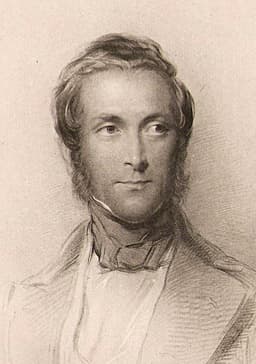
Lord Dalhousie
Politician · Modern
58.4Total
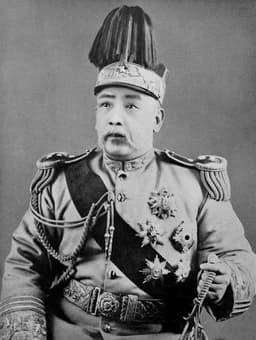
Yuan Shikai
Politician · Modern
60.0Total
Basic Information
Born
1812
1859
Died
1860
1916
Era
Modern
Modern
Nationality
United Kingdom
China
Occupation
Politician
Politician
Civilization
Western
Eastern
Score Comparison
Military (10%)
40.0
45.0
Political (20%)
60.0
72.0
Influence (20%)
58.3
57.2
Legacy (20%)
55.0
54.0
Leadership (15%)
74.0
72.0
Strategy (15%)
60.0
61.2
TOTAL
58.4
60.0
Lord Dalhousie — Complete Timeline
1848 AD
Second Anglo-Sikh WarWar◆ Major
Dalhousie oversaw the Second Anglo-Sikh War in 1848-1849, which resulted in the British annexation of the Punjab. The Sikh army was defeated at the Battle of Gujrat, and the Treaty of Lahore in 1849 formally annexed the region, ending Sikh sovereignty and extending British rule to the northwest frontier.
Anglo-Sikh WarAnnexationPunjab
Impact: regional
Doctrine of LapsePolitical Action
Lord Dalhousie, as Governor-General of India, implemented the Doctrine of Lapse, a policy that allowed the British to annex any princely state where the ruler died without a natural heir. This policy led to the annexation of states like Satara, Jhansi, and Nagpur, causing widespread resentment among Indian rulers and contributing to the 1857 Rebellion.
AnnexationPolicy1857 Rebellion
Impact: regionaldestructive
1853 AD
Railway and Telegraph ExpansionInvention◆ Major
Dalhousie championed the development of railways and telegraphs in India. The first railway line from Bombay to Thane opened in 1853, and a telegraph network was established connecting major cities. These projects aimed to improve communication, trade, and military control, laying the foundation for India's modern infrastructure.
InfrastructureRailwayTelegraph
Impact: regionalconstructive
1856 AD
Annexation of AwadhPolitical Action◆ Major
Dalhousie annexed the Kingdom of Awadh in 1856 under the pretext of misgovernment. The annexation was highly controversial and deeply resented by the local population and nobility. It became a major cause of the 1857 Indian Rebellion, as Awadh's soldiers and landlords joined the uprising against British rule.
AnnexationAwadh1857 Rebellion
Impact: regionaldestructive
Yuan Shikai — Complete Timeline
1901 AD
Command of the Beiyang ArmyReform◆ Major
Yuan Shikai took command of the Beiyang Army, the most modern military force in late Qing China. He expanded and trained the army, which became the basis for his political power and later dominated Chinese politics.
Military reformBeiyang Army
Impact: national
1912 AD
Appointed First President of the Republic of ChinaPolitical Action
Yuan Shikai became the first president of the Republic of China after negotiating the abdication of the Qing emperor. He used his control of the Beiyang Army to pressure the revolutionary government into accepting his leadership.
PresidencyRepublic of China
Impact: national
1915 AD
Declaration of the Empire of ChinaPolitical Action◆ Major
Yuan Shikai declared himself emperor of the Empire of China, attempting to restore the monarchy. This move sparked widespread opposition from provincial leaders and foreign powers, leading to the collapse of his regime.
Monarchy restorationPolitical crisis
Impact: nationaldestructive
Signing of the Twenty-One DemandsPolitical Action◆ Major
Yuan Shikai accepted most of Japan's Twenty-One Demands, which expanded Japanese influence in China. The agreement granted Japan economic rights in Manchuria and Shandong, and was seen as a national humiliation.
DiplomacyJapanese imperialism
Impact: globaltragic
1916 AD
Death and Collapse of the Beiyang GovernmentPolitical Action◆ Major
Yuan Shikai died of uremia, leaving no clear successor. His death led to the fragmentation of the Beiyang Army into warlord factions, plunging China into a period of civil war and political instability.
Warlord eraPolitical fragmentation
Impact: nationaltragic
Expert Analysis
Yuan Shikai vs Lord Dalhousie
# The Emperor and the Governor-General: Ambition’s Two Paths
In the winter of 1915, Yuan Shikai sat in the Forbidden City’s Hall of Supreme Harmony, contemplating a crown he had designed himself—a gilded, dragon-embroidered thing that would proclaim him Emperor of China. Half a world away and sixty years earlier, in the summer of 1856, Lord Dalhousie stood on a veranda in Calcutta, watching the last Nawab of Awadh being led away in chains, his kingdom swallowed by the British Empire. Both men had risen to the pinnacle of power. Both would see their grandest designs crumble into chaos. But the forces that drove them—and the ruins they left behind—could not have been more different.
Origins
Yuan Shikai was born in 1859 into a gentry family in Henan Province, a child of a crumbling empire. The Qing Dynasty was gasping its last, battered by foreign gunboats and internal rebellions. Yuan grew up in a world where tradition collided with modernity, where Confucian examinations still mattered but where military reform had become an urgent necessity. His father’s death when Yuan was young left him to carve his own path, and he did so with a pragmatism that bordered on ruthlessness. He failed the civil service exams—a humiliation that might have broken a lesser man—and instead bought a minor military post. That failure, oddly, became his salvation.
Lord Dalhousie, born James Andrew Broun-Ramsay in 1812, was the son of a Scottish peer, raised in the assured world of British aristocracy. His father had been a governor-general before him; his family breathed empire. From Eton to Oxford, Dalhousie absorbed the certainties of Victorian Britain: that progress was linear, that British rule was a civilizing force, and that the world’s resources ought to be efficiently managed. Where Yuan learned to survive in a dying order, Dalhousie learned to administer a rising one.
Rise to Power
Yuan’s ascent was a masterclass in opportunism. In 1882, he accompanied the Chinese army to Korea, where he managed a chaotic situation with such skill that he caught the eye of Li Hongzhang, the Qing’s most powerful statesman. By 1901, Yuan had been given command of the Beiyang Army—the most modern force in China, trained with German arms and Japanese methods. He turned it into his personal instrument. When the 1911 Revolution toppled the Qing, Yuan did not rush to save the dynasty. Instead, he negotiated: he would persuade the child emperor Puyi to abdicate, and in return, the revolutionaries would make him president. On February 12, 1912, he became the first president of the Republic of China. He had outmaneuvered everyone.
Dalhousie’s rise was less dramatic but no less decisive. Appointed Governor-General of India in 1848 at the age of thirty-six, he arrived with a reputation for efficiency and a mandate for expansion. He did not wait. Within months of taking office, he launched the Second Anglo-Sikh War (1848–1849), crushing the Sikh Empire and annexing the Punjab. The conquest was swift, brutal, and complete. Dalhousie’s method was simple: find a pretext, win the war, absorb the territory. He had the full weight of the British Empire behind him. Yuan, by contrast, had to build his power from the rubble of a dynasty.
Leadership & Governance
Yuan Shikai governed as a military strongman who understood politics. His leadership score of 81.3 reflects a man who could command loyalty and negotiate deals, but who never truly believed in the republic he led. As president, he banned political parties, censored the press, and ruled by decree. Yet he also reformed the legal code, standardized education, and modernized the currency. He was a reformer, but only insofar as reform strengthened his grip. His political score of 74.2 is respectable but not visionary. He saw democracy as a foreign farce, and he was not entirely wrong—China had no tradition of it. But instead of building one, he dismantled it.
Dalhousie governed with a different kind of arrogance. His political score of 72.0 is comparable, but his approach was administrative rather than autocratic. He championed railways and telegraphs—the first railway line from Bombay to Thane opened in 1853 under his watch—believing that technology would bind India to Britain and spread civilization. He built roads, canals, and schools. He also imposed the Doctrine of Lapse in 1848, a policy that allowed the British to annex any princely state whose ruler died without a natural heir. It was legalistic imperialism, and it worked—until it didn’t. The annexation of Awadh in 1856, justified on grounds of “misgovernment,” was the final straw. It united Indian princes and peasants in outrage.
Triumph & Tragedy
Yuan’s greatest moment was also his most cynical: the negotiation of the Qing abdication. He had saved China from civil war—for a time. His worst moment came in 1915, when he declared himself emperor of the Empire of China. It was a catastrophic miscalculation. The provinces rose in rebellion; his own generals abandoned him. Even worse, earlier that year, he had accepted most of Japan’s Twenty-One Demands, granting Tokyo extensive economic and political control over Manchuria and Shandong. He had sold China’s sovereignty to buy Japanese recognition. The emperor dream died in 1916, and so did Yuan, of uremia at age fifty-seven. His death left the Beiyang Army leaderless, and China splintered into warlord chaos.
Dalhousie’s triumph was the Punjab: a rich, strategic province pacified and integrated into British India. His tragedy was the 1857 Rebellion. The annexation of Awadh, combined with the Doctrine of Lapse and cultural insensitivity, lit a fuse that exploded into the Indian Rebellion of 1857—a bloody, desperate uprising that nearly ended British rule. Dalhousie had left India in 1856, but his policies were the kindling. He died in 1860, four years before he turned fifty, a broken man who blamed himself for the catastrophe. His legacy score of 55.0 reflects the bitterness of that judgment.
Character & Destiny
Yuan Shikai was a survivor first, a patriot second, and a visionary never. He believed in power, not principles. His strategy score of 65.4 shows a man who could win short-term battles but had no long-term plan beyond his own aggrandizement. He mistrusted everyone, and everyone eventually mistrusted him. Dalhousie was a true believer—in empire, in progress, in the righteousness of British rule. His strategy score of 70.0 is higher because his vision was coherent, even if it was catastrophic. He saw India as a problem to be solved, not a people to be understood. Both men were undone by their own certainties: Yuan’s cynicism, Dalhousie’s faith.
Legacy
Today, Yuan Shikai is remembered as a traitor and a would-be emperor, the man who strangled China’s first republic. His total score of 70.6 masks a deeper truth: he was a product of his time, a transitional figure who could not bridge the gap between empire and nation. Dalhousie is remembered as an imperialist who built railways and provoked rebellion. His total score of 61.9 is lower, but his impact on India was more lasting—the railway network he championed still exists, and the wounds he inflicted still ache.
Conclusion
Standing at the edge of their eras, Yuan Shikai and Lord Dalhousie reveal a sobering truth about power: it is never enough to be clever, or efficient, or even strong. What matters is understanding the people you rule. Yuan saw them as pawns; Dalhousie saw them as subjects. Both were wrong, and both paid the price. The emperor’s crown never touched his head; the governor-general’s reforms lit a fire that nearly consumed his empire. In the end, the question is not whether you can seize power, but whether you can hold it—and for what purpose.
Rankings
🥇
Yuan ShikaiLeader
Mil: 45.0Pol: 72.0Inf: 57.2
60.0
🥈
Lord Dalhousie
Mil: 40.0Pol: 60.0Inf: 58.3
58.4
+1.6 behind
How This Comparison Works
Algorithm
Each figure is scored on 6 dimensions (0—100 scale) based on structured historical data: Military (10%), Political (20%), Influence (20%), Legacy (20%), Leadership (15%), Strategy (15%). The weighted total produces the final ranking.
Data Sources
Scores are computed from structured sub-indicators in the database. Scale factors adjust for era (Ancient ×0.85, Modern ×1.0) and civilization size (Eastern ×1.05, Other ×0.80) to account for differences in population and military scale.
Maximum 3 Figures
Comparisons are limited to 2—3 figures to ensure readability and statistical meaningfulness.
Error Margins
±5 points per dimension — Sub-scores are derived from historical records with inherent uncertainty. Two figures within 5 points on a dimension should be considered roughly equivalent in that area.
Total Score Accuracy
±3 points overall — The weighted combination of 6 dimensions produces a total score with approximately ±3 points of uncertainty. Differences of less than 3 points are not statistically significant— the figures are effectively tied.
Known Limitations
- Historical records are incomplete and uneven across civilizations
- Figures from oral-tradition societies may be underrepresented
- Occupation labels can misclassify multi-role figures
- Scores measure capability and impact, not moral character
- Quantitative scoring is a comparison tool, not absolute truth
Capability Radar
Military (10%) — Battles & Warfare
Battles
20
45
Win Rate
30
55
Expansion
85
50
Political (20%) — Governance & Reform
Reform
75
55
Diplomacy
55
70
Economy
65
50
Influence (20%) — Cultural & Global Reach
Cultural
40
40
Global
70
35
Legacy (20%) — Historical Impact
Historical
75
65
Longevity
60
40
Leadership (15%) — Power & Stability
Tenure
70
60
Stability
20
30
Strategy (15%) — Tactics & Innovation
Strategy
60
65
Tactics
15
60
Reform
40
80
Similar Comparisons
Comments & Discussion
Gilded Dragon6/16/2026
Comparing Yuan to Dalhousie is like comparing a desperate gambler to a successful bank robber. Dalhousie's "Doctrine of Lapse" was a legalistic crime that devoured seven princely states, while Yuan's imperial farce lasted 83 pathetic days. Dalhousie annexed Awadh with British steel; Yuan couldn't even hold Beijing. One built an empire, the other staged a tragic opera. Dalhousie won, Yuan lost - end of story.
数据屠夫6/16/2026
你们全被“历史对比”骗了!袁和达尔豪西唯一的共同点:两人都是数据撒谎高手。袁的北洋军号称二十万精锐,实际能战者不过三万;达尔豪西吹嘘印度铁路网络“连接文明”,实际只为运鸦片去中国。别跟我扯宏大叙事,看数字:袁称帝时筹款两千万银元,结果军饷都发不出;达尔豪西离任时英国国债翻倍。数字不会说谎——两个骗子罢了。
Classics Scholar6/16/2026
The comparison misses the deeper tragedy: timing. Dalhousie destroyed traditional Indian kingdoms when British power was ascendant, steam engines and Maxim guns backing his every move. Yuan, however, tried to restore monarchy in an age where republics were the rising tide. Yuan studied the classics—he knew the Mandate of Heaven concept intimately. He should have recognized that 1915 China had no stomach for another emperor. Dalhousie's sin was hubris; Yuan's was anachronism. Both failed, but Yua
北洋老兵6/16/2026
我用命换来的见解:袁大头和达尔豪西根本不是一个档次。老子爷爷在天津小站跟袁练兵,袁确实有心强国,改革军制、废科举、练新军,可惜走错了路。达尔豪西是殖民者的代表,把印度当自家后院拆了重建,留下的是血泪。袁的失败是个人的悲剧,达尔豪西的“成功”是民族的灾难。别把那两个放一块儿比,一个是中国最后的改革者,一个是英国最贪婪的总督。
Unbiased Revisionist6/16/2026
Everyone romanticizes Dalhousie as the "efficient imperial administrator" while trashing Yuan as the "corrupt schemer." The truth? Dalhousie's policies directly caused the 1857 Indian Rebellion—the bloodiest uprising of the 19th century—by trampling traditional rulers. Yuan at least unified China temporarily after the Qing collapse, preventing a complete Balkanization. Dalhousie left India in ruins bleeding; Yuan left a fractured China that eventually found its footing. Dalhousie was efficient b