Loading...
Li Zongren vs Shi Dakai
Shi Dakai leads by 1.1 pts · 2 figures compared
…
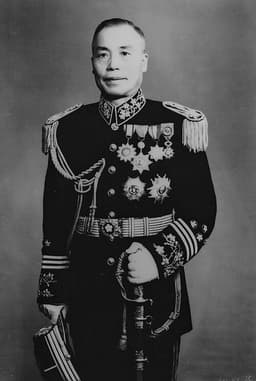
Li Zongren
General · Modern
58.5Total
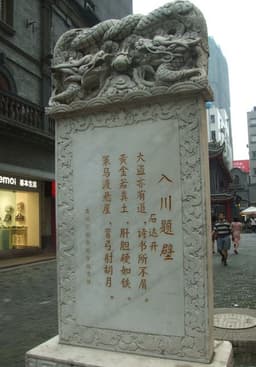
Shi Dakai
General · Modern
59.6Total
Basic Information
Born
1890
1831
Died
1969
1863
Era
Modern
Modern
Nationality
China
China
Occupation
General
General
Civilization
Eastern
Eastern
Score Comparison
Military (10%)
65.0
76.0
Political (20%)
53.8
45.0
Influence (20%)
58.0
56.7
Legacy (20%)
52.0
54.0
Leadership (15%)
72.0
72.0
Strategy (15%)
56.8
68.1
TOTAL
58.5
59.6
Li Zongren — Complete Timeline
1921 AD
Command of the Guangxi ArmyPolitical Action◆ Major
Li Zongren became a commander in the Guangxi Army and helped unify Guangxi province under the New Guangxi Clique. He established a powerful regional base that rivaled other warlords.
Guangxi CliqueMilitary CommandWarlord Era
Impact: regional
1926 AD
Alliance with the Nationalist GovernmentPolitical Action◆ Major
Li Zongren allied the Guangxi Clique with Chiang Kai-shek's Nationalist government during the Northern Expedition. His forces played a key role in defeating warlords and unifying China under KMT rule.
Northern ExpeditionAllianceKMT
Impact: nationalconstructive
1938 AD
Battle of TaierzhuangWar
Li Zongren commanded Chinese forces to a major victory over the Japanese at the Battle of Taierzhuang during the Second Sino-Japanese War. This was the first significant Chinese victory of the war and boosted national morale.
Second Sino-Japanese WarBattleVictory
Impact: nationalconstructive
1949 AD
Acting Presidency of the Republic of ChinaPolitical Action◆ Major
Li Zongren served as Acting President of the Republic of China after Chiang Kai-shek's resignation during the Chinese Civil War. He attempted to negotiate peace with the Communists but failed, leading to the KMT's retreat to Taiwan.
Chinese Civil WarPresidencyKMT
Impact: nationaltragic
Exile to the United StatesPolitical Action
After the Communist victory, Li Zongren fled to the United States, where he lived in exile. He criticized Chiang Kai-shek's leadership and advocated for a reformed KMT, but remained politically marginalized.
ExileChinese Civil WarPolitics
Impact: nationaltragic
Shi Dakai — Complete Timeline
1851 AD
Jintian UprisingWar◆ Major
Shi Dakai joined the Taiping Rebellion at its inception in Jintian, Guangxi. As a core leader, he helped organize the rebel forces and was appointed Wing King, becoming one of the key military commanders of the Taiping Heavenly Kingdom.
Taiping RebellionUprisingMilitary Command
Impact: national
1854 AD
Battle of XiangtanWar◆ Major
Shi Dakai led Taiping forces to a major victory at Xiangtan, Hunan, defeating Qing imperial troops. This battle secured Taiping control over key territories in the Yangtze River valley and demonstrated his military skill.
Taiping RebellionBattleVictory
Impact: regional
1856 AD
Tianjing IncidentPolitical Action
Shi Dakai returned to Tianjing (Nanjing) after the internal purge of the Eastern King Yang Xiuqing and the murder of the Northern King Wei Changhui. He condemned the violence and was forced to flee, leading to a split in Taiping leadership.
Taiping RebellionInternal ConflictPurge
Impact: nationaltragic
1858 AD
Campaign in Zhejiang and FujianWar
Shi Dakai led a separate Taiping army into Zhejiang and Fujian provinces, capturing several cities. This campaign expanded Taiping influence into southeastern China but also isolated his forces from the main Taiping base.
Taiping RebellionCampaignExpansion
Impact: regional
1863 AD
Battle of Baishui RiverWar◆ Major
Shi Dakai's army was trapped and defeated by Qing forces at the Baishui River in Sichuan. He was captured and executed shortly after, marking the end of his military career and a significant loss for the Taiping cause.
Taiping RebellionBattleDefeatDeath
Impact: nationaltragic
Expert Analysis
Shi Dakai vs Li Zongren
# The Wing King and the Warlord President: Two Paths Through China's Storm
On a spring morning in 1863, Shi Dakai knelt by the Baishui River in Sichuan, his army shattered, his cause lost. He was thirty-two years old. The Qing executioner's blade would fall within hours. A century later, in 1965, another old soldier—Li Zongren—stepped off a plane in Beijing, returning to China after sixteen years of exile. Mao Zedong himself shook his hand. One died a rebel, the other a prodigal son. Both were generals. Both fought for a vision of China. Yet their fates could not have diverged more sharply. What drove these two men—separated by sixty years, bound by the same soil—to such different ends?
Origins
Shi Dakai was born in 1831 into a prosperous Hakka family in Guangxi, a province of rugged mountains and simmering unrest. His people were outsiders, and he was educated in the Confucian classics, but the world around him was collapsing: opium wars, peasant starvation, a dynasty rotting from within. When a failed scholar named Hong Xiuquan declared himself the brother of Jesus Christ and called for a Heavenly Kingdom of Great Peace, Shi Dakai—barely twenty years old—saw a chance to remake the world. He joined the Jintian Uprising in 1851, bringing with him a young man's idealism and a cold-eyed talent for war.
Li Zongren, born in 1890, came from the same Guangxi hills, but the China he entered was different. The Taiping Rebellion had been crushed, but the Qing dynasty was dying. Foreign gunboats prowled the rivers. Warlords carved up the provinces. Li grew up in a world where the old certainties had evaporated, and power belonged to those who could seize it. He trained at the Guangxi Military Academy, learned to command men, and by 1921 had become a commander in the Guangxi Army. Where Shi Dakai had been a prophet-soldier, Li Zongren was a pragmatist, a man who understood that in revolutionary times, survival meant flexibility.
Rise to Power
Shi Dakai's rise was meteoric. By 1854, at twenty-three, he was the Wing King—one of the five core leaders of the Taiping Heavenly Kingdom. His victory at the Battle of Xiangtan that year was a masterpiece: he outmaneuvered Qing forces in Hunan, securing the Taiping's western flank and proving that the peasant army could match imperial veterans. His military score of 84.6 reflects the awe he inspired. But the Taiping leadership was a court of knives. In 1856, the Tianjing Incident tore the kingdom apart: Hong Xiuquan ordered the murder of the Eastern King, Yang Xiuqing, and the slaughter spread. Shi Dakai returned to the capital to stop the bloodshed, only to find his own family murdered by the new power brokers. He fled, taking a separate army into Zhejiang and Fujian, a prince without a kingdom.
Li Zongren's path was slower, more calculating. He unified Guangxi under the New Guangxi Clique, then in 1926 made a crucial decision: he allied with Chiang Kai-shek's Nationalist government during the Northern Expedition. This was not ideology—it was strategy. By joining the stronger force, Li preserved his autonomy while gaining legitimacy. His political score of 65.0 and leadership score of 79.9 reflect a man who knew when to bend. Where Shi Dakai burned with conviction, Li Zongren cooled with calculation.
Leadership & Governance
Shi Dakai was a battlefield genius—his strategy score of 81.6 places him among China's great captains. He understood terrain, logistics, and the psychology of his men. But as a ruler, he was a failure. His political score of 64.8 tells the story: he could conquer cities but could not govern them. The Taiping Heavenly Kingdom was a theocracy of madness, with Hong Xiuquan claiming to be God's second son and forbidding sex among his followers. Shi Dakai, a rationalist in a cult, could never reconcile his military brilliance with the kingdom's lunacy. He led his army on a long, doomed march into Sichuan, hoping to carve out his own domain—but he was fleeing, not building.
Li Zongren governed. His political score of 65.0 is barely higher than Shi Dakai's, but it was earned in a different arena. As a warlord, he brought stability to Guangxi, reformed its administration, and kept his province out of the worst chaos of the warlord era. His greatest moment came at the Battle of Taierzhuang in 1938, when he commanded Chinese forces to a stunning victory over the Japanese—the first major Chinese land victory of the Second Sino-Japanese War. His strategy score of 83.4 matches Shi Dakai's, but his leadership was of a different kind: he held together a coalition of Nationalist and regional troops, balancing egos and ammunition supplies. He was a politician in uniform.
Triumph & Tragedy
Shi Dakai's triumph was Xiangtan—the moment when the Taiping seemed unstoppable. His tragedy was the Baishui River in 1863, where his army, exhausted and betrayed, was trapped. He offered himself to the Qing in exchange for his men's lives. They took him, executed him slowly, and slaughtered his soldiers anyway. The Wing King died alone, his kingdom already ash.
Li Zongren's triumph was Taierzhuang—a victory that proved China could fight. His tragedy came eleven years later, in 1949, when he became Acting President of the Republic of China as Chiang Kai-shek resigned. It was a poisoned gift: the Communists were crossing the Yangtze, the Nationalist government was collapsing. Li held power for months, negotiating desperately, but the war was lost. He fled to the United States, where he lived in exile, criticizing Chiang but powerless to change history. A warlord who had once united Guangxi ended his career as a guest in a foreign country.
Character & Destiny
Shi Dakai was a man of faith in a faithless age. He believed in the Taiping vision—a society of equality, land reform, and Christian morality—even as it crumbled around him. That faith made him a great general but a poor politician: he could not compromise with the madness of Hong Xiuquan, nor could he abandon his loyalty to the kingdom. He chose death rather than betrayal. His total score of 71.4 masks the tragedy: a brilliant strategist undone by the very purity of his cause.
Li Zongren was a survivor. He allied with Chiang, then broke with him. He fought the Japanese, then fled the Communists. He criticized his enemies, then returned to China in 1965 to die in the homeland he had left. His total score of 71.8 is almost identical to Shi Dakai's, but it represents a different kind of life—a career of adaptation, not conviction. He was not a hero of epic poetry; he was a man who kept his head down and lived.
Legacy
Shi Dakai is remembered as a tragic hero, a knight of the lost cause. Chinese historians debate whether he was a visionary or a fool, but the people of Guangxi still tell stories of the Wing King, the young general who fought for a better world and died for it. His legacy score of 65.9 reflects the ambiguity: he is honored but not celebrated, a symbol of what might have been.
Li Zongren's legacy is more complex. In mainland China, he is remembered as a patriotic general who fought the Japanese, a former enemy who returned to the fold. In Taiwan, he is a footnote—the man who briefly held the presidency while Chiang fled. His legacy score of 67.1 is slightly higher than Shi Dakai's, but it is a quiet legacy, the memory of a survivor who chose life over glory.
Conclusion
Stand by the Baishui River today, and you might feel the ghost of Shi Dakai—the young king who chose death for his men. Walk through the halls of the National Palace Museum in Taipei, and you might find Li Zongren's photograph, a faded warlord in a Republican uniform. Two Guangxi boys, sixty years apart, both generals, both failures in the grand sweep of history. But one burned bright and died young; the other burned slow and died old. Which was wiser? The question lingers, like the scent of gunpowder on an old battlefield. In the end, perhaps the only difference between triumph and tragedy is the moment you choose to stop fighting.
Rankings
🥇
Shi DakaiLeader
Mil: 76.0Pol: 45.0Inf: 56.7
59.6
🥈
Li Zongren
Mil: 65.0Pol: 53.8Inf: 58.0
58.5
+1.1 behind
How This Comparison Works
Algorithm
Each figure is scored on 6 dimensions (0—100 scale) based on structured historical data: Military (10%), Political (20%), Influence (20%), Legacy (20%), Leadership (15%), Strategy (15%). The weighted total produces the final ranking.
Data Sources
Scores are computed from structured sub-indicators in the database. Scale factors adjust for era (Ancient ×0.85, Modern ×1.0) and civilization size (Eastern ×1.05, Other ×0.80) to account for differences in population and military scale.
Maximum 3 Figures
Comparisons are limited to 2—3 figures to ensure readability and statistical meaningfulness.
Error Margins
±5 points per dimension — Sub-scores are derived from historical records with inherent uncertainty. Two figures within 5 points on a dimension should be considered roughly equivalent in that area.
Total Score Accuracy
±3 points overall — The weighted combination of 6 dimensions produces a total score with approximately ±3 points of uncertainty. Differences of less than 3 points are not statistically significant— the figures are effectively tied.
Known Limitations
- Historical records are incomplete and uneven across civilizations
- Figures from oral-tradition societies may be underrepresented
- Occupation labels can misclassify multi-role figures
- Scores measure capability and impact, not moral character
- Quantitative scoring is a comparison tool, not absolute truth
Capability Radar
Military (10%) — Battles & Warfare
Battles
65
75
Win Rate
60
70
Expansion
60
75
Political (20%) — Governance & Reform
Reform
45
50
Diplomacy
60
45
Economy
40
40
Influence (20%) — Cultural & Global Reach
Cultural
40
55
Global
40
40
Legacy (20%) — Historical Impact
Historical
55
60
Longevity
45
45
Leadership (15%) — Power & Stability
Tenure
55
55
Stability
35
35
Strategy (15%) — Tactics & Innovation
Strategy
68
80
Tactics
70
85
Reform
55
60
Similar Comparisons
Comments & Discussion
数据拆解者6/16/2026
说李宗仁比石达开高明?别搞笑了。石达开在湖口战役以三万杂牌军打垮曾国藩的湘军水师,歼灭战例被写进西点教材。李宗仁台儿庄确实赢了,但那是在日军两个联队轻敌冒进的前提下惨胜,后期徐州会战一样被打得弃城而逃。军事上石达开是开宗立派的天才,李宗仁只是民国军阀的及格线选手。
ClassicsBro6/16/2026
The real tragedy isn't their different fates—it's how Chinese historiography has flattened both into moral fables. Shi Dakai is taught as the perfect tragic hero: the "Wing King" whose wings were clipped by factionalism. Li Zongren as the pragmatic survivor who "came home." But dig deeper: Shi Dakai's fanatical purges of "Manchu devils" mirrored Taiping bloodlust, while Li Zongren's Guangxi clique instituted opium taxation that funded warlord violence. Neither was a clean narrative.
街巷考据党6/16/2026
你们都在谈宏大叙事,我说点真东西:石达开被俘前在成都写的那五首诗,字迹苍劲中透着绝望,他至死相信自己是"替天行道"。李宗仁六十年代回来写的回忆录,通篇在淡化自己与蒋介石的暗斗,美化白崇禧的军事失误。一个临刑前还在写诗,一个晚年忙着改稿——这才是两人本质区别:书生与政客的终极分野。
RevisionistEdge6/16/2026
Let's be honest: Li Zongren's "return" was a PR stunt designed to pressure Chiang Kai-shek, not a heartfelt reconciliation. The man who commanded the Fifth战区 during the Battle of Shanghai knew exactly what he was doing—positioning himself between Washington, Taipei, and Beijing like a chess player. Shi Dakai, for all his flaws, never hedged his bets. He marched his army into the trap at the Dadu River because his ideology demanded martyrdom. One died for his convictions; the other outlived his.
Chronicler83876/16/2026
Shi Dakai wasn't merely a Taiping general—he was the last true Confucian knight in an age of fanatics. While Hong Xiuquan raved about being Jesus's brother, Shi Dakai governed his territories with meritocratic policies that would impress any Ming reformer. His fatal flaw wasn't military incompetence but misplaced loyalty: he wasted his finest years defending a dying delusion. Li Zongren, by contrast, was a political gymnast who lived long enough to see his own side win—and realize he'd backed th