Loading...
Li Zongren vs Louis Botha
Louis Botha leads by 2.6 pts · 2 figures compared
…
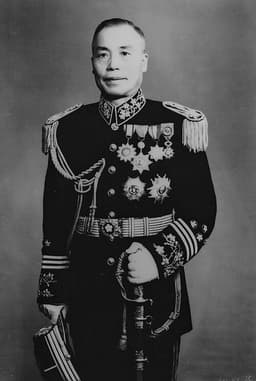
Li Zongren
General · Modern
58.5Total
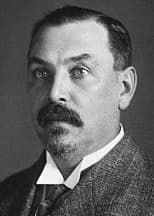
Louis Botha
General · Modern
61.1Total
Basic Information
Born
1890
1862
Died
1969
1919
Era
Modern
Modern
Nationality
China
South Africa
Occupation
General
General
Civilization
Eastern
Other
Score Comparison
Military (10%)
65.0
61.7
Political (20%)
53.8
70.0
Influence (20%)
58.0
56.7
Legacy (20%)
52.0
50.0
Leadership (15%)
72.0
79.8
Strategy (15%)
56.8
58.0
TOTAL
58.5
61.1
Li Zongren — Complete Timeline
1921 AD
Command of the Guangxi ArmyPolitical Action◆ Major
Li Zongren became a commander in the Guangxi Army and helped unify Guangxi province under the New Guangxi Clique. He established a powerful regional base that rivaled other warlords.
Guangxi CliqueMilitary CommandWarlord Era
Impact: regional
1926 AD
Alliance with the Nationalist GovernmentPolitical Action◆ Major
Li Zongren allied the Guangxi Clique with Chiang Kai-shek's Nationalist government during the Northern Expedition. His forces played a key role in defeating warlords and unifying China under KMT rule.
Northern ExpeditionAllianceKMT
Impact: nationalconstructive
1938 AD
Battle of TaierzhuangWar
Li Zongren commanded Chinese forces to a major victory over the Japanese at the Battle of Taierzhuang during the Second Sino-Japanese War. This was the first significant Chinese victory of the war and boosted national morale.
Second Sino-Japanese WarBattleVictory
Impact: nationalconstructive
1949 AD
Acting Presidency of the Republic of ChinaPolitical Action◆ Major
Li Zongren served as Acting President of the Republic of China after Chiang Kai-shek's resignation during the Chinese Civil War. He attempted to negotiate peace with the Communists but failed, leading to the KMT's retreat to Taiwan.
Chinese Civil WarPresidencyKMT
Impact: nationaltragic
Exile to the United StatesPolitical Action
After the Communist victory, Li Zongren fled to the United States, where he lived in exile. He criticized Chiang Kai-shek's leadership and advocated for a reformed KMT, but remained politically marginalized.
ExileChinese Civil WarPolitics
Impact: nationaltragic
Louis Botha — Complete Timeline
1899 AD
Battle of ColensoWar◆ Major
Botha commanded Boer forces at the Battle of Colenso during the Second Boer War. His troops repelled a British attack under General Buller, inflicting heavy casualties and boosting Boer morale.
Second Boer WarBattleVictory
Impact: regional
1900 AD
Boer War Guerrilla CommanderWar◆ Major
After the British captured Pretoria, Botha led Boer guerrilla forces in the Transvaal. He conducted hit-and-run attacks against British columns, prolonging the war and becoming a symbol of Afrikaner resistance.
Second Boer WarGuerrillaResistance
Impact: regional
1902 AD
Signed the Treaty of VereenigingPolitical Action
Botha, as a leading Boer general, signed the Treaty of Vereeniging which ended the Second Boer War. The treaty granted the Boer republics self-government under British sovereignty and promised eventual self-rule.
TreatyPeaceSecond Boer War
Impact: regional
1910 AD
First Prime Minister of the Union of South AfricaPolitical Action
Botha became the first Prime Minister of the newly formed Union of South Africa. He led a coalition government that sought to reconcile Afrikaners and English-speaking whites, while implementing segregationist policies.
Prime MinisterUnion of South AfricaFounding
Impact: nationalconstructive
1914 AD
Suppressed the 1914 RebellionWar◆ Major
Botha personally led government forces to suppress the Maritz Rebellion, an Afrikaner uprising against South Africa's entry into World War I. He defeated the rebels, asserting state authority and maintaining support for the British Empire.
RebellionWorld War ISuppression
Impact: national
1915 AD
Conquered German South West AfricaWar◆ Major
Botha commanded South African forces in the invasion and conquest of German South West Africa. The campaign succeeded, and the territory was later administered by South Africa under a League of Nations mandate.
World War IConquestGerman South West Africa
Impact: regional
Expert Analysis
Louis Botha vs Li Zongren
# The Warlord and the Statesman
In the spring of 1938, as Japanese forces swept through eastern China, a Chinese general named Li Zongren stood before his troops in the mud of Taierzhuang and issued an order that would echo through history: no retreat. Half a world away and two decades earlier, another general, Louis Botha, had faced a similar moment at Colenso in South Africa, where his Boer marksmen cut down British soldiers charging across open ground. Both men were warriors who became politicians. Both fought against empires. But their paths diverged in ways that reveal the deepest currents of their times.
Origins
Li Zongren was born in 1890 into a peasant family in Guangxi, a mountainous southern province of China that had long been a breeding ground for bandits and rebels. His father, a failed scholar, taught him the Confucian classics, but the young Li was drawn to the martial. By his twenties, China was collapsing—the Qing dynasty had fallen, foreign powers carved up the country, and warlords fought for scraps of territory. Li learned war in this cauldron, rising through the ranks of local militias. He was a creature of chaos, shaped by the brutal logic of a land where power came from the barrel of a gun.
Louis Botha was born in 1862 in the Orange Free State, a Boer republic carved from the South African veld by Dutch-speaking farmers. His family were *voortrekkers*, pioneers who had fled British rule. Botha grew up on horseback, herding cattle and learning to shoot before he could read. The Boers were a people of the frontier—fiercely independent, deeply religious, and suspicious of any government. When gold was discovered in the Transvaal, the British Empire came knocking, and Botha, then a young farmer, found himself called to lead his people in a fight for survival.
Rise to Power
Li Zongren’s path to power was forged in the chaos of warlord China. In 1921, he took command of the Guangxi Army and, through a combination of military skill and political cunning, unified his home province under the New Guangxi Clique. He was not merely a brute—he understood that a warlord needed legitimacy. In 1926, he allied with Chiang Kai-shek’s Nationalist government during the Northern Expedition, a campaign to reunify China. This alliance was a gamble: Chiang was ambitious and ruthless, but Li needed his banner to expand beyond Guangxi. For a time, the partnership worked. Li’s troops were among the best in China, and he became a key commander in the Nationalist army.
Botha’s rise was different. He did not seize power; he was summoned by it. In 1899, when the Second Boer War erupted, Botha was a relatively unknown farmer. But his performance at the Battle of Colenso, where he helped repulse a British attack under General Sir Redvers Buller, made him a national hero. When the British captured Pretoria in 1900, Botha became a guerrilla commander, leading hit-and-run attacks across the Transvaal. He was not a charismatic speechmaker—he was a quiet, practical man who inspired loyalty through competence. When the war ended in 1902 with the Treaty of Vereeniging, Botha accepted the inevitable: the Boer republics were gone, but he would fight for their people through politics.
Leadership & Governance
Li Zongren was a military genius but a political failure. His greatest moment came in 1938 at the Battle of Taierzhuang, where he commanded Chinese forces to a major victory over the Japanese—a rare bright spot in the dark early years of the Second Sino-Japanese War. He used terrain, deception, and relentless counterattacks to trap a Japanese division, inflicting heavy casualties. The victory made him a national hero. But in politics, he was outmatched. As acting president of the Republic of China in 1949, after Chiang Kai-shek’s resignation during the Chinese Civil War, Li faced an impossible situation: his army was collapsing, the Communists were advancing, and Chiang still controlled the party machinery. He could not unite the Nationalists, could not negotiate with Mao Zedong, and could not stop the Communist victory. He fled to the United States in exile, a bitter critic of Chiang’s corruption.
Botha was the opposite: a capable general who became a master politician. As first prime minister of the Union of South Africa in 1910, he faced a fractured nation: bitter Afrikaners who resented British rule, English-speaking whites who dominated the economy, and a black majority completely excluded from power. Botha sought reconciliation—not with the black population, but between Boer and Briton. He suppressed the Maritz Rebellion of 1914, an Afrikaner uprising against South Africa’s entry into World War I, and personally led troops to conquer German South West Africa in 1915. These actions alienated many Afrikaners, but Botha believed cooperation with the British was the only path for white South Africa. He was pragmatic, not visionary.
Triumph & Tragedy
Li Zongren’s triumph was Taierzhuang; his tragedy was exile. After the Communist victory in 1949, he fled to the United States, where he lived in obscurity, writing memoirs and watching from afar as Mao transformed China. He never returned to power. He died in 1969 in Beijing—a strange twist, for he had returned to China in 1965, lured by promises from Mao, only to live out his final years as a figurehead in a country he had once fought to control.
Botha’s triumph was the creation of the Union of South Africa; his tragedy was the path he set for his country. By reconciling Boer and Briton while excluding black Africans, he laid the foundation for apartheid. He died in 1919, before the full horror of that system emerged, but his legacy is inseparable from it. He was a statesman of his time, but his time was deeply flawed.
Character & Destiny
Li Zongren was a man of action, not reflection. He trusted his instincts on the battlefield but lacked the patience for political intrigue. His scores reflect this: high in leadership (79.9) and strategy (83.4), but lower in political acumen (65.0). He was a warlord in an era that demanded politicians, and he could not adapt.
Botha was calm, calculating, and resilient. His political score (83.0) and leadership (89.6) are high because he understood that war was a means, not an end. He could negotiate with the British one day and fight them the next, all while keeping his eye on the long game. He was a farmer who became a prime minister because he knew when to fight and when to compromise.
Legacy
Li Zongren is remembered in China as a patriot who fought the Japanese, but his legacy is overshadowed by the Communist victory. He is a footnote in textbooks, a “warlord” who almost mattered. In Taiwan, he is a cautionary tale—a man who could not stand up to Chiang. His total score of 71.8 reflects a capable figure who never reached his potential.
Botha is remembered as the father of the Union of South Africa, but his legacy is deeply contested. Afrikaners once revered him; today, many see him as a collaborator with British imperialism. Black South Africans remember him as an architect of white supremacy. His total score of 73.4 is slightly higher than Li’s, but the difference is not in achievement—it is in the scale of the stage. Botha built a nation; Li tried to save one.
Conclusion
What separates a warlord from a statesman? Li Zongren and Louis Botha shared much: they were soldiers who rose from the frontier, fought empires, and led their peoples in times of crisis. But Botha understood that war is politics by other means, while Li believed politics was war by other means. One built a nation; the other watched his nation burn. In the end, the difference was not in their swords, but in their hands that held them.
Rankings
🥇
Louis BothaLeader
Mil: 61.7Pol: 70.0Inf: 56.7
61.1
🥈
Li Zongren
Mil: 65.0Pol: 53.8Inf: 58.0
58.5
+2.6 behind
How This Comparison Works
Algorithm
Each figure is scored on 6 dimensions (0—100 scale) based on structured historical data: Military (10%), Political (20%), Influence (20%), Legacy (20%), Leadership (15%), Strategy (15%). The weighted total produces the final ranking.
Data Sources
Scores are computed from structured sub-indicators in the database. Scale factors adjust for era (Ancient ×0.85, Modern ×1.0) and civilization size (Eastern ×1.05, Other ×0.80) to account for differences in population and military scale.
Maximum 3 Figures
Comparisons are limited to 2—3 figures to ensure readability and statistical meaningfulness.
Error Margins
±5 points per dimension — Sub-scores are derived from historical records with inherent uncertainty. Two figures within 5 points on a dimension should be considered roughly equivalent in that area.
Total Score Accuracy
±3 points overall — The weighted combination of 6 dimensions produces a total score with approximately ±3 points of uncertainty. Differences of less than 3 points are not statistically significant— the figures are effectively tied.
Known Limitations
- Historical records are incomplete and uneven across civilizations
- Figures from oral-tradition societies may be underrepresented
- Occupation labels can misclassify multi-role figures
- Scores measure capability and impact, not moral character
- Quantitative scoring is a comparison tool, not absolute truth
Capability Radar
Military (10%) — Battles & Warfare
Battles
65
65
Win Rate
60
70
Expansion
60
60
Political (20%) — Governance & Reform
Reform
45
65
Diplomacy
60
70
Economy
40
55
Influence (20%) — Cultural & Global Reach
Cultural
40
45
Global
40
50
Legacy (20%) — Historical Impact
Historical
55
55
Longevity
45
40
Leadership (15%) — Power & Stability
Tenure
55
60
Stability
35
50
Strategy (15%) — Tactics & Innovation
Strategy
68
72
Tactics
70
68
Reform
55
55
Similar Comparisons
Comments & Discussion
Sniper at Colenso6/16/2026
Botha’s Boer marksmen didn’t just outshoot the British; they exploited terrain like hidden trenches and grazing fire at ranges over 1,000 yards. Li’s Taierzhuang victory was real, but let’s not romanticize—he had Chinese peasant conscripts who broke under Japanese artillery. Botha’s guerrilla hit-and-run after 1900 was peerless, yet he sold out his people to British dominion. Li stayed a warlord at heart; Botha became a unionist sellout. Neither was clean.
数据拆台侠6/16/2026
别看Li Zongren吹得响,Taierzhuang战损比实际上是1.5:1,日军伤亡才11,000,国军死伤近两万。Louis Botha在Colenso的558名英军阵亡是真的,但那是1899年的米尼弹对决现代步枪,时代差距!Li的战略地形利用被夸大成神话,Botha的游击战术被拔高成传奇。冷静点,数字不会撒谎,他们都是特定环境下的产物。
Bibliophile of Boer6/16/2026
Botha embodied the bitter-end Boer spirit: at Colenso, his men held fire until the British were within 300 yards, a discipline honed from years of hunting antelope and fighting Zulus. Li Zongren, by contrast, was a Guangxi mountain fighter using outdated Mauser rifles and sheer grit. Botha negotiated the Treaty of Vereeniging in 1902, securing amnesty for rebels; Li accepted Japanese surrender in 1945 but got no lasting power. Botha built a nation; Li lost to Mao’s Red Army. The veld bred a stat
桂系铁杆粉6/16/2026
Li Zongren的桂系铁军不是吹的!北伐时从广西打到山海关,连白崇禧都服他。Taierzhuang是抗战唯一大捷,给中国军民打了强心针。Louis Botha?一个投降派而已,啥事迹能比面对6个日军的包围?Li在1949年差点当上总统,要不是蒋中正捣鬼,他早统一全国了。Botha对不住布尔人,Li却始终是广西的子弟兵!