Loading...
Li Zicheng vs Vladimir Lenin
Vladimir Lenin leads by 27.7 pts · 2 figures compared
…
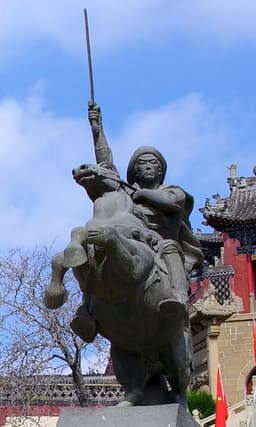
Li Zicheng
Revolutionary · Modern
43.5Total
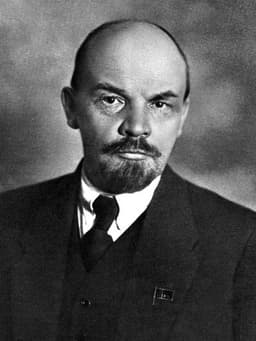
Vladimir Lenin
Revolutionary · Modern
71.2Total
Basic Information
Born
1606
1870
Died
1645
1924
Era
Modern
Modern
Nationality
China
Russia
Occupation
Revolutionary
Revolutionary
Civilization
Eastern
Western
Score Comparison
Military (10%)
50.0
30.0
Political (20%)
27.9
78.0
Influence (20%)
52.5
82.0
Legacy (20%)
44.2
72.0
Leadership (15%)
39.0
80.0
Strategy (15%)
43.3
60.0
TOTAL
43.5
71.2
Li Zicheng — Complete Timeline
1644 AD
Captured Beijing and Ended the Ming DynastyWar
Li Zicheng led his rebel army to capture Beijing. The Chongzhen Emperor committed suicide, ending the Ming dynasty. Li Zicheng proclaimed the Shun dynasty and briefly ruled from the Forbidden City before being defeated by Qing forces.
Ming-Qing TransitionRebellionBeijing
Impact: globaldestructive
Defeated at the Battle of Shanhai PassWar◆ Major
Li Zicheng's army was defeated by the combined forces of Wu Sangui and the Manchus at the Battle of Shanhai Pass. The defeat forced him to abandon Beijing and retreat westward, effectively ending his control over northern China.
Ming-Qing TransitionBattleDefeat
Impact: globaltragic
Proclaimed the Shun DynastyPolitical Action◆ Major
After capturing Beijing, Li Zicheng formally proclaimed the establishment of the Shun dynasty in Xi'an. He adopted the title of emperor and began implementing his own administrative policies, though his rule was short-lived.
Shun DynastyProclamationRebellion
Impact: nationalconstructive
1645 AD
Killed in Jiugong MountainWar◆ Major
Li Zicheng was killed by a local militia while fleeing through Jiugong Mountain in Hubei province. His death marked the end of the Shun dynasty and the collapse of his rebellion, though some accounts claim he survived and became a monk.
Shun DynastyDeathRebellion
Impact: nationaltragic
Vladimir Lenin — Complete Timeline
1903 AD
Founding of the Bolshevik PartyPolitical Action
At the Second Congress of the Russian Social Democratic Labour Party in London, Lenin led a split that created the Bolshevik faction. The Bolsheviks advocated for a disciplined vanguard party of professional revolutionaries, a key element of Lenin's political strategy.
Political PartyRevolutionIdeology
Impact: global
1917 AD
April ThesesPolitical Action◆ Major
Lenin returned to Russia from exile and published the April Theses, calling for the overthrow of the Provisional Government, transfer of power to the soviets, and an end to World War I. This document set the Bolshevik agenda for the coming revolution.
RevolutionIdeologyPolitical Strategy
Impact: national
October RevolutionPolitical Action
Lenin led the Bolshevik seizure of power in Petrograd, capturing key government buildings and the Winter Palace. The revolution overthrew the Provisional Government and established the world's first socialist state, the Russian Soviet Federative Socialist Republic.
RevolutionCoupCommunism
Impact: global
1918 AD
Treaty of Brest-LitovskPolitical Action◆ Major
Lenin signed a separate peace treaty with the Central Powers, ceding vast territories including Ukraine, Belarus, and the Baltic states. The treaty ended Russia's involvement in World War I but caused significant territorial losses and internal opposition.
TreatyWorld War ITerritorial Loss
Impact: globaldestructive
1921 AD
New Economic Policy (NEP)Reform◆ Major
Lenin introduced the NEP, allowing limited private enterprise and market mechanisms to revive the war-torn Soviet economy. The policy replaced War Communism, permitting small-scale capitalism while the state retained control of major industries.
Economic ReformPolicyRecovery
Impact: nationalconstructive
1922 AD
Establishment of the Soviet UnionPolitical Action
Lenin oversaw the creation of the Union of Soviet Socialist Republics (USSR), a federation of Soviet republics. The new state consolidated Bolshevik control over much of the former Russian Empire and became a model for communist states worldwide.
State FormationCommunismFederation
Impact: global
Expert Analysis
Vladimir Lenin vs Li Zicheng
# The Revolutionary’s Betrayal: Why Lenin Built an Empire While Li Zicheng Lost One
On an autumn night in 1917, a balding man with a goatee slipped through the shadows of Petrograd, disguised in a worker’s cap and ragged coat. Vladimir Lenin was heading to the Smolny Institute, where his Bolsheviks were about to seize power. Two hundred and seventy-three years earlier and five thousand miles away, another revolutionary had entered Beijing in triumph, his peasant army cheering as the last Ming emperor hanged himself on Coal Hill. Li Zicheng had reached the pinnacle of rebellion. Within weeks, his dream collapsed. Within a decade, Lenin’s endured. The difference was not luck—it was a question of what revolutionaries do after they win.
Origins
Lenin was born into privilege in 1870, the son of a school inspector who had risen from serfdom to nobility. His older brother Alexander was hanged for plotting to assassinate the Tsar—a trauma that turned young Vladimir from a studious child into a relentless revolutionary. He devoured Marx, studied law, and spent years in Siberian exile honing his theories. The Russia of 1900 was a powder keg: industrializing rapidly, yet ruled by an autocratic tsar who resisted reform. Lenin saw himself as a surgeon, not a rebel—he would cut out the cancer of capitalism with precision.
Li Zicheng came from the mud of Shaanxi province, born in 1606 to a poor farming family. He worked as a horse groomer and a courier before a drought-driven famine pushed him into banditry. Ming China was rotting from within: corrupt eunuchs controlled the court, taxes crushed the peasantry, and a minor ice age brought relentless crop failures. Li had no books, no ideology—only the raw fury of the hungry and the loyalty of desperate men. Where Lenin saw a system to dismantle, Li saw a throne to take.
Rise to Power
Lenin’s path was deliberate and ideological. At the 1903 London congress of the Russian Social Democratic Labour Party, he split the movement by demanding a tightly disciplined vanguard of professional revolutionaries—his Bolsheviks. For fourteen years, he wrote, plotted, and waited. The First World War was his great gift: it shattered the Tsar’s army, emptied his treasury, and turned millions against the state. When the February Revolution of 1917 toppled the monarchy, Lenin rushed home in a sealed train, funded by Germany. He issued the April Theses: no cooperation with the provisional government, all power to the soviets. By October, he had convinced his hesitant comrades to strike. The Winter Palace fell with barely a fight.
Li Zicheng’s rise was chaotic and visceral. He joined a rebellion led by Gao Yingxiang, a charismatic bandit who was captured and executed in 1636. Li inherited the remnants, calling himself the “Dashing King.” For eight years, he wandered across northern China, gathering followers with promises of land and tax relief. His army swelled with famine refugees, disillusioned soldiers, and local militias. In 1644, he marched on Beijing. The Ming army melted away; the emperor’s own eunuchs opened the gates. Li entered the Forbidden City as a liberator. He had no theory of the state, no plan for governance—only victory.
Leadership & Governance
Lenin ruled with the cold logic of a Marxist engineer. He immediately abolished private property, nationalized banks, and created the Cheka—a secret police that executed “class enemies” without trial. When the Civil War erupted, he centralized everything: grain requisitioning, mass conscription, and terror. But he was also pragmatic. By 1921, with the economy in ruins and peasant revolts spreading, he pivoted to the New Economic Policy, allowing small-scale capitalism to revive trade. He called it “one step backward, two steps forward.” Lenin understood that power required adaptation, not purity.
Li Zicheng governed like a warlord who had stumbled into a palace. He issued vague decrees about justice and tax relief but never built an administration. His soldiers looted Beijing, torturing Ming officials for hidden gold. He alienated the scholar-officials who might have helped him govern. Worse, he failed to secure his borders. The Ming general Wu Sangui, guarding the Great Wall against Manchu invaders, was negotiating surrender. Li’s envoys mishandled the talks; Wu defected to the Manchus. At the Battle of Shanhai Pass in May 1644, Li’s peasant army was crushed by Wu’s veterans and Manchu cavalry. He fled Beijing, his dynasty—the Shun—lasting barely six weeks.
Triumph & Tragedy
Lenin’s greatest triumph was survival. He dragged Russia out of World War I with the humiliating Treaty of Brest-Litovsk in 1918, ceding vast territories to Germany. His comrades called it treason; Lenin called it breathing room. The treaty bought time for the Red Army to crush the White forces in a brutal civil war. His tragedy was the human cost: millions died from famine, war, and terror. By his death in 1924, he had built a one-party state that would outlast him, but at a price that haunted the century.
Li Zicheng’s triumph was his capture of Beijing—the dream of every rebel. He had ended a dynasty that had ruled for 276 years. His tragedy was that he could not hold it. He died in 1645, killed by a peasant militia while fleeing through Jiugong Mountain. The man who had toppled the Ming was erased by the very forces he had failed to control: the Manchus conquered China and ruled for nearly three centuries.
Character & Destiny
Lenin was a fanatic with a blueprint. He could be ruthless, dogmatic, and paranoid, but he was also disciplined, patient, and intellectually flexible. He believed history was on his side, and that conviction gave him the nerve to gamble everything. Li Zicheng was a man of instinct—brave, generous to his followers, but impulsive and politically naive. He trusted his army’s loyalty without building institutions. Lenin’s personality built a state; Li’s personality built a grave.
Legacy
Lenin’s body lies embalmed in a mausoleum on Red Square, a mummy worshipped by communists and reviled by millions. His ideology shaped the Soviet Union, Mao’s China, and revolutions across Asia and Africa. His name became a curse and a rallying cry. Li Zicheng is remembered in Chinese folk tales and operas—a tragic hero, a cautionary tale of what happens when a rebel wins but does not know how to rule. The Ming loyalists called him a bandit; the Communists later celebrated him as a proto-revolutionary.
Conclusion
The difference between Lenin and Li Zicheng is not one of morality but of modernity. Lenin lived in an age of ideology, mass parties, and systematic terror. He could build a machine that crushed and controlled. Li Zicheng lived in an age of dynastic cycles, where rebels either became emperors or became corpses. He had the courage to topple a throne but lacked the tools to build a new one. Both men changed history—one by creating a new world, the other by destroying an old one. Which is more tragic? Perhaps the one who succeeded.
Rankings
🥇
Vladimir LeninLeader
Mil: 30.0Pol: 78.0Inf: 82.0
71.2
🥈
Li Zicheng
Mil: 50.0Pol: 27.9Inf: 52.5
43.5
+27.7 behind
How This Comparison Works
Algorithm
Each figure is scored on 6 dimensions (0—100 scale) based on structured historical data: Military (10%), Political (20%), Influence (20%), Legacy (20%), Leadership (15%), Strategy (15%). The weighted total produces the final ranking.
Data Sources
Scores are computed from structured sub-indicators in the database. Scale factors adjust for era (Ancient ×0.85, Modern ×1.0) and civilization size (Eastern ×1.05, Other ×0.80) to account for differences in population and military scale.
Maximum 3 Figures
Comparisons are limited to 2—3 figures to ensure readability and statistical meaningfulness.
Error Margins
±5 points per dimension — Sub-scores are derived from historical records with inherent uncertainty. Two figures within 5 points on a dimension should be considered roughly equivalent in that area.
Total Score Accuracy
±3 points overall — The weighted combination of 6 dimensions produces a total score with approximately ±3 points of uncertainty. Differences of less than 3 points are not statistically significant— the figures are effectively tied.
Known Limitations
- Historical records are incomplete and uneven across civilizations
- Figures from oral-tradition societies may be underrepresented
- Occupation labels can misclassify multi-role figures
- Scores measure capability and impact, not moral character
- Quantitative scoring is a comparison tool, not absolute truth
Capability Radar
Military (10%) — Battles & Warfare
Battles
55
20
Win Rate
60
35
Expansion
65
70
Political (20%) — Governance & Reform
Reform
15
95
Diplomacy
20
75
Economy
10
60
Influence (20%) — Cultural & Global Reach
Cultural
40
80
Global
35
90
Legacy (20%) — Historical Impact
Historical
55
95
Longevity
30
85
Leadership (15%) — Power & Stability
Tenure
20
55
Stability
5
40
Strategy (15%) — Tactics & Innovation
Strategy
55
55
Tactics
50
30
Reform
30
85
Similar Comparisons
Comments & Discussion
1. **RedStarTactician**6/16/2026
As a military historian, I see Li's fatal flaw: he failed to secure the key terrain—the Great Wall passes. While Lenin neutralized the Whites by controlling the Trans-Siberian Railway, Li let Wu Sangui hold Shanhaiguan. That single strategic oversight invited the Manchus in. Lenin would have bribed, flanked, or destroyed that commander before the ink dried on the armistice. Victory without logistics is just a parade.
2. **IvanTheAdvisor**6/16/2026
Data doesn't lie: Li Zicheng controlled Beijing for just 42 days in 1644; Lenin's Bolsheviks held Petrograd for 74 years. The math is brutal. Lenin had a famine-proof theory of revolutionary violence and a party that ran like a railroad schedule. Li's movement was a mob with good intentions. A grain shortage turned his own soldiers into looters. You can't govern with slogans when your army is stealing people's rice bowls.
3. **RevolutionGhostbuster**6/16/2026
我读马克思,但也读《明史》。列宁一边骂帝国主义,一边把沙俄的边疆吞得更紧,还造了个更毒的官僚机器。李自成呢?他进了北京还发“三年不征”的空头支票,结果连账本都看不懂,把整个士绅阶级推向满清。两人都背叛了“革命”,只是列宁背叛得更成功、更系统化——他建的“国家”比明朝还专制。
4. **古史刀笔吏**6/16/2026
说李自成失国只因策略差?大错。明末全国人口突破一亿五千万,而一个小冰河期的饥荒就毁了整个财政系统。列宁面对的是一战崩溃中的俄国,他根本没有李自成那种“供养百万饥民”的物理难题。李自成不是不懂治国,是他接手的是一个已在化学性崩坏的生态系统。你把列宁扔进陕西省的颗粒无收之年,他也会在煤山上吊。