Loading...
Bhagat Singh vs Li Zicheng
Bhagat Singh leads by 3.3 pts · 2 figures compared
…
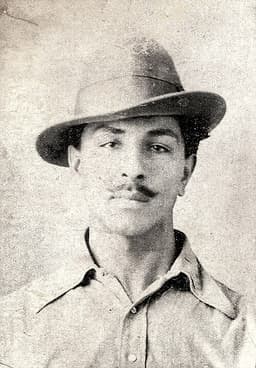
Bhagat Singh
Revolutionary · Modern
46.8Total
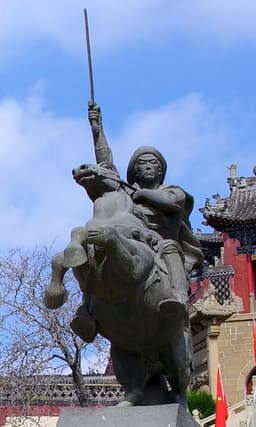
Li Zicheng
Revolutionary · Modern
43.5Total
Basic Information
Born
1907
1606
Died
1931
1645
Era
Modern
Modern
Nationality
India
China
Occupation
Revolutionary
Revolutionary
Civilization
Indian
Eastern
Score Comparison
Military (10%)
30.0
50.0
Political (20%)
25.0
27.9
Influence (20%)
61.0
52.5
Legacy (20%)
50.0
44.2
Leadership (15%)
65.0
39.0
Strategy (15%)
25.0
43.3
TOTAL
46.8
43.5
Bhagat Singh — Complete Timeline
1928 AD
Killing of John SaundersPolitical Action◆ Major
Bhagat Singh and his associates killed British police officer John Saunders in Lahore, mistaking him for James Scott, who had ordered the lathi charge that killed Lala Lajpat Rai. This act of revenge escalated the revolutionary movement.
AssassinationRevolutionary Action
Impact: national
1929 AD
Central Legislative Assembly BombingPolitical Action◆ Major
Bhagat Singh and Batukeshwar Dutt threw bombs in the Central Legislative Assembly in Delhi to protest the Public Safety Bill and Trade Disputes Act. They were arrested and used the trial to propagate revolutionary ideas.
ProtestRevolutionary Action
Impact: national
Hunger Strike in JailPolitical Action◆ Major
Bhagat Singh and fellow prisoners went on a 116-day hunger strike in Lahore jail demanding better treatment for political prisoners. The strike drew national attention and forced the British to make concessions.
ProtestPrison Reform
Impact: national
1931 AD
Execution by HangingPolitical Action◆ Major
Bhagat Singh was executed by hanging at Lahore jail at age 23, along with Rajguru and Sukhdev. His execution sparked widespread protests and made him a martyr for the Indian independence movement.
ExecutionMartyrdom
Impact: nationaltragic
Li Zicheng — Complete Timeline
1644 AD
Captured Beijing and Ended the Ming DynastyWar
Li Zicheng led his rebel army to capture Beijing. The Chongzhen Emperor committed suicide, ending the Ming dynasty. Li Zicheng proclaimed the Shun dynasty and briefly ruled from the Forbidden City before being defeated by Qing forces.
Ming-Qing TransitionRebellionBeijing
Impact: globaldestructive
Defeated at the Battle of Shanhai PassWar◆ Major
Li Zicheng's army was defeated by the combined forces of Wu Sangui and the Manchus at the Battle of Shanhai Pass. The defeat forced him to abandon Beijing and retreat westward, effectively ending his control over northern China.
Ming-Qing TransitionBattleDefeat
Impact: globaltragic
Proclaimed the Shun DynastyPolitical Action◆ Major
After capturing Beijing, Li Zicheng formally proclaimed the establishment of the Shun dynasty in Xi'an. He adopted the title of emperor and began implementing his own administrative policies, though his rule was short-lived.
Shun DynastyProclamationRebellion
Impact: nationalconstructive
1645 AD
Killed in Jiugong MountainWar◆ Major
Li Zicheng was killed by a local militia while fleeing through Jiugong Mountain in Hubei province. His death marked the end of the Shun dynasty and the collapse of his rebellion, though some accounts claim he survived and became a monk.
Shun DynastyDeathRebellion
Impact: nationaltragic
Expert Analysis
Bhagat Singh vs Li Zicheng
# The Rebel's Hourglass
On a spring morning in 1644, Li Zicheng rode through the gates of Beijing at the head of a peasant army that had shattered the Ming dynasty. The Forbidden City lay open before him, its last emperor dangling from a tree on Coal Hill. Less than a year later, Li himself would be dead, hunted through the mountains like an animal. Half a world away and three centuries apart, a young man named Bhagat Singh walked into the Central Legislative Assembly in Delhi, tossed two bombs into the empty benches, and then stood waiting to be arrested. He was twenty-three years old. Within two years, he too would hang from a British noose. Both men were revolutionaries; both died young. But the arcs of their rebellions could not have been more different—one briefly held an empire, the other never held a square foot of territory, yet each left a mark that outlasted their conquerors.
Origins
Li Zicheng was born in 1606 into a world collapsing under its own weight. The Ming dynasty was rotting from within: corrupt eunuchs controlled the court, taxes crushed the peasantry, and famine swept the northern provinces. Li's father was a poor farmer, and young Li worked as a shepherd and later a blacksmith. When the government abolished the postal relay system, Li lost his job as a courier, and when he could not pay his debts, he was tortured in the public square. He killed his tormentor and fled to the hills—a man forged by desperation.
Bhagat Singh was born in 1907 into a very different kind of crisis. Colonial India was not starving, but it was suffocating. His family were Sikh landowners who had long resisted British rule; his uncle had been hanged for sedition. Bhagat grew up on stories of the Jallianwala Bagh massacre, where British troops fired into an unarmed crowd. While Li's rebellion was born of hunger, Bhagat's was born of humiliation. One fought for bread, the other for dignity.
Rise to Power
Li Zicheng rose through violence and sheer momentum. After killing his first victim, he joined a rebel band and quickly distinguished himself as a fighter. The Ming state was too preoccupied with Manchu threats on its northern border to crush the growing insurgency. Li adopted the slogan "Open the granaries to feed the people," and peasants flocked to his banner by the tens of thousands. By 1643, he had declared himself the "Dashing King" and controlled much of central China. His path was that of a warlord—conquest, alliance, betrayal, and more conquest.
Bhagat Singh's rise was ideological. He joined the Hindustan Republican Association, a small group of young radicals who believed that only armed revolution could free India. Unlike Li, he never commanded armies. His weapon was the symbolic act. In 1928, he and his comrades killed a British police officer named John Saunders—though they had meant to kill another man. The murder was a tactical failure but a propaganda victory. The following year, Bhagat and an associate threw bombs into the Central Legislative Assembly. The bombs were deliberately non-lethal; the point was not to kill but to be heard. They threw pamphlets, shouted slogans, and then surrendered.
Leadership & Governance
Li Zicheng, once in power, proved incapable of governing. When he entered Beijing, he ordered his troops to "kill not one person," but his army quickly degenerated into a looting mob. He tortured Ming officials for their gold, alienated the scholar-gentry, and failed to secure the loyalty of Wu Sangui, the Ming general guarding the Great Wall. His "Shun dynasty" lasted just forty-two days. He had no administrative experience, no stable revenue system, and no strategy beyond conquest.
Bhagat Singh governed nothing. But from his prison cell, he waged a different kind of war. During a 116-day hunger strike, he forced the British to negotiate. He wrote essays on atheism, socialism, and revolution. He turned his trial into a platform, using the courtroom to broadcast his ideas. While Li commanded armies, Bhagat commanded minds. His leadership was not in battle but in martyrdom—he knew he would die, and he used his death as a political weapon.
Triumph & Tragedy
Li Zicheng's greatest moment was also his undoing. Capturing Beijing was the triumph of a lifetime, but it was a hollow victory. The Ming had fallen, but the Manchus were waiting. At the Battle of Shanhai Pass, Li's army was crushed by the combined forces of Wu Sangui and the Manchu cavalry. He fled west, his army disintegrating, and was killed by a peasant militia in the mountains of Hubei. He had risen from nothing, ruled for weeks, and died in obscurity.
Bhagat Singh's tragedy was that he never saw victory. He was executed on March 23, 1931, at the age of twenty-three. But his death was his triumph. News of his hanging sparked riots across India. The British had made him a martyr, and martyrdom proved more powerful than any army. As he wrote in his last letter, "The sword of revolution is sharpened on the whetting stone of ideas."
Character & Destiny
Li Zicheng was a man of the moment. He was brave, charismatic, and ruthless, but he lacked vision. He could tear down an empire but could not build one. His destiny was shaped by the chaos of his time—he was a product of famine and collapse, and he could not transcend his origins.
Bhagat Singh was a man of the future. He read voraciously, planned meticulously, and thought in decades while living in days. He wrote, "The aim of life is no more to control the mind, but to develop it harmoniously." His destiny was shaped by the structure of colonial rule—he could not win a military victory, so he won a moral one. He understood that in the long arc of history, ideas outlast empires.
Legacy
Li Zicheng is remembered in China as a tragic folk hero—a man who toppled a dynasty but could not hold it. His name appears in histories as a cautionary tale: a rebel without a plan. The Manchus, whom his failure let into China, would rule for nearly three hundred years.
Bhagat Singh is remembered as a secular saint. His image adorns walls across India; his songs are sung at protests. He did not liberate India, but he inspired the generation that did. In 1947, when the British finally left, many Indians believed that Bhagat Singh's spirit had won the war. His legacy is not a dynasty but an idea—that one man, armed with conviction, can shake an empire.
Conclusion
Both men died violently in their twenties, but they lived in different centuries and different worlds. Li Zicheng rode the wave of peasant desperation to the gates of the Forbidden City; Bhagat Singh walked into an assembly hall with pamphlets and bombs. One conquered territory, the other conquered hearts. In the end, the peasant king's empire crumbled in weeks, while the schoolboy revolutionary's influence grew with every passing year. Perhaps that is the deepest lesson: the walls that fall to armies can be rebuilt, but the walls that fall to ideas stay down forever.
Rankings
🥇
Bhagat SinghLeader
Mil: 30.0Pol: 25.0Inf: 61.0
46.8
🥈
Li Zicheng
Mil: 50.0Pol: 27.9Inf: 52.5
43.5
+3.3 behind
How This Comparison Works
Algorithm
Each figure is scored on 6 dimensions (0—100 scale) based on structured historical data: Military (10%), Political (20%), Influence (20%), Legacy (20%), Leadership (15%), Strategy (15%). The weighted total produces the final ranking.
Data Sources
Scores are computed from structured sub-indicators in the database. Scale factors adjust for era (Ancient ×0.85, Modern ×1.0) and civilization size (Eastern ×1.05, Other ×0.80) to account for differences in population and military scale.
Maximum 3 Figures
Comparisons are limited to 2—3 figures to ensure readability and statistical meaningfulness.
Error Margins
±5 points per dimension — Sub-scores are derived from historical records with inherent uncertainty. Two figures within 5 points on a dimension should be considered roughly equivalent in that area.
Total Score Accuracy
±3 points overall — The weighted combination of 6 dimensions produces a total score with approximately ±3 points of uncertainty. Differences of less than 3 points are not statistically significant— the figures are effectively tied.
Known Limitations
- Historical records are incomplete and uneven across civilizations
- Figures from oral-tradition societies may be underrepresented
- Occupation labels can misclassify multi-role figures
- Scores measure capability and impact, not moral character
- Quantitative scoring is a comparison tool, not absolute truth
Capability Radar
Military (10%) — Battles & Warfare
Battles
0
55
Win Rate
0
60
Expansion
0
65
Political (20%) — Governance & Reform
Reform
15
15
Diplomacy
5
20
Economy
0
10
Influence (20%) — Cultural & Global Reach
Cultural
55
40
Global
50
35
Legacy (20%) — Historical Impact
Historical
60
55
Longevity
55
30
Leadership (15%) — Power & Stability
Tenure
0
20
Stability
0
5
Strategy (15%) — Tactics & Innovation
Strategy
5
55
Tactics
10
50
Reform
0
30
Similar Comparisons
Comments & Discussion
TheBombThrower6/16/2026
Comparing these two is like comparing a wildfire to a lightning strike. Li Zicheng was a product of mass starvation and institutional collapse—he mobilized millions because the Ming system had literally consumed itself. Bhagat Singh operated in a colonial context where the machinery of repression was intact and efficient. Singh never had a chance to take territory, but he understood something Li didn't: symbolic violence aimed at the heart of power can be more lasting than holding a capital for
末日暴君6/16/2026
拿李自成和巴格特·辛格比?搞笑吧。李自成一个农民军头子,占了北京没几天就被清军打得屁滚尿流,最后死在九宫山,连个像样的结局都没有。辛格至少死得像个英雄,二十三岁扔炸弹,二十五岁上绞架,到现在印度小孩还在课本里读他。李自成有什么?史书里就一页"流寇",连自己的政权都没撑过一年。要说历史分量,辛格甩他八条街。
ShepherdToEmperor6/16/2026
Li Zicheng's rise is the more extraordinary story in purely military terms. He started as a blacksmith's son who killed a torturer in the street, and within fifteen years he commanded an army that outmaneuvered Ming generals who had been fighting for decades. The Battle of Tongguan in 1643 was a masterpiece of turning defensive terrain into a trap. Bhagat Singh's "battle" was throwing bombs into empty benches. I respect the intent, but one ended dynasties; the other ended in a colonial courtroom
数据侦探6/16/2026
理性分析一下具体数据:李自成鼎盛时期控制着陕西、河南、湖北、山西、直隶五省,约4000万人口,军队号称百万。巴格特·辛格呢?他的"革命活动"参与人数大概几十个,扔炸弹那次算上同伙一共四个。李自成在1643年就攻下西安建立大顺政权,年号永昌,有一套完整的行政体系。辛格到死都只是英国殖民者眼里的"恐怖分子"。别拿情怀当历史,数字不会骗人。
LegacyCobbler6/16/2026
You're all missing the point. Neither of them "won" in any conventional sense, but both names became verbs. In Punjab, you still hear "Bhagat Singh" used as shorthand for defiant courage. In China, "Li Zicheng" is invoked every time a peasant uprising is discussed in the Party's propaganda apparatus. Their actual achievements were failures—Li couldn't hold Beijing, Singh couldn't liberate a street. But their afterlives? Those are the real victories. History doesn't care about duration; it cares