Loading...
Li Zicheng vs Sun Yat-sen
Sun Yat-sen leads by 9.0 pts · 2 figures compared
…
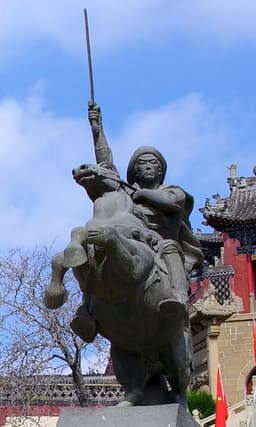
Li Zicheng
Revolutionary · Modern
43.5Total
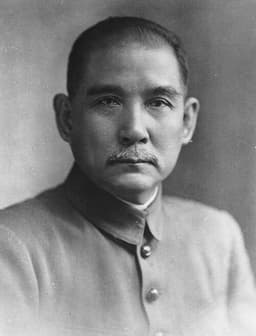
Sun Yat-sen
Revolutionary · Modern
52.5Total
Basic Information
Born
1606
1866
Died
1645
1925
Era
Modern
Modern
Nationality
China
China
Occupation
Revolutionary
Revolutionary
Civilization
Eastern
Eastern
Score Comparison
Military (10%)
50.0
45.0
Political (20%)
27.9
68.0
Influence (20%)
52.5
61.0
Legacy (20%)
44.2
58.0
Leadership (15%)
39.0
33.5
Strategy (15%)
43.3
30.3
TOTAL
43.5
52.5
Li Zicheng — Complete Timeline
1644 AD
Captured Beijing and Ended the Ming DynastyWar
Li Zicheng led his rebel army to capture Beijing. The Chongzhen Emperor committed suicide, ending the Ming dynasty. Li Zicheng proclaimed the Shun dynasty and briefly ruled from the Forbidden City before being defeated by Qing forces.
Ming-Qing TransitionRebellionBeijing
Impact: globaldestructive
Defeated at the Battle of Shanhai PassWar◆ Major
Li Zicheng's army was defeated by the combined forces of Wu Sangui and the Manchus at the Battle of Shanhai Pass. The defeat forced him to abandon Beijing and retreat westward, effectively ending his control over northern China.
Ming-Qing TransitionBattleDefeat
Impact: globaltragic
Proclaimed the Shun DynastyPolitical Action◆ Major
After capturing Beijing, Li Zicheng formally proclaimed the establishment of the Shun dynasty in Xi'an. He adopted the title of emperor and began implementing his own administrative policies, though his rule was short-lived.
Shun DynastyProclamationRebellion
Impact: nationalconstructive
1645 AD
Killed in Jiugong MountainWar◆ Major
Li Zicheng was killed by a local militia while fleeing through Jiugong Mountain in Hubei province. His death marked the end of the Shun dynasty and the collapse of his rebellion, though some accounts claim he survived and became a monk.
Shun DynastyDeathRebellion
Impact: nationaltragic
Sun Yat-sen — Complete Timeline
1894 AD
Founded the Revive China SocietyPolitical Action◆ Major
Sun Yat-sen founded the Revive China Society (Xingzhonghui) in Honolulu, the first modern revolutionary organization among overseas Chinese. The society aimed to overthrow the Qing dynasty and establish a republic, marking the beginning of organized revolutionary activity.
RevolutionOverseas ChineseRepublic
Impact: nationalconstructive
1911 AD
Led the Xinhai RevolutionPolitical Action
Sun Yat-sen's revolutionary activities culminated in the Wuchang Uprising of October 1911, which sparked the Xinhai Revolution. The uprising spread across China, leading to the abdication of the Qing emperor in 1912 and the end of 2,000 years of imperial rule.
RevolutionQing DynastyRepublic
Impact: globalconstructive
1912 AD
Proclaimed the Republic of ChinaPolitical Action
On January 1, 1912, Sun Yat-sen was inaugurated as the provisional president of the Republic of China in Nanjing. He proclaimed the establishment of the first republic in Asia, based on his Three Principles of the People: nationalism, democracy, and livelihood.
RepublicPresidencyThree Principles
Impact: globalconstructive
Resigned Presidency in Favor of Yuan ShikaiPolitical Action◆ Major
To secure the abdication of the Qing emperor and avoid civil war, Sun Yat-sen resigned the provisional presidency in February 1912 in favor of Yuan Shikai. This decision, while pragmatic, allowed Yuan to consolidate power and later attempt to restore the monarchy.
Power TransferYuan ShikaiCompromise
Impact: national
1919 AD
Reorganized the KuomintangPolitical Action◆ Major
Sun Yat-sen reorganized the Chinese Revolutionary Party into the Kuomintang (KMT) in 1919, with a more centralized structure. He later accepted Soviet aid and CCP members into the party under the policy of 'alliance with Russia and the Communists,' reshaping the revolutionary movement.
KuomintangSoviet AllianceCCP
Impact: nationalconstructive
Expert Analysis
Sun Yat-sen vs Li Zicheng
# The Revolutionary’s Two Faces: Sun Yat-sen and Li Zicheng
In the spring of 1644, a peasant rebel named Li Zicheng rode through the gates of Beijing, the Forbidden City sprawling before him like a prize finally within reach. The Ming emperor had hanged himself on Coal Hill, and China’s oldest dynasty had crumbled in a matter of weeks. Less than three centuries later, in January 1912, another revolutionary stood in Nanjing, proclaiming the birth of the Republic of China. Both men had shattered the old order. One would be dead within a year, his name a footnote to the Qing conquest. The other would be remembered as the father of modern China. What made the difference between a rebel who could only destroy and a revolutionary who could build?
Origins
Li Zicheng was born in 1606 into a world already starving. The Ming dynasty was collapsing under the weight of corruption, famine, and the Little Ice Age’s brutal winters. His family were poor farmers in Shaanxi province, scraping survival from dust. When a drought killed his father and left him orphaned, Li became a shepherd, then a postal courier, then a soldier. He grew up knowing hunger as a constant companion, and violence as the only language the powerful understood.
Sun Yat-sen, born in 1866, inhabited a different China. His village in Guangdong was poor, but it was also porous—open to the sea and the foreign ideas that sailed across it. His older brother had made money in Hawaii, and young Sun followed, receiving an English education in Honolulu and later in Hong Kong. He became a doctor, trained in Western medicine, and saw China’s weakness not as a failure of the harvest but as a failure of the state. Where Li Zicheng saw famine, Sun saw feudalism. One man’s horizon was the village; the other’s was the world.
Rise to Power
Li Zicheng’s ascent was forged in desperation. In 1630, when the Ming government abolished the postal service and threw him out of work, he joined a peasant rebellion. He was not its leader—not at first. He was a foot soldier in a surge of hungry men who swept across northern China like locusts. But Li had a talent for survival. When other rebel leaders were killed or captured, he gathered their remnants. By 1643, he had proclaimed himself the “Dashing King” and controlled all of Shaanxi. His army was not an ideology; it was a tide.
Sun Yat-sen’s path was painstakingly political. In 1894, he founded the Revive China Society in Honolulu, the first modern revolutionary organization among overseas Chinese. His methods were not mass uprisings but secret societies, foreign fundraising, and pamphlets. He attempted an armed revolt in 1895 that failed, forcing him into exile. For sixteen years, he traveled the world—London, Tokyo, Singapore—building networks and refining his ideas. His revolution was not a flood but a slow burn.
Leadership & Governance
Li Zicheng’s brief rule in Beijing revealed his limits. After capturing the capital in April 1644, he declared the Shun dynasty and issued decrees promising land redistribution and tax relief. But he had no administrative machinery to implement them. His soldiers, accustomed to plunder, continued looting. He tortured Ming officials for their wealth, alienating the very elites he needed to govern. His strategy was military, not political: he thought victory meant conquest, not consolidation.
Sun Yat-sen understood that revolution required institutions. His Three Principles of the People—nationalism, democracy, and livelihood—were not slogans but a framework for rebuilding China. When he became provisional president in 1912, he immediately established a provisional government and drafted a constitution. But his political wisdom was matched by his military weakness. To secure the Qing emperor’s abdication and avoid civil war, he resigned the presidency in favor of Yuan Shikai, a powerful general. It was a strategic surrender: Sun chose unity over power.
Triumph & Tragedy
Li Zicheng’s greatest triumph was also his undoing. When he captured Beijing, he believed he had won the Mandate of Heaven. But he had not reckoned with Wu Sangui, the Ming general guarding the Great Wall. When Li seized Wu’s concubine and family, Wu defected to the Manchus. At the Battle of Shanhai Pass in May 1644, Li’s army was crushed by the combined Qing and Wu forces. He fled Beijing, his dynasty lasting barely six weeks. He was killed the following year by a local militia while hiding in Jiugong Mountain—a peasant death for a peasant king.
Sun Yat-sen’s tragedy was different. He spent his final decade watching his republic fragment into warlord fiefdoms. He reorganized the Kuomintang in 1919, sought Soviet aid, and even allied with the fledgling Communist Party. But he died of liver cancer in 1925, never seeing a unified China. His last words were reportedly: “Peace, struggle, save China.” He had given everything to a nation that would not be born in his lifetime.
Character & Destiny
Li Zicheng was a man of instinct, not ideology. He could inspire loyalty in battle but could not build trust in peace. His cruelty toward Ming officials and his inability to control his own army reflected a deeper flaw: he saw power as personal, not institutional. He believed that taking the throne was the end, not the beginning.
Sun Yat-sen was a man of ideas, not armies. He was often called a “dreamer” by his contemporaries, and there was truth in it. He failed more revolutions than he succeeded. But his failures were fertile. Every exile, every lost battle, every compromise refined his vision. He understood that a revolution without a philosophy is just a riot.
Legacy
Li Zicheng is remembered as a cautionary tale. In Chinese historiography, he is the rebel who could not rule—a symbol of the chaos that follows when the peasantry rises but the scholar-officials flee. His name appears in textbooks as a lesson in the limits of military power. His total score of 54.9 reflects this: high in influence (74.3) and legacy (62.0), but low in leadership (33.8) and political skill (40.3).
Sun Yat-sen is remembered as the father of modern China. His total score of 70.6 is anchored by political acumen (80.0) and influence (77.6). Both the Kuomintang in Taiwan and the Communist Party on the mainland claim his mantle. His Three Principles of the People remain the ideological foundation of the Republic of China, and his portrait still hangs in Tiananmen Square. He was the revolutionary who failed in his own lifetime but succeeded in history.
Conclusion
Li Zicheng and Sun Yat-sen both faced a China in crisis, but they answered with different tools. One reached for a sword; the other reached for a book. One saw enemies to destroy; the other saw a nation to build. Their fates were not written by destiny but by the depth of their vision. The peasant rebel could tear down a dynasty, but only the doctor-philosopher could imagine what might rise in its place. In the end, Li Zicheng taught China what it costs to revolt without a plan. Sun Yat-sen taught it what it costs to dream without an army. The difference between them is the difference between a fire and a foundation.
Rankings
🥇
Sun Yat-senLeader
Mil: 45.0Pol: 68.0Inf: 61.0
52.5
🥈
Li Zicheng
Mil: 50.0Pol: 27.9Inf: 52.5
43.5
+9.0 behind
How This Comparison Works
Algorithm
Each figure is scored on 6 dimensions (0—100 scale) based on structured historical data: Military (10%), Political (20%), Influence (20%), Legacy (20%), Leadership (15%), Strategy (15%). The weighted total produces the final ranking.
Data Sources
Scores are computed from structured sub-indicators in the database. Scale factors adjust for era (Ancient ×0.85, Modern ×1.0) and civilization size (Eastern ×1.05, Other ×0.80) to account for differences in population and military scale.
Maximum 3 Figures
Comparisons are limited to 2—3 figures to ensure readability and statistical meaningfulness.
Error Margins
±5 points per dimension — Sub-scores are derived from historical records with inherent uncertainty. Two figures within 5 points on a dimension should be considered roughly equivalent in that area.
Total Score Accuracy
±3 points overall — The weighted combination of 6 dimensions produces a total score with approximately ±3 points of uncertainty. Differences of less than 3 points are not statistically significant— the figures are effectively tied.
Known Limitations
- Historical records are incomplete and uneven across civilizations
- Figures from oral-tradition societies may be underrepresented
- Occupation labels can misclassify multi-role figures
- Scores measure capability and impact, not moral character
- Quantitative scoring is a comparison tool, not absolute truth
Capability Radar
Military (10%) — Battles & Warfare
Battles
55
15
Win Rate
60
10
Expansion
65
5
Political (20%) — Governance & Reform
Reform
15
85
Diplomacy
20
60
Economy
10
20
Influence (20%) — Cultural & Global Reach
Cultural
40
70
Global
35
65
Legacy (20%) — Historical Impact
Historical
55
80
Longevity
30
75
Leadership (15%) — Power & Stability
Tenure
20
30
Stability
5
15
Strategy (15%) — Tactics & Innovation
Strategy
55
20
Tactics
50
10
Reform
30
40
Similar Comparisons
Comments & Discussion
Peasant Wrecker6/16/2026
Li Zicheng was nothing but a destruction addict. He took Beijing in weeks, sure, but his army's looting and corruption turned the capital into a cesspool in months. The guy couldn't even hold power for a year—his "Dashun" dynasty died before it started. Sun Yat-sen, despite all his failures, at least proposed a coherent plan with the Three Principles. Li just burned down the house without building a shed. A rebel, not a revolutionary.
清算先驱6/16/2026
孙中山至少算个有理想的革命家,李自成就是莽夫抢劫。1644年李自成进北京后,立马纵容部下拷打明朝官员勒索钱财,连吴三桂的家属都不放过,直接逼反了吴三桂引清兵入关。历史证明,只会分赃没眼界的暴动,再怎么轰轰烈烈也活不过一年。孙中山多次失败但始终有战略,这才叫革命。
Skeptic Samurai6/16/2026
You’re all oversimplifying it. Calling Li Zicheng a "destroyer" ignores that he abolished eunuch power and cut taxes for peasants in the short time he ruled. Sure, his regime failed, but Sun Yat-sen's republic was a paper tiger too—warlords ignored it, and he couldn't even control his own party. The real difference? Luck and timing. Li faced the Manchus' full force; Sun had foreign exile to survive. Both were rebels, not saints.
数据拆解者6/16/2026
别扯什么理想主义骗人了。孙中山的革命成功了吗?辛亥革命后,他只在位44天就让位给袁世凯了,民国实际就是军阀割据。再看李自成,他的大顺军进京后迅速腐化,但崇祯朝腐败积累的粮食、银两被他分发赈济,这是有记录的历史。胜负不是靠浪漫事迹,是看谁挺得过大环境的摧残。两人都是泡沫英雄。
Classical Scholar6/16/2026
Li Zicheng's tragedy is echoed in every failed peasant rebellion since Chen Sheng. He lacked what Sun Yat-sen understood: legitimacy beyond violence. In classical Chinese thought, a ruler must possess both "de" (virtue) and "tian ming" (mandate). Li's looting showed he had neither. Sun, despite his failures, cultivated intellectual and international support—he quoted Mencius to peasants! The Mandate of Heaven requires not just conquering, but governing with moral authority. Li was a bandit; Sun
叛逆史评人6/16/2026
你们全在洗白!孙中山就是被捧高的意识形态工具。他流亡海外搞起义,靠的是华侨捐款和日本支持,跟同胞李自成拿命拼的完全不是一回事。李自成是真正的草根英雄,从放羊娃到推翻明朝只用了十年