Loading...
Li Zicheng vs Shamil Basayev
Li Zicheng leads by 0.4 pts · 2 figures compared
…
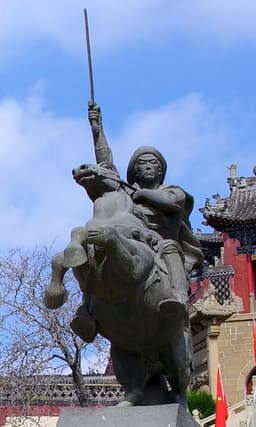
Li Zicheng
Revolutionary · Modern
43.5Total
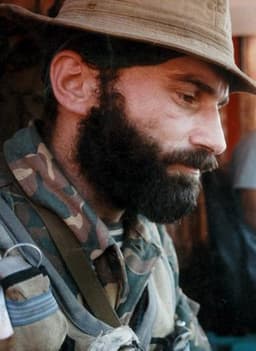
Shamil Basayev
Revolutionary · Modern
43.1Total
Basic Information
Born
1606
1965
Died
1645
—
Era
Modern
Modern
Nationality
China
Chechnya
Occupation
Revolutionary
Revolutionary
Civilization
Eastern
Western
Score Comparison
Military (10%)
50.0
40.0
Political (20%)
27.9
35.0
Influence (20%)
52.5
45.5
Legacy (20%)
44.2
35.0
Leadership (15%)
39.0
57.1
Strategy (15%)
43.3
51.7
TOTAL
43.5
43.1
Li Zicheng — Complete Timeline
1644 AD
Captured Beijing and Ended the Ming DynastyWar
Li Zicheng led his rebel army to capture Beijing. The Chongzhen Emperor committed suicide, ending the Ming dynasty. Li Zicheng proclaimed the Shun dynasty and briefly ruled from the Forbidden City before being defeated by Qing forces.
Ming-Qing TransitionRebellionBeijing
Impact: globaldestructive
Defeated at the Battle of Shanhai PassWar◆ Major
Li Zicheng's army was defeated by the combined forces of Wu Sangui and the Manchus at the Battle of Shanhai Pass. The defeat forced him to abandon Beijing and retreat westward, effectively ending his control over northern China.
Ming-Qing TransitionBattleDefeat
Impact: globaltragic
Proclaimed the Shun DynastyPolitical Action◆ Major
After capturing Beijing, Li Zicheng formally proclaimed the establishment of the Shun dynasty in Xi'an. He adopted the title of emperor and began implementing his own administrative policies, though his rule was short-lived.
Shun DynastyProclamationRebellion
Impact: nationalconstructive
1645 AD
Killed in Jiugong MountainWar◆ Major
Li Zicheng was killed by a local militia while fleeing through Jiugong Mountain in Hubei province. His death marked the end of the Shun dynasty and the collapse of his rebellion, though some accounts claim he survived and became a monk.
Shun DynastyDeathRebellion
Impact: nationaltragic
Shamil Basayev — Complete Timeline
1995 AD
Budyonnovsk Hospital Hostage CrisisWar◆ Major
Basayev led a raid on the Russian town of Budyonnovsk, taking over 1,000 hostages in a hospital. The crisis ended with a negotiated settlement that allowed him to return to Chechnya. This attack demonstrated Chechen reach into Russia.
Hostage CrisisTerrorismChechnya
Impact: nationaldestructive
1999 AD
Invasion of DagestanWar
Basayev led Chechen and Islamist fighters into Dagestan to support local rebels. This invasion triggered the Second Chechen War as Russia responded with a full-scale military campaign. The invasion failed to gain local support.
DagestanChechnyaInvasion
Impact: regionaldestructive
2002 AD
Moscow Theater Hostage CrisisWar◆ Major
Basayev orchestrated the Moscow theater hostage crisis, where Chechen militants took 850 people hostage. Russian forces ended the siege with gas, killing 130 hostages. The attack increased international condemnation of Chechen rebels.
Hostage CrisisTerrorismMoscow
Impact: nationaldestructive
2004 AD
Beslan School SiegeWar◆ Major
Basayev planned the Beslan school siege, where militants took over 1,100 people hostage. The siege ended in a bloody assault, resulting in 334 deaths, mostly children. This attack was widely condemned globally.
Hostage CrisisTerrorismBeslan
Impact: globaltragic
2006 AD
Killed by Russian ExplosivesWar◆ Major
Basayev was killed in Ingushetia when a truck loaded with explosives detonated. Russian intelligence claimed responsibility. His death removed the most prominent Chechen rebel commander.
AssassinationChechnyaRussia
Impact: regional
Expert Analysis
Li Zicheng vs Shamil Basayev
# The Rebel's Crown: Two Men Who Shook Empires and Lost Everything
In the spring of 1644, a peasant-turned-warlord named Li Zicheng rode through the gates of Beijing, the Forbidden City sprawling before him like a dream made stone. Three hundred and sixty years later, on a September morning in 2004, a Chechen commander named Shamil Basayev watched from a hillside as his men seized a school in Beslan, turning a place of children's laughter into a fortress of terror. Both men sought to topple giants. Both believed they were writing history with blood and fire. And both ended their lives hunted, killed not by the armies they had defied but by the margins of a world that had no place for them. What drives a man to gamble everything on rebellion? And why do some rebels build dynasties while others leave only ashes?
Origins
Li Zicheng was born in 1606 into a world already cracking apart. The Ming dynasty, once the most sophisticated empire on earth, was rotting from within—corrupt officials, famine-scorched provinces, and a military that could no longer feed itself. Li grew up in Shaanxi province, a region ravaged by drought and locust plagues. He worked as a post-station courier, then as a shepherd, then as a bandit. He had no education, no noble blood, no patron. What he had was a body hardened by hunger and a mind sharpened by desperation.
Shamil Basayev was born in 1965 in the village of Dyshne-Vedeno, high in the Caucasus mountains of Chechnya. His people had fought Russians for two centuries—Catherine the Great's generals, Stalin's secret police, and now the crumbling Soviet empire. Basayev grew up hearing stories of resistance, of ancestors who died rather than submit. He studied engineering in Moscow, played professional soccer, and for a time seemed destined for a normal life. But when the Soviet Union collapsed in 1991, Chechnya declared independence, and Basayev discovered that the only trade his homeland truly valued was war.
Two men, two centuries, two empires in decay. Li Zicheng rose from the dust of a peasant famine; Basayev rose from the smoke of a nationalist rebellion. Their origins shaped not only their ambitions but their fatal blind spots.
Rise to Power
Li Zicheng's path to power was a slow burn through a tinderbox. In the 1630s, as Ming garrisons mutinied over unpaid wages and peasants ate bark to survive, Li joined rebel armies that swelled like floodwaters. He distinguished himself not by brilliance but by resilience—he was wounded, captured, and escaped; defeated, scattered, and regathered. By 1643, he controlled much of central China, having promised peasants land and tax relief. In 1644, he proclaimed the Shun dynasty in Xi'an, then marched on Beijing. The Ming emperor, isolated and hopeless, hanged himself on a hill behind the Forbidden City. Li Zicheng, at age 38, was master of China.
Basayev's rise was faster and more violent. In 1995, he led a raid on the Russian town of Budyonnovsk, seizing a hospital with over 1,000 hostages. The siege ended in a negotiated withdrawal, but Basayev had proven that a handful of Chechen fighters could paralyze the Russian state. He became a folk hero. In 1999, he invaded neighboring Dagestan, hoping to spark an Islamist uprising—a miscalculation that triggered the Second Chechen War and brought the full fury of the Russian military down on his people. Yet even in defeat, he reinvented himself, transforming from a nationalist commander into a global jihadist.
Li Zicheng captured a capital; Basayev captured headlines. One inherited an empire's infrastructure; the other inherited only a cause.
Leadership & Governance
As a ruler, Li Zicheng was catastrophic. His army, once disciplined in the field, turned into a mob in Beijing. His soldiers tortured Ming officials for hidden gold, raped women, and alienated the very elites who might have accepted him. Li himself seemed paralyzed by victory—he spent his days in the palace, surrounded by advisors who told him only what he wanted to hear. He had no administrative experience, no civil service, no plan for feeding a city of a million people. Within weeks, Beijing was starving, and the Ming general Wu Sangui, stationed at the Great Wall, refused to surrender.
Basayev never had to govern. He was a commander of shadows, not a builder of states. His leadership was tactical, not strategic—he could plan a hostage crisis with chilling precision but could not forge a political movement that outlasted him. His 2002 Moscow theater siege, where 850 people were taken hostage, ended in a gas attack that killed over 130 hostages. The 2004 Beslan school siege, which he planned, ended with over 330 dead, half of them children. These were not battles; they were atrocities, designed to terrorize but incapable of winning a war.
Li Zicheng failed because he could not transition from rebel to ruler. Basayev failed because he never tried.
Triumph & Tragedy
Li Zicheng's greatest moment was also his undoing. In April 1644, he stood in the Forbidden City, the first peasant in Chinese history to sit on the Dragon Throne. But his triumph lasted only 42 days. At the Battle of Shanhai Pass, the combined forces of Wu Sangui and the Manchu army crushed his exhausted troops. Li fled Beijing, his dynasty evaporating like morning mist. He was killed a year later by a local militia in Jiugong Mountain, Hubei—not by the Manchu emperor, but by peasants defending their village.
Basayev's greatest moment was his 1995 Budyonnovsk raid, which forced the Russian government to negotiate and made him a legend. But every subsequent operation deepened his isolation. By 2006, he was a fugitive in Ingushetia, his movement fractured, his homeland under Russian control. He died when a truck loaded with explosives detonated—either a Russian intelligence operation or an accident. No monument marks his grave.
Character & Destiny
Li Zicheng was a man of immense physical courage but fatal political naivety. He trusted former Ming officials who betrayed him, alienated the scholar-gentry who could have legitimized his rule, and failed to see that the Manchus were not another rebel band but a conquering empire. His personality—earthy, suspicious, impulsive—was suited for rebellion, not governance.
Basayev was driven by a messianic certainty that violence would set his people free. He was charismatic, ruthless, and utterly indifferent to civilian death—whether Russian or Chechen. His tragedy was that he could only destroy, never build. The Chechen independence movement he championed was crushed, and his jihadist turn ensured that no major power would ever support his cause.
Both men were shaped by their times, but their times also limited them. Li Zicheng could not imagine a China without an emperor; Basayev could not imagine a Chechnya without war.
Legacy
Li Zicheng is remembered in China as a complex figure—a rebel who toppled a dynasty but failed to replace it, a folk hero in some stories and a cautionary tale in others. The Qing dynasty, which conquered China after his fall, used his example to warn against rebellion, while later revolutionaries saw him as a precursor to their own struggles.
Basayev is remembered as a terrorist. No Chechen government, even the separatist one, claims him. In Russia, his name is synonymous with the worst horrors of the Chechen wars. In the West, he is a footnote in the history of modern terrorism.
Conclusion
The differences between Li Zicheng and Shamil Basayev are not merely personal; they are historical. Li Zicheng fought within a Chinese tradition of dynastic rebellion, where the goal was always to replace one emperor with another. Basayev fought in a world of nation-states and global media, where the goal was often to destroy the existing order without a clear vision of what should replace it. One failed because he could not govern; the other failed because he could not stop fighting. Both remind us that the hardest victory is not conquering an enemy—it is building something that lasts after the guns fall silent.
Rankings
🥇
Li ZichengLeader
Mil: 50.0Pol: 27.9Inf: 52.5
43.5
🥈
Shamil Basayev
Mil: 40.0Pol: 35.0Inf: 45.5
43.1
+0.4 behind
How This Comparison Works
Algorithm
Each figure is scored on 6 dimensions (0—100 scale) based on structured historical data: Military (10%), Political (20%), Influence (20%), Legacy (20%), Leadership (15%), Strategy (15%). The weighted total produces the final ranking.
Data Sources
Scores are computed from structured sub-indicators in the database. Scale factors adjust for era (Ancient ×0.85, Modern ×1.0) and civilization size (Eastern ×1.05, Other ×0.80) to account for differences in population and military scale.
Maximum 3 Figures
Comparisons are limited to 2—3 figures to ensure readability and statistical meaningfulness.
Error Margins
±5 points per dimension — Sub-scores are derived from historical records with inherent uncertainty. Two figures within 5 points on a dimension should be considered roughly equivalent in that area.
Total Score Accuracy
±3 points overall — The weighted combination of 6 dimensions produces a total score with approximately ±3 points of uncertainty. Differences of less than 3 points are not statistically significant— the figures are effectively tied.
Known Limitations
- Historical records are incomplete and uneven across civilizations
- Figures from oral-tradition societies may be underrepresented
- Occupation labels can misclassify multi-role figures
- Scores measure capability and impact, not moral character
- Quantitative scoring is a comparison tool, not absolute truth
Capability Radar
Military (10%) — Battles & Warfare
Battles
55
45
Win Rate
60
40
Expansion
65
15
Political (20%) — Governance & Reform
Reform
15
5
Diplomacy
20
10
Economy
10
5
Influence (20%) — Cultural & Global Reach
Cultural
40
20
Global
35
20
Legacy (20%) — Historical Impact
Historical
55
25
Longevity
30
15
Leadership (15%) — Power & Stability
Tenure
20
10
Stability
5
5
Strategy (15%) — Tactics & Innovation
Strategy
55
35
Tactics
50
55
Reform
30
20
Similar Comparisons
Comments & Discussion
CrimsonCartographer6/16/2026
Li Zicheng was a classic peasant rebel who accidentally stumbled into power; Basayev was a calculating jihadist who weaponized terror. Comparing them is like comparing a flood to a bomb. Li never targeted civilians as a strategy—his armies plundered because they were starving, not because they thought child hostages could bargain for a caliphate. One died drunk in a mud pit. The other died in an explosion he probably orchestrated himself. Different eras, different moral universes.
暴风评史官6/16/2026
李自成是个有天命观念的造反者,他知道打下北京是改朝换代;巴萨耶夫呢?他炸学校、劫人质,根本就没想过治理。李自成失败是因为进了紫禁城就以为赢了,连军饷都不发。巴萨耶夫的失败更彻底——他只想毁掉别人的世界,没能力建自己的。一个是破产的冒牌皇帝,一个是纯破坏的恐怖分子,别放一起比。
DataDefender6/16/2026
Let's talk numbers. Li Zicheng's army peaked at maybe 600,000 starving men who surrendered as soon as the Qing offered food or amnesty. Basayev had maybe 300 fighters when he planned Beslan. One commanded a horde and lost it in months; the other led a cult and made headlines for a decade. Statistically, Li's failure was swift and complete—his "empire" lasted 42 days. Basayev's terror network survived him. Which "shook" more? The scale is incomparable.
墨守陈规6/16/2026
历史学家的毛病就是把不同时代的人硬扯来比较。李自成是饥饿驱动的流民领袖,他的命运写在明朝赋税和崇祯决策里。巴萨耶夫呢?后苏联、车臣战争、圣战主义——这是完全不同的历史动力。你要真想比,拿李自成跟黄巢比更合适:同是唐末/明末,同是农民军,同是失败收场。别用现代那套道德判断去套古代人,这不公平。