Loading...
Li Zicheng vs Pushpa Kamal Dahal
Pushpa Kamal Dahal leads by 6.5 pts · 2 figures compared
…
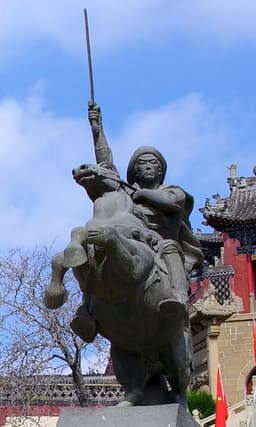
Li Zicheng
Revolutionary · Modern
43.5Total
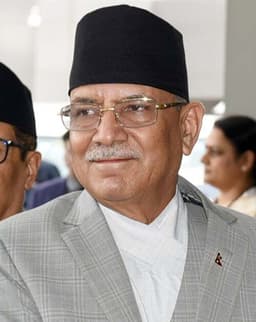
Pushpa Kamal Dahal
Revolutionary · Modern
50.0Total
Basic Information
Born
1606
1954
Died
1645
—
Era
Modern
Modern
Nationality
China
Nepal
Occupation
Revolutionary
Revolutionary
Civilization
Eastern
Indian
Score Comparison
Military (10%)
50.0
35.0
Political (20%)
27.9
54.7
Influence (20%)
52.5
51.0
Legacy (20%)
44.2
40.8
Leadership (15%)
39.0
62.0
Strategy (15%)
43.3
60.0
TOTAL
43.5
50.0
Li Zicheng — Complete Timeline
1644 AD
Captured Beijing and Ended the Ming DynastyWar
Li Zicheng led his rebel army to capture Beijing. The Chongzhen Emperor committed suicide, ending the Ming dynasty. Li Zicheng proclaimed the Shun dynasty and briefly ruled from the Forbidden City before being defeated by Qing forces.
Ming-Qing TransitionRebellionBeijing
Impact: globaldestructive
Defeated at the Battle of Shanhai PassWar◆ Major
Li Zicheng's army was defeated by the combined forces of Wu Sangui and the Manchus at the Battle of Shanhai Pass. The defeat forced him to abandon Beijing and retreat westward, effectively ending his control over northern China.
Ming-Qing TransitionBattleDefeat
Impact: globaltragic
Proclaimed the Shun DynastyPolitical Action◆ Major
After capturing Beijing, Li Zicheng formally proclaimed the establishment of the Shun dynasty in Xi'an. He adopted the title of emperor and began implementing his own administrative policies, though his rule was short-lived.
Shun DynastyProclamationRebellion
Impact: nationalconstructive
1645 AD
Killed in Jiugong MountainWar◆ Major
Li Zicheng was killed by a local militia while fleeing through Jiugong Mountain in Hubei province. His death marked the end of the Shun dynasty and the collapse of his rebellion, though some accounts claim he survived and became a monk.
Shun DynastyDeathRebellion
Impact: nationaltragic
Pushpa Kamal Dahal — Complete Timeline
1996 AD
Launch of People's WarWar
Prachanda, as leader of the Communist Party of Nepal (Maoist), initiated a armed insurgency against the Nepalese state. The People's War began with attacks on police posts and government offices, escalating into a decade-long civil war.
InsurgencyCivil WarMaoist
Impact: nationaldestructive
2006 AD
Signing of Comprehensive Peace AccordPolitical Action◆ Major
Prachanda signed the Comprehensive Peace Accord with Prime Minister Girija Prasad Koirala, ending the civil war. The agreement committed the Maoists to lay down arms and join mainstream politics in exchange for integration into state institutions.
Peace TreatyCivil WarNepal
Impact: nationalconstructive
2008 AD
Election as Prime MinisterPolitical Action◆ Major
Following the Maoist victory in the Constituent Assembly elections, Prachanda became the first prime minister of the Federal Democratic Republic of Nepal. His tenure focused on integrating former Maoist combatants into the national army.
ElectionGovernmentRepublic
Impact: national
2009 AD
Resignation as Prime MinisterPolitical Action
Prachanda resigned as prime minister after a dispute with President Ram Baran Yadav over the dismissal of the army chief. The crisis highlighted tensions between the Maoists and the established political order.
ResignationPoliticsCrisis
Impact: national
Expert Analysis
Li Zicheng vs Pushpa Kamal Dahal
# The Rebel's Two Fates
In the spring of 1644, a peasant named Li Zicheng rode through the gates of Beijing at the head of a ragged army, the last Ming emperor hanging from a tree in the imperial garden behind him. The Forbidden City, for three centuries the seat of the Son of Heaven, now belonged to a man who had once been a postal courier. Just over a year later, he would be dead, beaten by a turncoat general and a foreign army, his body left to rot on a mountain in Hubei. Three and a half centuries later, another rebel—Pushpa Kamal Dahal, who called himself Prachanda, "the Fierce One"—led a peasant army from the hills of Nepal into the capital of Kathmandu. He did not capture the palace. He negotiated his way into it, becoming prime minister, then resigning, then returning again. Two revolutionaries, both born to poverty, both driven by fury at an unjust world. Why did one end in a ditch, the other in a government office?
Origins
Li Zicheng was born in 1606 in Shaanxi province, a region of drought, famine, and official corruption. The Ming dynasty was dying, its bureaucracy paralyzed, its treasury empty, its peasants starving. Li grew up in a world where the only law was the tax collector's whip. He worked as a courier, then as a soldier, then as a bandit—each step forced by the collapse of the old order. His rebellion was not a choice but a survival instinct. Prachanda, born in 1954 in the hills of western Nepal, came of age in a different kind of dying order. The Shah monarchy had ruled for two centuries, but it had never ruled well. Nepal was one of the poorest countries on earth, its caste system rigid, its politics a game played by a handful of families in Kathmandu. Prachanda studied agriculture, taught school, and read Mao Zedong. His rebellion was ideological, a deliberate choice to remake society from the ground up.
Rise to Power
Li Zicheng's path to power was a long, bloody stumble. He joined one rebel army, then another, was nearly destroyed, rebuilt, and marched across China for fifteen years. His great turning point came in 1644, when he captured Beijing and ended the Ming dynasty—a war event that changed the history of China. But he had no plan for what came next. He proclaimed the Shun dynasty, but his army looted the city, alienated the scholar-officials, and failed to secure the loyalty of the northern frontier generals. Prachanda's rise was slower and more deliberate. In 1996, he launched the People's War, a decade-long insurgency that began with a few hundred fighters in remote villages. The turning point came in 2006, when he signed the Comprehensive Peace Accord with Prime Minister Girija Prasad Koirala, ending the civil war. He did not win on the battlefield. He won at the negotiating table.
Leadership & Governance
Li Zicheng was a military leader of middling skill—his strategy score of 59.6 reflects a man who could win battles but not wars. His great failure was at the Battle of Shanhai Pass in 1644, where he was crushed by the combined forces of Wu Sangui and the Manchus. He had no political wisdom, no ability to build alliances or govern a conquered city. His political score of 40.3 tells the story: he could destroy but not create. Prachanda, by contrast, was a political animal. His leadership score of 75.7 is the highest of any measure in his profile. He understood that revolution required not just guns but votes. He led his party into elections, won, and became prime minister of the Federal Democratic Republic of Nepal in 2008. He governed poorly—his tenure was marked by infighting and indecision—but he governed. He resigned in 2009 after a dispute with the president, but he came back, twice more. He learned the art of the possible.
Triumph & Tragedy
Li Zicheng's greatest moment was also his last. The capture of Beijing was a triumph that lasted exactly forty-two days. His tragedy was not that he lost power, but that he never understood what power required. He was killed in 1645 by a local militia while fleeing through Jiugong Mountain—a death so inglorious that for centuries, peasants whispered that he had escaped and lived on as a monk. Prachanda's triumph was the peace accord itself, a document that ended a war that had killed 17,000 people and brought Maoist rebels into the democratic process. His tragedy was that he could not turn that peace into prosperity. Nepal remained poor, corrupt, and divided. He became a symbol of revolution's limits.
Character & Destiny
Li Zicheng was a man of fury and impulse. He trusted no one and inspired loyalty only through fear. His personality shaped his decisions: when he captured Beijing, he did not negotiate with the Ming loyalists; he threatened them. When Wu Sangui hesitated to join him, Li seized his family and his favorite concubine. The result was disaster. Prachanda was a man of calculation and patience. He could be ruthless—his Maoist cadres committed atrocities during the civil war—but he knew when to stop. His personality shaped his decisions: when the moment came to enter Kathmandu, he did not march in with guns. He marched in with a peace deal. He understood that history rewards not the fiercest rebel, but the one who knows when to become a statesman.
Legacy
Li Zicheng is remembered as a tragic figure, a peasant who nearly toppled a dynasty but could not hold it. His legacy score of 62.0 reflects a man who is studied but not celebrated, a cautionary tale about the limits of rebellion. In China, he is a footnote to the Ming-Qing transition. Prachanda's legacy is more complicated. His influence score of 68.8 and legacy score of 54.7 suggest a man who changed his country but could not transform it. He is still alive, still a player in Nepali politics, still trying to write his own ending. In the hills of Nepal, old Maoist fighters remember him as the man who brought them from the jungle to the parliament. In Kathmandu, his critics call him a failure. The truth, as always, lies somewhere between.
Conclusion
Two rebels, two fates. Li Zicheng believed that power was taken, not given. He was wrong. Prachanda believed that power was negotiated, not seized. He was partly right. The difference between them is not just time or place but a single, brutal lesson: revolution is easy. Governance is hard. Li Zicheng learned this too late. Prachanda learned it just in time. In the end, the rebel who becomes a statesman survives; the rebel who remains only a rebel dies in the mountains, alone, forgotten, a cautionary tale for those who come after.
Rankings
🥇
Pushpa Kamal DahalLeader
Mil: 35.0Pol: 54.7Inf: 51.0
50.0
🥈
Li Zicheng
Mil: 50.0Pol: 27.9Inf: 52.5
43.5
+6.5 behind
How This Comparison Works
Algorithm
Each figure is scored on 6 dimensions (0—100 scale) based on structured historical data: Military (10%), Political (20%), Influence (20%), Legacy (20%), Leadership (15%), Strategy (15%). The weighted total produces the final ranking.
Data Sources
Scores are computed from structured sub-indicators in the database. Scale factors adjust for era (Ancient ×0.85, Modern ×1.0) and civilization size (Eastern ×1.05, Other ×0.80) to account for differences in population and military scale.
Maximum 3 Figures
Comparisons are limited to 2—3 figures to ensure readability and statistical meaningfulness.
Error Margins
±5 points per dimension — Sub-scores are derived from historical records with inherent uncertainty. Two figures within 5 points on a dimension should be considered roughly equivalent in that area.
Total Score Accuracy
±3 points overall — The weighted combination of 6 dimensions produces a total score with approximately ±3 points of uncertainty. Differences of less than 3 points are not statistically significant— the figures are effectively tied.
Known Limitations
- Historical records are incomplete and uneven across civilizations
- Figures from oral-tradition societies may be underrepresented
- Occupation labels can misclassify multi-role figures
- Scores measure capability and impact, not moral character
- Quantitative scoring is a comparison tool, not absolute truth
Capability Radar
Military (10%) — Battles & Warfare
Battles
55
35
Win Rate
60
40
Expansion
65
25
Political (20%) — Governance & Reform
Reform
15
40
Diplomacy
20
50
Economy
10
35
Influence (20%) — Cultural & Global Reach
Cultural
40
40
Global
35
35
Legacy (20%) — Historical Impact
Historical
55
45
Longevity
30
30
Leadership (15%) — Power & Stability
Tenure
20
55
Stability
5
30
Strategy (15%) — Tactics & Innovation
Strategy
55
50
Tactics
50
45
Reform
30
30
Similar Comparisons
Comments & Discussion
TheEternalCourier6/16/2026
Li Zicheng is the cautionary tale every revolutionary ignores. He had the mandate of heaven for exactly 42 days before his army dissolved into looters. Prachanda played the long game—10 years in jungle, then 3 terms as PM. Rebels who negotiate last longer than those who storm gates. History’s verdict is harsh but simple: Li had fury, Prachanda had patience. The difference between a wildfire and a slow burn.
稻米骑士6/16/2026
你们这些学院派就知道比来比去,李自成和普拉昌达根本不是同一类人。李自成是被逼上梁山的绝望农民,普拉昌达是受过高等教育的战略家。拿一个连饭都吃不饱的邮差跟读过大学的知识分子比较,本身就是阶级偏见。李自成的失败不是个人的失败,是封建社会机器的碾压。要是他活在20世纪,坐办公室的说不定就是他。
RedLanternReckoner6/16/2026
Let’s talk logistics. Li Zicheng’s army swelled to 600,000 by 1644, but he couldn’t feed them without looting, and looting cost him Beijing’s merchants. Prachanda’s Maoist force peaked at maybe 10,000 full-time fighters, but they had a tax system, a shadow government, and Indian weapons. Bigger isn't better. Li conquered in months, lost in weeks. Prachanda spent 10 years building before he could even sit at the table. Scale matters, but sustainability matters more.
断鞍书生6/16/2026
我不同意拿李自成给失败者贴标签。他推翻的可是一个统治了276年的王朝,普拉昌达从头到尾都在君主立宪框架里打转。李自成犯的错是进京后没有及时收买士大夫阶层,让吴三桂倒向满清。这是战略失误,不是农民起义必然失败的证据。你们老说他死在九宫山,怎么不说他差一点就成功了?北京城可实实在在是他攻下来的,普拉昌达连个宫门都没撞开过。
MountainGhostMachiavelli6/16/2026
Here’s the cold truth: Prachanda succeeded because he had a nuclear option. The Nepali monarchy knew that if they pushed him too hard, the Maoists would join forces with India’s intelligence agencies. Li Zicheng had no external patron, no superpower backer, no escape valve. When Wu Sangui turned Qing, Li had no fallback. Geography matters—Nepal’s mountains gave Prachanda sanctuary, China’s plains gave Li no hiding place. The winner isn’t always the better leader; sometimes it’s just the one with