Loading...
Abd el-Krim vs Pushpa Kamal Dahal
Abd el-Krim leads by 11.8 pts · 2 figures compared
…
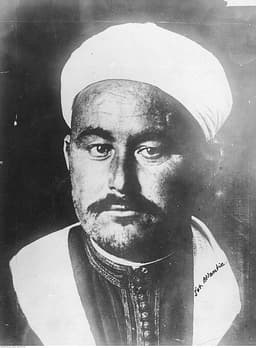
Abd el-Krim
Revolutionary · Modern
61.8Total
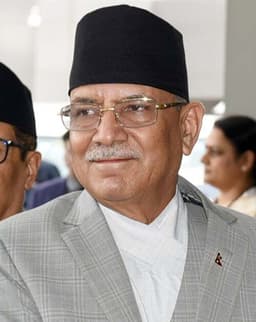
Pushpa Kamal Dahal
Revolutionary · Modern
50.0Total
Basic Information
Born
1882
1954
Died
1963
—
Era
Modern
Modern
Nationality
Morocco
Nepal
Occupation
Revolutionary
Revolutionary
Civilization
Middle Eastern
Indian
Score Comparison
Military (10%)
75.0
35.0
Political (20%)
72.0
54.7
Influence (20%)
59.0
51.0
Legacy (20%)
50.0
40.8
Leadership (15%)
72.0
62.0
Strategy (15%)
55.0
60.0
TOTAL
61.8
50.0
Abd el-Krim — Complete Timeline
1921 AD
Battle of AnnualWar
Abd el-Krim's Riffian forces decisively defeated a Spanish army at Annual in Spanish Morocco. The Spanish suffered thousands of casualties and lost vast amounts of equipment. This victory established Abd el-Krim as a major military leader and led to the proclamation of the Rif Republic.
Rif WarSpanish ColonialismBattle
Impact: regional
1923 AD
Proclamation of the Rif RepublicPolitical Action◆ Major
Abd el-Krim formally proclaimed the independent Rif Republic in northern Morocco. He established a government and administrative system, challenging Spanish and French colonial rule. The republic was not internationally recognized but functioned as a de facto state.
Rif RepublicIndependenceAnti-Colonialism
Impact: regionalconstructive
1925 AD
Rif War against FranceWar◆ Major
Abd el-Krim's forces attacked French positions in Morocco, expanding the conflict beyond Spanish territory. The French responded with a massive military campaign, using superior firepower and chemical weapons. This led to the eventual defeat of the Rif Republic.
Rif WarFrench ColonialismChemical Weapons
Impact: regional
1926 AD
Surrender and Exile to RéunionWar◆ Major
After a prolonged campaign, Abd el-Krim surrendered to French forces. He was exiled to the island of R
Rif WarExileDefeat
Impact: regionaltragic
1947 AD
Release and Move to EgyptPolitical Action
Abd el-Krim was released by the French and allowed to move to Egypt. He settled in Cairo, where he continued to advocate for North African independence and became a symbolic figure for anti-colonial movements.
ExileAnti-ColonialismSymbol
Impact: regionalconstructive
Pushpa Kamal Dahal — Complete Timeline
1996 AD
Launch of People's WarWar
Prachanda, as leader of the Communist Party of Nepal (Maoist), initiated a armed insurgency against the Nepalese state. The People's War began with attacks on police posts and government offices, escalating into a decade-long civil war.
InsurgencyCivil WarMaoist
Impact: nationaldestructive
2006 AD
Signing of Comprehensive Peace AccordPolitical Action◆ Major
Prachanda signed the Comprehensive Peace Accord with Prime Minister Girija Prasad Koirala, ending the civil war. The agreement committed the Maoists to lay down arms and join mainstream politics in exchange for integration into state institutions.
Peace TreatyCivil WarNepal
Impact: nationalconstructive
2008 AD
Election as Prime MinisterPolitical Action◆ Major
Following the Maoist victory in the Constituent Assembly elections, Prachanda became the first prime minister of the Federal Democratic Republic of Nepal. His tenure focused on integrating former Maoist combatants into the national army.
ElectionGovernmentRepublic
Impact: national
2009 AD
Resignation as Prime MinisterPolitical Action
Prachanda resigned as prime minister after a dispute with President Ram Baran Yadav over the dismissal of the army chief. The crisis highlighted tensions between the Maoists and the established political order.
ResignationPoliticsCrisis
Impact: national
Expert Analysis
Abd el-Krim vs Pushpa Kamal Dahal
# The Revolutionary’s Dilemma: Why Prachanda Joined the Government and Abd el-Krim Chose Exile
In the summer of 2006, Pushpa Kamal Dahal—known to the world as Prachanda—sat across a negotiating table from Nepal’s Prime Minister Girija Prasad Koirala in Kathmandu. The man who had spent a decade in the jungles, directing a guerrilla war that had killed over 13,000 people, was about to sign a peace accord. Eighty years earlier, on the other side of the world, another revolutionary leader faced a different choice. In the Rif Mountains of northern Morocco, Abd el-Krim watched French and Spanish forces close in on his republic. He chose to surrender, accepting exile rather than a negotiated settlement. Why did one revolutionary trade his rifle for a suit, while the other chose isolation?
Origins
Prachanda was born in 1954 in the hills of western Nepal, into a poor Brahmin family. His father was a landless farmer, and young Pushpa grew up watching the stark divide between Kathmandu’s feudal elite and the peasant majority. The 1950s and 1960s were a time of global revolutionary ferment—Mao’s China, Ho Chi Minh’s Vietnam, and the Naxalite uprising in India all shaped his political imagination. He joined the Communist Party as a student, and by the 1990s, he had risen through the ranks, absorbing the ideology that armed struggle was the only path to justice.
Abd el-Krim, born in 1882, came from a different world. His father was a qadi, a religious judge, in the Rif region of Morocco, then under Spanish colonial rule. Young Muhammad ibn Abd el-Krim al-Khattabi was educated in both Islamic law and Spanish schools, eventually working as a journalist and a judge. He witnessed Spain’s brutal pacification campaigns and the humiliation of Moroccan elites who collaborated with colonizers. His was a rebellion born not from abstract ideology but from the raw experience of occupation.
Rise to Power
Prachanda’s path to leadership was slow and organizational. In 1994, he became the general secretary of the Communist Party of Nepal (Maoist), and for two years, he prepared the ground for insurgency. On February 13, 1996, he launched the “People’s War” with a series of attacks on police posts and government offices. It was a calculated gamble: a small, poorly armed force taking on a monarchy backed by India. For a decade, Prachanda and his fighters lived in the shadow of death, moving through the hills, building a parallel government.
Abd el-Krim’s rise was more dramatic. In 1921, at the Battle of Annual, his Riffian forces annihilated a Spanish army of 20,000 men. It was one of the most devastating defeats a colonial power had ever suffered. Overnight, Abd el-Krim became the most feared guerrilla commander in Africa. He proclaimed the Rif Republic in 1923, establishing a government with a cabinet, a tax system, and a postal service. His military strategy was a masterclass in asymmetric warfare: hit-and-run attacks, tight discipline, and the use of rugged terrain.
Leadership & Governance
Both men were brilliant organizers, but their governance styles diverged sharply. Prachanda ruled his Maoist party with an iron fist, purging rivals and demanding absolute loyalty. Yet when he entered politics, he proved pragmatic, forming coalitions with former enemies. As prime minister in 2008, he pushed for land reform and federalism but struggled with the messy realities of parliamentary democracy. His leadership score of 75.7 reflects a man who could inspire fighters but found governing a divided nation far harder.
Abd el-Krim, with his leadership score of 86.5, was a more natural statesman. He created a functioning state in the Rif, with courts, schools, and a postal system. He banned the use of hashish and insisted on clean governance. Unlike Prachanda, who led a party, Abd el-Krim commanded a nation. His political score of 75.6 and strategy score of 72.0 show a leader who understood both war and administration.
Triumph & Tragedy
Prachanda’s greatest triumph was the 2006 Comprehensive Peace Accord. It ended a brutal civil war and brought the Maoists into mainstream politics. In 2008, he became prime minister, a victory unimaginable a decade earlier. But his tragedy came quickly: in 2009, he resigned after a dispute with the president over the dismissal of the army chief. It was a humiliating end to his first term, revealing the gap between revolutionary rhetoric and political reality.
Abd el-Krim’s triumph was the Battle of Annual, a victory that shook the Spanish Empire. His tragedy was the 1925 French intervention. When France joined Spain in a massive counteroffensive using chemical weapons, the Rif Republic was doomed. In 1926, Abd el-Krim surrendered, not to negotiate, but to end the suffering of his people. He was exiled to Réunion, a remote island in the Indian Ocean, where he lived in isolation for twenty-one years.
Character & Destiny
Prachanda was a survivor. He adapted to changing circumstances, shedding his guerrilla identity to become a politician. His personality was shaped by the Maoist belief that history moves through stages, and that revolutionaries must be flexible. Abd el-Krim was a man of principle. He refused to compromise with colonial powers, even when it meant exile. When the French released him in 1947, he chose to move to Egypt rather than return to Morocco under their terms. He died in Cairo in 1963, still advocating for North African liberation.
Legacy
Today, Prachanda remains a controversial figure in Nepal. His legacy score of 54.7 reflects a divided memory: some see him as a peacemaker who ended a war, others as a warlord who caused immense suffering. He has served as prime minister three times, each term shorter and less consequential than the last.
Abd el-Krim’s legacy score of 66.8 is more stable. He is remembered as a hero of anti-colonial resistance, an inspiration to figures like Ho Chi Minh and Che Guevara. The Rif Republic remains a symbol of what North African independence could have been.
Conclusion
Why did Prachanda join the government while Abd el-Krim chose exile? The answer lies in their eras and their ends. Prachanda lived in a time when revolutionaries could become prime ministers, when the global order tolerated—even encouraged—former guerrillas entering politics. Abd el-Krim faced a world where colonial powers offered no such path. He could surrender or die; there was no third option. In the end, both men made the choice that their circumstances demanded. Prachanda chose power; Abd el-Krim chose dignity. History, as always, has judged them both.
Rankings
🥇
Abd el-KrimLeader
Mil: 75.0Pol: 72.0Inf: 59.0
61.8
🥈
Pushpa Kamal Dahal
Mil: 35.0Pol: 54.7Inf: 51.0
50.0
+11.8 behind
How This Comparison Works
Algorithm
Each figure is scored on 6 dimensions (0—100 scale) based on structured historical data: Military (10%), Political (20%), Influence (20%), Legacy (20%), Leadership (15%), Strategy (15%). The weighted total produces the final ranking.
Data Sources
Scores are computed from structured sub-indicators in the database. Scale factors adjust for era (Ancient ×0.85, Modern ×1.0) and civilization size (Eastern ×1.05, Other ×0.80) to account for differences in population and military scale.
Maximum 3 Figures
Comparisons are limited to 2—3 figures to ensure readability and statistical meaningfulness.
Error Margins
±5 points per dimension — Sub-scores are derived from historical records with inherent uncertainty. Two figures within 5 points on a dimension should be considered roughly equivalent in that area.
Total Score Accuracy
±3 points overall — The weighted combination of 6 dimensions produces a total score with approximately ±3 points of uncertainty. Differences of less than 3 points are not statistically significant— the figures are effectively tied.
Known Limitations
- Historical records are incomplete and uneven across civilizations
- Figures from oral-tradition societies may be underrepresented
- Occupation labels can misclassify multi-role figures
- Scores measure capability and impact, not moral character
- Quantitative scoring is a comparison tool, not absolute truth
Capability Radar
Military (10%) — Battles & Warfare
Battles
75
35
Win Rate
70
40
Expansion
60
25
Political (20%) — Governance & Reform
Reform
70
40
Diplomacy
65
50
Economy
50
35
Influence (20%) — Cultural & Global Reach
Cultural
60
40
Global
55
35
Legacy (20%) — Historical Impact
Historical
70
45
Longevity
55
30
Leadership (15%) — Power & Stability
Tenure
55
55
Stability
45
30
Strategy (15%) — Tactics & Innovation
Strategy
80
50
Tactics
85
45
Reform
65
30
Similar Comparisons
Comments & Discussion
RifRevenger6/16/2026
You revisionists always romanticize exile like it's some noble choice. Abd el-Krim had numbers: 20,000 Riffian fighters versus 250,000 Franco-Spanish troops backed by chemical weapons. He surrendered because he knew a massacre wasn't a strategy. Prachanda read the room—13,000 dead in a decade, no victory in sight, India backing the monarchy. Both chose survival over martyrdom. Stop pretending Abd el-Krim's exile was purer; it was just earlier and lonelier.
丛林斗士6/16/2026
Prachanda才是真正的现实主义者——他带着毛主义和十年丛林战经验走进加德满都,签了和平协议,然后成了总理。13,000条人命换来了一个席位,这叫背叛?这叫聪明。Abd el-Krim选了流放,永远留在里夫山的记忆里,但谁改变了摩洛哥?没有人。Prachanda至少把枪换成了权力,哪怕只是分赃。
DataSkepticDan6/16/2026
Let’s talk numbers: Prachanda’s Maoists killed 13,000 over 10 years—about 1,300 per year. Abd el-Krim’s rebellion killed 50,000+ Europeans in 5 years—10,000 per year, with a population under 1 million. That’s efficiency. But surrender rates differ too: Prachanda’s negotiated disarmament saw 3,000+ weapons turned in, while Abd el-Krim’s forces dissolved without any treaty. You call Prachanda a pragmatist? I call him a paper tiger who folded when the body count got inconvenient.
经典学究6/16/2026
两位都是革命者,但路径选择暴露了底层逻辑。Abd el-Krim出身宗教法官家庭,他的抗争带有圣战色彩——投降是为了保全信仰共同体,而非个人权力。Prachanda是农民之子,毛主义信徒,他的目标就是夺取国家机器。一个选了流放以维护理想,一个选了议会以获取权力。没有对错,只有世界观的分野:精神领袖 vs 政治机器。