Loading...
Miguel Hidalgo vs Pushpa Kamal Dahal
Pushpa Kamal Dahal leads by 3.0 pts · 2 figures compared
…
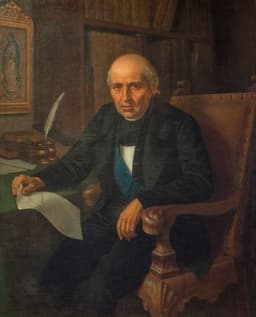
Miguel Hidalgo
Revolutionary · Modern
47.0Total
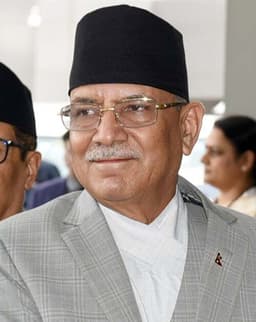
Pushpa Kamal Dahal
Revolutionary · Modern
50.0Total
Basic Information
Born
1753
1954
Died
1811
—
Era
Modern
Modern
Nationality
Mexico
Nepal
Occupation
Revolutionary
Revolutionary
Civilization
Western
Indian
Score Comparison
Military (10%)
50.0
35.0
Political (20%)
36.5
54.7
Influence (20%)
55.0
51.0
Legacy (20%)
52.0
40.8
Leadership (15%)
39.0
62.0
Strategy (15%)
39.6
60.0
TOTAL
47.0
50.0
Miguel Hidalgo — Complete Timeline
1810 AD
Captured Guanajuato and massacred SpaniardsWar◆ Major
Hidalgo's army of 80,000 captured the city of Guanajuato on September 28, 1810. After taking the Alh
BattleMassacreViolence
Impact: regionaldestructive
Issued the Grito de DoloresPolitical Action
On September 16, 1810, Father Miguel Hidalgo rang the church bell in Dolores and called for rebellion against Spanish colonial rule. His speech, known as the Grito de Dolores, urged Mexicans to rise up against the Spanish and marked the beginning of the Mexican War of Independence.
IndependenceRebellionGrito de Dolores
Impact: nationalconstructive
1811 AD
Defeated at the Battle of Calderón BridgeWar◆ Major
Hidalgo's poorly trained army was decisively defeated by a smaller Spanish royalist force at the Battle of Calder
DefeatSpanish RoyalistsTurning Point
Impact: regionaltragic
Executed by Spanish authoritiesPolitical Action◆ Major
Hidalgo was captured in Acatita de Baj
ExecutionMartyrdomIndependence Movement
Impact: nationaltragic
Pushpa Kamal Dahal — Complete Timeline
1996 AD
Launch of People's WarWar
Prachanda, as leader of the Communist Party of Nepal (Maoist), initiated a armed insurgency against the Nepalese state. The People's War began with attacks on police posts and government offices, escalating into a decade-long civil war.
InsurgencyCivil WarMaoist
Impact: nationaldestructive
2006 AD
Signing of Comprehensive Peace AccordPolitical Action◆ Major
Prachanda signed the Comprehensive Peace Accord with Prime Minister Girija Prasad Koirala, ending the civil war. The agreement committed the Maoists to lay down arms and join mainstream politics in exchange for integration into state institutions.
Peace TreatyCivil WarNepal
Impact: nationalconstructive
2008 AD
Election as Prime MinisterPolitical Action◆ Major
Following the Maoist victory in the Constituent Assembly elections, Prachanda became the first prime minister of the Federal Democratic Republic of Nepal. His tenure focused on integrating former Maoist combatants into the national army.
ElectionGovernmentRepublic
Impact: national
2009 AD
Resignation as Prime MinisterPolitical Action
Prachanda resigned as prime minister after a dispute with President Ram Baran Yadav over the dismissal of the army chief. The crisis highlighted tensions between the Maoists and the established political order.
ResignationPoliticsCrisis
Impact: national
Expert Analysis
Miguel Hidalgo vs Pushpa Kamal Dahal
### The Bell and the Gun: Two Revolutions, Two Fates
On September 16, 1810, a 57-year-old Catholic priest in the dusty town of Dolores, Mexico, rang a church bell and ignited a continent. On February 13, 1996, a 42-year-old former schoolteacher in the rugged hills of western Nepal declared a “People’s War” that would consume a kingdom. Miguel Hidalgo and Pushpa Kamal Dahal—known universally as Prachanda—both answered the same primal call: that the old order must be shattered. Yet one died before a firing squad, his head displayed in a cage for a decade; the other became prime minister, outliving his revolution to rule its ashes. Why did the priest fall and the guerrilla rise? The answer lies not in their ideals, but in the centuries that separated them—and the different worlds they sought to destroy.
### Origins
Hidalgo was a creature of the 18th-century Enlightenment, a man of books and pulpits. Born in 1753 to a Creole family on a hacienda in Guanajuato, he was ordained early, but his mind strayed far from catechism. He read Voltaire and Rousseau in secret, dabbled in banned French philosophy, and scandalized his superiors by living openly with a woman. His parish at Dolores was a laboratory for subversion: he taught local Indigenous and mestizo farmers to grow olives and grapes, defying Spanish mercantile laws. His rebellion was not a plan but a reflex—born from the fear that the Spanish Inquisition was about to arrest him. When he rang that bell, he had no army, no treasury, no manifesto. He had only fury and faith.
Prachanda was a creature of the 20th-century Cold War, a man of cells and strategy. Born in 1954 in a poor Brahmin family in Kaski district, Nepal, he grew up in a world where revolution was a science. As a young teacher, he joined underground communist factions, memorized Mao’s writings, and watched the Cultural Revolution from afar. By the 1990s, after the collapse of Nepal’s absolute monarchy and the failure of parliamentary democracy to deliver land reform, he saw his moment. Unlike Hidalgo, he spent years building a party, a secret army, and a parallel government in the hills. When he launched the “People’s War” in 1996, it was not a desperate cry—it was the opening move of a chess game.
### Rise to Power
Hidalgo’s rise was a wildfire, not a campaign. In one month, his ragtag army swelled from a few hundred to 80,000—Indigenous peasants, mine workers, and poor mestizos armed with machetes, slings, and captured muskets. They swept into the rich mining city of Guanajuato on September 28, 1810, and there, at the Alhóndiga de Granaditas granary, they committed a massacre of Spanish civilians that would forever stain Hidalgo’s cause. The priest could not control his own followers; he was a symbol, not a general. His military score of 42.0 reflects this chaos. He was a moral force, not a tactical one.
Prachanda’s rise was glacial and methodical. For ten years, his Maoist fighters waged a classic guerrilla war: ambushes, landmine attacks, and the gradual encirclement of cities from the countryside. He built a shadow state, complete with courts, schools, and tax collectors. By 2005, he controlled 80% of Nepal’s territory. His military score of 25.6 is deceptively low—it measures conventional warfare, but he never fought a conventional war. He fought a political war, and he won it. When King Gyanendra seized absolute power in 2005, Prachanda allied with the democratic parties, and within a year, the monarchy was forced to negotiate.
### Leadership & Governance
Hidalgo never governed. He led a mob, not a state. After the Guanajuato massacre, his army looted and terrorized, alienating the Creole elites who might have joined him. He was defrocked by the Church, abandoned by his allies, and crushed at the Battle of Calderón Bridge on January 17, 1811, where a Spanish force of 6,000 routed his 80,000. His political score of 63.2 is generous—it reflects his influence, not his administration. He had no time to build institutions; he had only time to die.
Prachanda did govern—and therein lies his tragedy. After the 2006 Comprehensive Peace Accord, he led the Maoists into elections, won, and became Prime Minister in 2008. But the revolutionary who had burned land records and executed landlords now had to manage a budget. His political score of 61.5 masks a deeper contradiction: he was a brilliant insurgent but a mediocre statesman. He resigned in 2009 after a petty feud with the president over the army chief. He would return twice more, but each time, the fire dimmed. The man who had promised to abolish the monarchy ended up dining with former kings.
### Triumph & Tragedy
Hidalgo’s greatest moment was also his last. The Grito de Dolores—the cry for independence—is still reenacted every September 15 by Mexico’s president. That single act, more than any battle, made him the Father of the Nation. His tragedy was that he died before he could see it. On July 30, 1811, he was shot in Chihuahua, his head severed and displayed in Guanajuato as a warning. It remained there for ten years, until independence was finally won.
Prachanda’s triumph was the peace accord itself—a negotiated end to a civil war that had killed 17,000. His tragedy is that he is still alive, watching his revolution fade into bureaucratic mediocrity. His legacy score of 54.7 is lower than Hidalgo’s 75.0, not because he achieved less, but because he had to live with his compromises.
### Character & Destiny
Hidalgo was a romantic, impulsive and generous. He gave away his salary, sheltered the poor, and believed that a righteous cause could overcome any obstacle. That faith doomed him at Calderón Bridge, but it also immortalized him. Prachanda was a strategist, cold and calculating. He signed truces, changed ideologies, and survived. That pragmatism made him prime minister, but it also made him a figure of suspicion—a revolutionary who became a politician, and therefore, in the eyes of many, a traitor.
### Legacy
Hidalgo is a saint in Mexico’s civic religion. His face is on coins, his cry is a national holiday, and his failure is forgotten. He represents the purity of the first blow. Prachanda is a living ghost in Nepal. He is still active, still controversial, still trying to define what his revolution meant. He represents the messiness of success.
### Conclusion
The priest and the guerrilla both reached for the same star—a world without kings or colonizers. Hidalgo grabbed it and was burned to ash; Prachanda held it and watched it cool in his hands. Which is the greater tragedy? To die for a dream, or to live long enough to see it become ordinary? The bell at Dolores still rings every year. The guns in Nepal have fallen silent. Perhaps the answer is that revolutions, like men, are judged not by their endings, but by their beginnings.
Rankings
🥇
Pushpa Kamal DahalLeader
Mil: 35.0Pol: 54.7Inf: 51.0
50.0
🥈
Miguel Hidalgo
Mil: 50.0Pol: 36.5Inf: 55.0
47.0
+3.0 behind
How This Comparison Works
Algorithm
Each figure is scored on 6 dimensions (0—100 scale) based on structured historical data: Military (10%), Political (20%), Influence (20%), Legacy (20%), Leadership (15%), Strategy (15%). The weighted total produces the final ranking.
Data Sources
Scores are computed from structured sub-indicators in the database. Scale factors adjust for era (Ancient ×0.85, Modern ×1.0) and civilization size (Eastern ×1.05, Other ×0.80) to account for differences in population and military scale.
Maximum 3 Figures
Comparisons are limited to 2—3 figures to ensure readability and statistical meaningfulness.
Error Margins
±5 points per dimension — Sub-scores are derived from historical records with inherent uncertainty. Two figures within 5 points on a dimension should be considered roughly equivalent in that area.
Total Score Accuracy
±3 points overall — The weighted combination of 6 dimensions produces a total score with approximately ±3 points of uncertainty. Differences of less than 3 points are not statistically significant— the figures are effectively tied.
Known Limitations
- Historical records are incomplete and uneven across civilizations
- Figures from oral-tradition societies may be underrepresented
- Occupation labels can misclassify multi-role figures
- Scores measure capability and impact, not moral character
- Quantitative scoring is a comparison tool, not absolute truth
Capability Radar
Military (10%) — Battles & Warfare
Battles
30
35
Win Rate
25
40
Expansion
20
25
Political (20%) — Governance & Reform
Reform
60
40
Diplomacy
30
50
Economy
20
35
Influence (20%) — Cultural & Global Reach
Cultural
70
40
Global
60
35
Legacy (20%) — Historical Impact
Historical
75
45
Longevity
70
30
Leadership (15%) — Power & Stability
Tenure
15
55
Stability
10
30
Strategy (15%) — Tactics & Innovation
Strategy
25
50
Tactics
20
45
Reform
10
30
Similar Comparisons
Comments & Discussion
No comments yet. Be the first to share your thoughts!