Loading...
Li Zicheng vs Mangal Pandey
Mangal Pandey leads by 5.1 pts · 2 figures compared
…
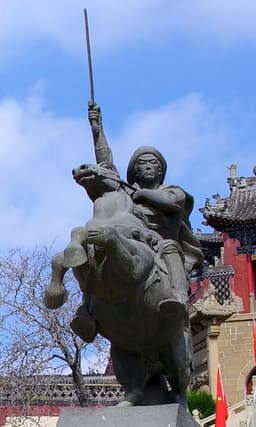
Li Zicheng
Revolutionary · Modern
43.5Total
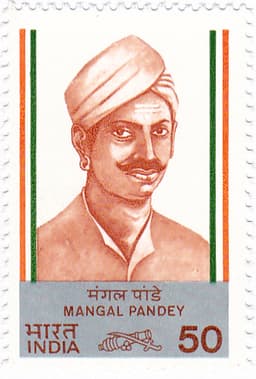
Mangal Pandey
Revolutionary · Modern
48.6Total
Basic Information
Born
1606
1827
Died
1645
1857
Era
Modern
Modern
Nationality
China
India
Occupation
Revolutionary
Revolutionary
Civilization
Eastern
Indian
Score Comparison
Military (10%)
50.0
39.9
Political (20%)
27.9
35.0
Influence (20%)
52.5
51.8
Legacy (20%)
44.2
46.7
Leadership (15%)
39.0
62.6
Strategy (15%)
43.3
53.8
TOTAL
43.5
48.6
Li Zicheng — Complete Timeline
1644 AD
Captured Beijing and Ended the Ming DynastyWar
Li Zicheng led his rebel army to capture Beijing. The Chongzhen Emperor committed suicide, ending the Ming dynasty. Li Zicheng proclaimed the Shun dynasty and briefly ruled from the Forbidden City before being defeated by Qing forces.
Ming-Qing TransitionRebellionBeijing
Impact: globaldestructive
Defeated at the Battle of Shanhai PassWar◆ Major
Li Zicheng's army was defeated by the combined forces of Wu Sangui and the Manchus at the Battle of Shanhai Pass. The defeat forced him to abandon Beijing and retreat westward, effectively ending his control over northern China.
Ming-Qing TransitionBattleDefeat
Impact: globaltragic
Proclaimed the Shun DynastyPolitical Action◆ Major
After capturing Beijing, Li Zicheng formally proclaimed the establishment of the Shun dynasty in Xi'an. He adopted the title of emperor and began implementing his own administrative policies, though his rule was short-lived.
Shun DynastyProclamationRebellion
Impact: nationalconstructive
1645 AD
Killed in Jiugong MountainWar◆ Major
Li Zicheng was killed by a local militia while fleeing through Jiugong Mountain in Hubei province. His death marked the end of the Shun dynasty and the collapse of his rebellion, though some accounts claim he survived and became a monk.
Shun DynastyDeathRebellion
Impact: nationaltragic
Mangal Pandey — Complete Timeline
1857 AD
Attack on British officers at BarrackporePolitical Action◆ Major
Mangal Pandey attacked two British officers at the Barrackpore military cantonment. He was arrested after the attack, and his actions sparked widespread unrest among Indian sepoys, leading to the 1857 rebellion.
Indian Rebellion of 1857Trigger Event
Impact: regional
Execution by hangingPolitical Action◆ Major
Mangal Pandey was tried by a British military court and executed by hanging at Barrackpore. His execution made him a martyr and a symbol of resistance against British rule in India.
Indian Rebellion of 1857ExecutionMartyr
Impact: regionaltragic
Expert Analysis
Mangal Pandey vs Li Zicheng
# The Rebel’s Crossroads: Li Zicheng and Mangal Pandey
On an April morning in 1644, Li Zicheng stood at the gates of Beijing, his peasant army stretching across the plains like a dark tide. The Ming emperor, alone and broken, had already hanged himself on Coal Hill. For a moment, the son of a poor farmer held the oldest empire on earth in his hands. Two centuries later, on a dusty parade ground in Barrackpore, a sepoy named Mangal Pandey raised his musket against his British officers. He fired, missed, and set in motion a rebellion that would shake the foundations of an empire. Both men were revolutionaries. Both struck at the heart of power. Yet one seized a throne and lost it in weeks; the other never held a city but ignited a national awakening. Why did their paths diverge so sharply?
Origins
Li Zicheng was born in 1606 into a world of famine, banditry, and collapsing order. The Ming dynasty was rotting from within, its bureaucracy paralyzed by corruption, its treasury drained, its northern borders threatened by Manchu horsemen. Li lost his father young, worked as a shepherd, then a post-station courier, and finally joined the swelling ranks of the desperate poor who roamed the countryside. He learned to fight, to organize, to survive—but he never learned to govern. His world was one of survival, not statecraft.
Mangal Pandey was born in 1827 into a very different world—an India subdued by the British East India Company, where order was enforced by red-coated soldiers and a foreign administration that rewrote laws, levied taxes, and offended ancient customs. Pandey was a Brahmin, a high-caste Hindu, and a sepoy in the Company’s army. He knew discipline, hierarchy, and the bitter taste of serving a master who despised his culture. His rebellion was not born of hunger but of humiliation.
Rise to Power
Li Zicheng rose through the chaos of peasant revolts that swept northern China in the 1630s. He was not the first rebel leader, but he was the most resilient. After suffering near-annihilation in 1634, he rebuilt his army with a simple promise: “Follow me, and you will eat.” By 1641, he had captured major cities, won over scholars and officials, and styled himself the “Dashing King.” His turning point came in 1644, when he marched on Beijing. The Ming capital fell without a siege—the city gates were opened by traitors.
Mangal Pandey’s rise was not a march but a moment. On March 29, 1857, at the Barrackpore cantonment, he loaded his musket and attacked two British officers. He was immediately overpowered, arrested, and tried. His rebellion lasted minutes, not months. But that single act of defiance came at a time when the entire Bengal Army was simmering with rage over the new Enfield rifle cartridges, greased with cow and pig fat—an insult to both Hindu and Muslim sepoys. Pandey’s attack was a spark thrown into a powder keg.
Leadership & Governance
Li Zicheng’s brief rule in Beijing reveals the tragedy of his limitations. He proclaimed the Shun dynasty in Xi’an before entering the capital, but he had no plan for governance. His soldiers looted the city, tortured officials for their gold, and alienated the very people who might have supported him. He tried to win over the Ming bureaucracy but failed to offer them a coherent vision. His military genius was real—he had outmaneuvered Ming armies for years—but his political wisdom was nonexistent. He could conquer, but he could not rule.
Mangal Pandey never governed anything. His leadership was symbolic, not administrative. He was a soldier who refused to obey, a sepoy who chose martyrdom over submission. He had no army, no treasury, no strategy beyond the moment of defiance. Yet his act inspired thousands of sepoys to mutiny across northern India. Within months, Delhi was in rebel hands, and the British were fighting for their survival. Pandey’s power was not in his decisions but in his example.
Triumph & Tragedy
Li Zicheng’s triumph was the capture of Beijing—the ultimate prize. His tragedy was the Battle of Shanhai Pass, fought just weeks later. The Ming general Wu Sangui, who had been poised to surrender to Li, instead allied with the Manchus. At Shanhai Pass, Li’s army was crushed by the combined force. He fled westward, his dream crumbling. In 1645, he was killed by a local militia in Jiugong Mountain, Hubei—not in a grand battle, but in a skirmish with farmers. The man who ended a dynasty died at the hands of peasants.
Mangal Pandey’s triumph was his attack—a single act that became legend. His tragedy was his execution, hanged on April 8, 1857, at Barrackpore. Yet his death did not end the rebellion; it ignited it. The mutiny spread like wildfire, and though it was crushed by 1858, it forced the British to abolish the East India Company and place India under direct Crown rule. Pandey’s failure was his victory.
Character & Destiny
Li Zicheng was a man of the earth—practical, ruthless, and short-sighted. He trusted his instincts but not his advisors. When he captured Beijing, he could have negotiated with Wu Sangui, offered amnesty to Ming loyalists, or restrained his troops. He did none of these. His character—impatient, suspicious, and hungry for immediate reward—sealed his fate. His destiny was to be a destroyer, not a builder.
Mangal Pandey was a man of conviction—proud, religious, and willing to die for his beliefs. He acted not out of ambition but out of outrage. He had no plan for power because he never expected to survive. His character—unyielding, principled, and fatalistic—made him a martyr. His destiny was to be a symbol, not a ruler.
Legacy
Li Zicheng is remembered in China as a cautionary tale—a rebel who overthrew a dynasty but could not hold it. Historians give him moderate scores: military 55.5, political 40.3, influence 74.3, legacy 62.0. He is a figure of folk stories, of “what if,” but not of admiration. His name evokes the chaos of transition, not the glory of foundation.
Mangal Pandey is revered in India as a national hero, the first martyr of the independence struggle. His scores are lower in military (28.2) and political (32.3) terms, but his influence (69.8) and legacy (62.7) rival Li’s. His face appears on stamps, his name in textbooks, his story in films. He failed in every practical sense, yet he succeeded in the realm of memory.
Conclusion
Li Zicheng and Mangal Pandey stand on opposite sides of a great divide. One rose from the soil to touch the sky, only to fall because he never learned to fly. The other rose from the ranks to touch eternity, precisely because he never aimed for the throne. Their stories remind us that revolutions are not measured by the cities they capture but by the imaginations they ignite. Li Zicheng seized an empire and lost it in a season. Mangal Pandey fired one shot and changed a nation. In the end, it is not the size of the rebellion that matters, but the depth of the dream.
Rankings
🥇
Mangal PandeyLeader
Mil: 39.9Pol: 35.0Inf: 51.8
48.6
🥈
Li Zicheng
Mil: 50.0Pol: 27.9Inf: 52.5
43.5
+5.1 behind
How This Comparison Works
Algorithm
Each figure is scored on 6 dimensions (0—100 scale) based on structured historical data: Military (10%), Political (20%), Influence (20%), Legacy (20%), Leadership (15%), Strategy (15%). The weighted total produces the final ranking.
Data Sources
Scores are computed from structured sub-indicators in the database. Scale factors adjust for era (Ancient ×0.85, Modern ×1.0) and civilization size (Eastern ×1.05, Other ×0.80) to account for differences in population and military scale.
Maximum 3 Figures
Comparisons are limited to 2—3 figures to ensure readability and statistical meaningfulness.
Error Margins
±5 points per dimension — Sub-scores are derived from historical records with inherent uncertainty. Two figures within 5 points on a dimension should be considered roughly equivalent in that area.
Total Score Accuracy
±3 points overall — The weighted combination of 6 dimensions produces a total score with approximately ±3 points of uncertainty. Differences of less than 3 points are not statistically significant— the figures are effectively tied.
Known Limitations
- Historical records are incomplete and uneven across civilizations
- Figures from oral-tradition societies may be underrepresented
- Occupation labels can misclassify multi-role figures
- Scores measure capability and impact, not moral character
- Quantitative scoring is a comparison tool, not absolute truth
Capability Radar
Military (10%) — Battles & Warfare
Battles
55
5
Win Rate
60
5
Expansion
65
5
Political (20%) — Governance & Reform
Reform
15
5
Diplomacy
20
5
Economy
10
5
Influence (20%) — Cultural & Global Reach
Cultural
40
40
Global
35
40
Legacy (20%) — Historical Impact
Historical
55
60
Longevity
30
50
Leadership (15%) — Power & Stability
Tenure
20
5
Stability
5
5
Strategy (15%) — Tactics & Innovation
Strategy
55
5
Tactics
50
10
Reform
30
5
Similar Comparisons
Comments & Discussion
铁血考据党6/16/2026
说Li Zicheng比Mangal Pandey更成功?错!李自成进北京42天就溃败,连根基都没建立;Pandey虽然孤身举枪失败,但他引爆了1857年民族起义,直接动摇东印度公司统治。李自成只是个强盗头子,Pandey是民族觉醒的引信。对比结局:李死得不明不白,Pandey被处决后却成了英雄符号。谁更有影响力?一目了然。
东亚烽火记录员6/16/2026
Li Zicheng和Mangal Pandey根本不是同一类人。李自成是个被饥荒逼反的流寇,1644年打进北京靠的是明朝内乱而非他多能打;Pandey是受过英式训练的士兵,他的反抗根植于对殖民者的制度性仇恨。李不会理政,来了就跑;Pandey单枪匹马却唤醒了印度人的同胞意识。一个是乱世投机者,一个是民族先驱。历史评价天差地别。
IronBrigade6/16/2026
From a military logistics angle, their fates hinge on supply lines—Li Zicheng’s peasant army ballooned to 600,000 men without a fiscal base, sacking Beijing for food within weeks. Mangal Pandey’s rebellion in 1857 had no such scale; his single regiment was crushed quickly. But Pandey’s advantage was timing: his act coincided with a systemic crisis across India, while Li’s moment was Ming’s final gasp. Both failed, but Pandey’s spark lit a wildfire.
WaterlooWonk6/16/2026
Li Zicheng was a tactical peasant general, but Mangal Pandey was a symbolic martyr—one seized a throne, the other seized a nation’s soul. Li’s fall in 1644 was swift because he couldn’t govern Beijing for even a month; his looting alienated scholars and merchants. Pandey’s single shot at Barrackpore in 1857, though missed, echoed across India because it tapped into deep grievances like the greased cartridges. Li won battles, Pandey won history.