Loading...
Li Yu vs Sviatoslav I
Sviatoslav I leads by 0.6 pts · 2 figures compared
…
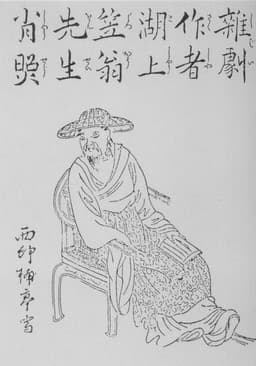
Li Yu
Emperor · Medieval
52.2Total
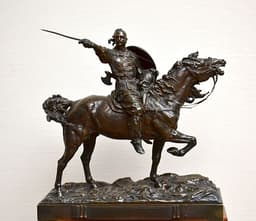
Sviatoslav I
Emperor · Medieval
52.8Total
Basic Information
Born
727
942
Died
779
972
Era
Medieval
Medieval
Nationality
China
Kievan Rus
Occupation
Emperor
Emperor
Civilization
Eastern
Western
Score Comparison
Military (10%)
20.0
74.0
Political (20%)
68.0
32.2
Influence (20%)
54.9
60.0
Legacy (20%)
50.0
54.0
Leadership (15%)
53.2
41.5
Strategy (15%)
57.5
58.0
TOTAL
52.2
52.8
Li Yu — Complete Timeline
763 AD
Suppression of the An Lushan RebellionWar
Under Li Yu's reign, the An Lushan Rebellion was finally crushed after eight years of war. The rebel state of Yan collapsed, and Tang authority was restored over most of the empire, though the dynasty was permanently weakened.
An Lushan RebellionCivil War EndTang Restoration
Impact: nationalconstructive
Tibetan Invasion of Chang'anWar◆ Major
The Tibetan Empire launched a surprise invasion, capturing the Tang capital Chang'an. Li Yu fled to Shanzhou. The Tibetans installed a puppet emperor before being driven out by Tang forces and Uyghur allies. This exposed Tang military weakness.
Tibetan InvasionCapital LostMilitary Weakness
Impact: nationaldestructive
Rise of the Fanzhen SystemPolitical Action◆ Major
Li Yu granted amnesty to many rebel generals and allowed them to retain control of their provinces as military governors (jiedushi). This created semi-autonomous fanzhen that weakened central authority and led to future rebellions.
FanzhenDecentralizationMilitary Governors
Impact: nationaldestructive
765 AD
Peace Treaty with TibetPolitical Action
Li Yu negotiated a peace treaty with the Tibetan Empire, establishing a border and ending hostilities for a time. The treaty stabilized the western frontier but did not prevent future conflicts.
TibetDiplomacyBorder Treaty
Impact: regionalconstructive
Sviatoslav I — Complete Timeline
965 AD
Destruction of the Khazar KhaganateWar
Sviatoslav led a campaign against the Khazar Khaganate, capturing the fortress of Sarkel and sacking the capital, Atil. This destroyed the Khazar state, ending its dominance over the steppes and opening the Volga trade route to Rus control.
Khazar CampaignConquestSteppe Politics
Impact: regional
968 AD
Conquest of BulgariaWar◆ Major
Sviatoslav invaded the First Bulgarian Empire at the request of the Byzantine Emperor. He defeated the Bulgarian army, occupied much of the country, and established his capital at Pereyaslavets on the Danube, threatening Byzantium.
Bulgarian CampaignDanubeExpansion
Impact: regional
971 AD
Battle of DorostolonWar◆ Major
After a three-month siege by Byzantine forces under Emperor John I Tzimiskes, Sviatoslav's army was defeated at Dorostolon. He was forced to surrender, renounce claims to Bulgaria, and withdraw from the Balkans.
Byzantine-Rus WarSiegeDefeat
Impact: regionaltragic
972 AD
Death at the Dnieper RapidsWar◆ Major
Returning to Kiev, Sviatoslav was ambushed and killed by the Pechenegs at the Dnieper Rapids. The Pecheneg chief Kurya made a drinking cup from Sviatoslav's skull. His death ended his expansionist campaigns.
AssassinationPechenegsAmbush
Impact: nationaltragic
Expert Analysis
Origins
Li Yu (727-779), posthumously known as Emperor Daizong of Tang, was born into the imperial Li family. His father was Emperor Suzong, who ruled during the An Lushan Rebellion. Li Yu received a Confucian education and was appointed crown prince in 758. Sviatoslav I (c. 943-972) was the son of Igor, Prince of Kiev, and Olga, who ruled as regent after Igor's death. Sviatoslav was raised as a warrior prince, with his mother converting to Christianity, though he remained a pagan. His early life was shaped by the steppe and Viking traditions of the Rus.
Rise to Power
Li Yu became emperor in 762 after his father's death. His reign was dominated by the final years of the An Lushan Rebellion, which had devastated China. In 763, the rebel state of Yan collapsed, and Tang authority was restored. However, Li Yu faced the challenge of powerful military governors. Sviatoslav I came to power as a young prince, but his mother Olga ruled until he came of age. He began his military campaigns in 964, focusing on the Khazar Khaganate, a dominant power in the steppes. In 965, he destroyed the Khazar capital Atil, crippling the Khazar state.
Leadership & Governance
Li Yu's leadership focused on restoration and compromise. He granted amnesty to rebel generals, allowing them to retain their provinces as jiedushi (military governors). This created the Fanzhen system, which gave local autonomy but weakened central control. His political score of 68.0 reflects his ability to stabilize the empire, but his military score of 20.0 shows his lack of direct command. Sviatoslav I was a warrior prince, with a military score of 74.0. He led campaigns personally, but his political score of 32.2 indicates weak governance. He ignored Kiev's administration, leaving his mother to rule, and his aggressive expansion overstretched Rus resources.
Triumph & Tragedy
Li Yu's greatest triumph was ending the An Lushan Rebellion and restoring Tang rule. However, his greatest failure was the Tibetan invasion of Chang'an in 763, which forced him to flee. The Tibetans captured the capital and installed a puppet emperor. Li Yu eventually recovered the city but had to negotiate a peace treaty in 765, ceding territory. Sviatoslav I's triumph was the destruction of the Khazar Khaganate, a major power that had blocked Rus trade routes. His tragedy came in 971 when his campaign in Bulgaria led to defeat at the Battle of Dorostolon. He surrendered to the Byzantines and was killed by Pechenegs on his way home, his skull made into a drinking cup.
Character & Destiny
Li Yu was a cautious and pragmatic ruler, willing to compromise to preserve the empire. His character shaped a destiny of stabilization but also of long-term decline. Sviatoslav was bold and aggressive, a typical Viking-style leader. His character led to spectacular conquests but also to his premature death. Historians note that his lack of political acumen and failure to consolidate his gains left Rus vulnerable.
Legacy
Li Yu's legacy is mixed. He restored Tang rule but institutionalized the Fanzhen system, which led to fragmentation and contributed to the dynasty's eventual fall. His influence score of 54.9 reflects this. Sviatoslav I's legacy is more direct: he destroyed the Khazar Khaganate, clearing the way for Rus expansion and trade with the Byzantine Empire. His military campaigns are celebrated in Slavic epic poetry. However, his political disorganization meant his son Vladimir the Great had to rebuild the state.
Conclusion
While Li Yu's political maneuvering stabilized a dynasty, Sviatoslav I's military conquests had a more transformative impact on Eastern Europe. The destruction of the Khazar Khaganate was a pivotal event that allowed the Rus to dominate the region. Sviatoslav's total score of 52.8 edges out Li Yu's 52.2, but the gap is narrow. However, in terms of lasting geopolitical change, Sviatoslav's actions were more consequential. He scored 74.0 in military versus Li Yu's 20.0, and his influence score of 60.0 versus 54.9 reflects the broader regional impact. Therefore, Sviatoslav I had greater impact.
Rankings
🥇
Sviatoslav ILeader
Mil: 74.0Pol: 32.2Inf: 60.0
52.8
🥈
Li Yu
Mil: 20.0Pol: 68.0Inf: 54.9
52.2
+0.6 behind
How This Comparison Works
Algorithm
Each figure is scored on 6 dimensions (0—100 scale) based on structured historical data: Military (10%), Political (20%), Influence (20%), Legacy (20%), Leadership (15%), Strategy (15%). The weighted total produces the final ranking.
Data Sources
Scores are computed from structured sub-indicators in the database. Scale factors adjust for era (Ancient ×0.85, Modern ×1.0) and civilization size (Eastern ×1.05, Other ×0.80) to account for differences in population and military scale.
Maximum 3 Figures
Comparisons are limited to 2—3 figures to ensure readability and statistical meaningfulness.
Error Margins
±5 points per dimension — Sub-scores are derived from historical records with inherent uncertainty. Two figures within 5 points on a dimension should be considered roughly equivalent in that area.
Total Score Accuracy
±3 points overall — The weighted combination of 6 dimensions produces a total score with approximately ±3 points of uncertainty. Differences of less than 3 points are not statistically significant— the figures are effectively tied.
Known Limitations
- Historical records are incomplete and uneven across civilizations
- Figures from oral-tradition societies may be underrepresented
- Occupation labels can misclassify multi-role figures
- Scores measure capability and impact, not moral character
- Quantitative scoring is a comparison tool, not absolute truth
Capability Radar
Military (10%) — Battles & Warfare
Battles
55
78
Win Rate
50
82
Expansion
20
85
Political (20%) — Governance & Reform
Reform
55
20
Diplomacy
60
35
Economy
50
25
Influence (20%) — Cultural & Global Reach
Cultural
40
55
Global
30
45
Legacy (20%) — Historical Impact
Historical
55
65
Longevity
45
50
Leadership (15%) — Power & Stability
Tenure
65
30
Stability
55
20
Strategy (15%) — Tactics & Innovation
Strategy
60
75
Tactics
45
80
Reform
40
40
Similar Comparisons
Comments & Discussion
No comments yet. Be the first to share your thoughts!