Loading...
Li Yu vs Napoleon Bonaparte
Napoleon Bonaparte leads by 18.7 pts · 2 figures compared
…
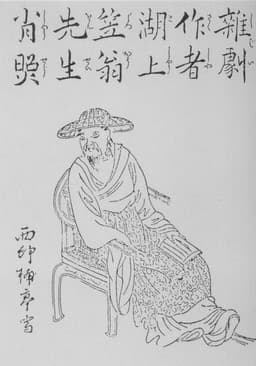
Li Yu
Emperor · Medieval
52.2Total

Napoleon Bonaparte
General · Modern
70.9Total
Basic Information
Born
727
1769
Died
779
1821
Era
Medieval
Modern
Nationality
China
France
Occupation
Emperor
General
Civilization
Eastern
Western
Score Comparison
Military (10%)
20.0
94.0
Political (20%)
68.0
72.0
Influence (20%)
54.9
40.0
Legacy (20%)
50.0
80.0
Leadership (15%)
53.2
78.0
Strategy (15%)
57.5
90.0
TOTAL
52.2
70.9
Li Yu — Complete Timeline
763 AD
Suppression of the An Lushan RebellionWar
Under Li Yu's reign, the An Lushan Rebellion was finally crushed after eight years of war. The rebel state of Yan collapsed, and Tang authority was restored over most of the empire, though the dynasty was permanently weakened.
An Lushan RebellionCivil War EndTang Restoration
Impact: nationalconstructive
Tibetan Invasion of Chang'anWar◆ Major
The Tibetan Empire launched a surprise invasion, capturing the Tang capital Chang'an. Li Yu fled to Shanzhou. The Tibetans installed a puppet emperor before being driven out by Tang forces and Uyghur allies. This exposed Tang military weakness.
Tibetan InvasionCapital LostMilitary Weakness
Impact: nationaldestructive
Rise of the Fanzhen SystemPolitical Action◆ Major
Li Yu granted amnesty to many rebel generals and allowed them to retain control of their provinces as military governors (jiedushi). This created semi-autonomous fanzhen that weakened central authority and led to future rebellions.
FanzhenDecentralizationMilitary Governors
Impact: nationaldestructive
765 AD
Peace Treaty with TibetPolitical Action
Li Yu negotiated a peace treaty with the Tibetan Empire, establishing a border and ending hostilities for a time. The treaty stabilized the western frontier but did not prevent future conflicts.
TibetDiplomacyBorder Treaty
Impact: regionalconstructive
Napoleon Bonaparte — Complete Timeline
1799 AD
Coup of 18 BrumaireOther◆ Major
Napoleon Bonaparte, with support from his brother Lucien and key political figures, overthrew the Directory in a bloodless coup. He established the Consulate with himself as First Consul, effectively becoming the ruler of France. This event ended the French Revolution's most unstable period.
French RevolutionCoupRise to Power
Impact: regional
1804 AD
Promulgation of the Napoleonic CodeOther◆ Major
Napoleon enacted the Civil Code of the French, known as the Napoleonic Code, a comprehensive set of laws that replaced the fragmented feudal legal systems. The code established legal equality, protected property rights, and secularized law. It became the basis for legal systems in many European and world countries.
Legal ReformNapoleonic CodeCivil Law
Impact: globalconstructive
1805 AD
Battle of AusterlitzWar◆ Major
Napoleon's Grande Arm
Napoleonic WarsBattleDecisive Victory
Impact: global
1812 AD
Invasion of RussiaWar◆ Major
Napoleon led the Grande Arm
Napoleonic WarsInvasionDisaster
Impact: globaldestructive
1815 AD
Battle of WaterlooWar◆ Major
Napoleon's French army was defeated by the combined forces of the Duke of Wellington's Anglo-Allied army and Gebhard Leberecht von Bl
Napoleonic WarsBattleFinal Defeat
Impact: globaldestructive
Expert Analysis
li-yu-vs-napoleon-bonaparte
# The Emperor and the Eagle
On a June morning in 1815, Napoleon Bonaparte stood on a muddy field near Waterloo, watching his Imperial Guard march into cannon fire for the last time. Half a world away and a thousand years earlier, another ruler faced his own moment of reckoning: Li Yu, the Tang emperor known to history as Daizong, fled his capital as Tibetan horsemen poured through the gates of Chang'an. One man built an empire that reshaped Europe; the other inherited a crumbling dynasty and fought simply to keep it alive. What separates a conqueror from a caretaker? The answer lies not in talent alone, but in the worlds that shaped them.
Origins
Napoleon Bonaparte was born in 1769 on the rugged island of Corsica, a land only recently annexed by France. His family was minor nobility, but his world was one of revolution. The old order of kings and aristocrats was collapsing across Europe, and young Napoleon—educated at French military academies, mocked for his accent and small stature—absorbed the explosive energy of his age. He read Rousseau and Voltaire, studied artillery tactics, and dreamed of glory. His era rewarded ambition; it punished hesitation.
Li Yu, by contrast, was born in 727 into the imperial family of the Tang dynasty, one of the most sophisticated civilizations the world had ever seen. China in the eighth century was not a place of upheaval but of order—a vast bureaucratic empire held together by Confucian ritual, civil service exams, and centuries of tradition. Li Yu’s father, Emperor Suzong, had fought to reclaim the throne from the rebel An Lushan. The young prince grew up not in the thrill of revolution but in the shadow of collapse. His world taught him that survival meant compromise, not conquest.
Rise to Power
Napoleon’s ascent was a story of sheer velocity. At 24, he drove the British out of Toulon; at 26, he crushed a royalist uprising in Paris with a “whiff of grapeshot”; at 30, he made himself First Consul of France. Each step was a gamble that paid off. The French Revolution had wiped clean the ladder of promotion, and Napoleon climbed it with breathtaking speed. By 1804, he crowned himself Emperor, taking the crown from the Pope’s hands and placing it on his own head—a gesture that said everything about his belief in his own agency.
Li Yu’s path to power was slower and more painful. He became emperor in 762, during the eighth year of the An Lushan Rebellion—a cataclysm that had already killed millions and shattered the Tang state. Unlike Napoleon, who seized power in a vacuum, Li Yu inherited a throne under siege. His first task was not conquest but survival. The rebellion was finally crushed in 763, but only after the imperial court had bribed and pardoned rebel generals, leaving them in control of their provinces as military governors. This was the birth of the Fanzhen system—a Faustian bargain that bought peace at the price of central authority.
Leadership & Governance
Napoleon governed with a clarity that matched his ambition. He reformed French law into the Napoleonic Code, a rational system that swept away feudal privileges and enshrined equality before the law—at least for men. He centralized education, built roads, stabilized the currency, and created a meritocratic bureaucracy. But his genius for organization was also a tool for control: he censored the press, suppressed dissent, and turned France into a military machine. His greatest achievement, the Code, outlasted his empire. His greatest flaw, the hunger for more, destroyed it.
Li Yu governed in a different key. He could not impose order; he had to negotiate it. After the Tibetan invasion of 763—when he fled Chang'an as foreign troops looted his capital—he understood that military strength alone would not save his dynasty. He turned to diplomacy. In 765, he negotiated a peace treaty with the Tibetan Empire, establishing borders and ending hostilities for a time. It was not glorious, but it was necessary. Where Napoleon commanded, Li Yu compromised. Where Napoleon reformed, Li Yu repaired. His political score of 72.0 reflects a ruler who managed decline, not a visionary who reshaped his world.
Triumph & Tragedy
Napoleon’s greatest triumph was Austerlitz in 1805, where he destroyed a combined Austrian and Russian army in a battle of dazzling maneuver. His greatest tragedy was the invasion of Russia in 1812—a catastrophic overreach that cost half a million lives and ended with his army freezing in the snow. He was exiled to Elba, escaped, and returned for one last gamble: Waterloo. There, on that June day in 1815, his Old Guard—the veterans who had marched across Europe—surrounded him and begged to die fighting. He refused. He surrendered. The eagle had fallen.
Li Yu’s triumph was quieter. He crushed the An Lushan Rebellion, ending eight years of war that had nearly destroyed the Tang dynasty. But his tragedy was that the victory was hollow. The rebel generals he pardoned became warlords. The Tibetan invasion he survived exposed the empire’s weakness. He died in 779, having restored stability but not strength. His military score of 37.3 speaks to a ruler who was not a battlefield commander but a survivor of battles others fought. His legacy was not conquest but continuation.
Character & Destiny
Napoleon was a force of nature: restless, brilliant, and utterly convinced of his own destiny. “Impossible is a word to be found only in the dictionary of fools,” he once said. He believed he could bend the world to his will, and for a decade, he did. But his personality—the ambition, the arrogance, the refusal to stop—was also his undoing. He could not consolidate because he could not be content.
Li Yu was the opposite. He was a pragmatist, not a visionary. He understood that some battles cannot be won, only survived. His character was shaped by necessity: he granted amnesty to rebels because he had no choice; he fled his capital because he could not defend it. He was not great in the way Napoleon was great, but he was wise in a way Napoleon was not. He knew that the purpose of power is not glory but stability.
Legacy
Napoleon’s legacy is written across Europe: the legal codes, the national borders, the myth of the self-made man. He is remembered as a genius and a tyrant, a liberator and a conqueror. His score of 78.0 for legacy reflects a figure who still divides opinion two centuries after his death.
Li Yu’s legacy is quieter but no less real. He saved the Tang dynasty for another century. The peace treaty with Tibet, the suppression of the rebellion, the painful compromises—they allowed Chinese civilization to endure through one of its darkest periods. His legacy score of 67.9 is modest, but it measures a different kind of achievement: not the height of the flame, but the length of the burn.
Conclusion
Napoleon and Li Yu were both rulers, but they lived in different universes. Napoleon’s world was one of revolution, where a man could remake reality with will and cannon. Li Yu’s world was one of tradition, where an emperor was bound by a thousand years of precedent. One conquered; the other conserved. One died in exile, dreaming of glory; the other died in his palace, having held his empire together. The difference between them is not talent—both were brilliant in their own ways—but context. History gives some men the chance to build empires and others the burden of saving them. The tragedy is that we remember the builders and forget the saviors.
Rankings
🥇
Napoleon BonaparteLeader
Mil: 94.0Pol: 72.0Inf: 40.0
70.9
🥈
Li Yu
Mil: 20.0Pol: 68.0Inf: 54.9
52.2
+18.7 behind
How This Comparison Works
Algorithm
Each figure is scored on 6 dimensions (0—100 scale) based on structured historical data: Military (10%), Political (20%), Influence (20%), Legacy (20%), Leadership (15%), Strategy (15%). The weighted total produces the final ranking.
Data Sources
Scores are computed from structured sub-indicators in the database. Scale factors adjust for era (Ancient ×0.85, Modern ×1.0) and civilization size (Eastern ×1.05, Other ×0.80) to account for differences in population and military scale.
Maximum 3 Figures
Comparisons are limited to 2—3 figures to ensure readability and statistical meaningfulness.
Error Margins
±5 points per dimension — Sub-scores are derived from historical records with inherent uncertainty. Two figures within 5 points on a dimension should be considered roughly equivalent in that area.
Total Score Accuracy
±3 points overall — The weighted combination of 6 dimensions produces a total score with approximately ±3 points of uncertainty. Differences of less than 3 points are not statistically significant— the figures are effectively tied.
Known Limitations
- Historical records are incomplete and uneven across civilizations
- Figures from oral-tradition societies may be underrepresented
- Occupation labels can misclassify multi-role figures
- Scores measure capability and impact, not moral character
- Quantitative scoring is a comparison tool, not absolute truth
Capability Radar
Military (10%) — Battles & Warfare
Battles
55
95
Win Rate
50
90
Expansion
20
95
Political (20%) — Governance & Reform
Reform
55
95
Diplomacy
60
80
Economy
50
85
Influence (20%) — Cultural & Global Reach
Cultural
40
85
Global
30
90
Legacy (20%) — Historical Impact
Historical
55
95
Longevity
45
90
Leadership (15%) — Power & Stability
Tenure
65
85
Stability
55
70
Strategy (15%) — Tactics & Innovation
Strategy
60
95
Tactics
45
98
Reform
40
92
Similar Comparisons
Comments & Discussion
No comments yet. Be the first to share your thoughts!