Loading...
Sviatoslav I vs Tokhtamysh
Tokhtamysh leads by 8.0 pts · 2 figures compared
…
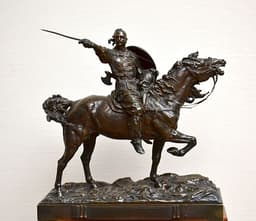
Sviatoslav I
Emperor · Medieval
52.8Total
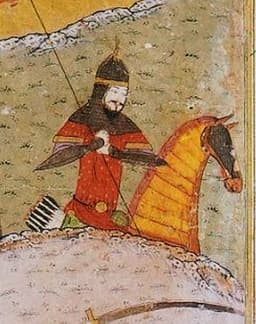
Tokhtamysh
Emperor · Medieval
60.8Total
Basic Information
Born
942
1342
Died
972
1406
Era
Medieval
Medieval
Nationality
Kievan Rus
Golden Horde
Occupation
Emperor
Emperor
Civilization
Western
Eastern
Score Comparison
Military (10%)
74.0
74.7
Political (20%)
32.2
68.0
Influence (20%)
60.0
61.0
Legacy (20%)
54.0
49.2
Leadership (15%)
41.5
65.0
Strategy (15%)
58.0
58.0
TOTAL
52.8
60.8
Sviatoslav I — Complete Timeline
965 AD
Destruction of the Khazar KhaganateWar
Sviatoslav led a campaign against the Khazar Khaganate, capturing the fortress of Sarkel and sacking the capital, Atil. This destroyed the Khazar state, ending its dominance over the steppes and opening the Volga trade route to Rus control.
Khazar CampaignConquestSteppe Politics
Impact: regional
968 AD
Conquest of BulgariaWar◆ Major
Sviatoslav invaded the First Bulgarian Empire at the request of the Byzantine Emperor. He defeated the Bulgarian army, occupied much of the country, and established his capital at Pereyaslavets on the Danube, threatening Byzantium.
Bulgarian CampaignDanubeExpansion
Impact: regional
971 AD
Battle of DorostolonWar◆ Major
After a three-month siege by Byzantine forces under Emperor John I Tzimiskes, Sviatoslav's army was defeated at Dorostolon. He was forced to surrender, renounce claims to Bulgaria, and withdraw from the Balkans.
Byzantine-Rus WarSiegeDefeat
Impact: regionaltragic
972 AD
Death at the Dnieper RapidsWar◆ Major
Returning to Kiev, Sviatoslav was ambushed and killed by the Pechenegs at the Dnieper Rapids. The Pecheneg chief Kurya made a drinking cup from Sviatoslav's skull. His death ended his expansionist campaigns.
AssassinationPechenegsAmbush
Impact: nationaltragic
Tokhtamysh — Complete Timeline
1380 AD
Reunification of the Golden HordePolitical Action◆ Major
Tokhtamysh, with the support of Timur, defeated the rebellious general Mamai and reunified the Golden Horde under his rule. He restored the Horde's authority over the Russian principalities, ending a period of fragmentation.
Golden HordeMamaiReunification
Impact: regionalconstructive
1382 AD
Sack of MoscowWar◆ Major
Tokhtamysh led a campaign against the Grand Duchy of Moscow. He besieged and captured Moscow, burning the city and massacring its inhabitants. The victory reasserted Mongol dominance over the Russian principalities.
MoscowRussiaSack
Impact: regionaldestructive
1387 AD
War with TimurWar◆ Major
Tokhtamysh invaded Timur's territory in Transoxiana, starting a war between the two Mongol rulers. Timur retaliated by invading the Golden Horde, defeating Tokhtamysh at the Battle of the Kondurcha River in 1391.
TimurTransoxianaKondurcha
Impact: regional
1395 AD
Battle of the Terek RiverWar
Timur decisively defeated Tokhtamysh at the Battle of the Terek River. The victory destroyed Tokhtamysh's army and led to the sack of Sarai, the capital of the Golden Horde. Tokhtamysh fled and never regained power.
TimurTerek RiverSarai
Impact: regionaltragic
1406 AD
Death in ExilePolitical Action
After his defeat by Timur, Tokhtamysh fled to the Grand Duchy of Lithuania. He was killed in a skirmish with a rival Mongol faction near Tyumen. His death marked the end of the last attempt to reunite the Golden Horde.
ExileLithuaniaTyumen
Impact: regionaltragic
Expert Analysis
Origins
Sviatoslav I of Kiev (born c. 943) was the son of Prince Igor and Princess Olga of Kievan Rus. His father was killed by the Drevlians in 945, leaving Olga as regent. Sviatoslav grew up in a warrior culture, with his mother converting to Christianity, but he remained a pagan. His early life was shaped by Viking and Slavic traditions, and he was trained for war from a young age.
Tokhtamysh (born c. 1342) was a descendant of Genghis Khan through his son Jochi. He emerged from the White Horde, a constituent of the Mongol Empire. His early life is obscure, but he gained prominence in the 1370s when he sought support from the powerful Central Asian conqueror Timur (Tamerlane). Tokhtamysh's lineage gave him legitimacy among the Mongol nobility.
Rise to Power
Sviatoslav became Prince of Kiev upon reaching adulthood around 960. His first major campaign was against the Khazar Khaganate in 965. He captured the fortress of Sarkel and sacked the capital Atil, destroying the Khazar state. This victory opened the steppe for Rus expansion. In 967, he intervened in the First Bulgarian Empire at the request of Byzantine Emperor Nikephoros II Phokas, defeating the Bulgarians and occupying much of their territory. His success alarmed the Byzantines.
Tokhtamysh rose with Timur's backing. In 1378, Timur helped him defeat the powerful general Mamai, who had usurped control of the Golden Horde. Tokhtamysh reunified the Horde by 1380, after the Battle of Kulikovo had weakened Mamai. He then consolidated power and restored the Horde's authority over Russian principalities. In 1382, he sacked Moscow, reasserting Mongol dominance.
Leadership & Governance
Sviatoslav was a classic warrior prince, spending most of his reign on campaign. He governed through his mother Olga and later his sons. He divided his realm among his sons before his final campaign, a decision that led to civil war. His leadership style was direct and personal; he led from the front. He did not implement lasting administrative reforms.
Tokhtamysh was a more political leader. He used his Chinggisid lineage to legitimize his rule and initially relied on Timur's support. He attempted to restore the centralized authority of the Golden Horde, rebuilding its economy and military. However, his governance was undermined by his war with Timur, which drained resources. His political score of 68.0 reflects his ability to reunite the Horde, but his long-term state-building was weak.
Triumph & Tragedy
Sviatoslav's greatest triumph was the destruction of the Khazar Khaganate, which ended a major rival and opened trade routes. He also expanded Rus territory. His tragedy came at the Battle of Dorostolon in 971, where he was defeated by Byzantine forces under John I Tzimiskes after a three-month siege. Forced to surrender, he abandoned claims to Bulgaria. On his return to Kiev, he was ambushed and killed by the Pechenegs at the Dnieper Rapids. His skull was made into a drinking cup.
Tokhtamysh's triumph was the reunification of the Golden Horde and the sack of Moscow in 1382, which restored Mongol prestige. His tragedy was his overreach in attacking Timur, leading to the devastating war of 1387-1395. Timur's invasion destroyed the Horde's capital Sarai and crippled its economy. Tokhtamysh fled to Lithuania and was killed in a skirmish around 1406.
Character & Destiny
Sviatoslav was a pagan warrior who embraced the Viking ethos of conquest. He was known for his personal bravery and simplicity, often sleeping on the ground and eating roasted meat. His character drove him to constant warfare, but his lack of political foresight led to his death and the fragmentation of his realm. He scored 41.5 in leadership, reflecting his inability to consolidate power.
Tokhtamysh was ambitious and politically astute, but his hubris led to his downfall. After reuniting the Horde, he underestimated Timur's power. His decision to invade Timur's territory in 1387 was a strategic blunder. Historical assessments note that he was a capable leader but lacked the long-term vision to maintain his gains. His leadership score of 65.0 is higher than Sviatoslav's.
Legacy
Sviatoslav's legacy is mixed. He destroyed the Khazars, but his death triggered a succession crisis that weakened Kievan Rus. His campaigns set the stage for later Rus expansion, but his governance failures led to internal strife. He is remembered as a heroic warrior in Slavic folklore, but his historical impact is limited by his short reign (c. 960-972).
Tokhtamysh's legacy is the brief reunification of the Golden Horde. His defeat by Timur accelerated the Horde's decline. He is seen as a symbol of Mongol resurgence, but his failure to stabilize the Horde meant that his achievements were temporary. The Horde fragmented after his death. His influence score of 61.0 reflects his role in shaping the history of the steppe.
Conclusion
Tokhtamysh had a greater overall impact than Sviatoslav I, as reflected in his higher total score (60.8 vs 52.8). While Sviatoslav's destruction of the Khazars was a significant event, it did not create a lasting political structure. Tokhtamysh's reunification of the Golden Horde, though brief, demonstrated the potential for Mongol revival and influenced the balance of power in Eastern Europe. His military score (74.7) is slightly higher than Sviatoslav's (74.0), and his political and leadership scores are substantially higher. Ultimately, Tokhtamysh's actions had broader consequences for the steppe and the rise of Timur, whereas Sviatoslav's impact was more localized and ephemeral.
Rankings
🥇
TokhtamyshLeader
Mil: 74.7Pol: 68.0Inf: 61.0
60.8
🥈
Sviatoslav I
Mil: 74.0Pol: 32.2Inf: 60.0
52.8
+8.0 behind
How This Comparison Works
Algorithm
Each figure is scored on 6 dimensions (0—100 scale) based on structured historical data: Military (10%), Political (20%), Influence (20%), Legacy (20%), Leadership (15%), Strategy (15%). The weighted total produces the final ranking.
Data Sources
Scores are computed from structured sub-indicators in the database. Scale factors adjust for era (Ancient ×0.85, Modern ×1.0) and civilization size (Eastern ×1.05, Other ×0.80) to account for differences in population and military scale.
Maximum 3 Figures
Comparisons are limited to 2—3 figures to ensure readability and statistical meaningfulness.
Error Margins
±5 points per dimension — Sub-scores are derived from historical records with inherent uncertainty. Two figures within 5 points on a dimension should be considered roughly equivalent in that area.
Total Score Accuracy
±3 points overall — The weighted combination of 6 dimensions produces a total score with approximately ±3 points of uncertainty. Differences of less than 3 points are not statistically significant— the figures are effectively tied.
Known Limitations
- Historical records are incomplete and uneven across civilizations
- Figures from oral-tradition societies may be underrepresented
- Occupation labels can misclassify multi-role figures
- Scores measure capability and impact, not moral character
- Quantitative scoring is a comparison tool, not absolute truth
Capability Radar
Military (10%) — Battles & Warfare
Battles
78
75
Win Rate
82
70
Expansion
85
75
Political (20%) — Governance & Reform
Reform
20
55
Diplomacy
35
65
Economy
25
55
Influence (20%) — Cultural & Global Reach
Cultural
55
45
Global
45
50
Legacy (20%) — Historical Impact
Historical
65
55
Longevity
50
40
Leadership (15%) — Power & Stability
Tenure
30
60
Stability
20
40
Strategy (15%) — Tactics & Innovation
Strategy
75
70
Tactics
80
65
Reform
40
60
Similar Comparisons
Comments & Discussion
No comments yet. Be the first to share your thoughts!