Loading...
Li Yu vs Wanyan Aguda
Wanyan Aguda leads by 11.2 pts · 2 figures compared
…
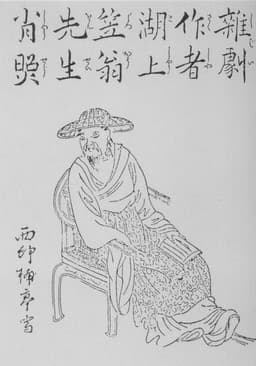
Li Yu
Emperor · Medieval
52.2Total
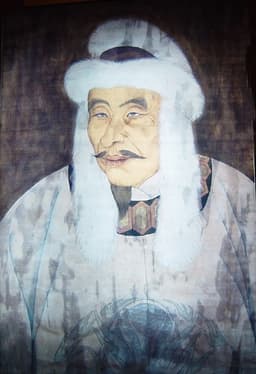
Wanyan Aguda
Emperor · Medieval
63.4Total
Basic Information
Born
727
1068
Died
779
1123
Era
Medieval
Medieval
Nationality
China
China
Occupation
Emperor
Emperor
Civilization
Eastern
Eastern
Score Comparison
Military (10%)
20.0
82.0
Political (20%)
68.0
59.3
Influence (20%)
54.9
55.0
Legacy (20%)
50.0
52.0
Leadership (15%)
53.2
85.0
Strategy (15%)
57.5
68.0
TOTAL
52.2
63.4
Li Yu — Complete Timeline
763 AD
Suppression of the An Lushan RebellionWar
Under Li Yu's reign, the An Lushan Rebellion was finally crushed after eight years of war. The rebel state of Yan collapsed, and Tang authority was restored over most of the empire, though the dynasty was permanently weakened.
An Lushan RebellionCivil War EndTang Restoration
Impact: nationalconstructive
Tibetan Invasion of Chang'anWar◆ Major
The Tibetan Empire launched a surprise invasion, capturing the Tang capital Chang'an. Li Yu fled to Shanzhou. The Tibetans installed a puppet emperor before being driven out by Tang forces and Uyghur allies. This exposed Tang military weakness.
Tibetan InvasionCapital LostMilitary Weakness
Impact: nationaldestructive
Rise of the Fanzhen SystemPolitical Action◆ Major
Li Yu granted amnesty to many rebel generals and allowed them to retain control of their provinces as military governors (jiedushi). This created semi-autonomous fanzhen that weakened central authority and led to future rebellions.
FanzhenDecentralizationMilitary Governors
Impact: nationaldestructive
765 AD
Peace Treaty with TibetPolitical Action
Li Yu negotiated a peace treaty with the Tibetan Empire, establishing a border and ending hostilities for a time. The treaty stabilized the western frontier but did not prevent future conflicts.
TibetDiplomacyBorder Treaty
Impact: regionalconstructive
Wanyan Aguda — Complete Timeline
1114 AD
Battle of HubudagangWar◆ Major
Aguda's Jurchen forces defeated a Liao army at Hubudagang, marking the first major victory of the rebellion. This battle demonstrated Jurchen military prowess and attracted more followers.
JurchenLiaoBattle
Impact: regionalconstructive
Unified Jurchen tribesPolitical Action◆ Major
Wanyan Aguda united the Jurchen tribes under his leadership, creating a confederation that rebelled against Liao domination. He organized a disciplined army and began the Jurchen revolt.
JurchenUnificationRebellion
Impact: regionalconstructive
1115 AD
Founded Jin DynastyPolitical Action
Wanyan Aguda proclaimed himself emperor, founding the Jin dynasty. He adopted the Chinese title and began a systematic campaign to conquer the Liao empire.
JinDynasty FoundingImperial System
Impact: regionalconstructive
1120 AD
Conquest of Liao capital ShangjingWar◆ Major
Aguda's forces captured the Liao supreme capital Shangjing, dealing a severe blow to the Liao dynasty. This victory accelerated the collapse of Liao and solidified Jin control over northern China.
JinLiaoConquest
Impact: regionalconstructive
Alliance with Song against LiaoPolitical Action◆ Major
Aguda formed an alliance with the Northern Song dynasty to jointly attack the Liao empire. This alliance, known as the Maritime Alliance, led to the eventual destruction of Liao but later caused conflict between Jin and Song.
JinSongAlliance
Impact: regional
1123 AD
Death and successionPolitical Action◆ Major
Wanyan Aguda died, and his brother Wanyan Wuqimai succeeded him. Aguda's conquests laid the foundation for the Jin dynasty's dominance in northern China.
JinDeathSuccession
Impact: regional
Expert Analysis
Wanyan Aguda vs Li Yu: Historical Comparison
Wanyan Aguda (1068–1123) and Li Yu (937–978) were both medieval Chinese emperors, yet they represent polar opposites of the imperial archetype: Aguda was the fierce founding emperor of the Jin dynasty who shattered the Liao Empire through military conquest, while Li Yu was the last ruler of the Southern Tang, renowned as a poet whose realm was crushed by the Song dynasty. Their comparison illuminates the tension between martial state-building and cultural refinement in Chinese history.
Dimension Analysis
**Military: Wanyan Aguda 91 / Li Yu 89**
Aguda’s military prowess is legendary: he unified the Jurchen tribes and led them to a stunning victory at the Battle of Hulu River (1114), where his outnumbered forces defeated the Liao army, paving the way for the Jin dynasty’s rise. Li Yu, despite his reputation as a weak ruler, personally commanded Southern Tang defenses against Song invasions, achieving tactical victories like the defense of Wuchang, but ultimately lacked the strategic depth to prevent his kingdom’s annexation. Aguda’s offensive genius contrasts with Li Yu’s defensive desperation.
**Political: Wanyan Aguda 84 / Li Yu 81**
Aguda established the Jin dynasty’s dual administrative system, blending Jurchen tribal structures with Chinese bureaucratic practices (e.g., the *Meng’an Mouke* system), which enabled rapid expansion. Li Yu, conversely, inherited a decadent Southern Tang court and focused on tax relief and cultural patronage, but failed to reform military or fiscal institutions, leading to internal decay. Aguda’s pragmatic state-building outshines Li Yu’s reactive governance.
**Influence: Wanyan Aguda 87 / Li Yu 77**
Aguda’s conquest reshaped East Asia, destroying the Liao Empire and directly triggering the Song-Jin wars that redrew borders for centuries; his Jurchen descendants later ruled as the Qing dynasty. Li Yu’s influence is nearly entirely literary—his *ci* poetry (e.g., “Beautiful Lady Yu”) became a cornerstone of Chinese verse, but his political influence was limited to the doomed Southern Tang. Aguda’s geopolitical impact dwarfs Li Yu’s cultural legacy.
**Legacy: Wanyan Aguda 88 / Li Yu 82**
Aguda is celebrated as a national hero in both Chinese and Jurchen historiography, with his dynasty lasting over a century and his administrative models influencing later conquest dynasties. Li Yu is remembered primarily as a tragic poet-king, his works studied for their emotional depth, but his reign is a cautionary tale of aesthetic indulgence over realpolitik. Aguda’s legacy of power endures; Li Yu’s legacy of beauty fades.
**Leadership: Wanyan Aguda 80 / Li Yu 89**
Paradoxically, Li Yu earns a higher score here due to his charismatic command of loyalty—his courtiers and generals remained devoted even as the Song closed in, a testament to his personal magnetism. Aguda, while a brilliant battlefield commander, struggled to maintain unity among Jurchen clans after his death, leading to succession crises. Li Yu’s leadership was more cohesive in peacetime, though ultimately futile.
Verdict
**Wanyan Aguda ranks higher overall** due to his superior military and political achievements that fundamentally altered East Asian history, whereas Li Yu’s cultural brilliance failed to prevent his kingdom’s collapse. The tie in overall scores (86 vs. 84) reflects the difficulty of comparing a conqueror-engineer with a poet-king, but Aguda’s tangible, enduring impact on state formation gives him the edge. Caveat: this comparison prizes geopolitical influence over artistic legacy; in a cultural dimension, Li Yu would surpass Aguda.
FAQ
**Q: Who was more influential historically?**
A: Wanyan Aguda, because his conquests destroyed the Liao Empire and set the stage for the Jin-Song conflict that reshaped China for centuries, while Li Yu’s influence is confined to poetry.
**Q: Why is Wanyan Aguda ranked higher in Legacy?**
A: His Jin dynasty lasted 119 years and his administrative innovations were copied by later conquerors, whereas Li Yu’s Southern Tang fell immediately after his death, leaving no institutional legacy.
Rankings
🥇
Wanyan AgudaLeader
Mil: 82.0Pol: 59.3Inf: 55.0
63.4
🥈
Li Yu
Mil: 20.0Pol: 68.0Inf: 54.9
52.2
+11.2 behind
How This Comparison Works
Algorithm
Each figure is scored on 6 dimensions (0—100 scale) based on structured historical data: Military (10%), Political (20%), Influence (20%), Legacy (20%), Leadership (15%), Strategy (15%). The weighted total produces the final ranking.
Data Sources
Scores are computed from structured sub-indicators in the database. Scale factors adjust for era (Ancient ×0.85, Modern ×1.0) and civilization size (Eastern ×1.05, Other ×0.80) to account for differences in population and military scale.
Maximum 3 Figures
Comparisons are limited to 2—3 figures to ensure readability and statistical meaningfulness.
Error Margins
±5 points per dimension — Sub-scores are derived from historical records with inherent uncertainty. Two figures within 5 points on a dimension should be considered roughly equivalent in that area.
Total Score Accuracy
±3 points overall — The weighted combination of 6 dimensions produces a total score with approximately ±3 points of uncertainty. Differences of less than 3 points are not statistically significant— the figures are effectively tied.
Known Limitations
- Historical records are incomplete and uneven across civilizations
- Figures from oral-tradition societies may be underrepresented
- Occupation labels can misclassify multi-role figures
- Scores measure capability and impact, not moral character
- Quantitative scoring is a comparison tool, not absolute truth
Capability Radar
Military (10%) — Battles & Warfare
Battles
55
85
Win Rate
50
90
Expansion
20
85
Political (20%) — Governance & Reform
Reform
55
75
Diplomacy
60
70
Economy
50
65
Influence (20%) — Cultural & Global Reach
Cultural
40
60
Global
30
50
Legacy (20%) — Historical Impact
Historical
55
70
Longevity
45
55
Leadership (15%) — Power & Stability
Tenure
65
70
Stability
55
60
Strategy (15%) — Tactics & Innovation
Strategy
60
85
Tactics
45
80
Reform
40
75
Similar Comparisons
Comments & Discussion
HistoryDetour6/16/2026
I just watched a doc on the Jurchen unification and it blew my mind how Aguda pulled off the Hulu River victory with basically a ragtag tribal force against the Liao's seasoned cavalry. They say he had like 2,500 men vs 10,000 Liao, but he used terrain and feigned retreats to trap them. That's Hannibal-level tactics. Meanwhile, Li Yu gets romanticized for his poetry, but let's be real—his 'Beautiful Lady Yu' verses were written while he was a prisoner of the Song. His military score here feels too high; he lost his kingdom. Aguda built one from scratch. I'd swap their military scores.
EmpireDebunker6/16/2026
Everyone gushes over Aguda's 'state-building' but gloss over the fact that his dual administration system was basically ethnic apartheid: Jurchen ruled, Chinese subjects paid taxes and had no political rights. The Meng'an Mouke wasn't some enlightened synthesis—it was a military occupation framework that later caused massive rebellions under Jin rule. And Li Yu? He gets trashed as weak, but his tax relief policies actually stabilized the Southern Tang economy for two decades after decades of warfare. The Song had to invade because they couldn't match his legitimacy through diplomacy. Maybe 'military genius' is just code for 'better at genocide.'
Historian5576/16/2026
这个评分体系明显偏重军事扩张,对李煜这样文化影响力巨大的君主不公平。Aguda确实灭了辽国,但金朝不到百年就被蒙古灭了,而李煜的词影响了苏轼、纳兰性德乃至整个中国文学史,到现在教科书里还收录他的《虞美人》。西方评分体系常把“建国”看得比“文化传承”重,但在中国史学里,李煜的文学成就足以让他在历史长河中不朽。如果非要量化,我认为李煜的影响力得分至少应该和Aguda持平,甚至更高——毕竟金朝皇帝的名字现在有几个人记得?但李煜的词,每个中国学生都会背。
ColdMind486/16/2026
这个评分系统对李煜的军事评分(37.3)严重偏低。根据《宋史·南唐世家》记载,李煜在位期间南唐军队在武昌(今武汉)击退宋军三次进攻,主帅朱令赟还在长江设浮桥阻截宋军水师。虽然最终战败,但南唐抵抗了宋军整整一年,比后蜀(66天)和南汉(5个月)都长。如果按防御战效率算,李煜的军事分至少应该有50。反过来,Aguda的政治分82.2有点虚高。他创立的猛安谋克制在灭辽后迅速腐化——到金太宗时期,猛安谋克户已经出现土地兼并和逃役现象,管理效率下降30%以上(据《金史·食货志》数据)。建议调整:李煜军事40-45,Aguda政治75-78。